The global magazine and marketplace for classic car enthusiasts, by enthusiasts.


Filter
Classic BSA, Unic for sale - BSA, Unic cars for sale
-

1926 Rolls Royce 20hp Barker Barrel Sided Tourer
1926 Rolls Royce 20hp Barker Barrel Sided Tourer Call Richard 07967260673 for full pictures & details. An impeccable fully restored car with massive bills & original Barker Barrel sided body & colonial bonnet. Interesting history. -
1928 Triumph Super 7 Faux Cabrio Fabric bodied by Hoyal
1928 Triumph Super 7 Faux Cabrio Fabric bodied by Hoyal Registration Number: VP4380 Nut & bolt restored to as new. This is believed to be the only surviving example of the Triumph Super 7 with a fabric covered faux Cabrio body coachbuilt by Hoyal of Weybridge. The car has been fully rebui.. -
Ford model T 1914 touring
Very correct car in good restored condition . Runs good . Nothing to complain about !! -
1927 Rolls-Royce 20HP Open-Drive Brougham
Vintage and Prestige are proud to offer 1927 Rolls-Royce 20HP Open-Drive Brougham For SaleRegistration: FOE147Chassis no: GUJ 47This stunning 20HP will certainly be noticed along the road; finished in the striking colour combination of Yellow and Black, with yellow wire wheels to match. The door surround is also.. -
1902 Oldsmobile Curved-Dash
Chassisnumber: 4640Engine number: 4640 This 1902 Oldsmobile curved-dash "R" as it was called is the 15th oldest in the club register and the second oldest in EuropeIt's a monocylindre of around 1600cc and the steering is by means of a tiller, maybe more direct than a steering wheelAs member of the .. -
1932 Aston Martin International
1932 Aston Martin International, chassis number A2/129. This is the last International sold by Aston Martin, first registered on 5th May 1932 and declared to the Licencing Authority as used for ‘Experimental Purposes’. Unusually, it was fitted with long sweeping front wings fitted to the bodywork, rather than the more normal ‘cycle wings’. Sold .. -
Bentley 4¼ Litre Sedanca 1938
Technical Specifications: Mark & Model: Bentley 4¼ Litre SedancaYear: 1938Registration plate: Guernsey registeredChassis Number: B-153-KUEngine Number: Z-3-BMEngine Capacity: 4257 ccTransmission: 4-speed manualMileage: Body style: 2-door SedancaInterior color: Black leathe.. -
1938 Bentley 4¼ Litre Sedanca
Technical Specifications Mark & Model: Bentley 4¼ Litre SedancaYear: 1938Registration plate: Jersey registeredChassis Number: B-187-LEEngine Number: E-9-BJEngine Capacity: 4257 ccTransmission: 4-speed manualMileage: Body style: 2-door SedancaInterior color: Cream le.. -
1927 Franklin 11-B Tandem Sport
1927 Franklin 11-B Tandem Sport Chassis Number: 164935-17 Registration Number: OFL27H (Germany.) Body Number: 58 A rare & unusual air cooled Franklin as used in a similar model by Charles Lindburgh in peiod. Air cooled 3.3l, 6 cyli.. -
1935 Daimler 15 Sports Coupe by Mulliner
Technical Specification:Mark & Model: Daimler 15 Sports Coupe by MullinerYear: 1935Registration plate: Jersey registeredChassis Number: 39538Engine Number: SG7L039Engine Capacity: 2003 ccTransmissions: 4-speed pre-selectorMileage:Body style: 2-door CoupeInterior col..


B.S.A.
GB, 1907 – 1926, 1933 – 1936
Birmingham Small Arms Co Ltd, Sparkbrook, Birmingham, Coventry
In 1907 the famous Midlands arms manufacturers began to make cars as a sideline. They were not entirely new to the field, having made parts for the Roots in 1897. Neither then nor later did they show much originality in their BSA cars. E.E. Baguley, formerly of Ryknield, was in charge, and later produced in 1908, a copy of the successful 40hp Itala from Italy. Other conventional, medium-sized BSA fours followed in small quantities. The major change that followed in 1911, after the company’s takeover of Daimler, was the adoption of Knight double sleeve-valve engines, as used by the latter concern, in BSA cars. These differed from Daimlers in being generally smaller and lighter. The first, the BSA Twelve of about two litres, weighed only 1.232lb in chassis form. Open bodies were of pressed steel from 1912: a single, important innovation that went largely unregarded. BSA also made the Stoneleigh, which was a BSA except for name and radiator, from then until 1914. It should nog be confused with the better-known Stoneleigh light car of the 1920s.
The first post-war BSA was a light car – an attempt to cash in on the boom in popular motoring, but superior to a great many. The BSA Ten of 1921 was powered by an air-cooled V-twin engine of modern design, with overhead valves, coil ignition, aluminium crankcase, and aluminium pistons in iron liners. This BSA developed 18bhp from a cubic capacity of 1080cc, and was made by Hotchkiss of Coventry. This power unit was smooth and though, like all of its kind, it was noisy, it was eventually made quieter by improvements. The rear axle of the BSA Ten with its underslung worm drive on Lanchester patents, was always silent. This uncharacteristic quality helped to sell the BSA Ten well until it was dropped in 1924. The next BSA’s were in fact small Daimlers, with 6-cylinder Knight double-sleeve-valve engines of under two litres. They were discontinued in 1926. From 1933 to 1936, this policy was resumed. In 1931, BSA had taken over Lanchester and introduced a line of completely new Lanchesters as cheap Daimlers. In turn, a still cheaper range christened BSA’s followed from 1933, consisting of a machine basically similar to the Lanchester: a BSA Ten but with a side-valve engine, and a BSA Light Six identical to its Lanchester opposite number. These BSA cars were made in the Daimler factory at Coventry. After 1936, no more cars came from the motor car division of BSA.
GB, 1929 – 1940
B.S.A. Cycles Ltd, Small Heath, Birmingham
In 1924 Hotchkiss, makers of proprietary engines for other car firms, were taken over by their main customer, William Morris. They had also made an excellent 1100cc, V-twin, air-cooled engine with overhead valves for the Birmingham Small Arms Company, for use in that company’s BSA light car (this engine also powered the short-lived Hotchkiss light car itself). BSA Cycles Ltd (the motor cycle division of BSA) acquired manufacturing rights in the engine to drive, in 1-litre form, the front wheels of a 3-wheeler of very modern conception with independent front suspension. This, the famous BSA Beeza, first appeared in 1929, ready for the 1930 season. In 1933 flexibility was added to the BSA’s virtues when a water-cooled 1100cc 4-cylinder sv engine became available. In the previous year, the BSA manufacturers had already tried to attract a wider market by adding a solid axle and another wheel at the rear. This became the BSA Nine in 1933. The front wheel drive BSA 4-wheeler was dropped for a season, but reappeared as the 9hp BSA Scout in 1935. From 1936 to 1940 the Scout in 1200cc BSA Ten form was the only BSA sold, the 2- and 4-cylinder 3-wheelers having been dropped in the former year. There was talk in the early 1950s of resuming production of a small BSA car with a 2-cylinder air-cooled engine, but it came to nothing.
Source: Georgano, encyclopedia of motorcar; TRN
The information is written with the greatest of care. However, if you have any suggested amendments please contact us at office@prewarcar.com
Unic
France, 1904 – 1939
(1) Sté des Ancien ets Georges Richard, Puteaux, Seine, 1904 – 1914
(2) SA des Automobiles Unic, Puteaux, Seine, 1914 – 1939
When in 1905 Georged Richard left the firm he had founded, he embarked on his second motor manufacturing career with what was intended to be a single-model policy – hence the name of his new car. However, his 10/12hp 2-cylinder UNIC car was joined within a year by two additional fours. After this the UNIC car make remained undistinguished. The most famous of the small fours UNIC cars was not a passenger UNIC car at all, but a taxi. The monobloc 12/14hp UNIC car of 1908 was made for 20 years, and served on London streets for longer still. In 1909 there was a 4.1-litre 6-cylinder model UNIC car. By 1914, three 4-cylinder UNIC cars were listed, of which the 10/12hp UNIC car was best known.
The basic UNIC car of the 1920s was the 10CV Type L, a worthy, long-lived but uninteresting car with an 1.847cc sv engine and the modern feature of unit construction of engine and gearbox. This UNIC car had front-wheel brakes from 1923. The Type L313 Sport UNIC car, an 11CV, with a bigger bore and 2-litres, was added in that year. The UNIC car had overhead valves, and was a good-looking 70mph fast tourer in the French tradition. The UNIC car must have been one of the first cars anywhere to have horizontal bonnet louvres. In 1926, the 11CV UNIC car was also listed in sv touring form; only cars of this rating were made, the UNIC car company having temporarily reverted to tehri original policy. At this time, the UNIC car company employed women road-testers, a rare but not unique practice.
UNIC cars penchant for unusual rear suspension – the 10CV UNIC car had used a combination of cantilevers and quarter-elliptics – was perpetuated on their straight-8 UNIC car of 1928, which had transverse springs located above and below the axle. Engines were push-rod ohv units of 2.494cc or 2.650cc, there were four forward speeds, and brakes of the UNIC cars were servo-assisted; both types persisted until 1934, though the old 11CV UNIC car had gone by 1932, and during the Depression years the UNIC car company concentrated on commercial vehicles. New for 1934 was the U4, a 2-litre sv four with magneto ignition (used on Unic cars almost until the end), articulated-arm independent front suspension and a double reduction back axle. The UNIC car competed with the Berliet 944 and the new small Delage and was joined during the year by the U6, a 3-litre six on similar lines, this UNIC car was available with a 4-speed Cotal electrically selected gearbox. This option was extended to the U4 in 1936, and in 1937, when traditional radiators gave way to fencer’s mask grilles, both 4- and 6-cylinder Unic cars were available in sports cabriolet form with ohv. The U4D of 1938 with 2.150cc ohv engine, and an improved U6 UNIC car survived until the outbreak of World War 2. Private UNIC car production was not resumed in 1946, though Unic are still active in truck manufacture as an associate of Fiat.
Source: Georgano, encyclopedia of motorcar; TRN
The information is written with the greatest of care. However, if you have any suggested amendments please contact us at office@prewarcar.com


Featured
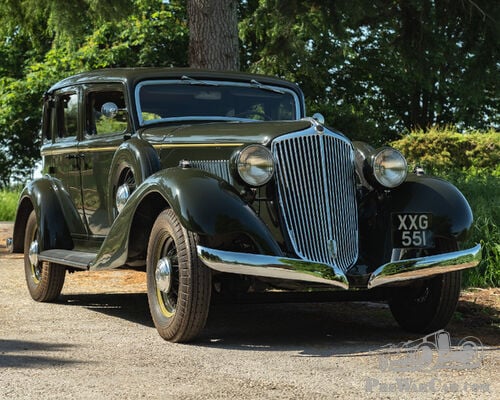
Graham Model 64 Standard Eight 'Blue Streak'
UK Registration No: XXG 551Chassis No: 1801069MOT: ExemptH&H ClassicsKelham Hall | Newark, Nottinghamshire

1915 Rolls-Royce Silver Ghost Barker Tourer
⁃ An exceptionally rare original bodied pre-war Silver Ghost⁃ Desirable Barker tourer in exciting barn find condition⁃ ..
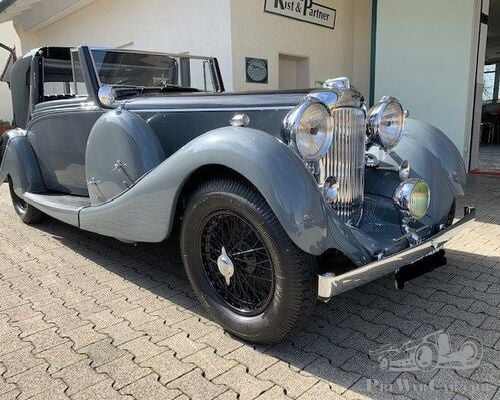
Lagonda LG 45 Coupe de Ville Sedanca by Mayfair
The successor to the M45, the LG45 was built around the same highly capable, competition-proven 4.5-litre Meadows inline-six engine, but featured r..