The global magazine and marketplace for classic car enthusiasts, by enthusiasts.


Filter
Classic Bucciali for sale - Bucciali cars for sale
-

Cadillac V16 - Series 452 - 1930 - Imperial Sedan 4330
Offers invited a round € 200.000 - This ONE of 4 Survivors of Serie 4330 body style - book C.W. Cummings - 2014) ***excellent driving car, the V16 gives you a special experience, no other car has***https://www.prewarcar.com/a-stately-cadillac-v16-in-the-netherlandsBuilt; no 9 of 50 - Engine no. 700163Lengt.. -
1925 Lancia Lambda 5th Series Torpedo
With a monocoque body, four-wheel brakes, independent front suspension and V4 overhead camshaft engine, many enthusiasts view the Lancia Lambda as one of the great and innovative automobiles of all time. The Lambda was also successful in competition with privately entered cars finishing fourth and fifth behind the works OMs in the first Mille Mi.. -
1930 Bentley Speed Six
1930 Bentley Speed Six Chassis Number: SB2774 Engine Number: SB2772 Reistration Number: GH8974 New to market & freshly restored to perfection. This car has over the past two years been fully rebuilt & built up as a LeMans style tourer by noted Rolls Royce &.. -
Renault NN Torpedo Commerciale (1926)
Highlights Complete, coherent, unmodified exampleExcellent base for a full restorationAttractive 1920s torpedo body styleVery accessible entry priceIdeal for workshops or enthusiasts looking for a rewarding project Restoration project – Complete car – Solid base but major work r.. -
Société des Automobiles Pilain
The 1911 Pilain is the Type 4.0, equipped with a four-cylinder engine and a single Zenith carburetor. This car has undergone a comprehensive restoration over the past few years. Since the original body was too deteriorated to restore, it was decided to install an alternative body. The current elegant body is sourced from a Bianchi, which perfect.. -
Lane Model 15 | Steam car
This unique steam car is a completely original 1909 Lane Model 15, offering a highly distinctive design that sets it apart from most other steam vehicles. It is the only surviving Lane Model 15 in existence. Experts consider the Lane to be one of the finest steam cars of the early automotive era, produced between 1900 and 1910. Lan.. -
1934 Railton -Hudson Original Alpine Trials Racer
By 1933, Railton built a variety of the larger versions which were powered by Hudson. The Hudson engine and chassis were built in the US and exported to England for Railton. This 1934 Railton is one of the two original Alpine Trials cars sponsored by Railton and driven by Habmit Davids. Both cars not only completed the trials but also.. -
Renault 12 HP Coupé de Ville Carrosserie Kellner Type CB – 1911
HighlightsExceptional original conditionRare Kellner coachworkComplete, authentic, coherent exampleOriginal paint and interiorMuseum‑grade preservationIdeal for concours preservation class Kellner Coupé de Ville – Exceptional original condition This.. -
De Dion‑Bouton Type D (1899)
HighlightsRare early De Dion‑Bouton, highly collectibleBeautiful presentation and coherent historyEligible for major international veteran eventsA centrepiece for any prestigious collection Vis‑à‑vis “La Petite Voiture” – High‑quality restoration – Veteran car eligible .. -
1938 Rolls Royce Wraith Gurney Nutting Sedanca Coupe
1938 Rolls Royce Wraith Gurney Nutting Sedanca Coupe Chassis number: WRB2 Registration number: FLH5 This car may be paid for in Bitcoin. Approx 3 BTC Simply the best of the best & a Pebble Beach/Villa D'Este quality car. This wrait..


Bucciali/ Buc
France, 1923 – 1933
Bucciali Frères, Courbevoie, Seine
A spate of very unconventional designs, all of them too far ahead of their time, appeared in France towards the end of the 1920s. The Buc or Bucciali, incorporating features that did not become common until the 1960s, was one of these. The Bucs of 1923 to 1924 were Violet-inspired 2-strokes, a twin followed by a V4. In 1925 came the conventional Buc AB 4/5 with 1.6-litre ohc S.C.A.P. engine, followed by a 70bhp Buc AB6 6-cylinder. Of these, only the Buc AB 4/5 was made in series. The Buc TAN of 1928 was completely unconventional, except for its power unit, which was a medium-sized sv engine available in 6- or 8-cylinder form. It served only as a means of propulsion for the assembly of novelties which made up the rest of the car; front-wheel drive, independent suspension on rubber to all 4 wheels, and Sensaud de Lavaud infinitely-variable automatic transmission. The most exotic Bucciali was built in 1931 to 1932, an is said never to have run under its own power, although the chassis survives today. This was the Bucciali Double Huit, powered by two 3.8-litre Continental straight-8 cylinder blocks mounted side-by-side on an aluminium crankcase. Two crankshafts geared together, and two radiators were used. After this, the last Bucciali model seemed something of an anticlimax, fine car though it was. This was the Bucciali TAV-12, a front-wheel-drive machine powered by a V12 Voisin engine. Only two were made. In all 151 Bucs or Bucciali were made, of which 38 were front-wheel-drive models.
Source: Georgano, encyclopedia of motorcar; TRN
The information is written with the greatest of care. However, if you have any suggested amendments please contact us at office@prewarcar.com


Featured
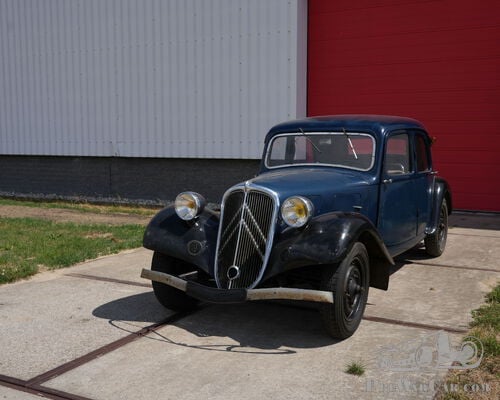
1935 Citroën Traction Avant
Early-production Traction AvantExceptionally original, unrestored conditionRecently part of a major museum collection
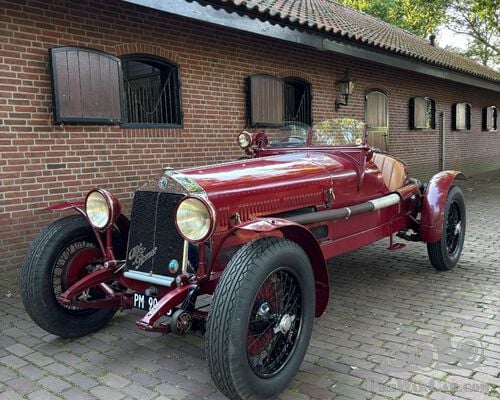
1930 Alfa Romeo 6C 1750 Spider
1930 Alfa Romeo 6C 1750 Spider with complete history from delivery to first owner in 1930 in Firenze till today with copy Libretto/license plate.
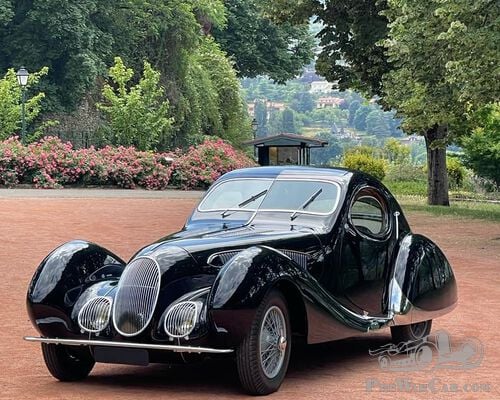
1939 Talbot-Lago T150C “Goutte d’Eau” — Iconic French Coachbuilt Masterpiece
Talbot-Lago T150C ‘Teardrop’ — An Icon of French Automotive Art There are motor cars that define an era. And then there are those tha..