The global magazine and marketplace for classic car enthusiasts, by enthusiasts.


Filter
Classic C.G.V./ Charron for sale - C.G.V./ Charron cars for sale
-

1931 Marmon Sedan 88
MARMON - SEDAN 88 Year 1931GasolineHistorical, 8 cylinders, very good condition. -
Alfa Romeo 6C 2500 SS Tipo 256 Project
Alfa Romeo 6C 2500 Tipo 256 Project We had started a Tipo 256 Corsa project a while ago, but now the client we did it for has to pass the project on due to declining health. The initial plan was to recreate a 1939 Tipo 256 “Siluro”. None of the original cars has survived and there are o.. -
1935 Riley Kestrel 15/6 four light saloon
1935 Riley Kestrel 15/6 four light saloon. Chassis number: 44T2355Registration Number: TI4340 (Swiss) Just thee of these six cylinder Rileys are on the Riley register making it a very very rare car. The car was delivered in March of 1935 by one John Binnie of Edinburgh. We previously sold this car quite some ye.. -
1939 Delahaye 135MS 3 position drophead by Pennock
1939 Delahaye 135MS 3 position drophead by Pennock Chassis number: 800874Registration number: 126JLB Owned by Prince Birabongse of Siam, the famed Racing driver. This Delahaye 135 comes to us with two large box files of history & photographs detailing the extensive works undertaken to it. In addition to a.. -
1934 ROLLS ROYCE 20/25 H.J. MULLINER SPORTS SALOON
1934 ROLLS ROYCE 20/25 H.J. MULLINER SPORTS SALOON Chassis number: GFE16 Registration Number: WS2765 £100,000 Plus has been spent upon this car in recent years by the current onwer with noted marque specialists A & S Engineering of Alton Hants; A company world renowned for t.. -
Mercedes Benz - 540K Spezialroadster (1938, matching numbers)
This impressive Mercedes-Benz 540K Special Roadster is built on the original chassis of a 540K Cabriolet B — both chassis and engine are matching numbers. As part of the prestigious W29 series and originally manufactured in 1938, this example underwent a meticulous and comprehensive restoration over several years and was fitted with a bod.. -
A Winning Formula
This 1924 3 4 ½ Litre Bentley has an interesting history from her rebirth in Scotland in the 1960’s as a car representing the racing style of the vintage TT period.Mechanically rebuilt by the team at Vintage Bentley, today she maintains the patina of regular use, with excellent hydraulic brakes, coil ignition via twin magnetos, and a besp.. -
1927 Rolls Royce 20hp Park Ward Limousine
1927 Rolls Royce 20hp Park Ward Limousine Chassis number: GAJ71 Registration Number: BF4133 Under the current ownership for 17 years, this car has been sparingly used & is in lovely running condition. The owner, a dealer in heavy plant & equipent has had his in house wor.. -
Circa 1928 Bean 14 hp rolling chassis
Circa 1928 Bean 14 hp rolling chassis for sale. This would be an ideal project to build a special sporty body on . Look at the large frontwheel brakes a la Delage and more powerful engine. Not many of these 14hp Beans are around . The price includes all shipping costs to Europe and the import vat . £ 8500.


C.G.V. / Charron
(1) Charron, Girardot et Voigt, 1901 – 1906
(2) Automobiles Charron Ltd, Puteax, Seine, 1906 – 1930
All three original partners in the CGV (C.G.V.) concern had raced Panhards; Charron won the first Gordon Bennett Cup race in 1900, while Girardot, who had been associated with him in a Parisian Panhard agency since 1897, enjoyed the reputation of being ‘the Eternal Second’. Thus it is not suprising that C.G.V.’s first cars reflected Panhard influence with their flitch-plate frames, 4-cylinder automatic inlet valve engines, 4-speed gearboxes and side-chain drive. The capacity of the CGV car was 3.3-litres. Girardot drove a 9.9-litre CGV racing machine in the 1902 Gordon Bennett Cup, but retired, though the CGV touring models rapidly established a sound reputation and were made under licence in the USA by Smith and Mabley, later to be responsible for Simpley. In 1903 CGV built one of the world’s first straight-8s, a racing 7.2-litre machine with no gearbox. In the same year they also made an auto-mitrailleuse based on their private-car CGV chassis, a line of development they were still exploring in 1906. Mechanically-operated inlet valves featured on their bigger models,though there was also an 8hp automatic inlet valve twin in addition to the original ‘CGV 15’. By 1905 automatic inlet valves had been dropped altogether and the CGV firm were turning out big 4-cylinder cars of 4.9-litre, 6.2-litre and 9.8-litre capacity, all T-headed and still with flitch-plate frames, but now with high-tension magneto ignition and swiveling acetylene headlights. CGV’s had Renault-type bonnets, but adhered to pump cooling and underslung frontal radiators. The biggest CGV car model cost £1.200 for a bare chassis in England. Girardot’s entry of a twin-radiatored car for the French Gordon Bennett Eliminating Trials was written off in a crash. The CGV company never raced again. Shaft drive was found on a 14/18hp CGV model in 1906, while at the other end of the range there was an immense 12.9-litre chain-driven 75/90hp with geared-down starting handle; one huge berline de voyage with built-in lavatory was shipped to an American client! In this year the CGV firm became a British limited liability company and Girardot left to sponsor the GEM petrol-electric. By 1912, Fernard Charron was also engaged on a venture of his own, the Alda.
From 1907 the CGV cars were knowns as Charrons, and the 14/18hp had acquired a monobloc engine, while shaft drive was available a year later on the 4.9-litre ‘Charron 20/28’. The smaller models appeared on the home market with left-hand drive. 1909 saw the advent of a new line of Charron cars which was to continue with little change up to 1914. These Charron cars had L-head engines, thermos-syphon cooling and dashboard radiators living uncomfortably near their petrol tanks. They were made in 1.2-litre 2-cylinder, 2.4-litre and 3.7-litre 4-cylinder, and 3.9-litre 6-cylinder versions, the two bigger Charron types having 4-speed gearboxes. The twins were dropped at the end of 1912, and the sixes a season later. At the same time the bigger Charron models continued unchanged, with fitch-plate frames, and chain drive, the latter being still listed as an option as late as 1912. The Charron make was used widely as a taxicab in London and some Charron cars were tried with Lentz hydraulic transmissions in 1913. Just before World War 1 came a baby 4-cylinder, the 845ccc Charron Charronette with 3-speed gearbox and detachable wood wheels, which offered a 40mph performance for £214. Other Charron models listed in 1914 were monobloc fours of 2.4-litres (the well-known ‘Charron 15’) and 3.4-litres.
The larger post-war Charrons were uninteresting cars, differing from their 1914 forebears in having pump cooling, conventional frontal radiators, and full electrical equipment. The 3.4-litre ‘Charron 18/24’ with sv and fixed head cost £1525 in England in 1920, but alongside this was developed a new Charonette with 1057cc sv engine, 2-bearing crankshaft, thermo-syphon cooling, frontal radiator, trough-and-dipper lubrication and a central vertical gate change for the 3-speed separate gearbox. It had little affinity with the British-made Charron-Laycock made in Sheffield from 1920, but the latter’s presence kept it off the English market until 1922, when it was listed at £325. Charron cars were not made with front-wheel brakes until 1925, when a 1½-litre ohv Charron 10CV on conventional lines was announced. Like many a Frenchmaker, Automobiles Charron departed from the scene with an undistinguished small six. Its capacity was 2.8-litres, the valves were overhead and cooling was by pump. A smaller 1.8-litre version was listed in 1929, but this marked the end of the make Charron.
Source: Georgano, encyclopedia of motorcar; MCS
The information is written with the greatest of care. However, if you have any suggested amendments please contact us at office@prewarcar.com


Featured
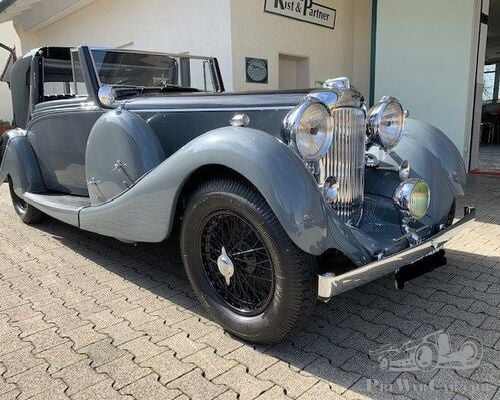
Lagonda LG 45 Coupe de Ville Sedanca by Mayfair
The successor to the M45, the LG45 was built around the same highly capable, competition-proven 4.5-litre Meadows inline-six engine, but featured r..
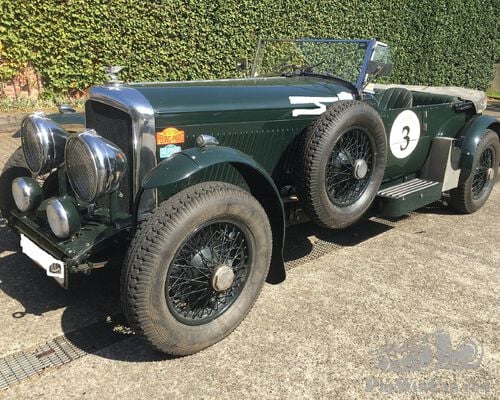
Bentley Derby Special Open Rally Car
This Bentley Derby, manufactured in 1935, has been rebuilt into a short and long-distance rally car. Full rebuilt engine in 2021, Since 2021 low mi..

1939 Wanderer W 23 Gläser(Dresden) Convertible
Wanderer W 23 Gläser(Dresden) Convertible in original condition Built in 1939 for sale. Ready to drive with TÜV and approval as a historic vehicle..