The global magazine and marketplace for classic car enthusiasts, by enthusiasts.


Filter
Classic Cadillac, Simca for sale - Cadillac, Simca cars for sale
-

1941 Cadillac Coupe
Cadillac really hit it with there design for 1941 , here a serie 62 coupe in a classic and eye-catching color combination. Designed by Harley Earl and Bill Mitchell and built at the Fleetwood plant, this serie 62 coupe is a full Classic (according to CCCA). The V8 engine with 150 hk make it a very powerful pre war car very usable on any ki.. -
Cadillac 1934 Town Sedan serie 370D V12 Fleetwood Body
Cadillac 370D Town Sedan from Fleetwood with the V12 150HP engine and a wheelbase from 146" only 683 V12 where produced in 1934 by Cadillac This Impressive car has a weight from over 2500KG The Cadillac runs and drives well. Frank Kennis Phone: 00.31.622.420.766 or mail me: info@KennisCars.NL www.KennisCars.NL Classic Car Dealer for Europe Cad.. -
1932 Cadillac Series 452B V-16 All-Weather Phaeton by Fisher | The Quail Auction 2026
Engine No. 1400211 (See Text) Body No. 16 At a time when fours and sixes dominated the market and V8s were considered a luxury, Cadillac's decision to introduce a sixteen-cylinder engine in 1930 was as audacious as it was revolutionary. Designed as the halo example of the brand's "Standard of the World" reputation, the V-16 left compet.. -
1936 Cadillac Series 90 V-16 Five-Passenger Town Sedan | The Quail Auction 2026
Engine No. 5110221 Body No. 24 Fleetwood Style No. 5833-S 1936 marked the penultimate model year for Cadillac's celebrated overhead valve V-16, an engine that had redefined standards of power, smoothness, and underhood presentation since its 1930 debut. Whisper-quiet in operation, the 452-cubic-inch sixteen was perfectly suited t.. -
Cadillac V16 - Series 452 - 1930 - Imperial Sedan 4330
Offers invited a round € 200.000 - This ONE of 4 Survivors of Serie 4330 body style - book C.W. Cummings - 2014) ***excellent driving car, the V16 gives you a special experience, no other car has***https://www.prewarcar.com/a-stately-cadillac-v16-in-the-netherlandsBuilt; no 9 of 50 - Engine no. 700163Lengt.. -
1928 Cadillac Model 7980 convertible coupe
Cadillac is one of the pristine cars in American history, here we have a 1928 model 7980 convertible coupewith all options as twin wooden spare wheels, trunk rack, pilot ray lights (who follow the direction of the front wheels) etc.The engine is a V8 with 5588cc on a 3560 wheelbase. At 2200kg it is not a lightweight.We parti.. -
1927 Cadillac V8 complete and restored rolling chassis
1927 Cadillac V8 complete and restored rolling chassis. With good radiator, beautiful original headlights, bonnet, cowling and dashboard. On restored wooden spoked wheels with the original hubcaps. Ideal car for racing and build your own body on ! We also have most of the dismantled original tourer body and the original fenders (guards) in good con.. -
Cadillac 1930 La Salle 340 Coupe
Beautifull Impresive Cadillac 1930 La Salle 340 Coupe with buffalo wire wheels, 2 spare wheels in the front wings, V8 engine 340 CID 5.600 cc with 90 HP. With a mother in law extra 2 seats in the trunk and a golf bag door for easy loading some stuff. This Cadillac / La Salle is in good original condition and great running. Frank Kennis Phone:.. -
1938 Cadillac V16 Coupe Series 90 Coupe by Fleetwood
1938 Cadillac V16 Coupe Series 90 Chassis number: 702748 Registration Number: H1087BBB (Spain Historic) On January 4, 1930, Cadillac introduced a new top of the line automobile at the New York Auto Show with the introduction of its breathtaking new V-16. With this first V16 pro..


Cadillac
US, 1903 to date
(1) Cadillac Automobile Co, Detroit, Mich., 1903 – 1905
(2) Cadillac Motor Car Co, Detroit, Mich., 1905 to date
The ‘Standard of the World’ started humbly as a single-cylinder car selling for $750. Henry M. Leland, its creator, had been associated with Henry Ford and has also built engines for Oldsmobile. The Model-A Cadillac was markedly similar to the early Fords in having a horizontal underfloor engine, 2-speed planetary transmission and central chain drive via a spur-type differential, but Cadillac’s 1½-litre inlet over exhaust power unit had one cylinder where Ford used two. There was no bonnet on the early Cadillac models. This very successful design remained in production until 1908, later improvements including rack-and-pinion steering, transverse front suspension and a dummy bonnet. The Cadillac marque was introduced to Britain by F.S. Bennett, who in 1908 conducted a ‘standardization test’ at Brooklands. Three single-cylinder Cadillac cars were dismantled and the parts mixed up – they were then reassembled and the vehicles run on the track. The R.A.C. awarded Cadillac the Dewar Trophy for this achievement.
A 30hp 4-cylinder Cadillac car with separate cylinders and copper jackets was announced for 1906 and 75.000 of this type Cadillac were sold before it was discontinued in 1914. The original planetary transmission gave way first to a conventional 3-speed box, and finally in 1914 to a 3-speed box with 2-speed back axle. Cadillac was one of the firms organized into the General Motors group in 1909 by W.C. Durant, and in 1910, when a 4-cylinder Cadillac tourer could be bought for $1600, the company was claiming that tolerance on 112 parts of the car were accurate to one-thousandth of an inch. 1912 saw a most important Cadillac innovation: the standardization of the Delco system of electric lighting and starting on the Cadillac, now of 5½-litres capacity and capable of 60mph. The first left-hand drive Cadillac of 1915 was also the first of the company’s V8s, to become as much a hallmark of the breed as were Buick’s overhead valves. Inspired by the De Dion Bouton of 1910 it had 5.1-litre engine and sold for $2700. 13.000 V8 Cadillac cars were sold in the first year of production and the model was widely used by the U.S. Army in World War 1. Cylinder heads were detachable from 1917 on, and 1924 Cadillac versions had Duco cellulose finish and front wheel brakes.
In 1927, when 47.000 Cadillac cars were sold, a less expensive companion make, La Salle appeared, and the cars were restyled in 1928. The synchromesh gearbox made its world debut with the 1929 Cadillac models, which also featured chromium plating and safety glass, with a price range from $3.295 to $5.995. 1930 saw the advent of the ohv Cadillac V16 of 7.4-litres, which gave 185bhp and had a wheelbase of 12ft 4in. This sold at an average rate of 500 Cadillac cars a year for eight seasons in the $6.000-$9.000 price backet. It was joined in 1931 by an equally impressive ohv 6-litre V12 Cadillac for sale. Improvements over the next few years included power brakes (1931), ride control (1932), no-draught ventilation (1933), Dubonnet type independent front suspension (1934) and ‘turret-top’ all-steel bodies (for sale in 1935). 1938 Cadillac models had column change as standard, a year ahead of other GM products, while the V12 and V16 were dropped in favour of a side-valve short-stroke Cadillac 16-cylinder model which was made until 1940. Another new model for Cadillac in 1938, the 8-cylinder Cadillac Sixty Special, anticipated GM’s 1940 styling with its absence of running boards and 4-light sedan bodywork. 5.7-litre side-valve V8s in three wheelbase lengths made up the 1941 Cadillac range, on which Hydramatic transmission was optional for the first time.
The post-war era was to see Cadillac outstrip all its competitors in the top-price class and become an international symbol of wealth. Sales climbed from 66.000 cars in 1941 to 103.857 Cadillac cars in 1950, and to a new record of 165.959 Cadillac cars in 1964. Tail fins made their first appearance on Cadillac’s 1948 fastback coupé, and in 1949 Cadillac, along with Oldsmobile, adopted overhead valves and oversquare cylinder dimensions, their new 5.4-litre engine developing 160bhp. Cadillacs were raced at Le Mans in 1950 by Briggs Cunningham and the Cadillac engine was also used in export editions of Britain’s J2. Allard. Power output increased steadily: 190bhp in 1952 (by which time manual transmission was no longer offered), 210bhp in 1953 (when a 12-volt electric system was standardized), and 230bhp in 1954, the year when panoramic wrap-around windscreens and power-assisted steering became standard on the Cadillac for sale.
The expensive Cadillac Eldorado Brougham of 1957 (it cost over $13.000) was the first car to have air suspension (dropped after a few seasons) as standard equipment, while Cadillac, along with Lincoln, started the fashion for four headlamps, that later became universal in the USA. 1966 Cadillac cars featured GM’s perimeter-type chassis frame, a 340bhp 7-litre engine, variable-rate power steering, full air conditioning, electric door locks and seat controls, a time switch for the headlamps and a six-position steering wheel. Prices started at $4.650. In 1967 Cadillac set a new sales record of 213.161 cars, bettered in 1969 with 266.798/ They introduced a fwd car on Oldsmobile Toronado lines, the Fleetwood Cadillac Eldorado with torsion-bar ifs, self-levelling suspension, and front disc brakes, these last being applied to the more expensive Cadillac Fleetwoods with conventional drive, and to all the 1969 Cadillac range. Capacity of the Cadillac V8 engine was increased – to 7.735cc in 1968 and to 8.2 litres in 1970, but otherwise there were no major changes. In 1973 Cadillac were one of the few firms offering a nine-seater limousine: the Cadillac 75 with a wheelbase of 12ft 7½in and an overall length of 20ft 8in.
Source: Georgano, encyclopedia of motorcar; MCS
The information is written with the greatest of care. However, if you have any suggested amendments please contact us at office@prewarcar.com
Simca
France, 1935 to date
(1) Sté Industrielle de Mécanique et Carrosserie Automobile, Nanterre, Seine, 1935 – 1961; Poissy, Seine-et-Oise, 1954 – 1970
(2) Chrysler France SA, Poissy, Seine-et-Oise, 1970 to date
H.T. Pigozzi’s Simca car company was formed in November 1934, to manufacture Fiat cars under licence for the French market in the former Donnet factory. Pre-1940 production Simca car models were virtually identical to their Italian counterparts, the types offered being the Simca Tipo 508 Balilla, the 2-litre Simca Tipo 518 Ardita, and the later 500 (Simca 5) and 1.100 (Simca 8). Outside France, however, the Simca car make’s reputation stemmed from the competition successes of Amdédée Gordini’s specially tuned versions, mainly based on the 508 family, though he also extracted 28bhp from the Topolino engine. Most successful of these Simca cars were the aerodynamic 508C two-seaters which won the Bol d’Or, the small sports-car race at Reims, and the Paris-Nice Rally, as well as the Index of Performance with a Simca car at le Mans in 1939. A 1.2-litre Simca car version of the basic Fiat unit developed 65bhp. After World War 2, Gordini continued to develop competition Simca cars under Simca sponsorship until 1951, and evolved an 1.100cc single-seater Simca car with twin-tube frame and all-round independent suspension, which Simca car furnished keen competition for the Cisitalia and did very well in 1947, with wins by the Simca car in the Bol d’Or and at Nimes, not to mention a 1-2-3 victory in the Coupe des Petites Cylindrées at Reims. The Simca cars acquired hemispherical heads and 5-bearing crankshafts in 1948, winning their class in the Belgian 24 Hour Race, as well as being victorious once again in the Bol d’Or. Later Simca-Gordinis used Wade-blown 1½-litre power units, and the breed’s career culminated in Trintignant’s win in the 1951 Albi Grand Prix. Thereafter the Simca car company withdrew its support from Gordini, who set up on his own as a manufacturer.
In 1942 Simca cars joined Baron Petiet’s Groupe Française Automobile selling organization along with Delahaye/ Delage, but withdrew from the GFA after the war, when production of the Simca 5, and Simca 8 resumed in basically 1939 form. An ohv Simca 6 (the equivalent of Fiat’s later 500C) was introduced for 1948, and in 1929 a 50bhp sports Simca car version of the 8CV with handsome coupé bodywork by Facel Metallon was marketed; a Simca car of this type won its class in the 1949 Alpine Rally, while standard Simca 8 cars scored two class wins in the 1950 Monte Carlo event. This year the Simca 8 was restyled, and this Simca car emerged with a 40bhp 1.2-litre engine and steering-column change. In the summer of 1951, however, an entirely new Simca car, the Simca Aronde, made its appearance; the enginee of this Simca car was a 45bhp derivative of the old 8CV, but the rest of the Simca car was entirely new, with unitary construction, coil-and-wishbone independent front suspension, and hypoid final drive. Production jumped to 50.000 Simca cars in 1952 and the Simca Aronde made numerous attacks on long-distance records held for many years by the Citroën ‘Petite Rosalie’, achieving 100.000 kilometres at 100 km/h in 1953. The Simca Aronde had a production run of over 12 years. The half-millionth Simca car was delivered in January 1957, and the millionth Simca car in February 1869. The Simca car company also participated in several takeover bids, buying Unic (now only making trucks) in 1951, Ford in 1954, Saurer’s French branch in 1956, and Talbot in 1959. A 50bhp sports version of the Simca Aronde was announced in 1953, and Gemmer cam steering was adopted on Simca cars in 1954, in which year the Simca car model was introduced to the British market at a list price of £896. With the acquisition of the French Ford company, their 2.3-litre sv V8 Vedette reappeared under the Simca car name, the Ford factory at Poissy first supplementing and then supplanting the original Simca car works at Nanterre, which was turned over to Citroën in 1961. The V8 Simca car sold fairly well, and was given a more powerful 84bhp engine in 1958. Production of Simca cars ceased in France in 1961, though as late as 1967 the Chambord and Présidence Simca car version, now with 112bhp and ohv, were still being made under licence in Brazil.
1956 Simca Arondes had 48bhp 1.3-litre engines as standard, though 57bhp Special units were found in the sports coupés and convertibles Simca cars and the Simca Montlhéry saloon; station wagon Simca cars had the 45bhp Service type. 1957 saw a family derivative, the Simca Ariane, using the hull of the V8 Vedette and the regular Simca Aronde engine – this Simca car was made until 1963. In 1958 Chrysler acquired a minority interest in Simca cars, and it was announced that the American company’s Adelaide factory would built Simca Arondes for the Australian market; this small holding had become a controlling interest by 1963, and the Chrysler ‘pentastar’ emblem was to be seen on all Simcas in 1967. Aronde development continued: a cheap 6CV 1.100cc Simca car model was listed in 1960, and the 1961 Simca car range used 5-bearing engines in various ratings up to 62bhp, later increased to 70bhp. A new departure for 1962 was the 1000 Simca car, a 944cc rear-engined 4-door saloon with radiator mounted alongside the power-unit, 5-bearing crankshaft, all-round independent suspension, and 4-speed synchromesh gearbox: at 6.490NFr this Simca car was cheaper than Citroën’s Ami 6, and production rose over a quarter of a million Simca cars. Within a year this Simca car had evolved into a Bertone-bodied coupé with all-round disc brakes, while the first of the Simca-Abarths was available in the shape of a twin ohc 1.300cc model. In 1963 all-synchromesh boxes were also found on the conventional 4-cylinder 1300 and 1500 Simca cars; outputs were 61bhp and 83bhp, and the bigger Simca car had front disc brakes, which were added to the 1300’s specification in 1966. 1964 was the last year of the Simca Aronde, which Simca car had been continued as a very inexpensive item at 6.950NFr for an 1.100cc saloon. In 1966 the 1000 became available with a 3-speed semi-automatic gearbox, full automatic (by Borg-Warner) being an option on the 1500-series Simca cars; during the year the millionth Simca 1000 left the Simca car factory.
1968 brought two new versions of the 1000 Simca car, the high-performance GLS and the austerity 777cc Sim’4 Simca car for the home market; at the same time Simca cars switched to front wheel drive with their transverse-engined 53bhp 1100. On this Simca car the gearbox was mounted left of the engine, rear suspension was independent, by wishbones and torsion bars, and front disc brakes were fitted. An interesting hybrid Simca car evolved in England was the Radbourne-Abarth 1200, basically a 1200 coupé Simca car fitted with a Fiat 124 engine. In 1970, the Simca car company changed its name and the Chrysler was added as a prestige line. Also Simca cars took Matra, and their racing team, under their wing. A 76bhp 1.2-litre version Simca car of the 1100 appeared in 1971, helping the front wheel drive Simca car to become France’s best-selling car early in 1972. The principal novelty for 1972 was yet another 1000 derivative Simca car, the 1.294cc Rallye saloon. The conventional rear-driven 1301 and 1501 were continued into 1973, along with the 1000 and 1100 families.
Source: Georgano, encyclopedia of motorcar; MCS
The information is written with the greatest of care. However, if you have any suggested amendments please contact us at office@prewarcar.com


Featured
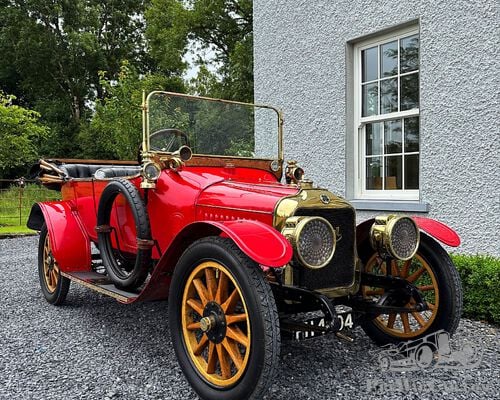
1914 Brasier
1914 Brasier Tourer 9ABrasier were a French manufacturer who were in business from 1901 until 1930, when the company became victim of the gr..
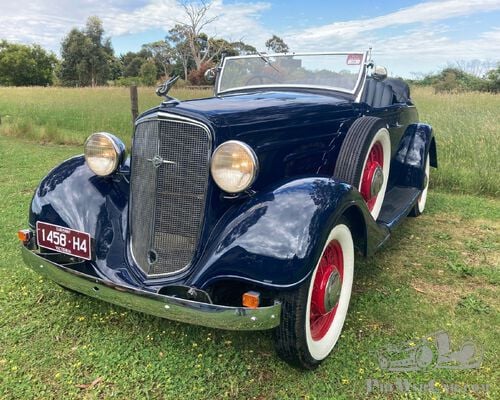
1934 Chevrolet Standard Roadster
1934 Chevrolet Standard Roadster This vehicle was delivered to Australia from Chevrolet and the body was manufactured by Holden Body Works w..
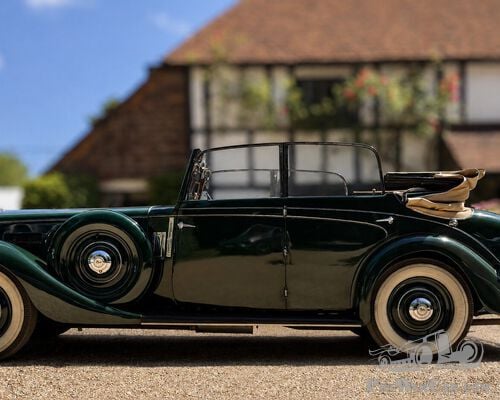
1936 Armstrong Siddeley 20/25 Cabriolet with Tickford coachwork by Salmons & Sons, Newport Pagnell
This exceptionally rare Armstrong Siddeley 20/25 Cabriolet with original Tickford coachwork by Salmons & Sons of Newport Pagnell was first reg..