The global magazine and marketplace for classic car enthusiasts, by enthusiasts.


Filter
Classic Ariès, Chalmers for sale - Ariès, Chalmers cars for sale
-

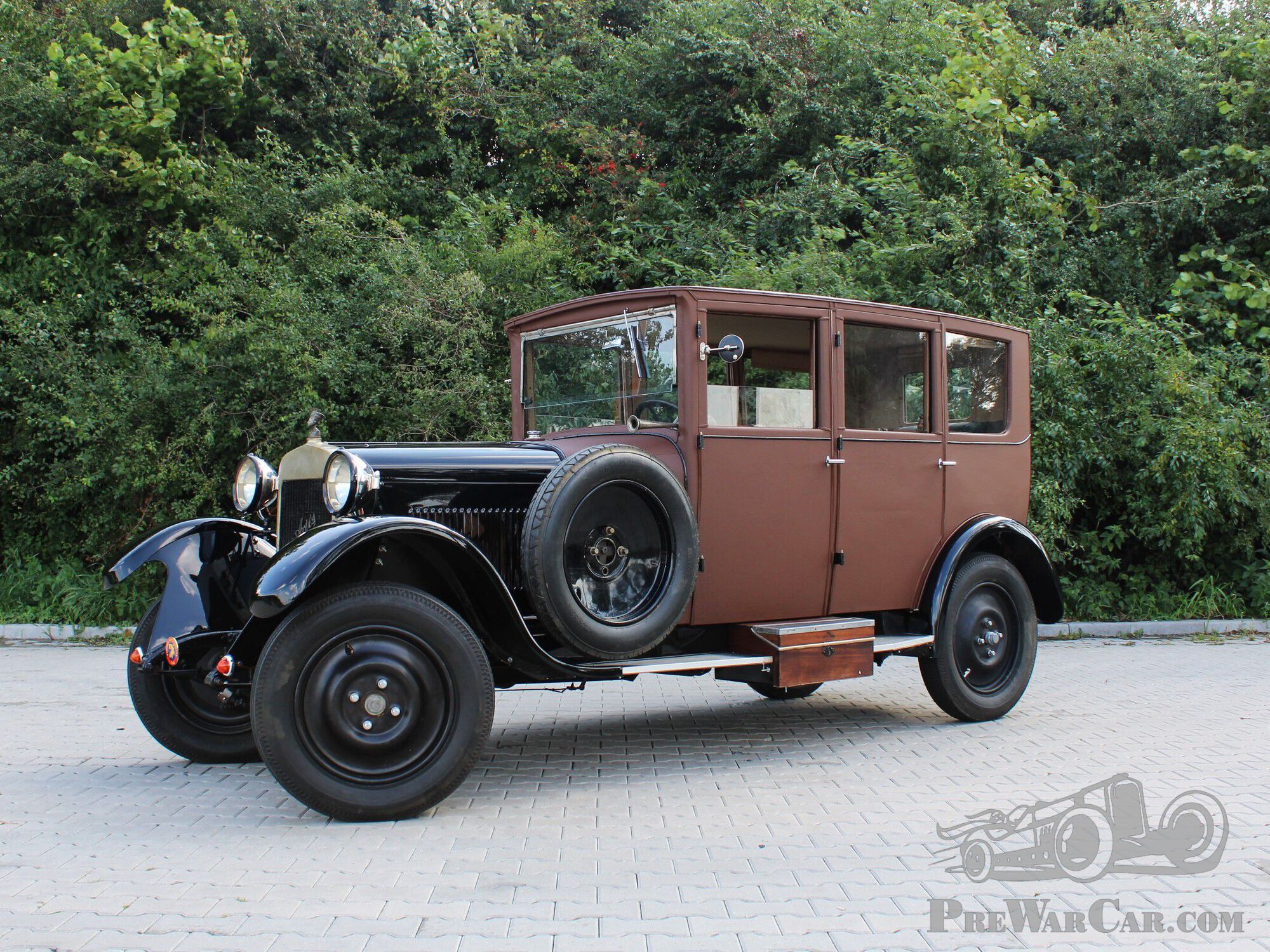
Aries CC4S Saloon 1925
Aries CC4S Saloon 1925 Company HistoryThe Ariès was built in Villeneuve de La Garenne and was the initiative of Baron Charles Petiet, who founded the company in 1902.In its early years, Ariès produced luxury cars where the chauffeur and the important/wealthy passengers sat separately. Later, in 1910, Ariès began producing c..
Ariès
France, 1903 – 1938
SA Ariès, Courbevoie, Seine
The first Ariès motor vehicle was the delivery truck of 1903, which was powered by an Aster 2-cylinder engine. The Paris Salon of that year saw the first Ariès car, which was also Aster-powered. It was designed by Baron Charles Petiet. These Ariès were unremarkable machines, except for the feature of De Dion-type drive, the rear wheels being driven by shafts above a ‘dead’ axle. Not all Ariès were so furnished; some Ariès models were available with the choice of live axle or chain drive. By 1905, 4-cylinder Ariès cars as well as a twin were listed. Engines were still by Aster. 1908 brought a six and a narrow V4 engine of 60mm x 100mm, so compact that it was mistaken for a single and in 1910 Ariès catalogued the smallest 6-cylinder car in the world. All models had De Dion-type drive. The production of commercial Ariès vehicles took precedence over passenger cars towards the end of the decade. One Ariès for sale of the 1913 range, following the fashion, used a Knight double sleeve-valve engine.
After making Hispano-Suiza engines during World War 1, Ariès went back to cars, but still in a small way. Among the longest-lived models were the Ariès 15CV for sale and its close relative the Ariès 12CV, touring cars using a 4-cylinder sv engine with a cubic capacity of around three litres, and a 4-speed gearbox. From 1922 there was an Ariès Sport model with overhead camshaft and front wheel brakes. The smallest Ariès, the 5CV Ariès Type CC2 was worthy of more attention. It had a single overhead-camshaft engine of 1.085cc and (from 1924) four forward speeds. The 1929 Ariès CC4S sports model, with two plugs per cylinder, was a fast car. The Ariès 15CV was still there, but by the end of 1930 both it and the Ariès CC4S had gone, making way for the 1½-litre Aries CB4 and its successor the slightly bigger Ariès CC4N, current until 1934. The 4-cylinder, 10CV Ariès Super of 1934-1938 boasted a 2-speed rear axle.
Source: Georgano, encyclopedia of motorcar; TRN
The information is written with the greatest of care. However, if you have any suggested amendments please contact us at office@prewarcar.com
Chalmers / Chalmers-Detroit
US, 1908 – 1924
Chalmers Motor Car Co, Detroit, Mich.
The Chalmers was one of the most popular automobiles made in the United States for more than a decade. The Chalmers was the successor to the Thomas-Detroit which was built by a company which had been founded in 1906 by E.R. Thomas (builder of the Thomas car in Buffalo, N.Y.), Roy D. Chapin and Howard Earle Coffin; the two latter had previously served at Oldsmobile. The Thomas-Detroit of which some 500 were sold during the first year of production, was marketed through the parent firm in Buffalo which manufactured a larger line of cars under the Thomas emblem. The Thomas-Detroit was a medium priced four-cylinder car which had been designed by Coffin. In 1907, Hugh Chalmers, vice president of the National Cash Register Co and a noted salesman, entered the firm. Shortly after, he bought a half of E.R. Thomas’ stock and became president of the company which became the Chalmers-Detroit Motor Company. The Thomas-Detroit became the Chalmers-Detroit in 1908 and in 1910, the Chalmers. Open and closed Chalmers models in two lines comprised the Chalmers four-cylinder cars, with self-starters appearing in 1912. Chalmers (as Chalmers-Detroit) had distinguished itself in road races as early as 1908 when W.R. Burns won the Motor Parkway Sweekstakes at Jericho, N.Y., averaging 48.7mph in the six-lap 140.76 mile run.
In 1913, the Chalmers brought out its first 6-cylinder model, as well as the four and apart from small mechanical and design changes, continued both until 1914. The Chalmers four was dropped from the 1915 line, however, and sixes were to be used exclusively in Chalmers until the ending of manufacture. By 1915, some 20.000 Chalmers cars per year were coming off the Chalmers production line and would even exceed that figure before the advent of World War 1. In 1917, an L-head motor replaced the earlier overhead-valve type and on August 4th, Chalmers again headed racing news when Joe Dawson won the 24-hour stock Car Endurance Run at Sheepshead Bay, N.Y. Sales flagged following the end of the war and Hugh Chalmers, always the salesman, and with the realization that a competitor, Maxwell, wasn’t faring well either, arranged to lease his Chalmers plants to Maxwell, using his salesmanship to promote the two concerns and getting the benefit of Maxwell tooling and manufacturing equipment. By the early 1920s, however, many makes of cars were in financial difficulties due to over-expansion and recession, and Walter P. Chrysler was called in to try and reorganize Maxwell. Chrysler was at this time planning his own corporation and in 1922 Chalmers was taken over by Maxwell which had become a Chrysler subsidiary. The last Chalmer cars for sale were equipped with Lockheed hydraulic brakes but 1923 was the last year of Chalmers production with some 9000 units leaving the factories. The Maxwell survived until 1925 when it became the Chrysler Four.
Source: Georgano, encyclopedia of motorcar; KM
The information is written with the greatest of care. However, if you have any suggested amendments please contact us at office@prewarcar.com


Featured

HORCH 930 V
For SaleHorch 930 VManufacturer: HorchModel and Variant: 930 VBody Type: 4-door sedanChassis Number: ..
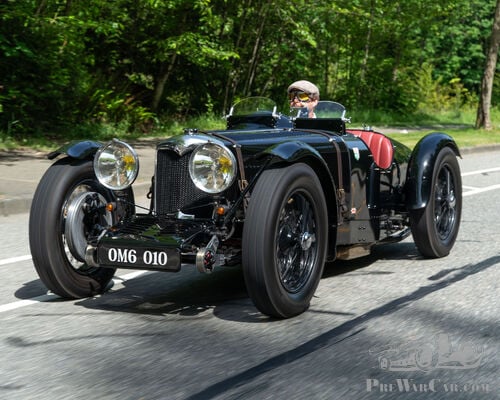
Riley 14/6 Special 1933
The ExperienceStep into the golden age of British motoring. This 1933 Riley 14/6 Special is a masterclass in pre-w..

Alfa 6C1750 Spider
Alfa 6C1750 Spider with complete history from delivery in 1930 to first owner in Firenze till today with copy Libretto/license plate all the years