The global magazine and marketplace for classic car enthusiasts, by enthusiasts.


Filter
Classic Chalmers, DB for sale - Chalmers, DB cars for sale
-

D.B. 6 Monoposto; the first genuine single-seater by Deutsch & Bonnet
D.B. 6 Monoposte - Deutsch Bonnet Grand PrixThe very first D.B. monopostoExceptionally well-documented competition historyRaced extensively by René Bonnet (1947–1950)Eligible for events as Monaco Historic Grand Prix This D.B. 6 Monoposto is a unique survivor from the early post-war years..

Chalmers / Chalmers-Detroit
US, 1908 – 1924
Chalmers Motor Car Co, Detroit, Mich.
The Chalmers was one of the most popular automobiles made in the United States for more than a decade. The Chalmers was the successor to the Thomas-Detroit which was built by a company which had been founded in 1906 by E.R. Thomas (builder of the Thomas car in Buffalo, N.Y.), Roy D. Chapin and Howard Earle Coffin; the two latter had previously served at Oldsmobile. The Thomas-Detroit of which some 500 were sold during the first year of production, was marketed through the parent firm in Buffalo which manufactured a larger line of cars under the Thomas emblem. The Thomas-Detroit was a medium priced four-cylinder car which had been designed by Coffin. In 1907, Hugh Chalmers, vice president of the National Cash Register Co and a noted salesman, entered the firm. Shortly after, he bought a half of E.R. Thomas’ stock and became president of the company which became the Chalmers-Detroit Motor Company. The Thomas-Detroit became the Chalmers-Detroit in 1908 and in 1910, the Chalmers. Open and closed Chalmers models in two lines comprised the Chalmers four-cylinder cars, with self-starters appearing in 1912. Chalmers (as Chalmers-Detroit) had distinguished itself in road races as early as 1908 when W.R. Burns won the Motor Parkway Sweekstakes at Jericho, N.Y., averaging 48.7mph in the six-lap 140.76 mile run.
In 1913, the Chalmers brought out its first 6-cylinder model, as well as the four and apart from small mechanical and design changes, continued both until 1914. The Chalmers four was dropped from the 1915 line, however, and sixes were to be used exclusively in Chalmers until the ending of manufacture. By 1915, some 20.000 Chalmers cars per year were coming off the Chalmers production line and would even exceed that figure before the advent of World War 1. In 1917, an L-head motor replaced the earlier overhead-valve type and on August 4th, Chalmers again headed racing news when Joe Dawson won the 24-hour stock Car Endurance Run at Sheepshead Bay, N.Y. Sales flagged following the end of the war and Hugh Chalmers, always the salesman, and with the realization that a competitor, Maxwell, wasn’t faring well either, arranged to lease his Chalmers plants to Maxwell, using his salesmanship to promote the two concerns and getting the benefit of Maxwell tooling and manufacturing equipment. By the early 1920s, however, many makes of cars were in financial difficulties due to over-expansion and recession, and Walter P. Chrysler was called in to try and reorganize Maxwell. Chrysler was at this time planning his own corporation and in 1922 Chalmers was taken over by Maxwell which had become a Chrysler subsidiary. The last Chalmer cars for sale were equipped with Lockheed hydraulic brakes but 1923 was the last year of Chalmers production with some 9000 units leaving the factories. The Maxwell survived until 1925 when it became the Chrysler Four.
Source: Georgano, encyclopedia of motorcar; KM
The information is written with the greatest of care. However, if you have any suggested amendments please contact us at office@prewarcar.com
D.B.
France, 1938 – 1961
Automobiles D.B., Champigny-sur-Marne, Seine
Deutsch and Bonnet were building ‘specials’ based on 11CV traction avant Citroëns in 1938. In 1947 limited production began again, the first DBs being competition machines largely built up from reconditioned components, using 1½-litre and 2-litre engines and 4-speed gearboxes. A new DB car based on the Dyna-Panhard ran at Montlhéry in 1948, while in 1949 the Deutsch and Bonnet (DB) company produced a 500cc single-seater version for Formula III, with the Panhard engine mounted in the nose, and independent swing-axle rear suspension. Some 100mph Citroën-based Deutsch and Bonnet (DB) convertibles were also made, but after 1950 Deutsch and Bonnet (DB) devoted all their energies to Panhard derivatives. Though never a major force in Formula III, the Deutsch and Bonnet (DB) cars gained numerous International Class Records and won the Index of Performance at Le Mans five times (1954, 1956, 1959, 1960 and 1961). Also Laureau’s Deutsch and Bonnet (DB) won the 1954 TT outright. An attempt to contest the 2½-litre GP Formula of 1954 with the alternative permitted size of 750cc supercharged was a fiasco, and little came of the curious Deutsch and Bonnet (DB) Monomills (the same cars with blowers removed) with which Deutsch and Bonnet tried to popularize one-class racing in France. Equally abortive were experiments with twin engines and 4-wheel drive (for sale in 1952) and with rear-mounted Renault engine and 5-speed gearboxes (for sale in 1953). The production Deutsch and Bonnet (DB) sports coupés used regular Panhard mechanical components allied to light alloy bodywork (fiberglass from 1955) and were marketed in various engine capacities from 610cc (30bhp) to 1300cc (65bhp). M.A.G. low-pressure superchargers were listed from 1954, and disc brakes were an option a year later on Deutsch and Bonnet (DB). The standard 1958 Deutsch and Bonnet (DB)model was the Rallye coupé with a 55bhp 850cc engine. Deutsch and Bonnet (DB) remained faithful to Panhard until the partnership was dissolved in 1961. René Bonnet continued the manufacture of cars in the Champigny works under his own name.
Source: Georgano, encyclopedia of motorcar; MCS
The information is written with the greatest of care. However, if you have any suggested amendments please contact us at office@prewarcar.com


Featured
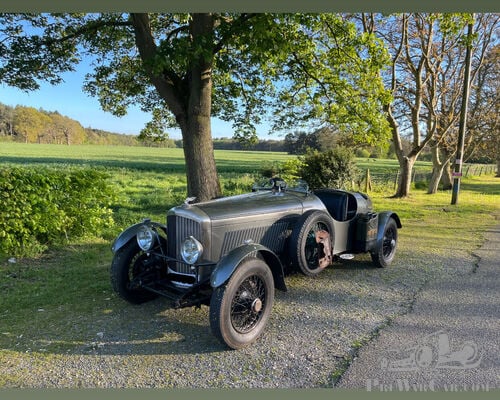
Derby Bentley Special 4-1/4
Sadly i am having to sell on my Bentley special ( Icarus). It is currently a work in progress and still needs finalising/ refining. A great o..
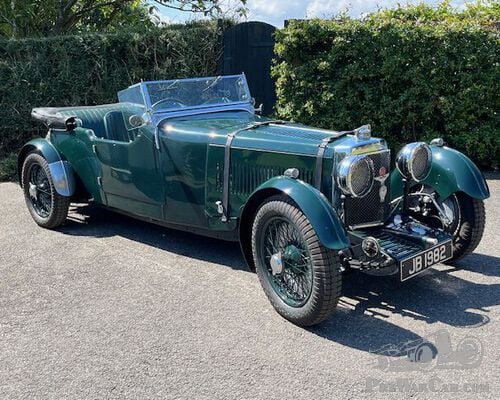
1933 Aston Martin Le Mans
Exceptional 1933 Astron Martin Le MansOriginally bodied as a Standard (Chassis No. L2/222), this unique vehicle was thoughtfully re-bodied i..
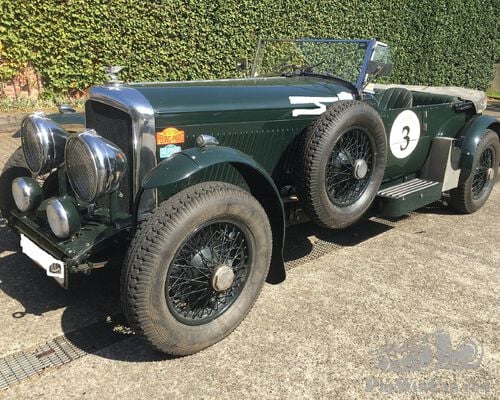
Bentley Derby Special Open Rally Car
This Bentley Derby, manufactured in 1935, has been rebuilt into a short and long-distance rally car. Full rebuilt engine in 2021, Since 2021 low mi..