The global magazine and marketplace for classic car enthusiasts, by enthusiasts.


Filter
Classic Chalmers, Graham-Paige for sale - Chalmers, Graham-Paige cars for sale
-

1932 - Graham " Lucenti " Indianapolis
Original participant of the 1932, 1934 and 1935 Indy 500. Best result: finishing 10th overall in the 1934 Indy 500 with driver “Herb” Ardinger.• Genuine Indy 500 racer.• Graham Blue Streak 8 cylinder based chassis and engine.• 1 owner between 1953 to 2006.• Road legal 2-seater car with Dutch registration.• FIA ..

Chalmers / Chalmers-Detroit
US, 1908 – 1924
Chalmers Motor Car Co, Detroit, Mich.
The Chalmers was one of the most popular automobiles made in the United States for more than a decade. The Chalmers was the successor to the Thomas-Detroit which was built by a company which had been founded in 1906 by E.R. Thomas (builder of the Thomas car in Buffalo, N.Y.), Roy D. Chapin and Howard Earle Coffin; the two latter had previously served at Oldsmobile. The Thomas-Detroit of which some 500 were sold during the first year of production, was marketed through the parent firm in Buffalo which manufactured a larger line of cars under the Thomas emblem. The Thomas-Detroit was a medium priced four-cylinder car which had been designed by Coffin. In 1907, Hugh Chalmers, vice president of the National Cash Register Co and a noted salesman, entered the firm. Shortly after, he bought a half of E.R. Thomas’ stock and became president of the company which became the Chalmers-Detroit Motor Company. The Thomas-Detroit became the Chalmers-Detroit in 1908 and in 1910, the Chalmers. Open and closed Chalmers models in two lines comprised the Chalmers four-cylinder cars, with self-starters appearing in 1912. Chalmers (as Chalmers-Detroit) had distinguished itself in road races as early as 1908 when W.R. Burns won the Motor Parkway Sweekstakes at Jericho, N.Y., averaging 48.7mph in the six-lap 140.76 mile run.
In 1913, the Chalmers brought out its first 6-cylinder model, as well as the four and apart from small mechanical and design changes, continued both until 1914. The Chalmers four was dropped from the 1915 line, however, and sixes were to be used exclusively in Chalmers until the ending of manufacture. By 1915, some 20.000 Chalmers cars per year were coming off the Chalmers production line and would even exceed that figure before the advent of World War 1. In 1917, an L-head motor replaced the earlier overhead-valve type and on August 4th, Chalmers again headed racing news when Joe Dawson won the 24-hour stock Car Endurance Run at Sheepshead Bay, N.Y. Sales flagged following the end of the war and Hugh Chalmers, always the salesman, and with the realization that a competitor, Maxwell, wasn’t faring well either, arranged to lease his Chalmers plants to Maxwell, using his salesmanship to promote the two concerns and getting the benefit of Maxwell tooling and manufacturing equipment. By the early 1920s, however, many makes of cars were in financial difficulties due to over-expansion and recession, and Walter P. Chrysler was called in to try and reorganize Maxwell. Chrysler was at this time planning his own corporation and in 1922 Chalmers was taken over by Maxwell which had become a Chrysler subsidiary. The last Chalmer cars for sale were equipped with Lockheed hydraulic brakes but 1923 was the last year of Chalmers production with some 9000 units leaving the factories. The Maxwell survived until 1925 when it became the Chrysler Four.
Source: Georgano, encyclopedia of motorcar; KM
The information is written with the greatest of care. However, if you have any suggested amendments please contact us at office@prewarcar.com
Graham Paige
US, 1927 – 1941
Graham Paige Motors Corp, Detroit, Mich.
The Graham brothers, Joseph, Robert and Ray, acquired the old Paige concern in 1927. Their Graham Paige cars were conventional machines noted for their internal-expanding hydraulic front wheel brakes and 4-speed ‘twin-top’ gearboxes, and 78.000 Graham Paige cars were sold in their first year of production. The range embraced three sixes and two eights, the biggest of these being the ‘Graham Paige 835’ with an 11ft 5in wheelbase and a 5.3-litre engine. One of these straight-8 Graham Paige cars won the last race ever held on the Brooklands Motor Course in August 1939. The name of the Graham Paige make was simplified to Graham for the 1931 season, though design underwent little alteration until the arrival of the 1932 Graham Blue Streaks, headed by a 4-litre eight which introduced skirted front wings to the American market and was immortalized in the ‘Tootsie Toys’ found in many a nursery of the 1930s. 1934 8-cylinder Graham Paige cars were available with a centrifugal supercharger rotating at 5¾ times the engine speed, which gave them a top speed of 95mph. After 1935 only sixes were made by the Graham Paige car factory, the 3½-litre Graham Cavalier being listed in 80bhp unblown and 112bhp blown versions, both with aluminium cylinder heads – this chassis of this Graham Paige car formed the basis of the Anglo-American Lammas. Despite an attempt to compete in the lowest-priced field with the 2.8-litre Graham Crusader at $595 (it cost less than £300 in England), Graham Paige achieved little beyond three successive outright wins in the Gilmore-Yosemite Ecoonmy Run, though these small Graham Paige sixes were copied by Nissan of Japan. An ugly concave nose and spatted rear wheels characterized the 1938 and 1939 Graham Paige cars, which were 3½-litre Graham cars available with or without superchargers. The Graham Paige company’s final fling was the 1940 Hollywood, which made use of the body dies from Cord’s 810/812 series. Like Hupmobile’s very similar Skylark, this was not a commercial success, and after World War 2 Graham-Paige joined forces with Henry J. Kaiser to build the Kaiser and Frazer cars: the latter were named after Graham-Paige’s President Joseph W. Frazer.
Source: Georgano, encyclopedia of motorcar; MCS
The information is written with the greatest of care. However, if you have any suggested amendments please contact us at office@prewarcar.com


Featured
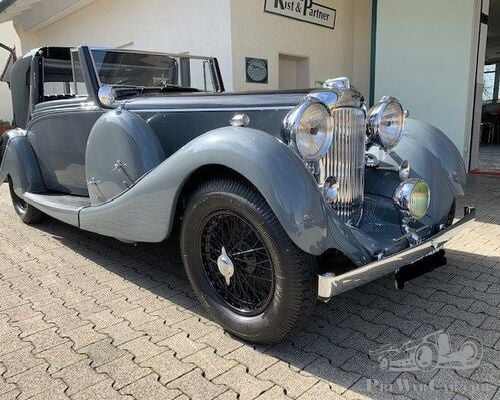
Lagonda LG 45 Coupe de Ville Sedanca by Mayfair
The successor to the M45, the LG45 was built around the same highly capable, competition-proven 4.5-litre Meadows inline-six engine, but featured r..
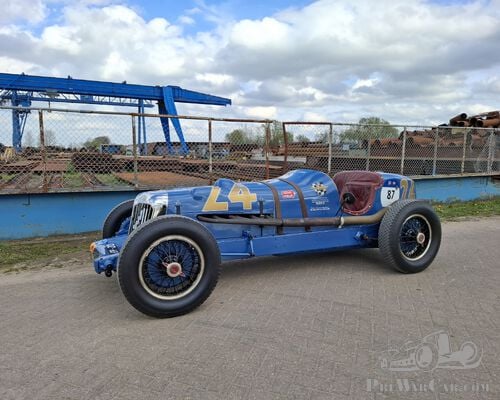
1932 - Graham " Lucenti " Indianapolis
Original participant of the 1932, 1934 and 1935 Indy 500. Best result: finishing 10th overall in the 1934 Indy 500 with driver “Herb” Ardinger...
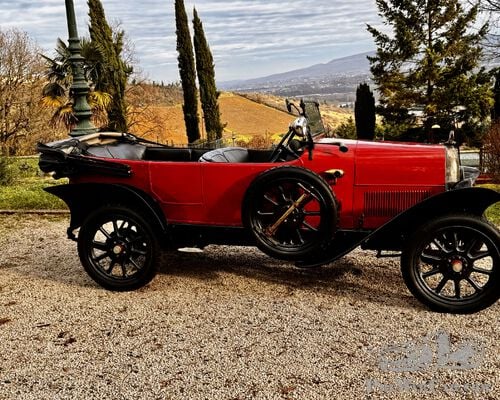
Torpedo sport de 1923 complete et fonctionnelle, conforme a sa sortie d'usine ,d'une authenticité totale, agréer à participer aux MILLE MIGLIA
Voiture référencée pour son authenticité au BOOK FIAT historique de ThurinBelle présentatio, peinture ancienne d'environ 20 ans ,Mot..