The global magazine and marketplace for classic car enthusiasts, by enthusiasts.


Filter
Classic Chalmers, Maybach for sale - Chalmers, Maybach cars for sale
-

1934 Maybach Zeppelin DS8 Stromlinien Cabriolet - one-off body
Maybach was a technological leader in European vehicle manufacturing12-cylinder engine with 8-litre displacement and 200 hpUnique 8-speed shift regulator transmissionOnly 24 Maybach Zeppelin cars, including 2 chassis, still exist todayOne-of-a-kind bodyworkOriginal leather interior in excellent c.. -
1938 Maybach SW 38 Gläser Cabriolet
German first deliveryRare bodywork by Gläser, DresdenIn the same ownership for 15 yearsDocumented history in the Maybach Register The SW38 is widely regarded as one of the most elegant and technically impressive six-cylinder cars produced in Germany in the late 1930s. With its powerful engine,..


Chalmers / Chalmers-Detroit
US, 1908 – 1924
Chalmers Motor Car Co, Detroit, Mich.
The Chalmers was one of the most popular automobiles made in the United States for more than a decade. The Chalmers was the successor to the Thomas-Detroit which was built by a company which had been founded in 1906 by E.R. Thomas (builder of the Thomas car in Buffalo, N.Y.), Roy D. Chapin and Howard Earle Coffin; the two latter had previously served at Oldsmobile. The Thomas-Detroit of which some 500 were sold during the first year of production, was marketed through the parent firm in Buffalo which manufactured a larger line of cars under the Thomas emblem. The Thomas-Detroit was a medium priced four-cylinder car which had been designed by Coffin. In 1907, Hugh Chalmers, vice president of the National Cash Register Co and a noted salesman, entered the firm. Shortly after, he bought a half of E.R. Thomas’ stock and became president of the company which became the Chalmers-Detroit Motor Company. The Thomas-Detroit became the Chalmers-Detroit in 1908 and in 1910, the Chalmers. Open and closed Chalmers models in two lines comprised the Chalmers four-cylinder cars, with self-starters appearing in 1912. Chalmers (as Chalmers-Detroit) had distinguished itself in road races as early as 1908 when W.R. Burns won the Motor Parkway Sweekstakes at Jericho, N.Y., averaging 48.7mph in the six-lap 140.76 mile run.
In 1913, the Chalmers brought out its first 6-cylinder model, as well as the four and apart from small mechanical and design changes, continued both until 1914. The Chalmers four was dropped from the 1915 line, however, and sixes were to be used exclusively in Chalmers until the ending of manufacture. By 1915, some 20.000 Chalmers cars per year were coming off the Chalmers production line and would even exceed that figure before the advent of World War 1. In 1917, an L-head motor replaced the earlier overhead-valve type and on August 4th, Chalmers again headed racing news when Joe Dawson won the 24-hour stock Car Endurance Run at Sheepshead Bay, N.Y. Sales flagged following the end of the war and Hugh Chalmers, always the salesman, and with the realization that a competitor, Maxwell, wasn’t faring well either, arranged to lease his Chalmers plants to Maxwell, using his salesmanship to promote the two concerns and getting the benefit of Maxwell tooling and manufacturing equipment. By the early 1920s, however, many makes of cars were in financial difficulties due to over-expansion and recession, and Walter P. Chrysler was called in to try and reorganize Maxwell. Chrysler was at this time planning his own corporation and in 1922 Chalmers was taken over by Maxwell which had become a Chrysler subsidiary. The last Chalmer cars for sale were equipped with Lockheed hydraulic brakes but 1923 was the last year of Chalmers production with some 9000 units leaving the factories. The Maxwell survived until 1925 when it became the Chrysler Four.
Source: Georgano, encyclopedia of motorcar; KM
The information is written with the greatest of care. However, if you have any suggested amendments please contact us at office@prewarcar.com
Maybach
D, 1921 – 1941
Maybach Motoren-Werke GmbH, Friedrichshafen
Wilhelm Maybach left the Daimler company in 1907. Together with Count Zeppelin he founded a factory primarily for the production of aero engines, especially for the Zeppeling air-ships. These engines were designed by Karl Maybach, Wilhelm’s son. After World War 1, Karl Maybach started to build a 22/70ps 5.7-litre 6-cylinder engine intended for motor cars. This Maybach engine was used by Spyker, but no other factories were interested, so Maybach decided to take up Maybach car production on his own. From the beginning Maybach cars aimed at a high quality car with outstanding driving comfort. The first Maybach Model W3 appeared at the 1921 Berlin Motor Show, and this Maybach car featured a very advanced 2-speed pedal-controlled transmission. This Maybach carmodel was produced until 1926. It was followed by the ohv Maybach Model W5 (for sale in 1926 – 1930) using a 27/120ps 7-litre engine in the same chassis, this being available with Maybach’s Schnellgang 2-speed auxiliary box, giving the Maybach car 4 forward speeds. The Maybach 12 of 1929 had a V12 7-litre engine, which was superseded one year later by the Maybach Zeppelin, also with V12 7-litre engine of 150bhp; after 1931 the Maybach car was also available with an 8-litre 200bhp engine. The Zeppelin range was listed until 1939. Maybach Zeppelin car chassis were also fitted with 6-cylinder engines of 7-litres capacity (already used in Maybach Model W5) and a new 5.2-litre engine developing 130bhp (the Maybach W6 and DSH models respectively). These Maybach cars retained beam axles to the end and were characterized by 7-speed boxes of great complexity. A Zeppelin chassis for the Maybach car cost the equivalent of £1.300 in Germany.
In 1935 a new 6-cylinder Maybach car was presented, starting the SW range. This was the Maybach SW35 with a 3.5-litre 140bhp engine. Engine capacity of this Maybach car was raised to 3.8-litres in the Maybach SW38 in 1936 and to 4.2-litres in the SW42 of 1940. Production of the Maybach car ceased in 1941. The Maybach Zeppelin shared with the Mercedes 770 the claim to be the most exclusive German car of the 1930s. This reputation was enhanced by Maybach cars high standards of material and finish, of comfort and quietness in running. No less well-made were the 6-cylinder Maybach cars which were in the first rank of German cars of this class. Maybach only built complete chassis for their Maybach cars, bodies being made by various firms to customers’ special requirements. Best known of these firms was Spohn of Ravensburg. Spohn aslo built aerodynamic bodies to Jaray designs for the Maybach Zeppelin in 1932 and 1934, and for the Maybach SW35 in 1935. These versions Maybach cars were produced only in very limited numbers. Maybach car production was not taken up again after World War 2. Altogether, some 2.000 Maybach cars are believed to have been made. In 1960 Maybach cars pooled their interests with Daimler-Benz in the manufacture of diesel engines for locomotives and ships.
Source: Georgano, encyclopedia of motorcar; HON
The information is written with the greatest of care. However, if you have any suggested amendments please contact us at office@prewarcar.com


Featured
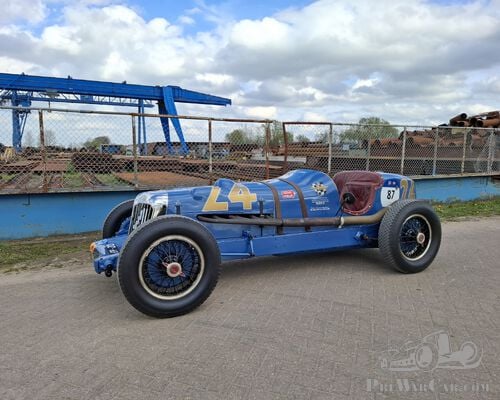
1932 - Graham " Lucenti " Indianapolis
Original participant of the 1932, 1934 and 1935 Indy 500. Best result: finishing 10th overall in the 1934 Indy 500 with driver “Herb” Ardinger...
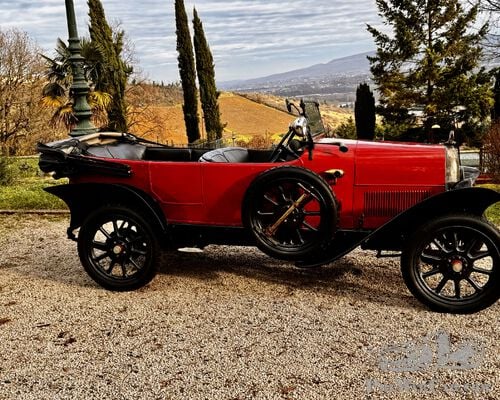
Torpedo sport de 1923 complete et fonctionnelle, conforme a sa sortie d'usine ,d'une authenticité totale, agréer à participer aux MILLE MIGLIA
Voiture référencée pour son authenticité au BOOK FIAT historique de ThurinBelle présentatio, peinture ancienne d'environ 20 ans ,Mot..
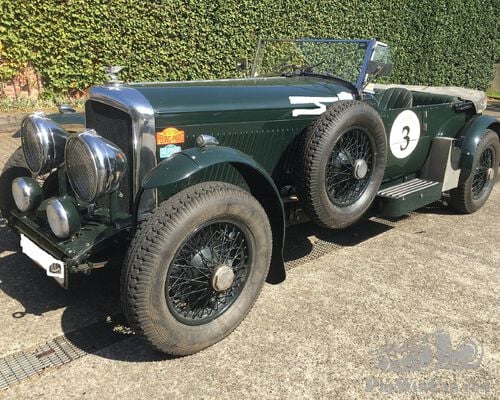
Bentley Derby Special Open Rally Car
This Bentley Derby, manufactured in 1935, has been rebuilt into a short and long-distance rally car. Full rebuilt engine in 2021, Since 2021 low mi..