The global magazine and marketplace for classic car enthusiasts, by enthusiasts.


Filter
Classic Regal, Chalmers for sale - Regal, Chalmers cars for sale
-

Regal Underslung Model T 1913
The Regal Motor Company was founded in 1908 in Detroit, USA, and became known for its conventional chassis concept, the “Underslung,” an extra-low concept with the axles mounted above the chassis. This resulted in a lower top dead center and greater stability; advertisements also stated that the car could not tip over.This Regal Model T w..

Regal
France, 1903
O.C. Selbach, Paris
Regal cars was one of the names under which Lacoste et Battmann cars were sold. Originally the Regal car was a light two-seater with a 6hp De Dion engine, later Régal cars were powered by 2- and 4-cylinder engines by Aster and Mutel.
US, 1907 – 1920
Regal Motor Car Co, Detroit, Mich.
In 1907 Regal made 50 of their 20hp 4-cylinder Regal cars, but the following year the Regal car company took them all back, and gave the owners a new 1908 model Regal cars free. Apparently this generosity by the Regal car company was not repeated in following years, and they settled down to making a range of conventional 4-cylinder Regal cars. The best-known Regal car was the 3.2-litre 18/20hp ‘underslung’ model, which, like the American Underslung, had frame members which passed underneath the axles. The Underslung Regal car was made in open two-seater, and closed coupé form. Other Regal car models were the 20/30hp and 40hp which had normal chassis design. Regal cars were imported into England by Seabrook of Great Eastern Street, and from 1911 to 1915 the Regal cars sold in England were known as RMCs or Seabrook-RMCs. In 1915 a 10/15hp four of 2.1-litres with unit construction of engine and gearbox was introduced on a Regal car, together with a short-lived V8. At the 1919 Olympia Show Seabrooks showed a large RMC tourer powered by a 3.8-litre 6-cylinder engine, but shortly afterwards American production of Regal cars ceased, and Seabrooks began to make their own light cars.
CDN, 1910
This Regal car was a 30hp car made as a touring car or runabout at Walkerville, Ont. The Regal car had no connection with the better known Regal cars.
CDN, 1914 – 1917
Canadian Regal Motor Car Co, Berlin, Ont.
The Regal car was a light-weight touring car which resembled the Detroit model Regal car bearing the same name. The Regal car was available with a Lycoming 4-cylinder engine at $875 or a V8 at $1.350, it had a radiator filler concealed under the bonnet. The Regal car company was under the direction of Henry Nyberg, who had built the US Nyberg car before going to Canada. In 1917 the Regal car company moved to a new plant and started producing Dominion trucks. About 200 Canadian Regal cars were built.
Source: Georgano, encyclopedia of motorcar; GNG, GB
The information is written with the greatest of care. However, if you have any suggested amendments please contact us at office@prewarcar.com
Chalmers / Chalmers-Detroit
US, 1908 – 1924
Chalmers Motor Car Co, Detroit, Mich.
The Chalmers was one of the most popular automobiles made in the United States for more than a decade. The Chalmers was the successor to the Thomas-Detroit which was built by a company which had been founded in 1906 by E.R. Thomas (builder of the Thomas car in Buffalo, N.Y.), Roy D. Chapin and Howard Earle Coffin; the two latter had previously served at Oldsmobile. The Thomas-Detroit of which some 500 were sold during the first year of production, was marketed through the parent firm in Buffalo which manufactured a larger line of cars under the Thomas emblem. The Thomas-Detroit was a medium priced four-cylinder car which had been designed by Coffin. In 1907, Hugh Chalmers, vice president of the National Cash Register Co and a noted salesman, entered the firm. Shortly after, he bought a half of E.R. Thomas’ stock and became president of the company which became the Chalmers-Detroit Motor Company. The Thomas-Detroit became the Chalmers-Detroit in 1908 and in 1910, the Chalmers. Open and closed Chalmers models in two lines comprised the Chalmers four-cylinder cars, with self-starters appearing in 1912. Chalmers (as Chalmers-Detroit) had distinguished itself in road races as early as 1908 when W.R. Burns won the Motor Parkway Sweekstakes at Jericho, N.Y., averaging 48.7mph in the six-lap 140.76 mile run.
In 1913, the Chalmers brought out its first 6-cylinder model, as well as the four and apart from small mechanical and design changes, continued both until 1914. The Chalmers four was dropped from the 1915 line, however, and sixes were to be used exclusively in Chalmers until the ending of manufacture. By 1915, some 20.000 Chalmers cars per year were coming off the Chalmers production line and would even exceed that figure before the advent of World War 1. In 1917, an L-head motor replaced the earlier overhead-valve type and on August 4th, Chalmers again headed racing news when Joe Dawson won the 24-hour stock Car Endurance Run at Sheepshead Bay, N.Y. Sales flagged following the end of the war and Hugh Chalmers, always the salesman, and with the realization that a competitor, Maxwell, wasn’t faring well either, arranged to lease his Chalmers plants to Maxwell, using his salesmanship to promote the two concerns and getting the benefit of Maxwell tooling and manufacturing equipment. By the early 1920s, however, many makes of cars were in financial difficulties due to over-expansion and recession, and Walter P. Chrysler was called in to try and reorganize Maxwell. Chrysler was at this time planning his own corporation and in 1922 Chalmers was taken over by Maxwell which had become a Chrysler subsidiary. The last Chalmer cars for sale were equipped with Lockheed hydraulic brakes but 1923 was the last year of Chalmers production with some 9000 units leaving the factories. The Maxwell survived until 1925 when it became the Chrysler Four.
Source: Georgano, encyclopedia of motorcar; KM
The information is written with the greatest of care. However, if you have any suggested amendments please contact us at office@prewarcar.com


Featured
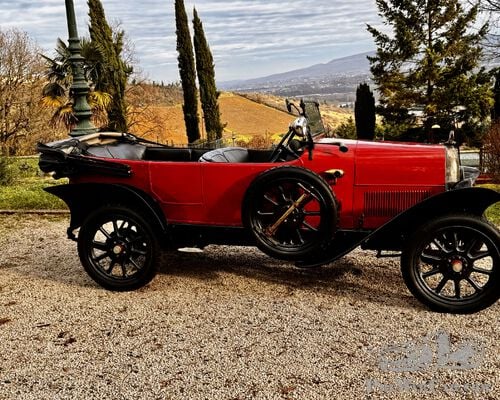
Torpedo sport de 1923 complete et fonctionnelle, conforme a sa sortie d'usine ,d'une authenticité totale, agréer à participer aux MILLE MIGLIA
Voiture référencée pour son authenticité au BOOK FIAT historique de ThurinBelle présentatio, peinture ancienne d'environ 20 ans ,Mot..
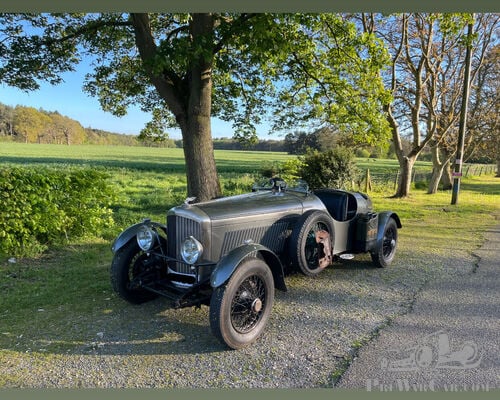
Derby Bentley Special 4-1/4
Sadly i am having to sell on my Bentley special ( Icarus). It is currently a work in progress and still needs finalising/ refining. A great o..

Alfa 6C1750 Spider
Alfa 6C1750 Spider with complete history from delivery in 1930 to first owner in Firenze till today with copy Libretto/license plate all the years