The global magazine and marketplace for classic car enthusiasts, by enthusiasts.


Filter
Classic Chalmers, Stoewer for sale - Chalmers, Stoewer cars for sale
-

1924 Stoewer type D3 roadster
Rare opportunity to buy a vintage 1924 Stoewer type D3 roadster in fully restored condition. More than € 50K were spent in 2018 and 2019 on its restoration . Detailed work invoices come with the car. A video can be sent on request . Price € 64000 ex Eibergen Netherlands imported EEC.
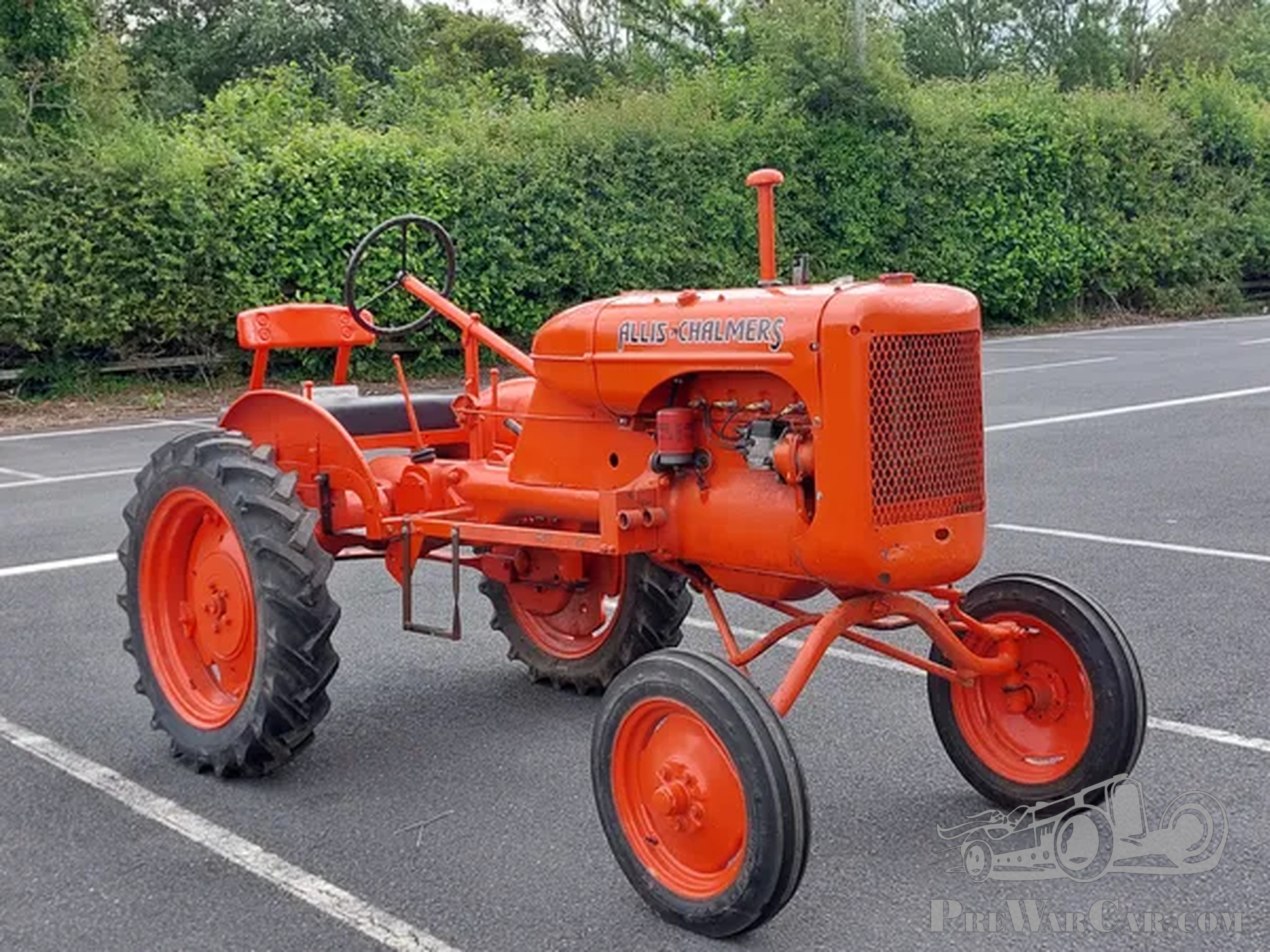

Chalmers / Chalmers-Detroit
US, 1908 – 1924
Chalmers Motor Car Co, Detroit, Mich.
The Chalmers was one of the most popular automobiles made in the United States for more than a decade. The Chalmers was the successor to the Thomas-Detroit which was built by a company which had been founded in 1906 by E.R. Thomas (builder of the Thomas car in Buffalo, N.Y.), Roy D. Chapin and Howard Earle Coffin; the two latter had previously served at Oldsmobile. The Thomas-Detroit of which some 500 were sold during the first year of production, was marketed through the parent firm in Buffalo which manufactured a larger line of cars under the Thomas emblem. The Thomas-Detroit was a medium priced four-cylinder car which had been designed by Coffin. In 1907, Hugh Chalmers, vice president of the National Cash Register Co and a noted salesman, entered the firm. Shortly after, he bought a half of E.R. Thomas’ stock and became president of the company which became the Chalmers-Detroit Motor Company. The Thomas-Detroit became the Chalmers-Detroit in 1908 and in 1910, the Chalmers. Open and closed Chalmers models in two lines comprised the Chalmers four-cylinder cars, with self-starters appearing in 1912. Chalmers (as Chalmers-Detroit) had distinguished itself in road races as early as 1908 when W.R. Burns won the Motor Parkway Sweekstakes at Jericho, N.Y., averaging 48.7mph in the six-lap 140.76 mile run.
In 1913, the Chalmers brought out its first 6-cylinder model, as well as the four and apart from small mechanical and design changes, continued both until 1914. The Chalmers four was dropped from the 1915 line, however, and sixes were to be used exclusively in Chalmers until the ending of manufacture. By 1915, some 20.000 Chalmers cars per year were coming off the Chalmers production line and would even exceed that figure before the advent of World War 1. In 1917, an L-head motor replaced the earlier overhead-valve type and on August 4th, Chalmers again headed racing news when Joe Dawson won the 24-hour stock Car Endurance Run at Sheepshead Bay, N.Y. Sales flagged following the end of the war and Hugh Chalmers, always the salesman, and with the realization that a competitor, Maxwell, wasn’t faring well either, arranged to lease his Chalmers plants to Maxwell, using his salesmanship to promote the two concerns and getting the benefit of Maxwell tooling and manufacturing equipment. By the early 1920s, however, many makes of cars were in financial difficulties due to over-expansion and recession, and Walter P. Chrysler was called in to try and reorganize Maxwell. Chrysler was at this time planning his own corporation and in 1922 Chalmers was taken over by Maxwell which had become a Chrysler subsidiary. The last Chalmer cars for sale were equipped with Lockheed hydraulic brakes but 1923 was the last year of Chalmers production with some 9000 units leaving the factories. The Maxwell survived until 1925 when it became the Chrysler Four.
Source: Georgano, encyclopedia of motorcar; KM
The information is written with the greatest of care. However, if you have any suggested amendments please contact us at office@prewarcar.com
Stoewer
D, 1899 – 1939
(1) Gebrüder Stoewer, Fabrik für Motorfahrzeuge, Stettin, 1899 – 1916
(2) Stoewer-Werke AG vorm. Gebr. Stoewer, Stettin, 1916 – 1939
The Stoewer car factory developed out of the Stoewer ironworks and was among the pioneers of the German car industry. After manufacturing motor cycles, tricycles and quadricycles for two years, Stoewer turned to cars in 1899. The first Stoewer car had a rear-mounted 2-cylinder engine. 4-cylinder Stoewer cars followed in 1901, and electric Stoewer cars were also produced. Best known were the 2-cylinder Type T Stoewer car (2.280cc and 3/12PS), the 4-cylinder Stoewer P4 (3.052cc and 11/22PS), the Stoewer G4 (1.500cc and 6/12PS) and the 6-cylinder Stoewer P6 (8.820cc and 34/60PS), evolved in the 1905-1907 period all Stoewer cars with shaft-drive. The Stoewer B1 of 6/16PS and the Stoewer B6 of 9/22PS which appeared in 1910 were also built by Mathis under licence. The G4 Stoewer car was the basis for the Stoewer B5, which Stoewer car in 1912 became famous by setting up a record at Brooklands with 67.7mph. The new range of Stoewer cars which appeared in 1913 was also based on successful earlier cars. They were the Stoewer C1 (6/18PS), Stoewer C2 (10/28PS) and C3 Stoewer car (6-cylinder and 19/45PS). Shortly before the outbreak of World War 1 the Stoewer car range was headed by the F4 Stoewer car with a 4-cylinder, 8.8-litre 33/100PS ohc engine. After the war an enormous Stoewer car appeared, the Stoewer D7, using a 6-cylinder 11.2-litre 42/120PS aero engine, as well as some conservative sv 4- and 6-cylinder Stoewer cars with rear wheel and transmission brakes. Front wheel brakes appeared on Stoewer cars in 1925. Stoewer introduced 8-cylinder Stoewer cars in 1928. These were the Stoewer Superior, Stoewer Marschall, Stoewer Gigant and Stoewer Repräsentant with engines ranging from 2-litres and 45bhp to 4.9-litres and 100bhp. The Stoewer car firm re-entered the economy class in 1931 with the V5, a front-driven Stoewer car with a V4 1.188cc engine, followed by the front-drive models R140 (1.369cc), R150 (1.488cc) and R180 (1.769cc). Another 8-cylinder was the front wheel drive Greif V8 with a 2.488cc engine, which was replaced by the conventional 6-cylinder 3.609cc Arcona Stoewer car in 1938. In 1934 the 1½-litre 4-cylinder Stoewer car and 2½-litre V8 Stoewer car were shown at the Brussels Salon by Monsieur Dewaet under the name D.S. (Dewaet-Stoewer). The Greif Junior was built under Tatra licence with an opposed 4-cylinder 1.474cc engine. It succeeded the Röhr Junior. In the middle of the range was the Stoewer Sedina with a 4-cylinder engine of 2.4-litres.
Production of private Stoewer cars was given up at the outbreak of World War 2 in 1939. The Stoewer car factory was destroyed during the war and production of Stoewer cars was not resumed.
Source: Georgano, encyclopedia of motorcar; HON
The information is written with the greatest of care. However, if you have any suggested amendments please contact us at office@prewarcar.com


Featured
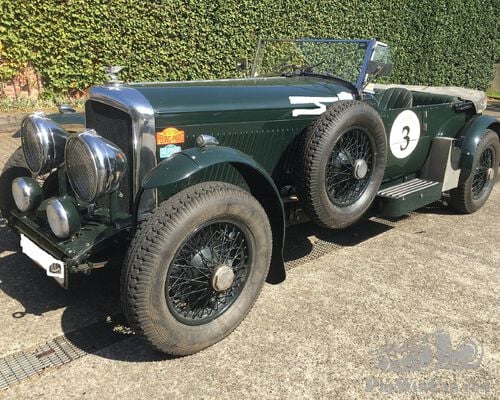
Bentley Derby Special Open Rally Car
This Bentley Derby, manufactured in 1935, has been rebuilt into a short and long-distance rally car. Full rebuilt engine in 2021, Since 2021 low mi..
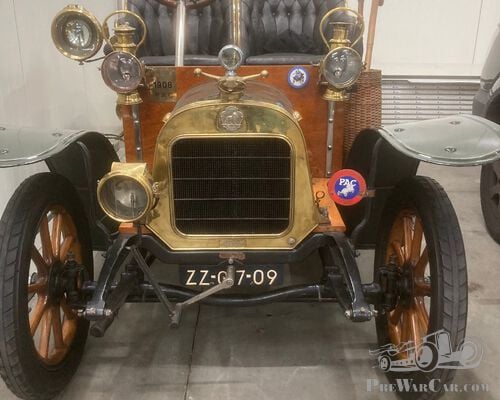
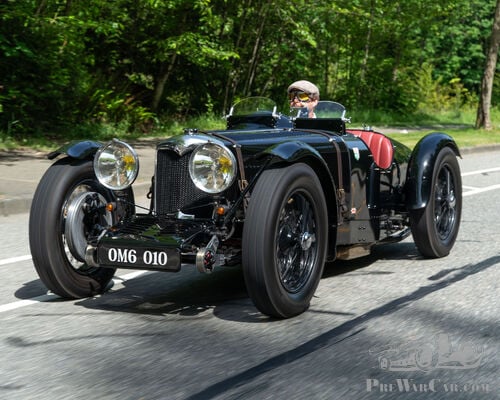
Riley 14/6 Special 1933
The ExperienceStep into the golden age of British motoring. This 1933 Riley 14/6 Special is a masterclass in pre-w..