The global magazine and marketplace for classic car enthusiasts, by enthusiasts.


Filter
Classic Clément-Talbot, Rauch & Lang for sale - Clément-Talbot, Rauch & Lang cars for sale
-

1918 Rauch & Lang Model B26 Brougham | RM Sotheby's | The Hershey Auction
To Be OFFERED AT AUCTION at RM Sothebys' The Hershey Auction event, 7 - 8 October 2026. $150,000 - $175,000 USD One of the finest surviving examples of the Rauch & Lang electric carBeautiful show-quality, AACA First Junior-winning restorationKnown history, with only three long-term caretakers since the 1950s -
1904 Clement-Talbot
This French-English car was the fruit of a collaboration between Adolphe Clement and Lord Chetwynd-Talbot, 20th Earl of Shrewsbury and talbotA 2 cylindre engine which brings good performance for this car and a 3 speed gearbox is all you need for a enjoyable rallyWe used it in rallies in Belgium, France, Germany, Italy, Netherlands .. -
1903 Clément AC4R 12/16 HP Rear-Entrance Tonneau | RM Sotheby's | The London Auction
To Be OFFERED AT AUCTION at RM Sothebys' The London Auction event, 31 October 2026. £350,000 - £450,000 GBP Please note this car is titled as 1933. Please check back soon as our dedicated cataloguing team is preparing the description for this lot. To view this car and others currently consigned to this auction, please visit the RM website at ..


Clement-Talbot
1903 – 1938
Clement-Talbot Ltd, North Kensington, London W.10
From 1903, Clement-Talbot Ltd, a company backed by the Earl of Shrewsbury and Talbot, began importing the French Clément car into Britain; in spite of its name and an interest held by Adolphe Clément, the concern was British, and by the end of the year its cars were called Talbots. The 1904 Clement-Talbot models were a 6hp single, and 11hp twin, and two big fours. All of them had shaft drive and side valves in T-heads, except for the biggest, the Clement-Talbot 27hp voiture de luxe, which used overhead inlet valves and a single camshaft. Trucks, buses and boats were also advertised. Promotion, which was at first in the hands of the managing director, D.M. Weigel, was energetic and successful.
By the end of 1904, an impressive Clement-Talbot factory had been built, complete with test track, and in the following year British-assembled, and partly British-made Clement-Talbots emerged from it. A wide variety of tupes was listed, from an 11hp twin to a great 50hp 4-cylinder model. One model that was to be famous, the Clement-Talbot 12/16hp, had already been designed. French cars were still being imported by the company. However, the 20hp of 1906 was the first British-made Talbot. It was designed by C.R. Garrard, and while still conventional, had an unusually efficient engine of 3.8 litres’ capacity. Both this and the 2.7-litre ‘12/16’ were fast cars that quickly made a name for themselves in competitions; their slogan became ‘The Invincible Talbot’. For 1907 a 3-litre 15hp, a car in the same mould, superseded the ‘12/16’. By 1908 it was the only British chassis offered, into which could be installed 15hp, 25hp or 35hp engines. Their popularity was due to a combination of smoothness, reliability, speed and reasonable price. The French range was still listed. A six was introduced for 1910, and the 4½-litre 25hp was revised by G.W.A. Brown with an L-head valve arrangement. This Clement-Talbot model, highly tuned and lightened, and fitted with a racing body, became the first car to cover 100 miles in an hour, at Brooklands in 1913 in the hands of Percy Lambert. In the same year a new model, the 2.6-litre 15/20hp, was introduced. This and the 25hp, now called the ‘Clement-Talbot 25/50’, were the famous cars that kept the name before the public eye in competitions. A sports model of the latter was also listed. By this time, the French range had been dropped.
In 1919 Clement-Talbot was taken over by another French-sounding, but in fact British-owned firm, the Société Alexandre Darracq of Paris.
Source: Georgano, encyclopedia of motorcar; TRN
The information is written with the greatest of care. However, if you have any suggested amendments please contact us at office@prewarcar.com
Rauch & Lang
US, 1905 – 1928
(1) Rauch & Lang Carriage Co, Cleveland, Ohio, 1905 – 1916
(2) Baker, Rauch & Lang Co, Cleveland, Ohio, 1916 – 1922
(3) Rauch & Lang Electric Car Manufacturing Co, Chicopee Falls, Mass., 1922 – 1928
Rauch & Lang were an old-established carriage building firm (founded 1853) when they began to make electric Rauch & Lang cars in 1905. These Rauch & Lang cars followed the usual pattern for such electric vehicles, being mainly closed town cars, although a few open phaeton Rauch & Lang cars were also made. The biggest Rauch & Lang cars were heavier vehicles and included a six-seater limousine with separate outside seat for the chauffeur. Some Rauch & Lang cars had 4-doors, a very unusual feature in electric cars. In 1916 the Rauch & Lang cars became part of the Baker, Rauch & Lane group and production declined. From 1919 onwards the Rauch & Lang cars were sometimes listed as Raulangs, and from 1922 this became the official name of the Rauch & Lang cars.
By this time production of Rauch & Lang cars had been transferred to the Stevens-Duryea factory at Chicopee Falls where the number of private cars made was very small. The factory, which was still turning out a few Stevens-Duryeas, also made petrol and electric taxi-cabs under the name Rauch & Lang cars, and bodies for Stanley Steamers.
Source: Georgano, encyclopedia of motorcar; GNG
The information is written with the greatest of care. However, if you have any suggested amendments please contact us at office@prewarcar.com


Featured
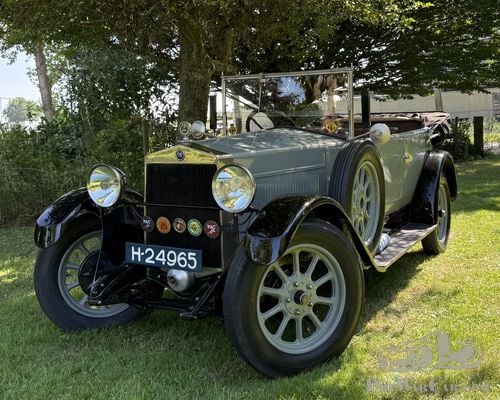
Fiat 509 Torpedo / Spider – Exceptionally Original and Complete
A Rare and Highly Original Example with Long-Term Dutch HistoryOffered for sale is an exceptionally original and remarkably complete Fiat 50..
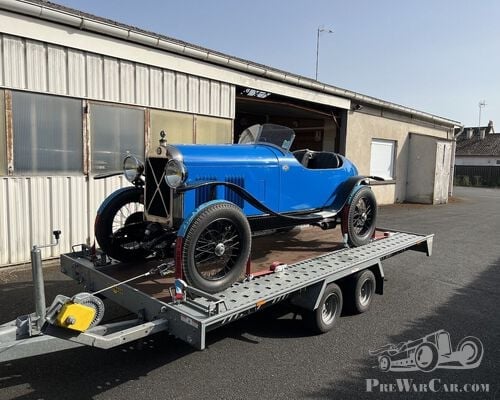
Salmson VAL 3 Séries 7
1927 Salmson VAL3 Series 7. Completely restored a few years ago, in very good overall condition, both bodywork and mechanics. Bordino-style bodywor..
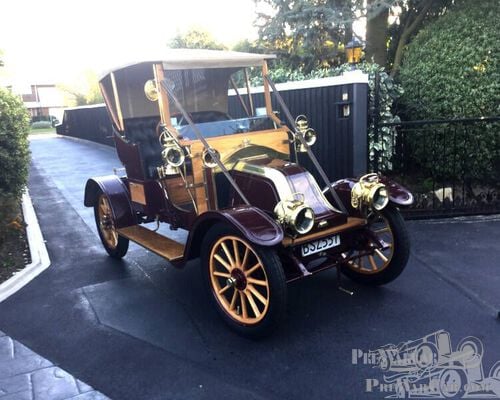
Renault /AX 1913 - named
Purchased fully renovated from New Zealand and imported to the UK. We have owned her for over10 years. Gigi is currently living in France where she..