The global magazine and marketplace for classic car enthusiasts, by enthusiasts.


Filter
Classic Rolland-Pilain, Clément-Talbot for sale - Rolland-Pilain, Clément-Talbot cars for sale
-

Rolland Pilain
I am selling a 1913 Rolland Pilain RP 10HP in very good condition. It has a standard registration document in my name, and the MOT will be carried out prior to the sale. -
1904 Clement-Talbot
This French-English car was the fruit of a collaboration between Adolphe Clement and Lord Chetwynd-Talbot, 20th Earl of Shrewsbury and talbotA 2 cylindre engine which brings good performance for this car and a 3 speed gearbox is all you need for a enjoyable rallyWe used it in rallies in Belgium, France, Germany, Italy, Netherlands .. -
1903 Clément AC4R 12/16 HP Rear-Entrance Tonneau | RM Sotheby's | The London Auction
To Be OFFERED AT AUCTION at RM Sothebys' The London Auction event, 31 October 2026. £350,000 - £450,000 GBP Please note this car is titled as 1933. Please check back soon as our dedicated cataloguing team is preparing the description for this lot. To view this car and others currently consigned to this auction, please visit the RM website at ..


Rolland-Pilain
France, 1906 – 1931
SA des Etablissements Rolland-Pilain, Tours
Unusual among French marques of its period, Rolland Pilain cars made their greatest impact after World War 1. Their first product was a 20hp 4-cylinder model Rolland Pilain cars with a monobloc engine, though smaller 2.2-litre shaft-driven Rolland Pilain cars were available in 1909 and a 3-speed 1½-litre Rolland Pilain 8/10CV in 1910, in which year the Rolland Pilain car company was also experimenting with ‘valveless’ engines and 4-wheel brakes. Though racing was in the doldrums, the Rolland Pilain car company went to the trouble of building a big chain-driven Rolland Pilain car for the 1911 Grand Prix de France, and a complex 1912 range started with a Rolland Pilain 9CV of 1.7-litres and went up to a chain-driven 4-cylinder 60 Rolland Pilain car of 130x270mm. The 6-cylinder Rolland Pilain 18CV had a ‘valveless’ engine, and even in 1913 chain drive was still optional on the biggest fours of 20CV and 24CV Rolland Pilain cars. Only 1.9-litre and 4-litre 4-cylinder Rolland Pilain cars with sv monobloc engines and unit gearboxes were listed in 1914.
These basic types of Rolland Pilain cars, still with pedal-operated transmission brakes, were available again after World War 1, but far more advanced was the 2.2-litre Rolland Pilain 14/16 of 1921, which boasted not only overhead valves and a detachable head, but also front-wheel brakes (hydraulic at the front and mechanical at the rear). This Rolland Pilain car was still catalogued in 1926. Even more ambitious was the 2-litre twin ohc straight-8 GP Rolland Pilain car of 1922, with desmodromic valves, ball-bearing crankshafts and 4-wheel hydraulic brakes. A victory of a Rolland Pilain car at San Sebastian in 1923 was the limit of the success of Rolland Pilain cars on the circuits, but the type found its way into the catalogue as the Type A22 Rolland Pilain car at 90.000fr, and one of the racers also ran with a 2-litre, 6-cylinder cuff-valve Schmid engine. In 1925 came a 2-litre ohv 4-cylinder Rolland Pilain car with 4-wheel mechanical brakes, selling for £725 in England, while a 1½-litre development, the Rolland Pilain D26, was introduced for 1927. In 1929 Rolland-Pilain car, along with several other French firms, tried a Franco-American theme by introducing a range of big luxury chassis with sv Continental engines. Both the 6-cylinder, 3-litre, and the 4-litre straight-8 Rolland Pilain cars had centralized chassis lubrication, though the elegant bodywork of the Rolland Pilain car was marred by the use of artillery wheels. At the 1930 Paris Salon the Rolland Pilain car company shared a stand with the BNC (also going through a Franco-American phase), but this was the end, though the Rolland Pilain car firm’s Paris depot was still advertising spare parts for Bignan as well as Rolland Pilain cars in 1934.
Source: Georgano, encyclopedia of motorcar; MCS
The information is written with the greatest of care. However, if you have any suggested amendments please contact us at office@prewarcar.com
Clement-Talbot
1903 – 1938
Clement-Talbot Ltd, North Kensington, London W.10
From 1903, Clement-Talbot Ltd, a company backed by the Earl of Shrewsbury and Talbot, began importing the French Clément car into Britain; in spite of its name and an interest held by Adolphe Clément, the concern was British, and by the end of the year its cars were called Talbots. The 1904 Clement-Talbot models were a 6hp single, and 11hp twin, and two big fours. All of them had shaft drive and side valves in T-heads, except for the biggest, the Clement-Talbot 27hp voiture de luxe, which used overhead inlet valves and a single camshaft. Trucks, buses and boats were also advertised. Promotion, which was at first in the hands of the managing director, D.M. Weigel, was energetic and successful.
By the end of 1904, an impressive Clement-Talbot factory had been built, complete with test track, and in the following year British-assembled, and partly British-made Clement-Talbots emerged from it. A wide variety of tupes was listed, from an 11hp twin to a great 50hp 4-cylinder model. One model that was to be famous, the Clement-Talbot 12/16hp, had already been designed. French cars were still being imported by the company. However, the 20hp of 1906 was the first British-made Talbot. It was designed by C.R. Garrard, and while still conventional, had an unusually efficient engine of 3.8 litres’ capacity. Both this and the 2.7-litre ‘12/16’ were fast cars that quickly made a name for themselves in competitions; their slogan became ‘The Invincible Talbot’. For 1907 a 3-litre 15hp, a car in the same mould, superseded the ‘12/16’. By 1908 it was the only British chassis offered, into which could be installed 15hp, 25hp or 35hp engines. Their popularity was due to a combination of smoothness, reliability, speed and reasonable price. The French range was still listed. A six was introduced for 1910, and the 4½-litre 25hp was revised by G.W.A. Brown with an L-head valve arrangement. This Clement-Talbot model, highly tuned and lightened, and fitted with a racing body, became the first car to cover 100 miles in an hour, at Brooklands in 1913 in the hands of Percy Lambert. In the same year a new model, the 2.6-litre 15/20hp, was introduced. This and the 25hp, now called the ‘Clement-Talbot 25/50’, were the famous cars that kept the name before the public eye in competitions. A sports model of the latter was also listed. By this time, the French range had been dropped.
In 1919 Clement-Talbot was taken over by another French-sounding, but in fact British-owned firm, the Société Alexandre Darracq of Paris.
Source: Georgano, encyclopedia of motorcar; TRN
The information is written with the greatest of care. However, if you have any suggested amendments please contact us at office@prewarcar.com


Featured
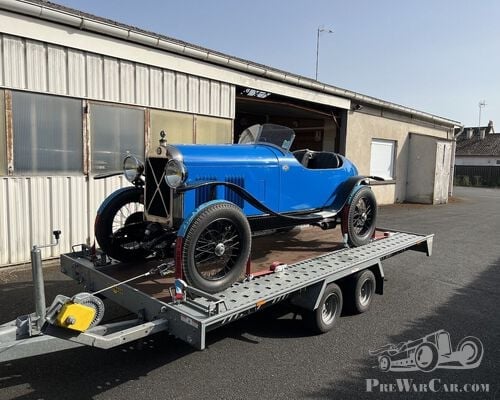
Salmson VAL 3 Séries 7
1927 Salmson VAL3 Series 7. Completely restored a few years ago, in very good overall condition, both bodywork and mechanics. Bordino-style bodywor..
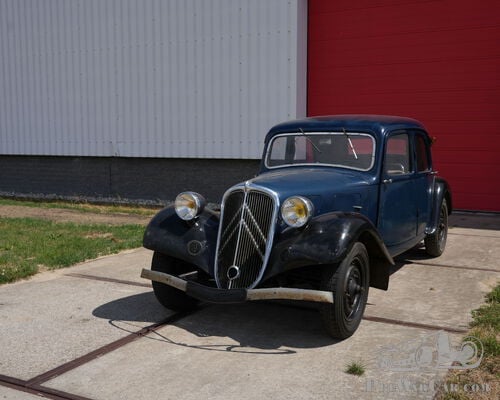
1935 Citroën Traction Avant
Early-production Traction AvantExceptionally original, unrestored conditionRecently part of a major museum collection
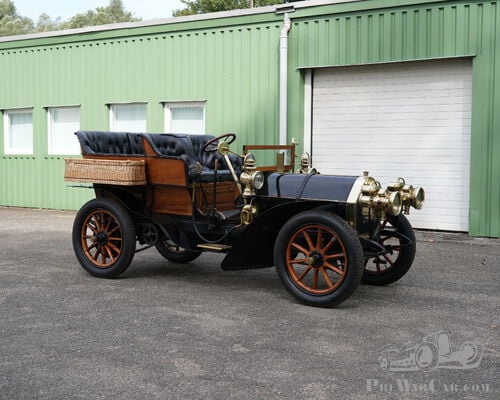
1904 Aster 16/20 HP Four-Cylinder Five-Seat Rear-Entrance Tonneau
Powerful four-cylinder engineFour-speed gearboxChain driveFive seatsMore than €100,000 recently invested