The global magazine and marketplace for classic car enthusiasts, by enthusiasts.


Filter
Classic Clyno for sale - Clyno cars for sale
-

Isotta Fraschini 8A Cesare Sala
This 1927 Tipo 8A was delivered from the factory to coachbuilder Cesare Sala in Milan. One of Italy’s most prestigious and skilled coachbuilders, Sala was a popular choice for Isotta’s customers, together with fellow Milan concern Castagna. Sala had made its name in the pre-automobile era, supplying fine horse-drawn carriages to European royalty.. -
1938 Derby Bentley 4.25 Litre High Vision Coupe by H.J. Mulliner.
1938 Derby Bentley 4.25 Litre High Vision Coupe by H.J. Mulliner. Chassis Numbwer: B83LE Registration Number: GPK222 Bentley 4¼-Litre chassis number B83LE, was bodied by H.J. Mulliner to a most unusual-yet-attractive design. Dubbed a ‘High Vision’ Coupé, it features a roof.. -
1935 MERCEDES BENZ 200 W21 LWB CABRIOLET
1935 Mercedes Benz 200 W21 LWB Cabriolet Chassis number: 108020Registration Number: Applied for. Produced in 1935, this very rare Mercedes cabriolet is the enbodiment of teutonic quality manufacturing. The Mercedes 200 W21 was in production between 1933 and 1936 as the successor to the W02. This W21 is o.. -
1935 Lancia Augusta Coupé Ghia Fuoriserie
- Ghia Certificate of Origin - Ghia Bodywork At the 1934 Milan Motor Show, Lancia introduced a new chassis designated "tipo 234" for custom-built cars based on the Augusta platform. Starting from the front hood, the custom chassis was essentially identical to the four-door sedan without pillars, apart from the relocated fuel tank. The chassis u.. -
D.B. 6 Monoposto; the first genuine single-seater by Deutsch & Bonnet
D.B. 6 Monoposte - Deutsch Bonnet Grand PrixThe very first D.B. monopostoExceptionally well-documented competition historyRaced extensively by René Bonnet (1947–1950)Eligible for events as Monaco Historic Grand Prix This D.B. 6 Monoposto is a unique survivor from the early post-war years.. -
1936 Bugatti Type 57 Atalante
1936 Bugatti Type 57 Atalante. We have two available, both with european papers. Both are fully matching numbers with complete history from day one. Qualified principals please call Richard Biddulph 0044 7967 260673 for full details. -
AC 16 / 66 - 1935 / 6 Cylinder / British Racing Green
AC (Acédès) 16/66 Drophead Coupe, year 1935.Chassis number L34X, engine number UBS.29X.Original British registration: DPC918. Colour: dark British Racing Green combined with a beige leather interior and light brown carpet trimmed with beige borders.The car is fitted with a black vinyl hood and a light brown mohair t.. -
1934 Aston Martin Mk II (long chassis)
This 1934 Aston Martin MkII long chassis tourer is a stunning example of vintage Aston Martin craftsmanship. Originally delivered new to Mr King of Norwich in December 1934, the car remained in the King family until 1952. It was enjoyed next by Mr Briggs of Berkshire and remained in the UK until 1986 when it travelled to New York until 2002,.. -
Bugatti Type 22 1920
1920 Bugatti type 22 ,16 valve Car number 922Delivered 12th October 1920 to Jarrot and Letts, LondonAn exceptional opportunity to acquire an early Bugatti with great provenance within New Zealand.922 holds a unique place in New Zealand Motoring history, being the first Bugatti imported into New Zealand. It arri.. -
Highly Awarded 1936 Delahaye 135 Competition Streamlined Disappearing Top Convertible, Figoni-Falaschi Masterpiece
This is the 1936 "Talk of Paris" car, the beginning of the famed Figoni Streamlined Teardrop Period, an objet d'artFigoni et Falaschi Centennial One of one; pièce unique Figoni streamlined Design #581One of the most highly awarded cars in the world....Best of..


Clyno
GB, 1922 – 1930
(1) Clyno Engineering Co (1922) Ltd, Wolverhampton, Staffs., 1922 – 1929
(2) R.H. Collier and Co Ltd, Birmingham, 1929 – 1930
The Clyno car was a nine years’ wonder on the British market. Deriving from a moribund motor cycle business, the Clyno marque rose to pre-eminence in the market in 1926, and as swiftly declined. The name originated with the inclined motorcycle belt pulleys which had been the Smith cousins’ first commercial venture. The early Clyno cars used a 1.368cc sv 4-cylinder Coventry-Climax engine, with two ball-race main bearings. A 3-speed gearbox was fitted on the end of the torque tube, and pivoted to a chassis cross-member. Aided by light weight, pleasant steering, sprightly performance and utter reliability, sales quickly outstripped other assembled marques. Improvements included the adoption of plain mian bearings in 1925, and half-elliptic front suspension, with 4-wheel brakes of efficient design as standard instead of as an optional extra, in 1926. Various styles were available, including a few sports versions and de luxe models Clyno known as Royals. Of the many component suppliers, it was perhaps only to the makers of the economical Cox Atmos carburetors that the Clyno concern remained faithful for all models.
Successfully rivalling the Morris Cowley, Clyno also made several efforts to establish a larger Clyno model to challenge the Oxford sales. In 1927 the old Clyno 10.8hp was lengthened, and the 3-bearing Clyno 12/28 version boosted. Generally, bodies were heavier, and the transmission was not immediately upgraded to match the added weight and power. Moreover, under the stress of expansion, production tolerances and inspection standards became a little lax. After a while the early reputation for reliability started to fade – just as a larger Clyno factory was coming into use.
In 1928 the main distributors and exporting agents, the Rootes organization, decided to concentrate on Hillmans and the like, and the early successes of the heavier Colonial models brought no lasting recompense. For 1928 the attractive Clyno radiator was changed, and the Clyno Nine was introduced. Bodies were skimped, and the 8.3hp engine breathed less rely than the public might have wished. A very Spartan version, the Clyno Century, was intended to sell at not much over £100, but merely succeeded in giving a disastrous image to a basically sound little Clyno car that stopped and handled in true Clyno fashion. Bodies on the larger cars, by now also mostly fabric, tended to become too expensive – with the Clyno 12/35 Olympic saloon the firm sought to reach well above their customary market. When, in 1929, the Clyno 10.8hp was finally pensioned off, the last links with the policies of 1926, when sales of this model alone passed 11.000, appeared to have been severed.
In 1929 the Clyno firm was still experimenting with larger cars, and a straight 8-cylinder prototype was made. All these factors, combining with the trade recession, caused the fall of the always under-capitalized Clyno company. Inevitably a few cars (Clyno 12/35) were assembled by the successors. AJS also took over some copyrights, and although their Nine bore no similarity with actual Clyno models, it was said to have been derived from these Clyno patents – certainly A.G. Booth had been concerned with both design teams. A Birmingham engineering firm perpetuated the name of Clyno on various products for several years.
Source: Georgano, encyclopedia of motorcar; DF
The information is written with the greatest of care. However, if you have any suggested amendments please contact us at office@prewarcar.com


Featured
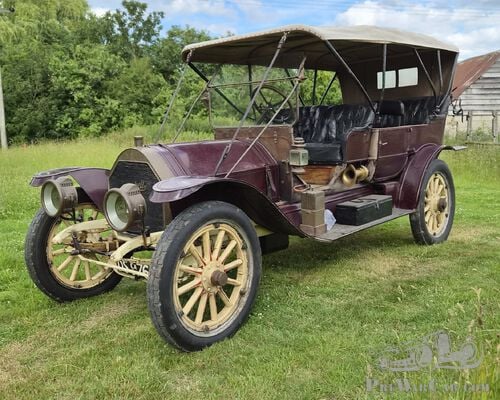
1910 Mitchell Model S - 50HP Six Cylinder
Based in Racine, Wisconsin and being the largest wagon manufacturer in the USA, Mitchell-Lewis produced their first motor car in 1903. Sales grew ..
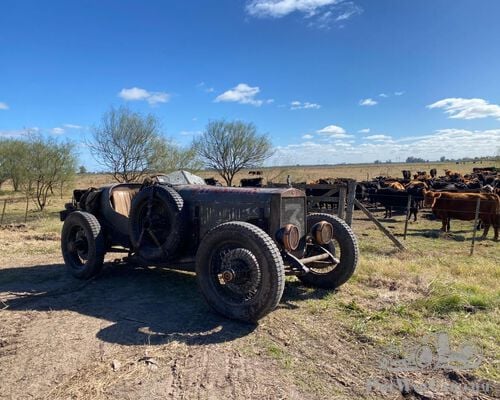
Studebaker 1927 for sale
Authentic race car of the time - Everything is working - All parts of its original mechanics - I have the history of the car - 6 cylinders - Ready ..
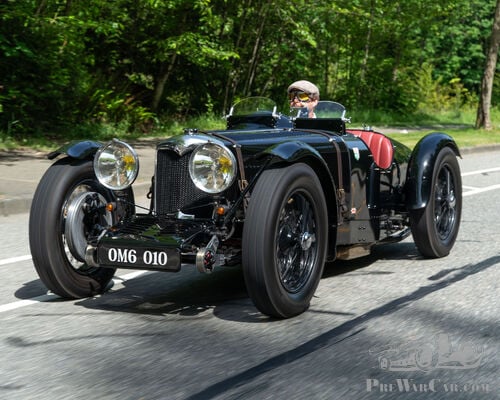
Riley 14/6 Special 1933
The ExperienceStep into the golden age of British motoring. This 1933 Riley 14/6 Special is a masterclass in pre-w..