The global magazine and marketplace for classic car enthusiasts, by enthusiasts.


Filter
Classic Albion, Cord for sale - Albion, Cord cars for sale
-

1936 Cord 810 Supercharged Phaeton | RM Sotheby's | The Hershey Auction
To Be OFFERED AT AUCTION at RM Sothebys' The Hershey Auction event, 7 - 8 October 2026. $125,000 - $175,000 USD Owned for over 60 years by legendary ACD Club member Ric SimpsonRestored in Mr. Simpson’s distinctive colors, with a supercharged engineDriven extensively, including a cross-country trip to the 2008 Pebble Bea.. -
1937 Cord 812 "Sportsman" Cabriolet
Vehicle Highlights Chassis No. 1268FEngine No. FB1707Auburn Cord Duesenberg (ACD) Club Certified Category 1 (C-277)Ideal for Auburn Cord Duesenberg Club and CCCA events Vehicle DescriptionThis is a 1937 Model 812 Cord Cabriolet “Sportsman”. A beautifully restored exa.. -
1901 Albion A1 Dogcart 8HP Twin Cylinder - VCC Dated
1901 Albion Model A1 8HP Twin Cylinder Dog CartRegistration No. BS8677Chassis No. 45E Established in 1899 in Finnieston Street Glasgow by Dr Thomas Blackwood Murray and Norman Fulton, the Albion Motor Company were once the largest provider of commercial vehicles in the British Empire. Albion were famed for their relia.. -
1937 Cord 812 Supercharged Cabriolet | RM Sotheby's | The Monterey Auction
To Be OFFERED AT AUCTION at RM Sothebys' The Monterey Auction event, 13 - 15 August 2026. $175,000 - $250,000 USD The iconic Cord in its most desirable and sought-after formA much-enjoyed part of the Mann collection for 33 yearsAttractive older restoration, mellowed through years of touring pleasureIdeal for CC..


Albion
GB, 1900 – 1913
Albion Motor Car Co Ltd, Scotstoun, Glasgow
Still active as a truck manufacturers within the Leyland Group, Albion was founded at the end of 1899 by T. Blackwood Murray and Norman Fulton, late of Arrol-Johnston and their early products were dogcarts with varnished-wood bodywork much in the Arrol-Johnston idiom, with 2-cylinder opposed-piston underfloor engines, low tension magneto ignition, and Murray’s patent governor. Wheel steering replaced the tiller in 1902, and a year later Albion began production of a 16hp vertical-twin which was made for many years, usually with solid tyres, and often with shooting-brake bodywork. ‘Cars for country houses’, especially Scottish ones, were a speciality of the house, though rather less rustic was a side-valve 5.6-litre chain-driven four introduced in 1906. This 24hp model had a seven-year production run. The last Albion passenger car was a 15hp Monobloc four with side valves in a T-head and worm drive, which sold for £475 in 1912. At the end of 1913 Albion elected to concentrade on commercial vehicles, though large shooting brakes using the 15hp engine continues to be made.
Source: Georgano, encyclopedia of motorcar; MCS
The information is written with the greatest of care. However, if you have any suggested amendments please contact us at office@prewarcar.com
Cord
US, 1929 – 1937
Auburn Automobile Co, Auburn, Ind., 1929 -1937
The first American front-wheel-drive car to win popular approval, the Cord was one of a trio of distinctive cars (the others being the Auburn and the Duesenburg) that made up Erret Lobban Cord’s empire. The first Cord for sale was the Cord Model L-29, powered by a 4.934cc straight 8 engine made by Lycoming, another Cord subsidiary. The Cord L-29 was much lower than most contemporary American cars and was made in open and closed models, as well as being given special coachwork by such firms as Murphy, Hayes, and in England, Freestone & Webb. However, the price of over $3.300 was against the car in the Depression years, and production ended in 1932 after some 4400 Cord cars had been sold.
The Cord name re-emerged later in 1935 with the strikingly modernistic Cord Model 810. Designed by Gordon Buehrig, this car had originally been intended as a small model of Duesenberg. Like the Cord L-29 the new car was front-driven and Lycoming-powered, although by a slightly smaller V8 engine of 4.730cc. The body was of a very advanced design, and featured retractable headlamps and a wrap-around grille. Body styles were the Westchester and Beverly sedans (identical except for upholstery pattern), two-seater Sportsman and four-seater Phaeton convertibles. In 1937 the Cord Model 812 series was introduced, featuring a long-wheelbase Custom berline with chauffeur division, while an optional supercharger boosted power to 195bhp. Prices ranged from $1.995 for the early models to $3.575 for the 1937 Cord Supercharged Custom berline, and this drastically restricted sales. Only 2320 examples of the Cord 810 and Cord 812 were made.
Source: Georgano, encyclopedia of motorcar; KM
The information is written with the greatest of care. However, if you have any suggested amendments please contact us at office@prewarcar.com


Featured
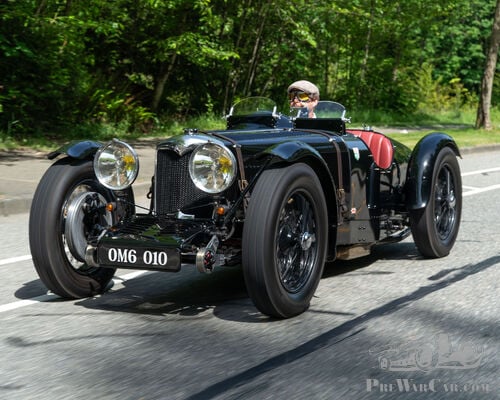
Riley 14/6 Special 1933
The ExperienceStep into the golden age of British motoring. This 1933 Riley 14/6 Special is a masterclass in pre-w..
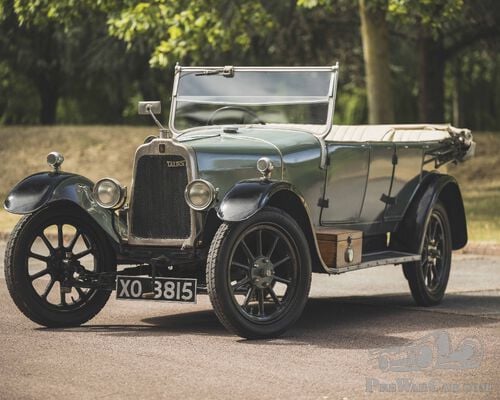
Rare RHD, low miles & great history file
This is an ONLINE-ONLY AUCTION at THE MARKET. The price shown here is the lower estimate. To see all the details, description, 250+ high-res photog..
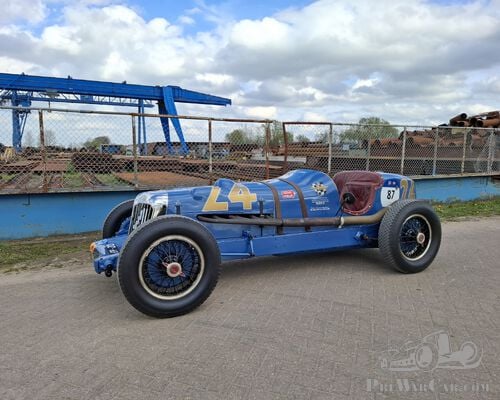
1932 - Graham " Lucenti " Indianapolis
Original participant of the 1932, 1934 and 1935 Indy 500. Best result: finishing 10th overall in the 1934 Indy 500 with driver “Herb” Ardinger...