The global magazine and marketplace for classic car enthusiasts, by enthusiasts.


Filter
Classic Mitchell, Cord for sale - Mitchell, Cord cars for sale
-

Mitchell Type R Raceabout 1911
A “racing” car from the early 1910s,Equipped with an impressive overhead valve engine that delivers 30 HP.The engine has a starter motor and starts easily.The gearbox has 3 gears and operates normally.This Mitchell rides well.The Mitchell was part of the famous Lindley Bothwell collection in Los Angeles (USA) f.. -
1936 Cord 810 Supercharged Phaeton | RM Sotheby's | The Hershey Auction
To Be OFFERED AT AUCTION at RM Sothebys' The Hershey Auction event, 7 - 8 October 2026. $125,000 - $175,000 USD Owned for over 60 years by legendary ACD Club member Ric SimpsonRestored in Mr. Simpson’s distinctive colors, with a supercharged engineDriven extensively, including a cross-country trip to the 2008 Pebble Bea.. -
Mitchell Type R Raceabout 1911
A “racing” car from the early 1910s, Equipped with an impressive overhead valve engine that delivers 30 HP. The engine has a starter motor and starts easily. The gearbox has 3 gears and operates normally. This Mitchell rides well. The Mitchell was part of the famous Lindley Bo.. -
1937 Cord 812 "Sportsman" Cabriolet
Vehicle Highlights Chassis No. 1268FEngine No. FB1707Auburn Cord Duesenberg (ACD) Club Certified Category 1 (C-277)Ideal for Auburn Cord Duesenberg Club and CCCA events Vehicle DescriptionThis is a 1937 Model 812 Cord Cabriolet “Sportsman”. A beautifully restored exa.. -
1937 Cord 812 Supercharged Cabriolet | RM Sotheby's | The Monterey Auction
To Be OFFERED AT AUCTION at RM Sothebys' The Monterey Auction event, 13 - 15 August 2026. $175,000 - $250,000 USD The iconic Cord in its most desirable and sought-after formA much-enjoyed part of the Mann collection for 33 yearsAttractive older restoration, mellowed through years of touring pleasureIdeal for CC..


Mitchell
US, 1903 – 1923
(1) Mitchell Motor Car Co, Racine, Wisc., 1903 – 1910
(2) Mitchell-Lewis Motor Co, Racine, Wisc., 1910 – 1916
(3) Mitchell Motors Co Inc, Racine, Wisc., 1916 – 1923
Mitchell and Lweis had been wagon builders since 1834, and their first Mitchell car was a light two-seater powered by a 7hp air-cooled 2-cylinder engine, using single chain drive, and priced at $1.200. In 1905 a 9hp engine was used on the Mitchell car, and air or water cooling was available. 4-cylinder engines of 18 and 30hp appeared in the 1906 Mitchell car range, and in 1907 shaft drive was employed on all Mitchell car models. Until 1910, 20 and 35hp fours were made, having pair-cast cylinders in 1910 when they were joined by a 50hp 6-cylinder Mitchell car. In 1913 a new range of T-head engines was introduced in a Mitchell car designed by René Petard and known as the ‘American-built French car’. A 40hp four and 50 and 60hp sixes were made in this Mitchell car range, which had high-cowled torpedo-style bodies and electric starters. Piston strokes were very long at 7 inches. At this time it was said that the Mitchell car company made 96% of all components. In 1916 a short-lived Mitchell 48hp V8 was made, and the following year the Mitchell car company settled down to making a range of conventional sixes of no great distinction. In 1920 a sloping radiator gave rise to the epithet, ‘the drunken Mitchell’ and this was hastily replaced by a vertical radiator for 1921. However, the company had lost a lot of money on their 1920 Mitchell car models, and few of the redesigned Mitchell cars were sold, as they lacked any distinctive qualities.
The 6-cylinder engines of the Mitchell car had acapacity of 4.7-litres. After production ceased in 1923, the Mitchell car factory was bought by Nash.
Source: Georgano, encyclopedia of motorcar; GNG
The information is written with the greatest of care. However, if you have any suggested amendments please contact us at office@prewarcar.com
Cord
US, 1929 – 1937
Auburn Automobile Co, Auburn, Ind., 1929 -1937
The first American front-wheel-drive car to win popular approval, the Cord was one of a trio of distinctive cars (the others being the Auburn and the Duesenburg) that made up Erret Lobban Cord’s empire. The first Cord for sale was the Cord Model L-29, powered by a 4.934cc straight 8 engine made by Lycoming, another Cord subsidiary. The Cord L-29 was much lower than most contemporary American cars and was made in open and closed models, as well as being given special coachwork by such firms as Murphy, Hayes, and in England, Freestone & Webb. However, the price of over $3.300 was against the car in the Depression years, and production ended in 1932 after some 4400 Cord cars had been sold.
The Cord name re-emerged later in 1935 with the strikingly modernistic Cord Model 810. Designed by Gordon Buehrig, this car had originally been intended as a small model of Duesenberg. Like the Cord L-29 the new car was front-driven and Lycoming-powered, although by a slightly smaller V8 engine of 4.730cc. The body was of a very advanced design, and featured retractable headlamps and a wrap-around grille. Body styles were the Westchester and Beverly sedans (identical except for upholstery pattern), two-seater Sportsman and four-seater Phaeton convertibles. In 1937 the Cord Model 812 series was introduced, featuring a long-wheelbase Custom berline with chauffeur division, while an optional supercharger boosted power to 195bhp. Prices ranged from $1.995 for the early models to $3.575 for the 1937 Cord Supercharged Custom berline, and this drastically restricted sales. Only 2320 examples of the Cord 810 and Cord 812 were made.
Source: Georgano, encyclopedia of motorcar; KM
The information is written with the greatest of care. However, if you have any suggested amendments please contact us at office@prewarcar.com


Featured
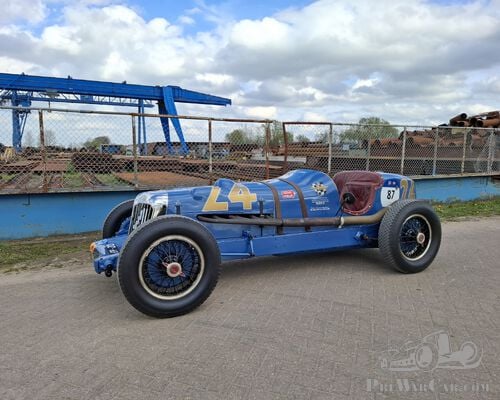
1932 - Graham " Lucenti " Indianapolis
Original participant of the 1932, 1934 and 1935 Indy 500. Best result: finishing 10th overall in the 1934 Indy 500 with driver “Herb” Ardinger...
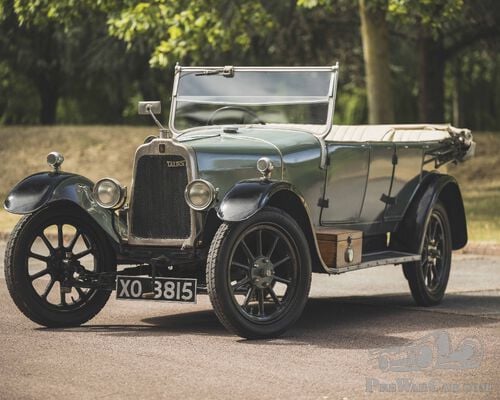
Rare RHD, low miles & great history file
This is an ONLINE-ONLY AUCTION at THE MARKET. The price shown here is the lower estimate. To see all the details, description, 250+ high-res photog..
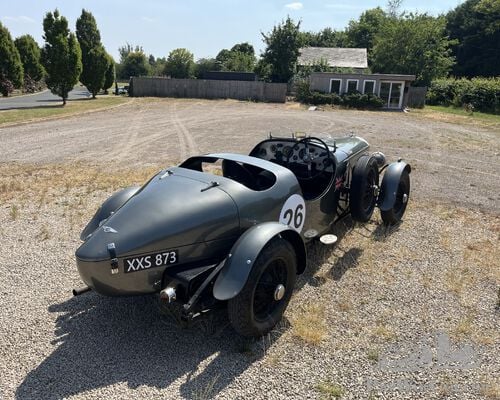
Derby Bentley Special 4-1/4
Sadly i am having to sell on my Bentley special ( Icarus) A great opportunity to be able to buy a Derby special to finish with your own touch..