The global magazine and marketplace for classic car enthusiasts, by enthusiasts.


Filter
Classic Corre La Licorne for sale - Corre La Licorne cars for sale
-

1916 Talbot 4 CYX Tourer by Walter Whitbourne of Melbourne
1916 Talbot 4 CYX Tourer by Walter Whitbourne of Melbourne Registration number: SV 7832 Chassis number: 7424 Engine number: 4CYX 725 1916 Talbot 4CYX. The car has been fully restored to concours condition & as a result is presented in impeccable o.. -
1935 Derby Bentley 3 1/2 Litre Sedanca Coupe by H.J. Mulliner.
1935 Derby Bentley 3 1/2 Litre Sedanca Coupe by H.J. Mulliner.Chassis number: B203CWRegistration number: BXP114Arriving with us in the next two weeks! A laregly original car with its original tool kit; this car spent 50 years in the ownership of one family who preserved it beautifully. since then the car has had a mechanical restoration & .. -
1939 Lagonda V-12 Drophead Coupé
1939 Lagonda V-12 Drophead CoupéChassis number: 14062Engine number: 14062Registration number: TBABody Number: 7542According to the Lagonda Club of Great Britain, the V-12 Drophead Coupé offered here was delivered new to James Scott and Son, of Dundee. In recent years it was fully restored in Sweden by world renowned Rolls Royce & Bentley spe.. -
1902 Mors Model H Four Cylinder Rear Entrance Tonneau - VCC Dated
1902 Mors Model H 4 Cylinder Rear Entrance Tonneau Registration No. DY29Engine No. 8057VCC Dating Certificate. 2055 (1995) Emile Mors was right at the cutting edge of motor car development at the turn of the century and, from his Parisian base, built motor cars that were at the forefront in the major m.. -
1904 De Dion Bouton ‘Type V’ 8HP Rear Entrance Tonneau
1904 De Dion Bouton ‘Type V’ 8HP Rear Entrance Tonneau Registration No. PO6595Car/ Chassis No. 132Engine No. 15972Model. Type V Not available 'til after the 2026 London to Brighton veteran car run. French Aristocrat Count Albert De Dion and Engineer Georges Bouton formed a pa.. -
Ford Model T Runabout - Fully restored by specialist - Dutch / EU registration
Ford Model T RunaboutThis "Tin Lizzie" has been fully restored. The pistons, piston rings, valves, and valve lifters in the engine have been replaced. The main and connecting rod bearings have been inspected and adjusted to the correct tolerances, and the connecting rods have been aligned. To improve bearing lubrication, we have fitted th.. -
1935 3 1/2 Litre Derby Bentley Park Ward sports saloon
1935 3 1/2 Litre Derby Bentley Park Ward sports saloon Registration number: Sweden CGK299 & UK BLU140Chassis Number B-153-CWPark Ward coach work. Vintage and Prestige are proud to be offering this 1935 3 1/2 Litre Derby Bentley Park Ward Sports Saloon for sale. Prior to us selling thi.. -
1939 Mercury Convertible Coupe | RM Sotheby's | The Hershey Auction
To Be OFFERED AT AUCTION WITHOUT RESERVE at RM Sothebys' The Hershey Auction event, 7 - 8 October 2026. Offered Without Reserve | $35,000 - $50,000 USD An especially attractive example of a landmark Mercury from the brand’s inaugural yearHighly authentic, believed to retain much of its factory upholsteryFormerly owned b.. -
1934 Ford Model 40 V-8 '3-Window' Coupe | RM Sotheby's | The Hershey Auction
To Be OFFERED AT AUCTION WITHOUT RESERVE at RM Sothebys' The Hershey Auction event, 7 - 8 October 2026. Offered Without Reserve | $60,000 - $80,000 USD Known ownership history stretching back 70 yearsHighly presentable older restoration in Coach Maroon over tan LeBaron fabric upholsteryDesirable period equipment, includ.. -
1939 Ford DeLuxe Convertible Coupe | RM Sotheby's | The Hershey Auction
To Be OFFERED AT AUCTION WITHOUT RESERVE at RM Sothebys' The Hershey Auction event, 7 - 8 October 2026. Offered Without Reserve | $60,000 - $75,000 USD Excellent example of Ford’s 1939 streamlined redesign, in a stellar color schemeLast year of the floor-mounted shifter for the early Ford V-8Tastefully enhanced with per..


Corre La Licorne
Sté Francaise des Automobiles Corre, Courbevoie, Seine
J. Corre made motor tricycles and quads, as well as acting as an agent for De Dion Bouton, Peugeot, and Renault in 1899. When he launched his first Corre car in 1901 it was almost a carbon copy of the contemporary Renault, with a 3hp single-cylinder water-cooled De Dion engine at the front of a tubular frame, a 3-speed gearbox, and shaft drive. Corre cars paralleled the Renault idiom until 1906: in 1904 the Corre company offered an 8hp single and a 10hp twin, both De Dion-powered, as well as a big 16hp with the 3163cc 4-cylinder Aster unit. A year later 4-cylinder models were available with Mutel or De Dion engines, and in 1905 Corre followed Renault by adopting dashboard radiators in place of the lateral arrangement. In 1906 the Corre firm built a 10.6-litre racer for the French Grand Prix.
In 1907 not only were frontal radiators adopted but also the La Licorne name (generally applied after 1909). There was now a steadily widening range, headed in 1908 by a 4.9-litre Corre-La Licorne 30. The Corre-La Licorne company remained faithful to De Dion engines, which enabled them to field a freakish single-cylinder racing voiturette with cylinder dimensions of 100x300mm in 1909, and to offer an infinite variety of types in 1910, ranging from three singles of 763cc, 1021cc, and 1257cc up to a 35CV V8, Corre-La Licorne Type V, though it is unlikely that this reached the public. Also in the catalogue were two different sv monobloc fours rated at 10CV, and a 2-litre Corre-La Licorne DX-type with their own 4-cylinder engine. The bigger Corre-La Licornes now had 4-speed gearboxes, but the singles were dropped at the end of 1912, and the fours included some medium-sized types powered by ioe units of Chapuis-Dornier manufacture. The 1914 catalogue of Corre La Licorne cars for sale ranged from a 1244cc sv two-seater with sv Chapuis-Dornier engine and 3-speed gearbox and curious stepped-quadrant change up to the 4.4-litre S-type. The Corre-La Licorne company was at this time planning to re-enter racing with a 1400cc pushrod light car designed by Causan. This was in fact campaigned by Collomb between 1920 and 1923.
The 7CV was the staple 1919 Corre-La Licorne, and early post-World War 1 models used sv units by Chapuis-Dornier and Ballot with capacities of 1237cc and 1593cc, 3-speed gearboxes, cone clutches, and accelerator pedal linkages attached to their steering columns. V-shaped stoneguards lent distinction to the radiators, but hand starting and acetylene lighting were standard until 1921, and as late as 1925 the cheapest Licornes still lacked electrics. A bigger model, the 1692cc 9/12CV, was introduced in 1923 and until 1927 a wide range of Corre-La Licorne was offered. The largest mdoel ran to 2.3-litres, ohv and four-wheel brakes made their appearance on a sports Corre-La Licorne 9/12CV in 1925, and in the same year a 7-bearing 1500cc six with ohc competed in the Tour de France, but it never went into production.
Though some of these traditional Corre-La Licorne types were still available on paper as late as 1931, there was a change of direction at the 1927 Paris Salon in the shape of the 900cc 5CV with 2-bearing sv engine, full-pressure lubcrication, magneto ignition, and quarter-elliptic rear springing. This was the French equivalent of cars like the Triumph Super Seven, and it set the tone for the Corre-La Licorne firm’s subsequent products, all of which were modestly rated small saloons of superior elegance. By 1930 the Corre-La Licorne 5CV was available with 4-door saloon coachwork, and coil ignition appeared on a bigger development, the 1125cc 6/8CV, in1931. The name short-stroke sv theme persisted on the 1451cc 8CV of 1932, and at the top of the range was a 2.2-litre machine, the Corre-La Licorne DR4. The 5CV had disappeared in 1932, but a 935cc replacement appeared in 1934; at the same time the more expensive Corre- La Licorne cars fell into line with prevailing trends, with ifs, synchromesh, and ohv, though there were still quarter-elliptics at the rear, and the 2-bearing sv units persisted until 1937, in which year the Corre-La Licorne company started to buy bodies from Citroën. The 1938 Corre-La Licorne 11CV was in fact 90 per cent Citroën – ohv traction power unit turned back to front to drive the rear wheels, and a Citroën body mated to a La Licorne radiator and bonnet. New Corre-La Licorne for sale in 1939 were the 6CV and 7CV, advanced small saloons with forked backbone frames, ifs, and Michelin Pilote wheels, plus, inevitably, quarter-elliptics at the rear. The smaller car had a 1125cc ohv Licorne engine, but the 1628cc Citroën unit was used in the 7CV. Electric conversions of these two types were marketed under the A;eric name during World War 2 and a few 6CVs were made between 1946 and 1948. La Licorne attempted a comeback at the 1949 Paris Salon with a 14CV six, but this never reached production.
Source: Georgano, encyclopedia of motorcar; MCS
The information is written with the greatest of care. However, if you have any suggested amendments please contact us at office@prewarcar.com


Featured
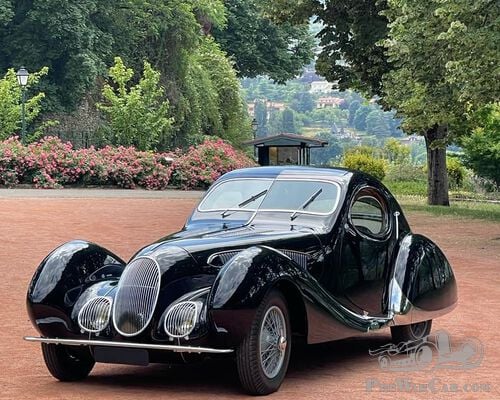
1939 Talbot-Lago T150C “Goutte d’Eau” — Iconic French Coachbuilt Masterpiece
Talbot-Lago T150C ‘Teardrop’ — An Icon of French Automotive Art There are motor cars that define an era. And then there are those tha..
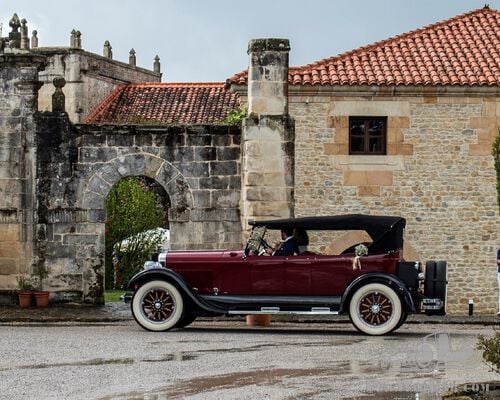
1925 Lincoln Model L Phaeton by Brunn - Excellent provenance
Retaining its original matching-numbers engine and chassis (both numbered 24576), the car benefits from an extensively documented history and..
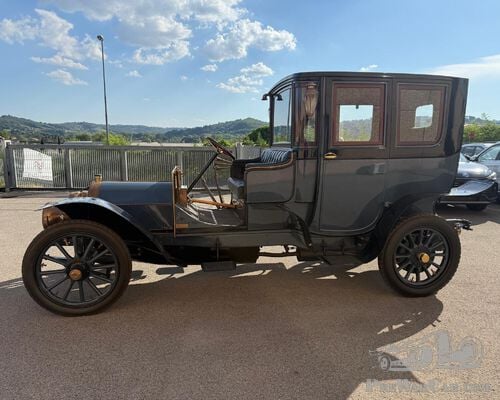
1906 FIAT BREVETTI COUPÉ DE VILLE Coachwork by Carrozzeria Italiana Cesare Sala, Milan
1906 FIAT BREVETTI COUPÉ DE VILLE Coachwork by Carrozzeria Italiana Cesare Sala, Milan Chassis No. 788 Coachwork No. 5699 Location: Siena, Tuscany..