The global magazine and marketplace for classic car enthusiasts, by enthusiasts.


Filter
Classic Crossley, Maybach for sale - Crossley, Maybach cars for sale
-

1934 Maybach Zeppelin DS8 Stromlinien Cabriolet - one-off body
Maybach was a technological leader in European vehicle manufacturing12-cylinder engine with 8-litre displacement and 200 hpUnique 8-speed shift regulator transmissionOnly 24 Maybach Zeppelin cars, including 2 chassis, still exist todayOne-of-a-kind bodyworkOriginal leather interior in excellent c.. -
1938 Maybach SW 38 Gläser Cabriolet
German first deliveryRare bodywork by Gläser, DresdenIn the same ownership for 15 yearsDocumented history in the Maybach Register The SW38 is widely regarded as one of the most elegant and technically impressive six-cylinder cars produced in Germany in the late 1930s. With its powerful engine,..


Crossley
GB, 1904 – 1937
(1) Crossley Brothers Ltd, Gorton, Manchester, 1904 – 1910
(2) Crossley Motors Ltd, Gorton, Manchester, 1910 – 1937
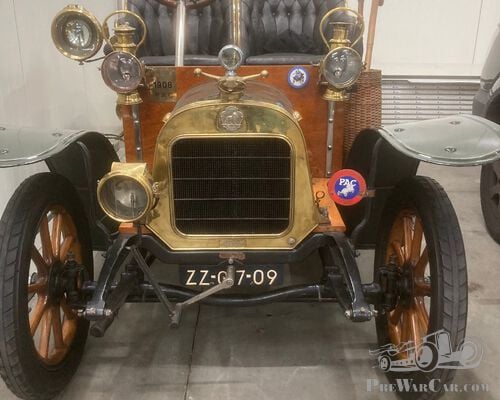
The name of Crossley was famous on engines before it was famous on cars; in fact the Crossley company was the first in Britain to make 4-stroke internal combustion engines on the Otto principle. Later, Daimler engines were made under licence. The first Crossley car for sale, a chain-driven 22hp 4-cylinder, appeared for the 1904 season. A Crossley 28hp and Crossley 40hp followed, all three cars being of normal design and foreign inspiration. Their designer was J.S. Critchley, formerly of Daimler. Shaft drive appeared in 1906, and late in 1909, some were fitted with Allen-Liveredge front-wheel brakes, but Crossley cars, though excellent machines, made little impression until after 1910. The 4-litre 20hp Crossley which then made its bow was a well-constructed, durable and very popular car. Designed by A.W. Reeves, it lived on in modified form until 1925. Crossley’s finest hour came in World War 1, when, as the Crossley 20/25hp it achieved fame as a staff car in the Royal Flying Corps, and as an ambulance and light truck. The Crossley model was extremely popular with the British Royal Family after the war in its 25/30hp version. In its early years, however, it was rivalled by the 15hp. The efficiency of the latter’s otherwise conventional engine, a side-valve four like the rest, gave this Crossley a better performance than most cars in its class and encouraged the makers to offer a special sporting variant, the Crossley Shelsley.
The Crossley Fifteen was discontinued after 1914, but a new Crossley arrived for 1921. This Crossley 19.6hp was a rather more modern design, having a detachable cylinder head, and it was cheaper and lighter on fuel than its 25/30hp companion. The performance was about the same. It was also made in sporting form as the Crossley 20/70hp, but this model was heavy, like the ’Crossley 19.6’ itself, and the brakes were not good enough for the 75mph that was available. Crossley did not make a serious attempt to invade the middle-class market until 1923, when the Crossley 12/14hp, later called the Crossley Fourteen, was introduced. Like its brothers, this was a simple side-valve four, in this case of 2.4 litres, but was more modern, with its unit construction of engine and gearbox and central gear-change. The Crossley Fourteen was a very successful model, being flexile and, thanks to its light weight, both roomy and economical. It survived until 1927. By this time the two bigger Crossley cars were giving way to a much more up-to-date car; the Crossley company’s first six and its first overhead-valve machine. This Crossley 18/50hp model was a spacious, heavy 2.6-litre car with good brakes but somewhat lacking in power. Its engine was enlarged to 3.2-litres and 20.9hp for 1928. At the same time a new small Crossley of similar design, the 2-litre Crossley 15.7hp was introduced, to which a sporting alternative reviving the Shelsley name was added in 1929. Lagonda’s 16/80 model used this engine later. The 6-cylinder Crossley 15.7hp continued until 1934 and the Crossley 20.9hp until 1937. Wilson pre-selector gearboxes were fitted from 1934.
In 1932, the Crossley company had introduced a light car, the Crossley Ten. This was an assembled vehicle powered by an 1100cc Coventry-Climax engine with overhead inlet valves. It was too heavy (a drawback compounded by the pre-selector gearbox), it was very low-geared and its brakes were mediocre. Another mistake was Crossley’s attempt to market the Burney rear-engined car with all-independent suspension. It was given a 15.7hp Crossley engine and a Wilson box, but it was too unconventional in appearance and handling. Very few were made. In 1935, Crossley introduced its new Regis range of small cars with handsome bodies styled by C.F. Beauvais. They consisted of the Crossley Ten and a new Crossley 1½-litre six of the same design also powered by Coventry-Climax, both with a new lowered frame. Both cars, together with the last Crossley 20.9s, disappeared after 1937.
Crossley assembled other people’s cars as well as making their own, beginning with the Willys-Overland Model 4 in 1920. The Gorton-produced Willys came to include more and more British-made parts, such as a Morris Oxford engine. A less likely diversion was an attempt of Crossley in 1921 to make the Type 22 Bugatti in England, but only a handful of these Crossley-Bugattis appeared. In 1922-1933 the Crossley factory made the AJS as well.
Source: Georgano, encyclopedia of motorcar; TRN
The information is written with the greatest of care. However, if you have any suggested amendments please contact us at office@prewarcar.com
Maybach
D, 1921 – 1941
Maybach Motoren-Werke GmbH, Friedrichshafen
Wilhelm Maybach left the Daimler company in 1907. Together with Count Zeppelin he founded a factory primarily for the production of aero engines, especially for the Zeppeling air-ships. These engines were designed by Karl Maybach, Wilhelm’s son. After World War 1, Karl Maybach started to build a 22/70ps 5.7-litre 6-cylinder engine intended for motor cars. This Maybach engine was used by Spyker, but no other factories were interested, so Maybach decided to take up Maybach car production on his own. From the beginning Maybach cars aimed at a high quality car with outstanding driving comfort. The first Maybach Model W3 appeared at the 1921 Berlin Motor Show, and this Maybach car featured a very advanced 2-speed pedal-controlled transmission. This Maybach carmodel was produced until 1926. It was followed by the ohv Maybach Model W5 (for sale in 1926 – 1930) using a 27/120ps 7-litre engine in the same chassis, this being available with Maybach’s Schnellgang 2-speed auxiliary box, giving the Maybach car 4 forward speeds. The Maybach 12 of 1929 had a V12 7-litre engine, which was superseded one year later by the Maybach Zeppelin, also with V12 7-litre engine of 150bhp; after 1931 the Maybach car was also available with an 8-litre 200bhp engine. The Zeppelin range was listed until 1939. Maybach Zeppelin car chassis were also fitted with 6-cylinder engines of 7-litres capacity (already used in Maybach Model W5) and a new 5.2-litre engine developing 130bhp (the Maybach W6 and DSH models respectively). These Maybach cars retained beam axles to the end and were characterized by 7-speed boxes of great complexity. A Zeppelin chassis for the Maybach car cost the equivalent of £1.300 in Germany.
In 1935 a new 6-cylinder Maybach car was presented, starting the SW range. This was the Maybach SW35 with a 3.5-litre 140bhp engine. Engine capacity of this Maybach car was raised to 3.8-litres in the Maybach SW38 in 1936 and to 4.2-litres in the SW42 of 1940. Production of the Maybach car ceased in 1941. The Maybach Zeppelin shared with the Mercedes 770 the claim to be the most exclusive German car of the 1930s. This reputation was enhanced by Maybach cars high standards of material and finish, of comfort and quietness in running. No less well-made were the 6-cylinder Maybach cars which were in the first rank of German cars of this class. Maybach only built complete chassis for their Maybach cars, bodies being made by various firms to customers’ special requirements. Best known of these firms was Spohn of Ravensburg. Spohn aslo built aerodynamic bodies to Jaray designs for the Maybach Zeppelin in 1932 and 1934, and for the Maybach SW35 in 1935. These versions Maybach cars were produced only in very limited numbers. Maybach car production was not taken up again after World War 2. Altogether, some 2.000 Maybach cars are believed to have been made. In 1960 Maybach cars pooled their interests with Daimler-Benz in the manufacture of diesel engines for locomotives and ships.
Source: Georgano, encyclopedia of motorcar; HON
The information is written with the greatest of care. However, if you have any suggested amendments please contact us at office@prewarcar.com


Featured
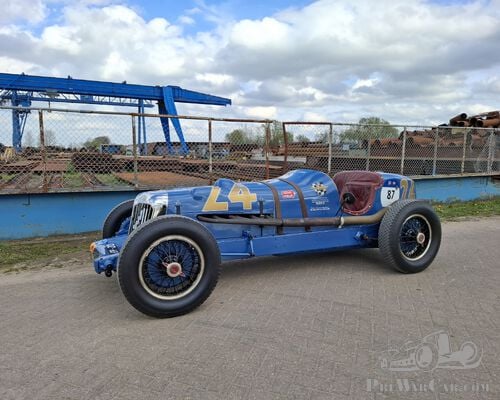
1932 - Graham " Lucenti " Indianapolis
Original participant of the 1932, 1934 and 1935 Indy 500. Best result: finishing 10th overall in the 1934 Indy 500 with driver “Herb” Ardinger...

K3 Replica on KN Chassis
"The K3 Magnette must rank in the history books as the most famous and successful of all the record breaking MGs. With only 33 examples produced durin..