The global magazine and marketplace for classic car enthusiasts, by enthusiasts.


Filter
Classic Star, De Dion-Bouton for sale - Star, De Dion-Bouton cars for sale
-

De Dion‑Bouton Type D (1899)
HighlightsRare early De Dion‑Bouton, highly collectibleBeautiful presentation and coherent historyEligible for major international veteran eventsA centrepiece for any prestigious collection Vis‑à‑vis “La Petite Voiture” – High‑quality restoration – Veteran car eligible .. -
1911 De Dion Bouton CS2 Tourer
1911 De Dion Bouton Type CS2 Tourer Registration no. DEZ1911Engine no. 6765CGearbox no. 26183 The Type CS2 has a 14hp, four-cylinder engine of 2121cc with mechanical valves, a double sleeve sliding pinion, four-speed gear.. -
1901 De Dion Bouton 4.5HP Vis a Vis - VCC Dated
1901 De Dion Bouton Type G Vis a Vis 4.5HP - VCC DatedRegistration No. BS8684Engine No. 6011Chassis No. 1211VCC Dating Certificate No. 1335 The first De Dion Bouton’s were of the ‘Vis a Vis’ type, with the occupants facing two by two. The engines varied in size from 1.25HP in 1896.. -
1899 De Dion Bouton Type D Vis a Vis
1899 De Dion Bouton Vis a Vis Type D - VCC DatedRegistration No. BS8599Chassis No. 85Engine No. 381VCC Dating Certificate No. 4028 ‘A 127 year old, Victorian motorcar’ Following experiments with various prototypes in late 1898 and the early part of 1899, De Dion Bouton commenced production .. -
1904 Dedion Bouton Type Y 6hp
1904 Dedion Bouton Type Y 6hp Chassis Number: 135Registration Number: BS8759 Coming to us from previous South African ownership with paperwork dating back as far as 1946. This little Dedion is of the Y type which finished production in 1904. It has run the last two London to Brighton events on a t.. -
1904 De Dion Bouton Type W 10HP Twin Cylinder Rear Entrance Tonneau - VCC Dated
1904 De Dion Bouton Type W 10HP Twin Cylinder Rear Entrance TonneauRegistration No. H42 Engine No. 1312B VCC Dating Certificate No. 130 The first indication in the British press that the De Dion Bouton company was preparing to produce a twin cylinder vehicle was a full-page advertisement in The Autocar on Octob..


Star
GB, 1898 – 1932
Star/ Starling/ Stuart
(1) Star Motor Co, Wolverhampton, Staffs., 1898 – 1902
(2) Star Engineering Co, Wolverhampton, Staffs., 1902 – 1909
(3) Star Cycle Co, Wolverhampton, Staffs., 1905 – 1909
(4) Star Engineering Co Ltd, Wolverhampton, Staffs., 1909 – 1928
(5) Star Motor Co Ltd, Wolverhampton, Staffs., 1928 – 1932
Edward Lisle Sr’s Star Motor Co, an offshoot of the Star Cycle Co, produced its first Star car in 1898, and offered the Star car for sale in the following year. The Star car was a Benz-based machine, with a single-cylinder, water-cooled 3½hp engine, belt primary drive and chain final drive. It was an improvement in that water circulation on the Star car was assisted by a pump. In 1900 there followed a 2-cylinder Star car with 3 forward speeds, still on Benz lines. 1901 brougth De Dion-engined single-cylinder Star cars, and 1902 an 8hp twin of Panhard type in addition. Other, larger Star cars of Panhard ancestry joined the 8hp, up to a 20hp four Star car. By 1904, although a De Dion-powered single and Panhard-type twin were still there, the bigger machines were of Mercédès pattern, these Star cars came with honeycomb radiators, mechanically-operated inlet valves and pressed-steel frames. All veteran Star cars up to 1914 were extremely well-made, well-furnished, conventional, rather expensive cars lacking in technical originality, showing a line of development appearance in the 1907 range. The best-known Star car of the veteran period was the excellent 15hp Star car of 1909, a shaft-driven 2.8-litre four which had become the 3-litre 15.9hp by 1914. A great variety of other Star cars, basically similar models were turned out, not only by Star but also by the Star Cycle Co. The latter, run by Edward Lisle Jr, had made motor tricycles and bicycles, and produced the Starling car in 1905. It had 2 forward speeds and a De Dion single-cylinder engine, but was otherwise of Panhard type, with armoured wood frame and chain drive. One year later the Star car company supplemented it with the more modern Stuart car, which had 2-cylinders, 3-speeds and shaft drive. This name was dropped in 1908, all models being called Starlings, but these too, disappeared in 1909 when Star cars cheaper line was entrusted to the new Brion Motor Co, a more indepented concern that was still run by Edward Lisle Jr. So popular was the Star car that its makers were among the six largest in the country before 1914.
The 15.9hp Star car was continued after World War 1, together with another sv four Star car of pre-war origin, the 20hp Star car of 3.8-litres. A modern light Star car of fashionable type, the 11.9hp, arrived in 1921. This Star car used a 1.795cc sv engine with a detachable head, made in unit with a 3-speed gearbox which had central change. By 1924, the 11.9 Star car had grown up into the 2-litre 12/25hp Star car. It shared cylinder dimensions with the 18hp Star car, which was a new 3-litre six. The 12/25 Star car could be had as a very fine fast touring car with overhead valves and 54bhp, in which form the Star car was called 12/40hp. Thereafter, the Star car range reverted to its pre-war complexity. By 1927, there were three sv Star car models and two additional and more up-to-date Star cars with overhead valves. The 14/40hp Star car, new in 1926, was a solid 2-litre, ohv machine which in spite of having only 4-cylinders and 3 forward speeds, this Star car was a notably smooth and flexible car, thanks to a 5-bearing crankshaft. The ohv 20/60hp Star car, a 2½-litre six with the same bore and stroke as the 14/40 and a 7-bearing crankshaft, was the most luxurious Star car. A light six, the popular ohv 18/50hp, joined the Star car range in 1928, the year of the Star car company’s acquisition by Guy, and replaced the 14/40 Star car for 1929. By this time, the sv Star cars had gone, leaving the two sixes. As the 18hp Star Comet and the 21hp Star Planet, these Star cars were revised with handsome bodies and very full, luxurious equipment, including one-shot chassis lubrication, thermostatically-controlled radiator shutters and a built-in jacking system. Two other engines, of 14hp (2-litres) and 24hp (3.6-litres) were also obtainable in Star cars for 1932, as alternative Comet and Planet power units. These Star car were the last new Star cars, for they were too expensive to make, and the times favoured the mass-produced economy car. Production of Star cars ended in March 1932, but the unsold stock was sold by McKenzie and Denley of Birmingham, and the Star car was quoted in the Buyer’s Guide lists until 1935.
US, 1903 – 1904
(1) Star Automobile Co, Cleveland, Ohio
(2) H.S. Moore, Cleveland, Ohio
This Star car was driven by a single-cylinder, watercooled engine of 1.9-litres, mounted beneath the front seat, with false bonnet and coil radiator in front. A champion planetary transmission and double chain drive was used on this Star car. Both two- and five-seater Star cars were made, the latter with rear entrance.
US, 1908
Star Automobile Co, Chicago, Ill.
Star runabouts were offered in three models, selling for $500, $600 and $700 respectively. The smallest Star car was an open two-seater, and shaft drive was employed on all Star cars.
US, 1908
Model Automobile Co, Peru, Ind.
The short-lived Star car from Peru was offered in conventional 2- and 4-cylinder forms. The twin was chain-driven, while the big, expensive four Star car ($4.000) had shaft drive.
US, 1922 – 1928
Durant Motor Co of New Jersey, Elizabeth, N.J.; Lansing, Mich; Oakland, Calif.
William Crapo Durant’s Star Four was one of the most serious attempts to take away some of the Model T Ford’s market, for the cheapest practical car. Unlike the Ford, the Star car was an assembled machine.The Star car had a 2.2-litre, 4-cylinder engine by Continental, and was conventional in design in every way except the gearbox, which was separate; a feature common to all the vehicles in Durant’s empire, but very unusual in American mass-produced cars by the early 1920s. The touring Star car cost only $443 in 1923, which helped Star to be the seventh biggest seller in America that year. The Star car was sold outside the United States as the Rugby. In 1926, a 2.8-litre six Star car was introduced. Front wheel brakes appeared in 1927 but a year later the Star car make disappeared in the collapse of the Durant interests. By this time, 250 Star cars a day were being turned out. Only the Four was still called the Star car for the 1928 model year, as the Six was now known as the Durant Model 55.
Source: Georgano, encyclopedia of motorcar; TRN, GMN, MJWW, TRN
The information is written with the greatest of care. However, if you have any suggested amendments please contact us at office@prewarcar.com
De Dion Bouton
France, 1883 – 1932
(1) De Dion Bouton et Trépardoux, Paris, 1883 – 1894
(2) De Dion Bouton et Cie, Paris, 1894 – 1897
(3) De Dion Bouton et Cie, Puteaux, Seine, 1897 – 1932
Charles Trépardoux left the company De Dion Bouton et Trepardoux he had originally launched with his brother-in-law, Georges Bouton in December 1893, entering a partnership with F. Mérelle, the distributor of De Dion Bouton et Trepardoux cars who had been largely responsible for marketing the early De Dion Bouton steam-driven tricycles and quadricycles his company had produced. From 1894, the focus of the efforts of the remaining partners, the Count de Dion and Bouton, was on the production of petrol-fuelled internal combustion engines. In fact, several years previously, in 1889, the Count had established a working partnership with an engineer named Delalande, based at 103 Rue Saint-Maurin, Paris, with the intention of developing an internal combustion engine. The result was two engines of radial design, for which patents were sought, and which looked remarkably similar to those engines used in early aircraft: the cylinders were laid out like the spokes of a wheel and rotated around a fixed crankshaft. There is no indication that these engines were progressed beyond the development stage and installed in any vehicles. Trépardoux did, however, have an influence on the first tricycles and the voiturettes in that he had conducted the early work on the front and rear axles, wheel bearings, and transmissions, which made these early De Dion Bouton et Trepardoux vehicles so distinctive and successful.
The first De Dion Bouton tricycles were produced in 1895, equipped with engines of modest output of ½hp and with frames that were very similar to those of the conventional De Dion Bouton pedal tricycles. Between that time and early 1897, the power output on De Dion Bouton cars was considerably increased, the frame was strengthened, electric ignition replaced the original hot tube version, and a mode of transport evolved that served the racing fraternity as well as those who could afford this desirable and fashionable accessory on their De Dion Bouton. At this time, De Dion Bouton developed its approach to engine manufacture that was to be a constant for the bulk of the next decade, where it sold ‘loose’ De Dion Bouton engines to individuals and companies alike, and in so doing, gave momentum to the early motor industry. Between 1895 and 1902, it has been estimated that the De Dion Bouton company produced some 50,000 De Dion Bouton engines, for a multiple of purposes including marine use as well as for stationairy machines. As the power output steadily increased, so the number of uses for the De Dion Bouton engines also escalated; by the turn of the last century, there were De Dion Bouton 2.75hp and 3.5hp engines available.
In the first few years of the twentieth century the level of technical progress in the construction of motor-cars was remarkable, and this is self-evident from a cursory review of the output from the Puteaux works of De Dion Bouton. In September 1899, the De Dion Bouton company produced its first rear-engined, four-wheeled, twin speed vehicle with a single cylinder engine, an unsprung back axle, no rear brakes, and very limited accommodation. Five years later, in December 1904, a De Dion Bouton four-cylinder, four forward speed vehicle, fully sprung and capable of carrying limousine coachwork and a full complement of passengers in appreciable comfort over long distances, was available. In the five years that lapsed, the constant flow of technical innovation on De Dion Bouton motorcars, and the adoption of individual new components on a continuous basis, led to the presentation of sixteen individual passenger vehicle submissions of De Dion Bouton, in single, twin and four-cylinder configuration, to the Service des Mines for approval.
The initial production voiturette was a 3.5hp rear-engined model, known as the De Dion Bouton Type ‘D’, which was replaced in 1900 by an upgraded De Dion Bouton Type ‘E’ version, albeit with the same engine. In November 1900, the De Dion Bouton Type ‘G1’ appeared with a 4.5hp engine, followed in 1901 by a variant known as the De Dion Bouton Type ‘G2’. The last rear-engined model was the De Dion Bouton Type ‘L’, which had an identical chassis to the De Dion Bouton Type ‘G’ Type, but was equipped with the more powerful 6hp De Dion Bouton engine that the company had initially installed in its front-engined models from November 1901.
The De Dion Bouton voiturette provided comfort in convivial style for two or more passengers that a tricycle or a quadricycle could not, and it was perfectly capable of long journeys by night or day, added to which it also offered advantages in cost, operation and maintenance for owner/drivers that vehicles produced by other manufacturers than De Dion Bouton did not. The presence of a light, high-speed petrol engine in a relatively lightweight body influenced many other manufacturers who adopted similar designs for their own vehicles.
By mid-1903 the De Dion Bouton Company was firmly established as a manufacturer of high quality engines and motor vehicles in Europe. The success of the motor tricycle followed by the launch of the De Dion Bouton voiturette, prepared the way for the first of the front-engined vehicles that appeared in 1901. Numerous other manufacturers, like Renault, had installed engines bought from De Dion Bouton into their own vehicles, and so De Dion Bouton had played a pivotal role in supporting the nascent car industry. In May 1903, the single cylinder De Dion Bouton vehicles were joined by the first twin cylinder offerings. This particular development had not been without its challenges, especially in connection with ignition and engine lubrication, but when the revised De Dion Bouton twin-cylinder vehicle was launched in December 1903, it was a triumph, attracting considerable positive comment for De Dion Bouton and appreciation from the burgeoning motoring public throughout 1904.
The technical lessons learned in 1903 were to serve the De Dion Bouton company well because the range and pace of technical development was set to dramatically accelerate from the end of 1904. In part this was due to the changing competitive environment in Europe: the days of De Dion Bouton hegemony were drawing to a close, as American manufacturers, were demonstrating both their manufacturing prowess and their ability to attract customers with keen prices. The Americans overtook the French in the value of their automobile production in 1905 and never looked back. The scale of production in Britain was also growing. In the Europe of 1906, however, French manufacturing still dominated, with 400 French cars being sold in Britain per month, in contrast to the monthly average of two British vehicles sold in France. At the end of 1913 the annual production in Britain was 25,000 cars, whilst in France the output was 45,000 vehicles. By this time Peugeot, Renault, Darracq and Berliet were all producing more passenger vehicles than De Dion Bouton. Many of De Dion Bouton’s innovations with engine design, ignition systems, suspension and speed change mechanisms were well established, reliable and effective, but they were no longer ‘cutting edge’, and the De Dion Bouton company was acutely aware of the need to demonstrate a willingness to change, difficult, expensive, and perhaps sometime unnecessary, as that might be. The De Dion Bouton customer base was changing too; the well-heeled clientele was still a substantial component of the demand, but many municipal authorities were interested in petrol driven vehicles, including the omnibus, and businessmen of all persuasions were keen to capitalize on the commercial opportunities and increased productivity through the usage of motorised trucks.
There were additional challenges facing De Dion Bouton, and every other vehicle manufacturer in France, at the end of 1904; should the focus be on petrol, steam, or electric vehicles, and which option would be best suited to each customer segment? The bulk of the factory’s output comprised of petrol engines, but electric vehicles had been offered since 1900, and by 1903 both the motors and the batteries were being manufactured in Puteaux, whilst steam was the favoured power source for the early trucks. The Marquis de Dion (following the death of his father in 1901) had finely tuned instincts for new opportunities in the marketplace but each one required investment in factory accommodation, people, expertise, machinery, raw materials and time.
Concerns around the logistic elements of De Dion Bouton car production and supplier management led De Dion Bouton towards self-sufficiency. The De Dion Bouton company employed 3,000 staff in 1903, and this number had grown to 4,500 by 1909 as De Dion Bouton continued to expand the range of components it made in-house. In addition to the De Dion Bouton engines, De Dion Bouton gearboxes, De Dion Bouton chassis and suspension, it made its own De Dion Bouton magnetos, wheels and bodies, and a workforce of 100 women was employed in making De Dion Bouton spark plugs. Apart from the usual design and construction facilities, the De Dion Bouton factory had its own chemical laboratory, microscope test-room, tensile and hardness-testing machinery, wood mills, paint shops, trimming department, and foundries.
The De Dion Bouton enterprise in Puteaux was vast, complex and extraordinarily expensive to maintain. Whilst the Marquis de Dion was convinced in 1904 that the future prosperity of De Dion Bouton lay in small vehicles and trucks, it did not prevent the De Dion Bouton company from launching a range of motor buses that became familiar on the streets of Paris, London and New York from 1906; De Dion Bouton taxicabs were produced from 1908, and 1909 witnessed the launch of a range of De Dion Bouton bicycles and the large De Dion Bouton V8 engine, along with 11 other passenger models.
The health of the De Dion Bouton Company was never as robust after the conflict of 1914-1918 as it had been in the years before hostilities commenced. The impact of those four years was catastrophic for many manufacturing businesses like De Dion Bouton, especially in France, and they never recovered. There can be little doubt that in the years leading up to 1914, development and construction of De Dion Bouton in Puteaux were taking place at a feverish pace, not just on passenger vehicles, but on trucks, buses, marine and standing engines. The De Dion Bouton management team was required to have a critical awareness of the diverse geographical markets they served, understand the competitive environment, deliver products to market, maintain the local technical infrastructure and secure the various resources necessary, demonstrate good judgement on De Dion Bouton product development, strengthen the De Dion Bouton brand and, critically, ensure the capital was in place to fund growth. For any company with an autocratic leader the potential for a poor decision was always high, as was its likely impact. The achievements of the De Dion Bouton Company in this period were considerable, and whilst market share in France, a maturing market, inevitably declined, its overall output, global presence and reputation, were significantly enhanced, underscoring the performance, resilience and fortitude of the Marquis de Dion and Georges Bouton.
The decline in the De Dion Bouton company’s fortunes were connected to decisions taken many years previously. Some writers have raised the decision to launch a De Dion Bouton V-8 engine, an initiative that no other European manufacturer emulated at the time, as a major distraction. This was obviously an expensive undertaking for De Dion Bouton but there were synergistic benefits in connection with aircraft engine production, and very few De Dion Bouton v-8s vehicles were actually made. Perhaps the more significant question to be raised is that connected with the decision to reduce the focus on the smaller De Dion Bouton engined (single and twin cylinder) car production, initially by suspending twin cylinder De Dion Bouton production in 1908, and then by terminating single cylinder De Dion Bouton car production entirely in 1912, at a time when their key competitors, Renault in particular, were redoubling their efforts with twin cylinder vehicles for passenger, commercial, and especially taxi usage.
The departure of De Dion Bouton from single cylinder cars certainly removed the De Dion Bouton Company from the competitive melee of that particular sector, but by 1911/12 the four-cylinder market had its own pressures. American manufacturers typically produced vehicles that provided high torque at low speed, good acceleration and hill-climbing ability, smooth and quiet running, and general docility in traffic. Further, they sold ready-to-drive cars complete with coachwork, tyres, hood, windscreen and lamps, and their scale of production along with their European distribution network, ensured that pricing was always aggressive.
In short, De Dion Bouton had exited a market sector it knew well, where it had an enviable international reputation for its De Dion Bouton products, and where its competitors were of comparable size, and it chose to focus on the De Dion Bouton four-cylinder market where others had the advantages of economies of scale, deep pockets, increasing technical proficiency, sophisticated production methods, and global reach. Coupled to this, the combination of an accident-prone twin bearing crankshaft, poor power output and expensive coachwork, encouraged De Dion Bouton customers to look elsewhere from 1912. From 1915 the resources of De Dion Bouton were focused on the war effort, and the French (like the British) government took steps to ensure that American motor car manufacturers did not seize the opportunity to flood the market with their products and disadvantage the long-term position of local producers. From the very start of hostilities in the Autumn of 1914 the De Dion Bouton Puteaux works and its resources were substantially dedicated to the French Artillery Construction Department and its role in supporting the war effort, although permission was granted for the De Dion Bouton company to supply a limited number of De Dion Bouton vehicles to the public. In December 1914, the De Dion Bouton company released an information sheet with details of the revised production schedule. They were to be five four-cylinder De Dion Bouton models with live back axles and three De Dion Bouton V-8s with cardan shafts. Only small variations were proposed on the 1914 De Dion Bouton designs, although Warland dual rims were to be adopted for all De Dion Bouton models. The De Dion Bouton company expected to be able to launch a new 12hp De Dion Bouton model early in 1915 and a De Dion Bouton 20hp special speed model for light two-seater and four-seater bodies. The intention was to fit the 10hp De Dion Bouton model with a revised, pointed radiator and upgrade the rear suspension, but all other De Dion Bouton Types were to remain substantially the same.
During the course of 1915, the French government rescinded this permission, and the De Dion Bouton factory was entirely devoted to the production of war material. It is no coincidence that for the first eighteen months of the war, significant numbers of completed De Dion Bouton vehicles were shipped to both the United States of America and Australia in order to maintain some commercial momentum. The management of De Dion Bouton in Puteaux had a clear perspective on the differing requirements of these two geographical regions: the number of extant four cylinder De Dion Bouton vehicles in Australia attests to the scale of export to that region, whilst the De Dion Bouton brochures produced for the US market are overwhelmingly dedicated to the eight cylinder De Dion Bouton vehicles, with power outputs ranging from 20hp to 100hp.
When the French War Ministry returned the production facilities in Puteaux to De Dion Bouton in 1919, the two stalwarts who had dedicated so much of their lives to the launch of the popular motor car and the establishment of the industry in France, must have realised that their historic achievements would count for little as they confronted the challenges of the new competitive landscape. Early in 1919, the De Dion Bouton factory was ready to resume vehicle production and a card was sent to faithful customers, suppliers and sales agents, informing them that four new De Dion Bouton types would be available, two with four cylinder De Dion Bouton engines, and two with eight-cylinder De Dion Bouton power units; each engine was a new bore and stroke configuration. There was stubborn resistance to reviving any of the smaller-engined pre-war vehicles, and only one Type, the De Dion Bouton IC, had an engine of less than three litres capacity. The De Dion Bouton company had been buoyed by the success of its eight-cylinder engines during the conflict, when they had performed admirably as staff cars and for the basis of armoured vehicles.
The De Dion Bouton company struggled during the 1920’s to maintain a strong foothold in any sector of the French market, as potential purchasers had the option to buy any number of ‘built to a price’ models or, at the other extreme, lavish concoctions from various carrossiers. De Dion Bouton models were well built and relatively expensive, especially when compared with American imports, buth they did not have the cache of the prominent manufacturers either. Production on any scale in Puteaux of De Dion Bouton had ceased by the end of 1931.
Source: De Dion Bouton club UK
The information is written with the greatest of care. However, if you have any suggested amendments please contact us at office@prewarcar.com


Featured
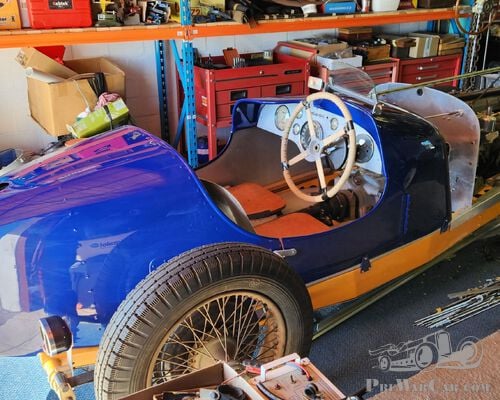
Riley TT Sprite
1935 6-cylinder TT Sprite replica. Chassis # 46A2722. Engine # 6A2722. Original Ulster Imp body. Restoration nearing completion. Engine, G..
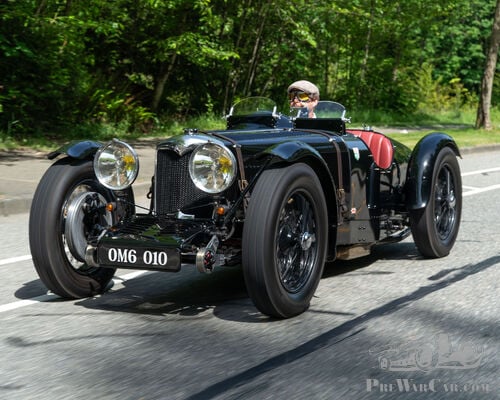
Riley 14/6 Special 1933
The ExperienceStep into the golden age of British motoring. This 1933 Riley 14/6 Special is a masterclass in pre-w..