The global magazine and marketplace for classic car enthusiasts, by enthusiasts.


Filter
Classic Columbia for sale - Columbia cars for sale
-

1912 Columbia 45hp Touring
Multi-award-winning restoration on a high quality/low production brass era. Powerful 410 cubic inch T-head engine, dual ignition, pressurized fuel system & discreetly electrified lamps. Built in Connecticut by The Pope Manufacturing Company. Known history, ex. James A. Conant. A fast, tight example and a joy to drive!Worldwide Ship..

Columbia
US, 1897 – 1913
(1) Pope Manufacturing Co, Hartford, Conn., 1897 – 1899
(2) Columbia Automobile Co, Hartford, Conn., 1899
(3) Columbia & Electric Vehicle Co, Hartford, Conn., 1900
(4) Electric Vehicle Co, Hartford, Conn., 1901 – 1909
(5) Columbia Motor Car Co, Hartford, Conn., 1909 – 1913
The detailed organizational history of the Columbia car make is complex, and its ancestry includes such pioneers as Riker and Morris & Salom. The initial Columbia models were electrically powered and this source was used until at least 1907. They were sold in England under the name City and Suburban, and in France as l’Electromotion. Petrol models were introduced in 1899, known then as the Pope-Columbia, and were designed by Hiram Maxim. These petrol cars were advanced for their time, with left-hand steering wheel, full elliptical springs, a coil radiator in front, and a 2-cylinder engine. The 1903 Columbia Type XLI showed definite European influence, with a sloping bonnet, double chain drive, and its 14hp engine drove it at 45mph.
In 1907, an electric transmission was introduced to the Columbia car, giving 7 forward speeds, with a 4-cylinder engine of 48hp. In 1911 a Knight sleeve-valve engine was used in one model known as the Columbia-Knight. This had a 6.3-litre engine, and was continued to 1913.
The Columbia Motor Car Co was absorbed by United States Motor Co in 1910, and the Columbia make ended when this company collapsed in 1913.
US, 1914
Seattle, Washington
This Columbia was a side-by-side two-seater cyclecar. It used a 2-cylinder engine with overhead valves, combined with a friction transmission and belt drive. Its wheelbase was 8ft, with a track of 3ft 4in.
US, 1914 – 1918
Columbia Electric Vehicle Co, Detroit, Mich.
This electric Columbia car was made in open two-seater, three-seater ‘coupelette’, and four-seater brougham form and was furnished with wire wheels. The price-range of this model, with various options, was $785 to $985. Soon after its introduction, the name was changed from Columbia to Columbian.
US, 1916 – 1924
Columbia Motors Co, Detroit, Mich.
The Columbia was a well thought of assembled car of its era and its low price attracted a considerable number of buyers. Two basic Columbia models were offered, both sixes and both powered by Continental engines. As many as 6.000 units were sold in 1923, principally the roadster at $995 (disc wheels were extra). Planning to expand its manufacturing activities, Columbia purchased the Liberty in 1923, but both makes failed a year later. Noteworthy was Columbia’s use of thermostatically-controlled radiator shutters as early as 1920 which opened as radiator temperature increased. The Columbia car was one of the first automobiles to use this device and doubtless it aided Columbia sales.
Source: Georgano, encyclopedia of motorcar; GMN, KM
The information is written with the greatest of care. However, if you have any suggested amendments please contact us at office@prewarcar.com



Featured
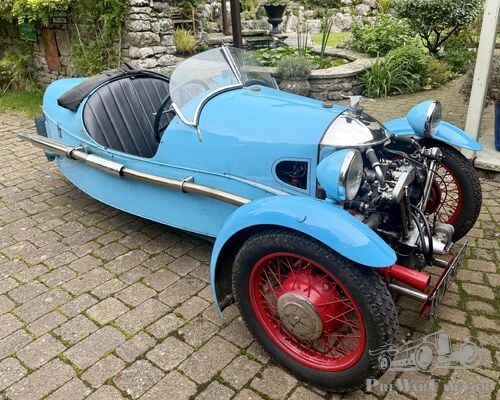
1933 Morgan Three-Wheeler Super Sports, Beetle Back • Show-Specification Car
First registered24 March 1933RegistrationXJ 6336 - original and transferableChassis numberD174Engine numberDTZE 94 H 31..
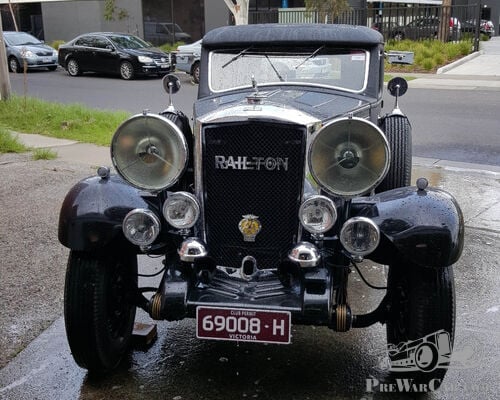
Railton straight 8 sports coupe for rallying REDUCED PRICE run with the bentleys at a fraction of the price
1934 Railton Sports CoupeBuilt for long distance rallyingRebuilt 2017built up at a cost of $160,000AUD, OFFERED FOR SALE AT A ..
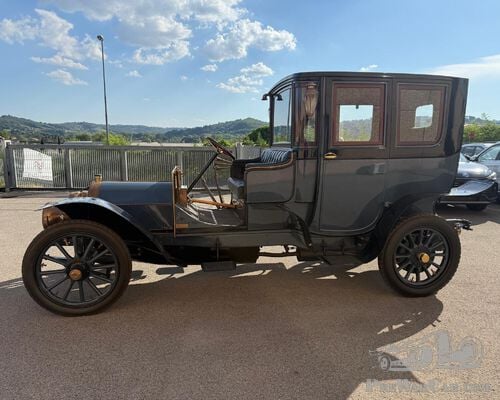
1906 FIAT BREVETTI COUPÉ DE VILLE Coachwork by Carrozzeria Italiana Cesare Sala, Milan
1906 FIAT BREVETTI COUPÉ DE VILLE Coachwork by Carrozzeria Italiana Cesare Sala, Milan Chassis No. 788 Coachwork No. 5699 Location: Siena, Tuscany..