The global magazine and marketplace for classic car enthusiasts, by enthusiasts.


Filter
Classic Decauville for sale - Decauville cars for sale
-

1937 Cord 812 Supercharged Cabriolet | RM Sotheby's | The Monterey Auction
To Be OFFERED AT AUCTION at RM Sothebys' The Monterey Auction event, 13 - 15 August 2026. $175,000 - $250,000 USD The iconic Cord in its most desirable and sought-after formA much-enjoyed part of the Mann Collection for 33 yearsAttractive older restoration, mellowed through years of touring pleasureIdeal for CC.. -
1935 Duesenberg Model JN Convertible Coupe by Rollston and Bohman & Schwartz | RM Sotheby's | The Monterey Auction
To Be OFFERED AT AUCTION at RM Sothebys' The Monterey Auction event, 13 - 15 August 2026. $5,750,000 - $8,000,000 USD Built for legendary actor Clark Gable, “The King of Hollywood”Restyled to Gable’s wishes by Bohman & Schwartz; a truly bespoke commissionUsed extensively by Gable with his beloved wife, Carole Lombar.. -
1934 Avions Voisin C23/24 Roadster by Saliot | RM Sotheby's | The Monterey Auction
To Be OFFERED AT AUCTION at RM Sothebys' The Monterey Auction event, 13 - 15 August 2026. $2,500,000 - $3,000,000 USD Best of Show at the 2002 Pebble Beach Concours d’EleganceBest of Show at the 2004 Amelia Island Concours d’EleganceA one-off creation by Parisian Avions Voisin impresario Raymond SaliotMeticulou.. -
1932 Chrysler CH Imperial Speedster | RM Sotheby's | The Monterey Auction
To Be OFFERED AT AUCTION at RM Sothebys' The Monterey Auction event, 13 - 15 August 2026. $2,500,000 - $3,000,000 USD Best of Show at the 1991 Pebble Beach Concours d’EleganceA one-off Chrysler in-house design and engineering study for Walter P. ChryslerBuilt using almost entirely custom hardware and numerous prototype .. -
1929 Du Pont Model G Two-Passenger Speedster by Merrimac | RM Sotheby's | The Monterey Auction
To Be OFFERED AT AUCTION at RM Sothebys' The Monterey Auction event, 13 - 15 August 2026. $800,000 - $1,200,000 USD One of the most beautiful American automobiles of its generationThe 1929 New York International Automobile Show display carOne of three two-passenger “taper tail” models with an external spareOne .. -
1927 Bentley 6½-Litre Short Chassis "Bob-Tail" Tourer in the style of Corsica | RM Sotheby's | The Monterey Auction
To Be OFFERED AT AUCTION at RM Sothebys' The Monterey Auction event, 13 - 15 August 2026. $600,000 - $800,000 USD Desirable short-chassis 6 1/2-Litre, one of the greatest vintage Bentleys Formerly owned by Jack Jeffery, Barry Cooney, Jack Goffette, and Bruce McCawExceptionally beautiful coachwork, fitted within two deca.. -
1924 Hispano-Suiza H6C Monza Speedster in the style of Kellner | RM Sotheby's | The Monterey Auction
To Be OFFERED AT AUCTION at RM Sothebys' The Monterey Auction event, 13 - 15 August 2026. $500,000 - $800,000 USD Built on an original, exceedingly rare Monza short-wheelbase H6C chassisFormerly owned by noted Hispanophiles John Sebert and Edwin “Ted” JamesonDriven by Mr. Mann against George Holman’s Stutz at the 2011 I.. -
1914 Rolls-Royce 40/50 HP Silver Ghost Colonial London-to-Edinburgh Skiff by Schapiro-Schebera | RM Sotheby's | The Monterey Auction
To Be OFFERED AT AUCTION at RM Sothebys' The Monterey Auction event, 13 - 15 August 2026. $1,500,000 - $2,000,000 USD Among the most famous and recognizable “parallel bonnet” Silver GhostsFormerly owned by noted collectors Bob Barrymore and Joseph and Margie CassiniOne of the cars featured in Melbourne Brindle’s Twen.. -
1914 American Underslung Model 642 Roadster | RM Sotheby's | The Monterey Auction
To Be OFFERED AT AUCTION at RM Sothebys' The Monterey Auction event, 13 - 15 August 2026. $600,000 - $800,000 USD The sole known surviving Model 642 roadster, American’s sportiest creationA robust machine with a 60-hp T-head six and four-speed transmissionBuilt on the innovative Underslung chassis, one of the best-engin.. -
1913 Mercer Model 35-J Raceabout | RM Sotheby's | The Monterey Auction
To Be OFFERED AT AUCTION at RM Sothebys' The Monterey Auction event, 13 - 15 August 2026. $2,750,000 - $3,500,000 USD America’s greatest and most legendary early sports carA genuine raceabout with exceptionally well-known historyFormerly owned by Paul Cadwell, Webster Knight, and Burt UpjohnDesirable late-produ..


Decauville
France, 1898 – 1910
Sté Decauville, Corbeil, Seine-et-Oise
The famous Decauville firm of locomotive manufacturers began their series of road vehicles by making the Gyédon small car, which they renamed the Decauville. This first Decauville car would have been called a Decauville voiturette, but for the fact that Léon Bollée had already appropriated the word for his own little machine. Thus it was termed the Decauville Voiturelle. It had four wheels, unlike the Bollée, and was powered by a vertical twin-cylinder air-cooled engine of 3½hp, at first mounted at the rear. There were two forward speeds. However the remarkable feature of the Decauville Voiturelle for sale was its front suspension, which was independent – the first known instance of this on a production petrol car was by Decauville. Suspension was by a transverse spring and sliding pillars. There were no rear springs at all. The water-cooled 5hp model of about 1899 had three forward spees. On the 8hp Decauville model of 1900, the engine was moved to the front, shaft transmission was used, and four speeds were supplied. The 1901 Decauville had a fully-floating axle, and direct rive on top gear. From 1903 onwards Decauville cars were conventional shaft-driven vehicles, with side valves in a T-head, honeycomb radiators, pressed-steel frames, and 3-speed gearboxes. However, the bigger ones had dual ignition, the coil being backed by a high-tension magneto by 1905, and the largest Decauville models were available with side-chain transmission. A Decauville 12/14hp twin was listed until 1905, but thereafter only 4-cylinder machines were catalogued. The Decauville company’s peak year was probably 1904, with 350 units delivered. Five types Decauville cars were catalogued in 1906, with capacities of 2.7, 3.3, 4.8, 6.4, and 9.2 litres, and short strokes were favoured – the Decauville 24hp model was ‘square’ at 115x115mm. These changed little in successive years. Though Decauville models from 12 to 60hp were still being advertised in 1909, the Decauville lasted only another year. Both the rear-engined voiturelles and the later fours were made under licence in Germany and Italy, though different firms handled the two varieties in each country. In 1898 the companies were Warburg (Dixi) and Marchand; in 1906 Ehrhardt and Lux of Turin.
Source: Georgano, encyclopedia of motorcar; TRN/ MCS
The information is written with the greatest of care. However, if you have any suggested amendments please contact us at office@prewarcar.com


Featured
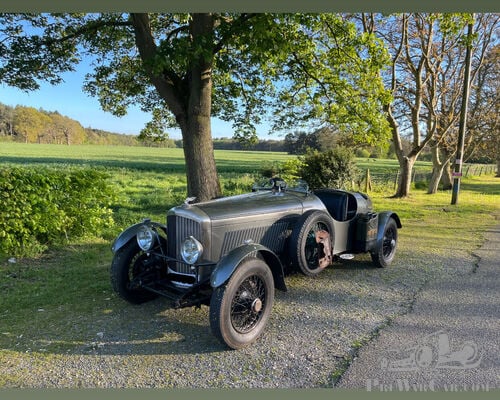
Derby Bentley Special 4-1/4
Sadly i am having to sell on my Bentley special ( Icarus). It is currently a work in progress and still needs finalising/ refining. A great o..
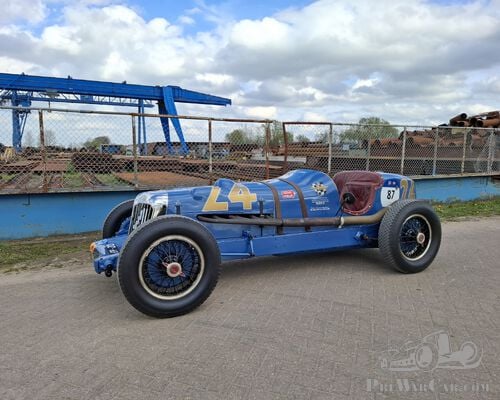
1932 - Graham " Lucenti " Indianapolis
Original participant of the 1932, 1934 and 1935 Indy 500. Best result: finishing 10th overall in the 1934 Indy 500 with driver “Herb” Ardinger...
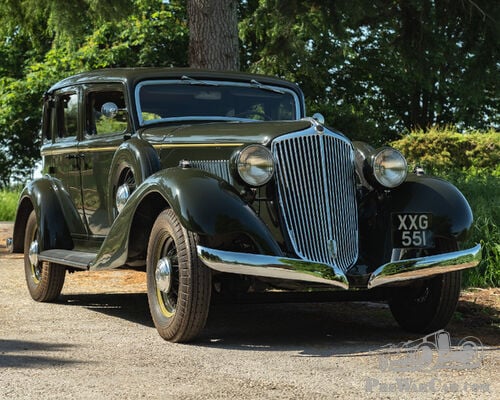
Graham Model 64 Standard Eight 'Blue Streak'
UK Registration No: XXG 551Chassis No: 1801069MOT: ExemptH&H ClassicsKelham Hall | Newark, Nottinghamshire