The global magazine and marketplace for classic car enthusiasts, by enthusiasts.


Filter
Classic Delage, Stoewer for sale - Delage, Stoewer cars for sale
-

1937 Delage D8-120 S Aerodynamic Coupe by Pourtout | RM Sotheby's | The Monterey Auction
To Be OFFERED AT AUCTION at RM Sothebys' The Monterey Auction event, 13 - 15 August 2026. $5,000,000 - $6,000,000 USD Best of Show at the 2005 Pebble Beach Concours d’EleganceThe original prototype for the D8-120 S chassisThe personal automobile of Louis Delage Extraordinarily beautiful, unique coachwork of sup.. -
1923 Grand Prix Delage - Bequet Delage
This exceptional car is the first of the iconic Grand Prix Delages, renowned for their dominance in the late 1920s. As the world’s first V12-engined Grand Prix car, it was entered in the 1923 French Grand Prix, driven by legendary René Thomas, starting from pole before retiring with engine issues. In 1925, the car was sold to flyin.. -
1939 Delage D8-120 S Coupe by Letourneur et Marchand | RM Sotheby's | The Monterey Auction
To Be OFFERED AT AUCTION at RM Sothebys' The Monterey Auction event, 13 - 15 August 2026. $1,500,000 - $2,500,000 USD Unique and striking, unusually muscular one-off coachwork on the rare D8-120 S chassisWell-known ownership history, including several decades in Portugal Nicely preserved restoration by RM Auto Restorati.. -
1937 Delage D8-120 Coach Aérosport by Letourneur et Marchand | RM Sotheby's | The Monterey Auction
To Be OFFERED AT AUCTION at RM Sothebys' The Monterey Auction event, 13 - 15 August 2026. $2,000,000 - $3,000,000 USD Inarguably one of the most beautiful and important bodies on a Delage chassisOne of six first-series examples of this exceptionally stunning designBest of Show at the 2002 Amelia Island Concours d’Elegan.. -
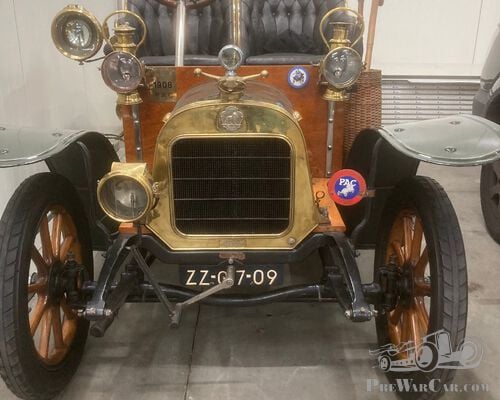
1924 Stoewer type D3 roadster
Rare opportunity to buy a vintage 1924 Stoewer type D3 roadster in fully restored condition. More than € 50K were spent in 2018 and 2019 on its restoration . Detailed work invoices come with the car. A video can be sent on request . Price € 64000 ex Eibergen Netherlands imported EEC. -
1930 Delage D8
This is a car with history that is ready to be passed onto a new owner.Originally bought into New Zealand in 1939 and since passed through owners who have all looked after and respected the heritage of such a car. As with many cars of this vintage, it has had a couple of different bodies fitted with the latest prior to it participating in.. -
1930 Delage D8 C Cabriolet by Chapron | RM Sotheby's | The Monterey Auction
To Be OFFERED AT AUCTION WITHOUT RESERVE at RM Sothebys' The Monterey Auction event, 13 - 15 August 2026. Offered Without Reserve | $175,000 - $225,000 USD The sole known surviving Chapron-bodied D8 CFormerly owned by renowned collectors Vojta Mashek and Dr. Peter KeslingClass award-winner at the 2017 Pebble Beach Conco..


Delage
France, 1905 – 1954
(1) Automobiles Delage, Courbevoie, Seine, 1905 – 1935
(2) Automobiles Delage, Paris, 1935 – 1954
Louis Delage, a former employee of Turgan-Foy and Peugeot, started modestly with a conventional shaft-driven single-cylinder 6½hp runabout with a De Dion Bouton engine which was marketed in England as the Baby Friswell. As early as 1906 Delage showed an interest in racing, and the Delage make’s second place in that year’s Coupe des Voiturettes was followed in 1908 with an outright win on a Delage single powered by a Causan-Designed engine. Meanwhile touring Delage cars continued to use De Dion power units, and later 4-cylinder engines of modest capacity built by Ballot, though single-cylinder cars rated at 6, 8 and 9hp were still catalogued by Delage for sale as late as 1910. The 1.4-litre ’Delage 12’ of 1909 was a neat little machine with monobloc cylinders, 3-speed gearbox and fuel tank streamlined into the dashboard, which sold for £230 and was progressively developed up to 1914. This Delage car had a pressure-fed crankshaft in 1910 and was joined in 1911 by a 2.5-litre 30bhp six on similar lines: the footbrake, unusually, worked on the rear wheels. This Delage model had acquired a 4-speed gearbox and electrics by 1914, a version with 11ft wheelbase being listed for town-carriage work.
Delage also pursued his racing career to good purpose, winning the 1911 Coupe de l’Auto with a horizontal-valve 3-litre 4-cylinder Delage which had a 5-speed gearbox with overdrive top. These features were also found on the 6.3-litre Delage cars which won both the 1913 GP du Mans and the 1914 Indianapolis 500-Mile Race, while for the 1914 Grand Prix his 4½-litre Delage cars had twin ohc, desmodromic valves and 4-wheel brakes (but no handbrake). While producing munitions in World War 1, Delage found time to develop a new long-stroke 4½-litre sv 6-cylinder (Delage Type CO), which went into production in 1919 with 4-wheel brakes, but still with a fixed cylinder head. There was also a companion 3-litre 4-cylinder, and by 1921 the Delage CO had developed into the Delage CO2 with ohv, twin-plug head, dual magneto ignition and 88bhp. The 1920s saw a line of excellent fast Delage tourers, while from 1922 to 1927 a costly but very successful Delage racing programme was pursued. Starting with the 6-cylinder Delage I and Delage II sprint cars, the Delage company progressed to an ohv V12 of 10.7 litres’ capacity in 1923, with which René Thomas annexed the World’s Land Speed Record at Arpajon in the following year with a speed of 143,31mph. The Delage car subsequently had a long and distinguished racing career in England. For the 2-litre GP Formula in 1924 Planchon designed a four ohc V12 Delage of great complexity – in twin-supercharged 1925 form it gave 190bhp and won the French and Spanish Grand Prix. Equally costly were the Lory-designed 1½-litre twin-cam Delage straight-8s of 1926 – 1927, with 5-speed overdrive gearboxes and various types of supercharging. In their early days these Delage cars had a bad name for overheating but they were unbeatable in 1927, with five major Grands Prix to their credit. There was also R.J.B. Seaman’s triumphal 1936 voiturette season, when the nine-year-old Delage trounced the ERA and Maseati opposition.
Mainstay of the Delage touring-car programme from 1924 onwards was the classic 2.1-litre 4-cylinder Delage DI for sale, with ohv, 4-wheel brakes, magneto ignition (coil on later cars), 4-speed gearbox and single-plate clutch. For sale at £475 in England it was excellent value and sports versions with aluminium pistons were quite fast. At the same time the Delage company offered the vast 6-litre Delage Type-GL as competition for the Hispano-Suiza: unusual features of this ohc 6-cylinder were the clutched fan, twin oil pumps, X-braced frame and hydraulic servo brakes – it could be bought in England for £1650 in 1925. It was only produced up to 1927. The Delage DI had gone a year later, Delage turning to 6-cylinder cars of more modest capacity: the 3.2-litre ohv Delage DM followed by a less successful sv Delage DR, made in 2.2-litre and 2.5-litre forms. The 1929 Paris Salon saw the first of the big ohv long-stroke straight-8s Delage cars for sale, all with coil ignition, pump and fan cooling, and 4-speed gearboxes. Valve bounce was countered by making the springs operate separate rocker arms. It came in several wheelbase lengths from 10ft 10in to 11ft 11in, and carried superbly elegant if not always practical bodywork. In 1931 it was joined by a 3-litre Delage D6 which was the same car with two less cylinders.
A super-sports Delage D8 was available in 1932: though often overbodied it took its International class 12-hour record at 112mph. The Delage range was further complicated in 1932 by the advent of a new series of short-stroke models, the first of which, the Delage D6-11, had an almost square 2.1-litre 6-cylinder unit, with the Delage D8’s valve gear, independent transverse front suspension and a silent-third gearbox. Inexpensive pressed-steel saloon bodywork was used and the Delage car sold for £595. By 1934 there was not only a companion straight-8 (the Delage D8-15) of 2.7-litres, but also a 1½-litre 4-cylinder version. The big Delage D8s were still listed. 1935 Delages featured synchromesh and hydraulic brakes and slightly undersquare 6- and 8-cylinder engines were used: all Delage cars now had ifs. Louis Delage was, however, forced to sell out to Delahaye and thereafter the Delage cars slowly evolved into more florid versions of that make, built in the same factory. The 4-cylinder cars died out with the obscure 2.2-litre mechanically-braked Delage DI-12 of 1936, a badge-engineered Delahaye. There was an abortive plan to make Delage cars in England in 1937. Up to World War 2 the Delage company’s offerings were the 2.7-litre Delage D6-70 and the 4.3-litre 8-cylinder Delage D8-100 and Delage D8-120. All had hydraulic brakes, Cotal gearboxes and ifs, and the Delage D6-70 could be bought in England for £695. This Delage was raced to some purpose, winning the 1938 TT and taking second place at Le Mans in 1939, in which year capacities of both engines were increased. The 3-litre 6-cylinder car appeared after the war, but only a few were made, and Louveau’s and Jover’s second place at Le Mans in 1949 was almost the last that was heard of Delage. Along with Delahaye, Delage was aborbed by Hotchkiss in 1954.
Source: Georgano, encyclopedia of motorcar; MCS
The information is written with the greatest of care. However, if you have any suggested amendments please contact us at office@prewarcar.com
Stoewer
D, 1899 – 1939
(1) Gebrüder Stoewer, Fabrik für Motorfahrzeuge, Stettin, 1899 – 1916
(2) Stoewer-Werke AG vorm. Gebr. Stoewer, Stettin, 1916 – 1939
The Stoewer car factory developed out of the Stoewer ironworks and was among the pioneers of the German car industry. After manufacturing motor cycles, tricycles and quadricycles for two years, Stoewer turned to cars in 1899. The first Stoewer car had a rear-mounted 2-cylinder engine. 4-cylinder Stoewer cars followed in 1901, and electric Stoewer cars were also produced. Best known were the 2-cylinder Type T Stoewer car (2.280cc and 3/12PS), the 4-cylinder Stoewer P4 (3.052cc and 11/22PS), the Stoewer G4 (1.500cc and 6/12PS) and the 6-cylinder Stoewer P6 (8.820cc and 34/60PS), evolved in the 1905-1907 period all Stoewer cars with shaft-drive. The Stoewer B1 of 6/16PS and the Stoewer B6 of 9/22PS which appeared in 1910 were also built by Mathis under licence. The G4 Stoewer car was the basis for the Stoewer B5, which Stoewer car in 1912 became famous by setting up a record at Brooklands with 67.7mph. The new range of Stoewer cars which appeared in 1913 was also based on successful earlier cars. They were the Stoewer C1 (6/18PS), Stoewer C2 (10/28PS) and C3 Stoewer car (6-cylinder and 19/45PS). Shortly before the outbreak of World War 1 the Stoewer car range was headed by the F4 Stoewer car with a 4-cylinder, 8.8-litre 33/100PS ohc engine. After the war an enormous Stoewer car appeared, the Stoewer D7, using a 6-cylinder 11.2-litre 42/120PS aero engine, as well as some conservative sv 4- and 6-cylinder Stoewer cars with rear wheel and transmission brakes. Front wheel brakes appeared on Stoewer cars in 1925. Stoewer introduced 8-cylinder Stoewer cars in 1928. These were the Stoewer Superior, Stoewer Marschall, Stoewer Gigant and Stoewer Repräsentant with engines ranging from 2-litres and 45bhp to 4.9-litres and 100bhp. The Stoewer car firm re-entered the economy class in 1931 with the V5, a front-driven Stoewer car with a V4 1.188cc engine, followed by the front-drive models R140 (1.369cc), R150 (1.488cc) and R180 (1.769cc). Another 8-cylinder was the front wheel drive Greif V8 with a 2.488cc engine, which was replaced by the conventional 6-cylinder 3.609cc Arcona Stoewer car in 1938. In 1934 the 1½-litre 4-cylinder Stoewer car and 2½-litre V8 Stoewer car were shown at the Brussels Salon by Monsieur Dewaet under the name D.S. (Dewaet-Stoewer). The Greif Junior was built under Tatra licence with an opposed 4-cylinder 1.474cc engine. It succeeded the Röhr Junior. In the middle of the range was the Stoewer Sedina with a 4-cylinder engine of 2.4-litres.
Production of private Stoewer cars was given up at the outbreak of World War 2 in 1939. The Stoewer car factory was destroyed during the war and production of Stoewer cars was not resumed.
Source: Georgano, encyclopedia of motorcar; HON
The information is written with the greatest of care. However, if you have any suggested amendments please contact us at office@prewarcar.com


Featured
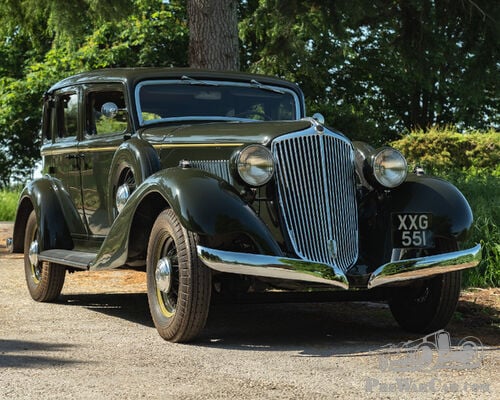
Graham Model 64 Standard Eight 'Blue Streak'
UK Registration No: XXG 551Chassis No: 1801069MOT: ExemptH&H ClassicsKelham Hall | Newark, Nottinghamshire
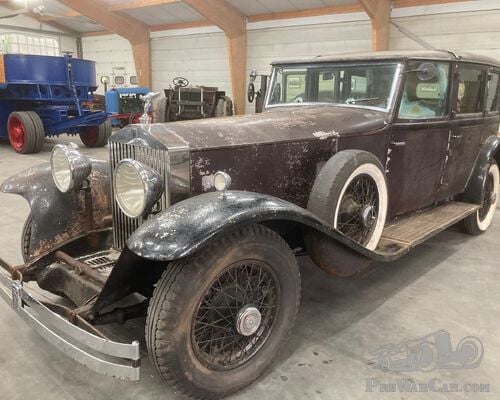
Rolls-Royce
Rolls-Royce Phantom ll chassisnummer 287 AJS. bouwjaar 1932, Links gestuurd, Brewster Keswick Sedance Towncar