The global magazine and marketplace for classic car enthusiasts, by enthusiasts.


Filter
Classic Delaunay-Belleville for sale - Delaunay-Belleville cars for sale
-

1932 Austin 7 Ulster (EA Sports) Replica
Originally assembled in the early 1990's this very correct and rarely found EA Sports replica in full touring trim. Full wings, windscreen and complete weather gear. Accurately assembled around a Roach Manufactuing body it is very accurate in many aspects with many correct parts used throughout the build. In excellent condition throughout .. -
1929 Rolls Royce 20hp H.J. Mulliner DHC.
1929 Rolls Royce 20hp H.J. Mulliner DHC. Chassis Number: GLN77 Registration Number: 73760 Guernsey A delightful little 20hp that comes to us from previous ownership dating back to the 1960's prior to being purchased & shipped to Guernsey by the last deceased owner who had a .. -
Ford Model A Roadster Pickup 1930
This is a very nice Model A Roadster Pickup, In a very attractive color red.The car has some very nice accesoires as;– A stone quard– Quail mascot– Side mounted spare wheel with a mirror– Wind wings– Step plates– A trunk rack– Folding down convertible top.Converted to 12 VoltT.. -
Unknown tricycle from around 1900
Unknown tricycle , built around 1900 , one of the oldest vehicles in Germany in unrestored condition .For sale .Who can provide information about the builder ??? -
1923 Citroen 5CV Cabriolet Boulogne - LHD
Technical Specifications Mark & Model: Citroen 5CV Cabriolet Boulogne - LHDYear: 1923Registration plate: Guernsey registeredChassis Number: 49518Engine Number: 2131794Engine Capacity: 856 ccTransmission: 3-speed manualMileage: Body style: 1-door convertibleInterior color: .. -
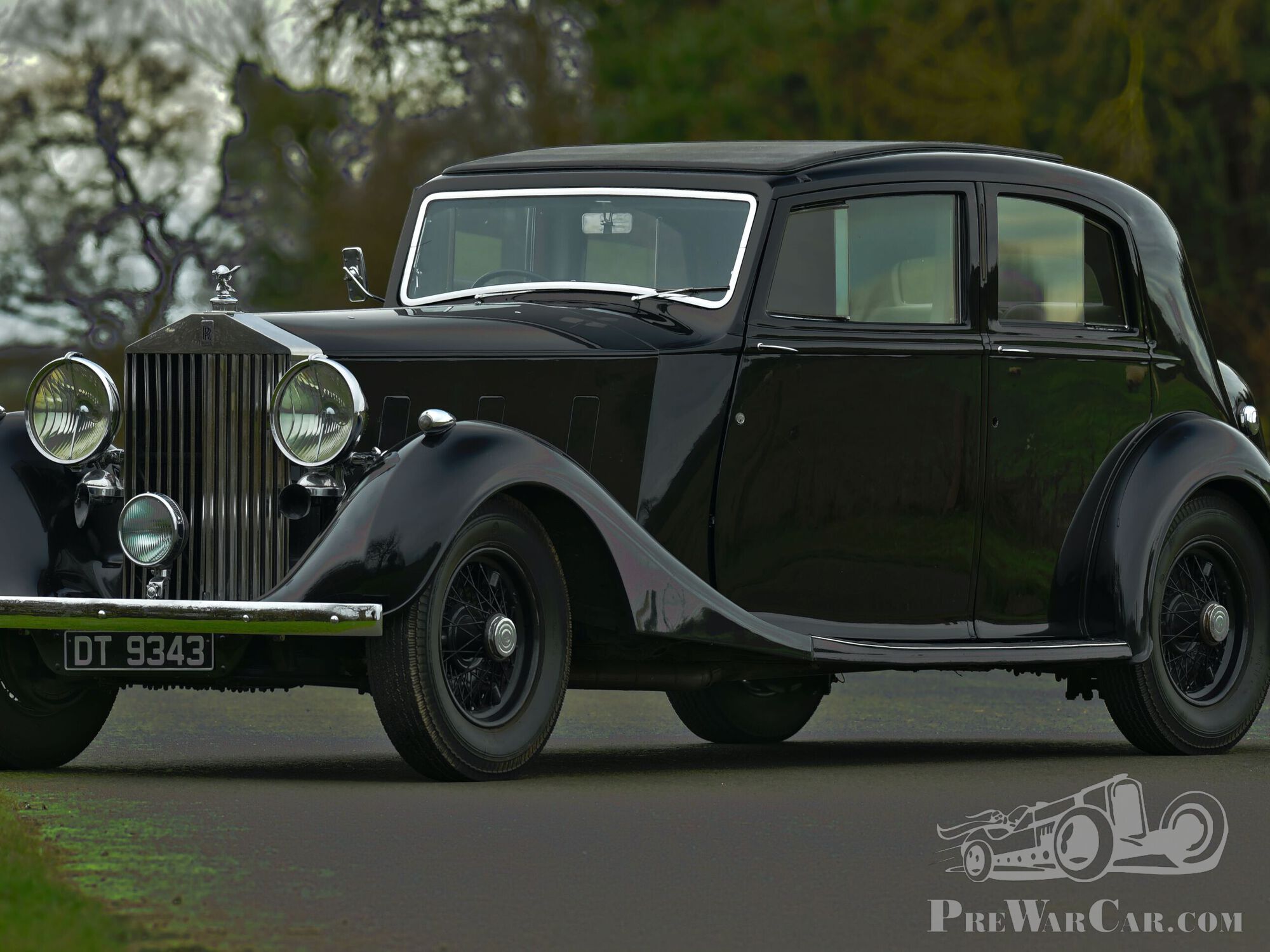
1937 Rolls Royce Phantom III Sports Saloon by Thrupp & Maberly
1937 Rolls Royce Phantom III Sports Saloon by Thrupp & Maberly. Chassis Number: 3-CP-150 Registraton Numbr: DT9343 A really lovely & very well proportioned car by Thrupp & Maberly. The body takes the form of a sports saloon with division but is very very spacious up .. -
Rolland Pilain
I am selling a 1913 Rolland Pilain RP 10HP in very good condition. It has a standard registration document in my name, and the MOT will be carried out prior to the sale. -
1922 Rolls Royce 40/50 HP Silver Ghost London to Edinburgh Tourer.
1922 Rolls Royce 40/50 HP Silver Ghost London to Edinburgh Tourer.Chassis number: 35RGRegistration number: EL1743Coming to us from a private overseas collector who keeps the car stored in the UK in between sparing use for rallies etc. This Silver Ghost is in impeccable condition with midnight blue paintwork in perfect condi.. -
Salmson GS8/GSS Grand Sport
Very rare original Salmson with a GS8 underslung chassis (nr. 21.112), the famous 3 roller bearing GSS engine, original Salmson 4-speed gearbox, Rudge wheels. One of the handful Salmson’s with an original works Grand Prix body. This body is reputated (after a search of Chris Draper) to come from the 1928 Motor Show car. All of the best Salmson coul..




Delaunay-Belleville
France, 1904 – 1950
SA des Automobiles Delaunay-Belleville, St. Denis, Seine
The first cars made by the celebrated firm of locomotive and marine boiler makers Delaunay-Belleville appeared at the Paris Salon of 1904, when a beautifully-built, expensive machine was shown. It was designed by Marius Barbarou, formerly of Benz, and later of Lorraine-Dietrich. Three 4-cylinder Delaunay-Belleville models were available for 1905, in 16, 24, and 40hp sizes. They had separately-cast cylinders, T-head engines, full-pressure lubrication, 4-speed gearboxes and chain drive. The range of fours was extended to five Delaunay-Belleville models between 10 and 40hp by 1907, when 15 and 40hp sixes were introduced. The larger Delaunay-Belleville models were chain-driven until 1910 when shaft drive was standardized on all models. In 1909 there was a small 10CV six of great refinement. The Delaunay-Belleville sixes were both smoother and more reliable than other early examples, the very rigid crankshaft largely eliminating vibration.
Up to 1914 the Delaunay-Belleville was regarded by many as the best car in the world, and was favoured by buyers who valued quiet, unostentatious dignity. The Delaunay-Belleville cars were never entered in competitions and were usually chauffeur-driven. Among royal customers ws Tsar Nicholas II of Russia who had a number of Delaunay-Belleville, including the 70hp chain-driven six known as the Delaunay-Belleville model SMT (Sa Majesté le Tsar).
One of the features of the Delaunay-Belleville was the round radiator and bonnet, and this was continued on the post-war Delaunay-Belleville cars, although in accordance with fashion the radiator was slightly pointed. The 1922 Delaunay-Belleville range consisted of a 10/12 and 14/16hp four, and three sixes from a 14/16 to a massive 40/50 of 8-litres capacity and using dual ignition. The Delaunay-Belleville P.4B 2.6-litre of 1922 to 1929 had a single ohc engine, while from 1926 a range of push-rod ohv fours and sixes was offered. However, the Delaunay-Belleville marque had lost its pre-war cachet, which had been taken over by Hispano-Suiza and Rolls-Royce, and during the 1930s it lost its individuality as well. In 1931 Continental 4 or 4½-litre straight-8 engines from America were available in the 21CV 6-cylinder Delaunay-Belleville chassis. With greater and more silent power, these Delaunay-Belleville cars were cheaper than the French-engined cars. The eights were still theoretically available in 1936, but by that time the main Delaunay-Belleville model was the 2.3-litre 6-cylinder Delaunay-Belleville R.16. This represented a further loss of individuality, as it closely resembled the Type 230 Mercedes Benz, although it had a longer stroke engine. It reappeared after World War 2 with a Cotal electric gearbox, and modernized ‘waterfall’ grille and was listed up to 1950. In the same early post-war years the Delaunay-Belleville factory which had made 70hp cars for the Tsar was turning out the 425cc Rovin minicar.
Source: Georgano, encyclopedia of motorcar; TRN
The information is written with the greatest of care. However, if you have any suggested amendments please contact us at office@prewarcar.com


Featured
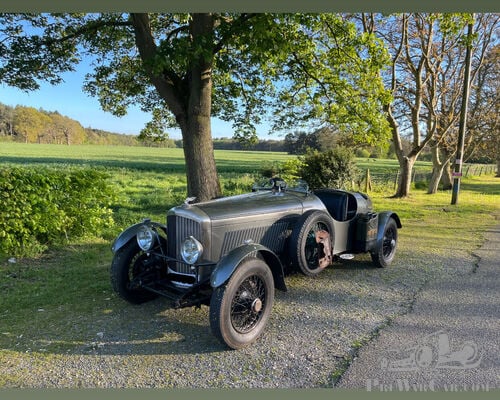
Derby Bentley Special 4-1/4
Sadly i am having to sell on my Bentley special ( Icarus). It is currently a work in progress and still needs finalising/ refining. A great o..

Lagonda LC Tourer 1934
The Lagonda story began in 1901 in Staines, a small town in the UK. The company enjoyed its greatest successes around 1935. During this period, the..

Alfa 6C1750 Spider
Alfa 6C1750 Spider with complete history from delivery in 1930 to first owner in Firenze till today with copy Libretto/license plate all the years