The global magazine and marketplace for classic car enthusiasts, by enthusiasts.


Filter
Classic Detroit Electric, Rauch & Lang for sale - Detroit Electric, Rauch & Lang cars for sale
-

1909 Detroit Electric Model D, Type K Brougham | RM Sotheby's | The Hershey Auction
To Be OFFERED AT AUCTION at RM Sothebys' The Hershey Auction event, 7 - 8 October 2026. $120,000 - $160,000 USD Believed to be the earliest surviving Detroit Electric automobileOne of two with the early double chain drive known to existOlder restoration in charming condition Detroit Electric stands tall amon.. -
1937 Detroit Electric Model 99 Coupe | RM Sotheby's | The Hershey Auction
To Be OFFERED AT AUCTION WITHOUT RESERVE at RM Sothebys' The Hershey Auction event, 7 - 8 October 2026. Offered Without Reserve | $50,000 - $75,000 USD The latest intact Detroit Electric in existenceAn extraordinarily rare, very late-production modelA marvelous, quirky combination of two eras of designStill in .. -
1918 Rauch & Lang Model B26 Brougham | RM Sotheby's | The Hershey Auction
To Be OFFERED AT AUCTION at RM Sothebys' The Hershey Auction event, 7 - 8 October 2026. $150,000 - $175,000 USD One of the finest surviving examples of the Rauch & Lang electric carBeautiful show-quality, AACA First Junior-winning restorationKnown history, with only three long-term caretakers since the 1950s


Detroit Electric
US, 1907 – 1938
(1) Anderson Carriage Co, Detroit, Mich., 1907 – 1910
(2) Anderson Electric Car Co, Detroit, Mich., 1911 – 1918
(3) Detroit Electric Car Co, Detroit, Mich., 1919 – 1938
One of the best-known electric automobiles built in the United States as well as one of the most long-lived, the Detroit Electric car reached its peak in production and sales between 1912 and 1920. The Detroit-Electric success was largely due to the demand by women for a simple car for urban use. More than 1000 Detroit Electric cars per year were sold up to World War 1, but production tapered off in the 1920s. A few Detroit Electrics with Renault-type bonnets were made under licence by Arrol-Johnston in 1913/ 1914. In 1920, the old-fashioned appearance of the Detroit Electric cars was modified by the introduction of false front which made the Detroit look more like a conventional car. In the early 1930s, production of Detroit Electric cars was cut to individual orders, and bodies for the more conventional-looking cars were obtained from Willys-Overland, complete with the horizontal bonnet louvres. The earlier design of the Detroit Electric, however, with rounded battery covers, fore and aft, was also available. Only a handful of Detroit Electric cars were produced annually after 1935. Some of the last Detroit Electric cars used the Dodge bonnet and grille.
Source: Georgano, encyclopedia of motorcar; KM
The information is written with the greatest of care. However, if you have any suggested amendments please contact us at office@prewarcar.com
Rauch & Lang
US, 1905 – 1928
(1) Rauch & Lang Carriage Co, Cleveland, Ohio, 1905 – 1916
(2) Baker, Rauch & Lang Co, Cleveland, Ohio, 1916 – 1922
(3) Rauch & Lang Electric Car Manufacturing Co, Chicopee Falls, Mass., 1922 – 1928
Rauch & Lang were an old-established carriage building firm (founded 1853) when they began to make electric Rauch & Lang cars in 1905. These Rauch & Lang cars followed the usual pattern for such electric vehicles, being mainly closed town cars, although a few open phaeton Rauch & Lang cars were also made. The biggest Rauch & Lang cars were heavier vehicles and included a six-seater limousine with separate outside seat for the chauffeur. Some Rauch & Lang cars had 4-doors, a very unusual feature in electric cars. In 1916 the Rauch & Lang cars became part of the Baker, Rauch & Lane group and production declined. From 1919 onwards the Rauch & Lang cars were sometimes listed as Raulangs, and from 1922 this became the official name of the Rauch & Lang cars.
By this time production of Rauch & Lang cars had been transferred to the Stevens-Duryea factory at Chicopee Falls where the number of private cars made was very small. The factory, which was still turning out a few Stevens-Duryeas, also made petrol and electric taxi-cabs under the name Rauch & Lang cars, and bodies for Stanley Steamers.
Source: Georgano, encyclopedia of motorcar; GNG
The information is written with the greatest of care. However, if you have any suggested amendments please contact us at office@prewarcar.com


Featured
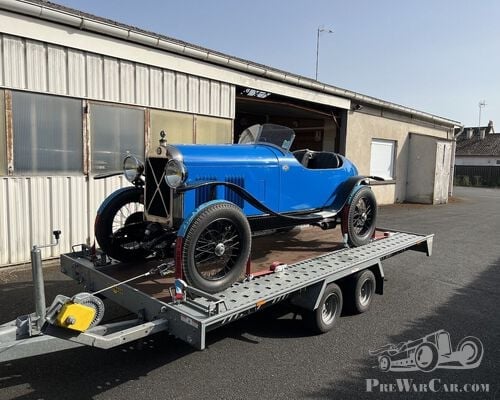
Salmson VAL 3 Séries 7
1927 Salmson VAL3 Series 7. Completely restored a few years ago, in very good overall condition, both bodywork and mechanics. Bordino-style bodywor..
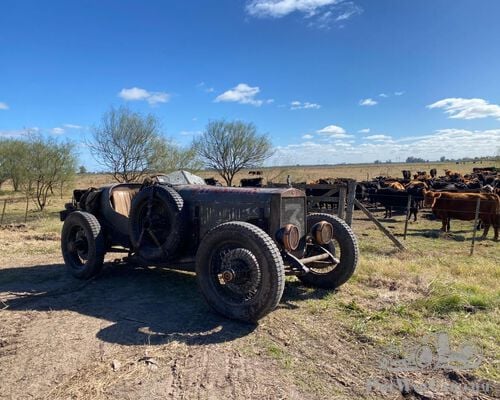
Studebaker 1927 for sale
Authentic race car of the time - Everything is working - All parts of its original mechanics - I have the history of the car - 6 cylinders - Ready ..
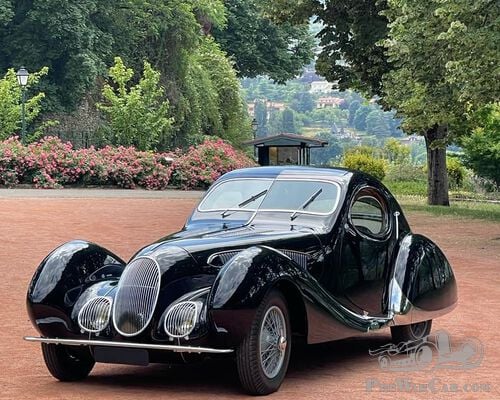
1939 Talbot-Lago T150C “Goutte d’Eau” — Iconic French Coachbuilt Masterpiece
Talbot-Lago T150C ‘Teardrop’ — An Icon of French Automotive Art There are motor cars that define an era. And then there are those tha..