The global magazine and marketplace for classic car enthusiasts, by enthusiasts.


Filter
Classic Detroit Electric for sale - Detroit Electric cars for sale
-

1938 Maybach SW 38 Gläser Cabriolet
German first deliveryRare bodywork by Gläser, DresdenIn the same ownership for 15 yearsDocumented history in the Maybach Register The SW38 is widely regarded as one of the most elegant and technically impressive six-cylinder cars produced in Germany in the late 1930s. With its powerful engine,.. -
1938 Horch 853 A Sport Cabriolet
1 of only 342 examples of the 853 AIn last hand for more than 16 yearsBuilt by the Horch factory in Zwickau The Horch 853 A Sport Cabriolet is one of the most sought-after luxury automobiles of its time - a masterpiece of Saxon engineering that embodies style consciousness and technical sophistication a.. -
1899 Beeston Ladies’ Model Motor Tricycle
A rare opportunity to acquire what is believed to be the only surviving Beeston Ladies’ Model motor tricycle. The New Beeston Cycle Co. was one of the earliest British cycle manufacturers to enter the emerging motor-vehicle industry. After experimenting with prototypes from 1896, the company introduced motor tricycles powere.. -
1934 Rolls-Royce 20/25 Sedanca Coupé
Stunning and sophisticated coachwork by Gurney Nutting.Fully restored with significant improvements from ourselves.An ideal 20-Ghost Club touring car.Benefits from an overdrive.This glorious car boasts supremely versatile and attractive coachwork that makes it stand out against other Sedanca Coupés. -
1936 MERCEDES-BENZ 500 K CABRIOLET (W29)
Elaborately built by renowned companiesElegant Cabriolet A bodyworkIn last hand for 10 yearsMercedes-Benz manufacturing expertise The Mercedes-Benz 500 K is one of the most important automobiles of the 1930s. Its turbocharged eight-cylinder engine, the technically sophisticated chassis and the .. -
1911 Rolls-Royce Silver Ghost Tourer
A very well-known and highly regarded example.Extensively toured across Europe and Australia including three Alpine Tours.Beautiful ‘Barker’ style Tourer Torpedo coachwork by Peter Lamb. This glorious 1911 Rolls-Royce Silver Ghost, chassis no. 1606, offers the epitome of Edwardian driving with its paral.. -
Cadillac 1930 La Salle 340 Coupe
Beautifull Impresive Cadillac 1930 La Salle 340 Coupe with buffalo wire wheels, 2 spare wheels in the front wings, V8 engine 340 CID 5.600 cc with 90 HP. With a mother in law extra 2 seats in the trunk and a golf bag door for easy loading some stuff. This Cadillac / La Salle is in good original condition and great running. Frank Kennis Phone:.. -
1926 Sunbeam Super-Sports 3 Litre Twin Cam
Year: 1926 Chassis No:4163GF Engine No:4017F Car No: 18689 U.K. Registration No: YM4066 Coachwork: Original Open Touring Factory The Wolverhampton based Sunbeam Motorcar Company traded from 1899-1935. During that short 36 year period they produced some of the most important and well engineered motorcars ever to be designed and built in G.. -
1933 Riley 9 Monaco Saloon 1089cc Twin Cam
Here for sale is a particularly attractive early metal-bodied Monaco, finished in dark blue over black with nicely proportioned four door all metal coachwork. Upright and purposeful in the way only a proper pre-war sporting saloon can be.Inside, the largely original black leather interior has just the right amount of age and character – h.. -
1932 Ford Hot Rod "High-Boy" Roadster | The Audrain Auction 2026
Chassis No. 513990066 Please check back for more information shortly.


Detroit Electric
US, 1907 – 1938
(1) Anderson Carriage Co, Detroit, Mich., 1907 – 1910
(2) Anderson Electric Car Co, Detroit, Mich., 1911 – 1918
(3) Detroit Electric Car Co, Detroit, Mich., 1919 – 1938
One of the best-known electric automobiles built in the United States as well as one of the most long-lived, the Detroit Electric car reached its peak in production and sales between 1912 and 1920. The Detroit-Electric success was largely due to the demand by women for a simple car for urban use. More than 1000 Detroit Electric cars per year were sold up to World War 1, but production tapered off in the 1920s. A few Detroit Electrics with Renault-type bonnets were made under licence by Arrol-Johnston in 1913/ 1914. In 1920, the old-fashioned appearance of the Detroit Electric cars was modified by the introduction of false front which made the Detroit look more like a conventional car. In the early 1930s, production of Detroit Electric cars was cut to individual orders, and bodies for the more conventional-looking cars were obtained from Willys-Overland, complete with the horizontal bonnet louvres. The earlier design of the Detroit Electric, however, with rounded battery covers, fore and aft, was also available. Only a handful of Detroit Electric cars were produced annually after 1935. Some of the last Detroit Electric cars used the Dodge bonnet and grille.
Source: Georgano, encyclopedia of motorcar; KM
The information is written with the greatest of care. However, if you have any suggested amendments please contact us at office@prewarcar.com


Featured
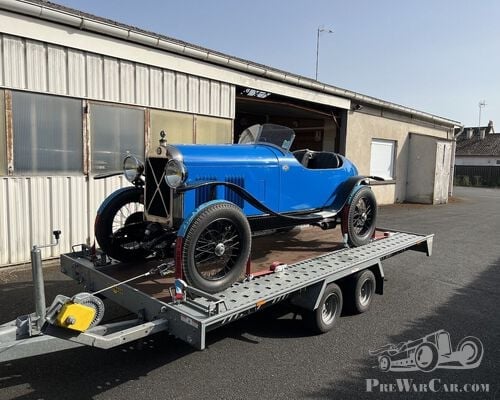
Salmson VAL 3 Séries 7
1927 Salmson VAL3 Series 7. Completely restored a few years ago, in very good overall condition, both bodywork and mechanics. Bordino-style bodywor..
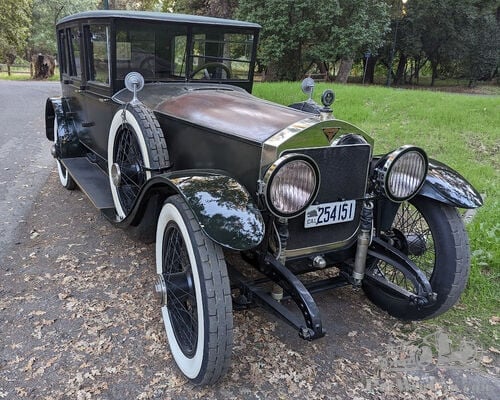
1916 Simplex, Crane model 5
1916 Simplex, Crane MODEL 5CUSTOM MADE HISTORIC PRESERVATION VEHICLE – READY TO TOUR!This Simplex recently completed th..
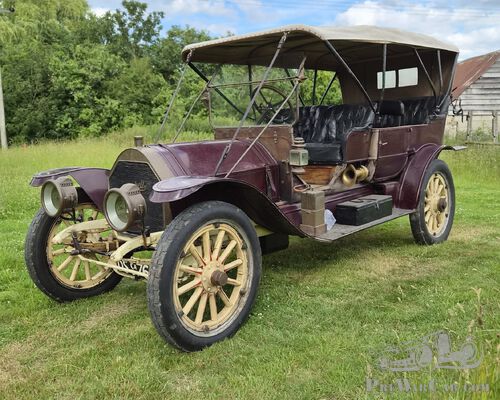
1910 Mitchell Model S - 50HP Six Cylinder
Based in Racine, Wisconsin and being the largest wagon manufacturer in the USA, Mitchell-Lewis produced their first motor car in 1903. Sales grew ..