The global magazine and marketplace for classic car enthusiasts, by enthusiasts.


Filter
Classic DFP - Doriot-Flandrin-Parant, Columbia for sale - DFP - Doriot-Flandrin-Parant, Columbia cars for sale
-

1912 Columbia 45hp Touring
Multi-award-winning restoration on a high quality/low production brass era. Powerful 410 cubic inch T-head engine, dual ignition, pressurized fuel system & discreetly electrified lamps. Built in Connecticut by The Pope Manufacturing Company. Known history, ex. James A. Conant. A fast, tight example and a joy to drive!Worldwide Ship.. -
C1926 DFP open
Rare DFP from c1926Mechanical complet, Missing interior and hood topno documents,can see in LisbonCan help with transportchassis # 40 273


D.F.P.
France, 1906 – 1926
Doriot, Flandrin et Parant, Courbevoie, Seine
Doriot and Flandrin had worked for Clément-Bayard and Peugeot, and their first products were straightforward shaft-driven single-cylinder voiturettes with transverse rear suspension, sold as Doriot-Flandrins until Parant arrived to complete the triumvirate. The singles DFP cars were still being marketed with 1100cc engines as late as 1910, but the 1908 DFP car range already included two 4-cylinder cars with sv Chapuis-Dornier engines of 2.4-litres and 2.8-litres capacity. By 1910 there was a small DFP four, the very successful DFP 10/12hp of 1.6-litres, with L-head Monobloc engine, magneto ignition, thermos-syphon cooling, cone clutch and 3-speed gearbox. There was also a DFP 25/30hp 6-cylinder car in 1911. In 1912 DFP started to make their own engines the ‘DFP 10/12’ being joined by an excellent 2-litre ‘DFP 12/15’ with pressure lubcrication, 3-bearing crankshaft and 4-speed gearbox, capable of 2500rpm and 55mph. Further, the British concession was acquired by the brothers W.O. and H.M. Bentley, who ran the ‘12/15’ in competitions; by the end of 1913 a specially prepared example of the DFP car had been timed of the half-mile at 89.70mph. Nothing, however, could be done with the DFP 16/22hp, a 2.8-litre (later 3-litre) machine with pair-cast cylinders and poor performance. In 1914 came the sporting DFP 12/40hp with V-radiator and electrics: for this model the Bentleys persuaded D.F.P. to fit aluminium pistons, as a consequence of which a 65mph performance was available for only £320. W.O. Bentley finished 6th in that year’s T.T., an excellent effort for a 2-litre car competing against specialized 3.3-litre machines.
DFP never recovered fully from World War 1 and Bentley’s decision to set up as a manufacturer in his own right meant that the DFP car company lost its best export market. A DFP 12/15hp chassis now cost £675 as against £290 in 1914. Failing finances forced the DFP company to use proprietary engines, Altos for the 2-litre models, and a Sergant in the ‘10/12’, which went American in 1922 with central change and coil ignition, but reverted to a magneto in 1923. 1922 ‘DFP 12/40s’ had 4-wheel brakes, and a year later this model was supplanted by an ohv 4-speed ‘13/50’, once again with a DFP-built engine. At the same time the DFP company marketed the little D.F.Petite, a sporting machine in the Amilcar idiom, with an ohv 1100cc engine, 3-speed gearbox, quarter-elliptic springing all round and a back axle without differential. This DFP car had front-wheel brakes by 1925, but a year later production had ceased, the DFP car factory being acquired by the Lafitte concern.
Source: Georgano, encyclopedia of motorcar; MCS
The information is written with the greatest of care. However, if you have any suggested amendments please contact us at office@prewarcar.com
Columbia
US, 1897 – 1913
(1) Pope Manufacturing Co, Hartford, Conn., 1897 – 1899
(2) Columbia Automobile Co, Hartford, Conn., 1899
(3) Columbia & Electric Vehicle Co, Hartford, Conn., 1900
(4) Electric Vehicle Co, Hartford, Conn., 1901 – 1909
(5) Columbia Motor Car Co, Hartford, Conn., 1909 – 1913
The detailed organizational history of the Columbia car make is complex, and its ancestry includes such pioneers as Riker and Morris & Salom. The initial Columbia models were electrically powered and this source was used until at least 1907. They were sold in England under the name City and Suburban, and in France as l’Electromotion. Petrol models were introduced in 1899, known then as the Pope-Columbia, and were designed by Hiram Maxim. These petrol cars were advanced for their time, with left-hand steering wheel, full elliptical springs, a coil radiator in front, and a 2-cylinder engine. The 1903 Columbia Type XLI showed definite European influence, with a sloping bonnet, double chain drive, and its 14hp engine drove it at 45mph.
In 1907, an electric transmission was introduced to the Columbia car, giving 7 forward speeds, with a 4-cylinder engine of 48hp. In 1911 a Knight sleeve-valve engine was used in one model known as the Columbia-Knight. This had a 6.3-litre engine, and was continued to 1913.
The Columbia Motor Car Co was absorbed by United States Motor Co in 1910, and the Columbia make ended when this company collapsed in 1913.
US, 1914
Seattle, Washington
This Columbia was a side-by-side two-seater cyclecar. It used a 2-cylinder engine with overhead valves, combined with a friction transmission and belt drive. Its wheelbase was 8ft, with a track of 3ft 4in.
US, 1914 – 1918
Columbia Electric Vehicle Co, Detroit, Mich.
This electric Columbia car was made in open two-seater, three-seater ‘coupelette’, and four-seater brougham form and was furnished with wire wheels. The price-range of this model, with various options, was $785 to $985. Soon after its introduction, the name was changed from Columbia to Columbian.
US, 1916 – 1924
Columbia Motors Co, Detroit, Mich.
The Columbia was a well thought of assembled car of its era and its low price attracted a considerable number of buyers. Two basic Columbia models were offered, both sixes and both powered by Continental engines. As many as 6.000 units were sold in 1923, principally the roadster at $995 (disc wheels were extra). Planning to expand its manufacturing activities, Columbia purchased the Liberty in 1923, but both makes failed a year later. Noteworthy was Columbia’s use of thermostatically-controlled radiator shutters as early as 1920 which opened as radiator temperature increased. The Columbia car was one of the first automobiles to use this device and doubtless it aided Columbia sales.
Source: Georgano, encyclopedia of motorcar; GMN, KM
The information is written with the greatest of care. However, if you have any suggested amendments please contact us at office@prewarcar.com



Featured
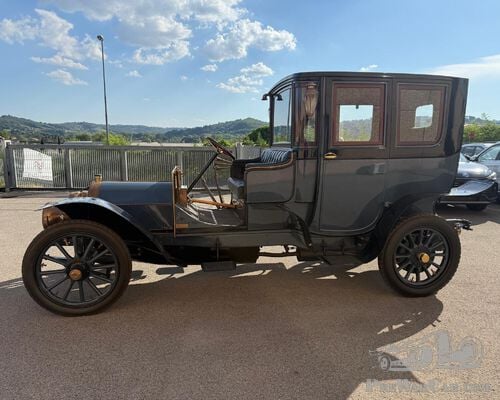
1906 FIAT BREVETTI COUPÉ DE VILLE Coachwork by Carrozzeria Italiana Cesare Sala, Milan
1906 FIAT BREVETTI COUPÉ DE VILLE Coachwork by Carrozzeria Italiana Cesare Sala, Milan Chassis No. 788 Coachwork No. 5699 Location: Siena, Tuscany..
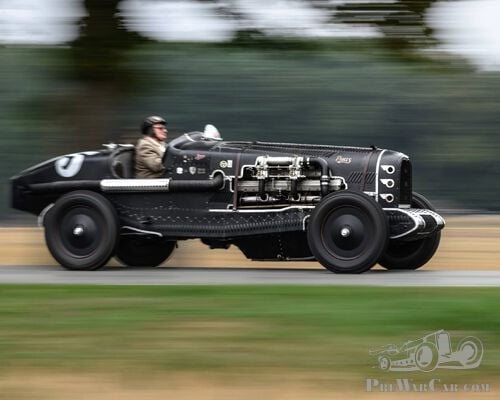
Delage DI, 1924, IL DRAGO RUGGENTE, one of few cars with an Aircraft engine and with war history.
A COLLECTOR'S OPPORTUNITY ONE-OFF. HAND-BUILT. UNREPEATABLE.A MACHINE WITH NO COMPARISONThere are special cars, there are racing cars..
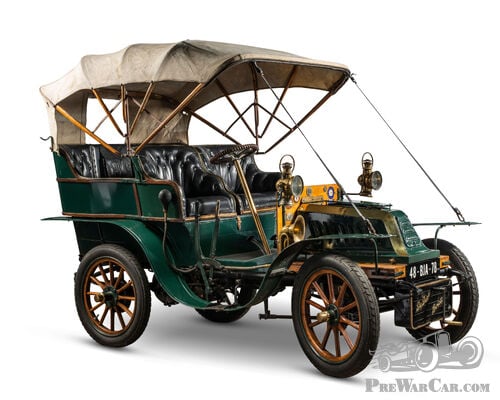
De Dion Bouton Type z in good running condition
De Dion Bouton Type Z from 1905. The car is in good condition, works and runs well. Serie number 36. Engine number 18190. French Carte grise.