The global magazine and marketplace for classic car enthusiasts, by enthusiasts.


Filter
Classic Diatto for sale - Diatto cars for sale
-

Te koop Morgan Aero 1927
De Morgan Aero is geproduceerd van 1920 tot rond 1933. Dit voertuig met chassisnummer B718 is van 1927. De driewieler is in goed rijdbare en in originele staat, video’s hierover zijn het bewijs. De aandrijving (koppeling & bak) en dynamo zijn op kwalitatief gezien technisch verantwoorde wijze enigszins aangepast, waarmee de technische betrou.. -
Ford Model T Runabout - Fully restored by specialist
Ford Model T RunaboutThis "Tin Lizzie" has been fully restored. The pistons, piston rings, valves, and valve lifters in the engine have been replaced. The main and connecting rod bearings have been inspected and adjusted to the correct tolerances, and the connecting rods have been aligned. To improve bearing lubrication, we have fitted th.. -
Very original Ford Model AA truck – Mechanically fully serviced
Imagine this: you open the doors of an old barn and there it is, waiting to be discovered. A 1928 Ford Model AA, a timeless classic that has been resting in a peaceful slumber for the past 50 years. This rugged truck, a true American legend, is more than just a vehicle; it is a living work of art, a sculpture of steel and wood that proudl.. -
1935 MERCEDES BENZ 200 W21 LWB CABRIOLET
1935 Mercedes Benz 200 W21 LWB Cabriolet Chassis number: 108020Registration Number: Applied for. Produced in 1935, this very rare Mercedes cabriolet is the enbodiment of teutonic quality manufacturing. The Mercedes 200 W21 was in production between 1933 and 1936 as the successor to the W02. This W21 is o.. -
Chrysler B70 Phaeton 1925
Very nice Chrysler, in good running order.Older Quality restoration.Powerfull engine.Hydraulic BrakesBeautiful color combination ,Leather interior. -
1939 Latil Mk I Road Tractor | Brightwells | Auction Ends: Tue 18th Aug
Very rare pre war French machine; four wheel drive and steering; Frank Galliers of Shrewsbury livery Further details to come - toby.service@brightwells.com -
1927 Scammell 100 Tonner Tractor Unit | Brightwells | Auction Ends: Tue 18th Aug
An important part of British engineering and transport heritage; one of just two Scammell 100-tonners built and the only survivor in running and driving order; affectionately know as 'Leaping Lena'; arguably the most significant surviving British heavy haulage vehicle Initially conceived after the need arose for UK built Kit.. -
1936 Bugatti Type 57 Atalante
1936 Bugatti Type 57 Atalante. We have two available, both with european papers. Both are fully matching numbers with complete history from day one. Qualified principals please call Richard Biddulph 0044 7967 260673 for full details. -
Alfa Romeo RL Special Racer
Alfa Romeo RL Special, 6cylinders 2500ccm Jaguar SS100 Type engine & transmission, Rolling chassis from the twenties, friction brakes.Chassis is a period chassis adapted to the dimensions of an Alfa Romeo RL, similar to the front and rear axles.The bodywork is newly made from aluminium.Engine & transmis.. -
AC 16 / 66 - 1935 / 6 Cylinder / British Racing Green
AC (Acédès) 16/66 Drophead Coupe, year 1935. Chassis number L34X, engine number UBS.29X. Original British registration: DPC918. Colour: dark British Racing Green combined with a beige leather interior and light brown carpet trimmed with beige borders. The car is fitted with a black vinyl hood and a light brown mohair tonneau..


Diatto
Italy, 1905 – 1927
(1) Diatto-A. Clément Vetture Marca Torino, Turin, 1905 – 1909
(2) Società Officine Fonderie Fréjus Vetture Diatto, Turin, 1909 – 1918
(3) Fonderie Officine Fréjus Automobili Diatto, Turin, 1918 – 1919
(4) Automobili Diatto, Turin, 1919 – 1923
(5) Autoconstruzioni Diatto, Turin, 1924 – 1927
The Diatto railway engineering concern entered the automobile industry by allying themselves with Adolpphe Clément (who joined the board at Diatto) to build Clément-Bayard cars under licence in Italy. Curious 2- and 4-cylinder Diatto models were marketed between 1906 and 1910; all had T-head engines, ht magneto ignition, and shaft drive, though latterly the largest Diatto, the 4.8-litre 28/35, could be had with side chains as well, and in 1908 there was a short-lived 4.1-litre six. Clément’s resignation in 1909 coincided with the Diatto company’s first monobloc engine, the 2.9-litre 16/20, but this was still of T-head type. The L-head configuration did not arrive until the 2-litre 12/15 of 1910 (sometimes known as the Fréjus); this evolved into the staple pre-World War 1 Diatto, and grew up to 2.4-litres with a 4-speed gearbox by 1915. In that year Scacchi and Newton were absorbed, and Diatto turned over to trucks and Bugatti aero engines, though new 2.7-litre and 4-litre fours were announced bij Diatto in 1916.
The Diatto firm made a few 1½-litre Bugatti Brescias in 1919 under the Diatto Tipo 30 desination, but their own post-war programme consisted of a 2.7-litre 4-cylinder in the traditional idiom, and Diatto Tipo 10, a simple light car with 1018cc sv engine, 3-speed egearbox, and plate clutch. This attempt to compete against Fiat had been abandoned by the end of 1922, in which year the Diatto company introduced their successful Diatto Tipo 20, a 2-litre four with shaft-driven overhead camshaft, 4-speed gearbox, and the usual Italian mock-Rolls Royce radiator. Output, originally a modest 40bhp, was worked up to around 70 by Diatto’s development engineer, Alfieri Maserati. Competition successes included three successive victories by Diatto (1922, 1923 and 1924) in the Circuit of Garda, as well as the 2-litre honours in the 1924 Gran Premio Della Notte at Monza. The short-wheelbase high-performance Diatto 20S, as well as 4-wheel brakes, appeared in 1924 and at the end, in 1926 – 1927, 2.6-litre (Diatto Tipo 26) and 3-litre (Diatto Tipo 25 and 35) developments were listed, in addition to the basic model. Maserati built a dohc supercharged straight-8 Diatto for the 2-litre Grand Prix formula in 1925, but it made one brief and unsuccessful appearance. By 1926 the Diatto had been redesigned, and was being raced as the first car to bear the Maserati name.
Source: Georgano, encyclopedia of motorcar; MCS
The information is written with the greatest of care. However, if you have any suggested amendments please contact us at office@prewarcar.com


Featured
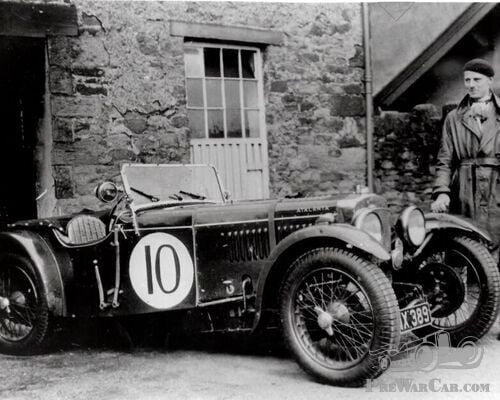
Fraser Nash TT Replica
AHX 389 ( chassis no. 2073, engine no. 10367).An important and correct short-chassis TT Replica with known history from new. Ex. H. P..
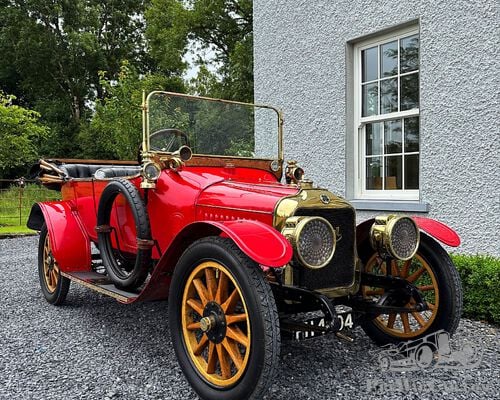
1914 Brasier
1914 Brasier Tourer 9ABrasier were a French manufacturer who were in business from 1901 until 1930, when the company became victim of the gr..
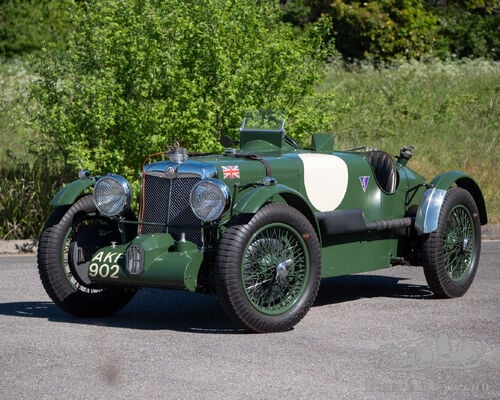
K3 Replica on KN Chassis
"The K3 Magnette must rank in the history books as the most famous and successful of all the record breaking MGs. With only 33 examples produced durin..