The global magazine and marketplace for classic car enthusiasts, by enthusiasts.


Filter
Classic Chalmers, Dodge for sale - Chalmers, Dodge cars for sale
-

1941 Dodge WC-12 ½-Ton 4x4 Military Truck | RM Sotheby's | The Hershey Auction
To Be OFFERED AT AUCTION WITHOUT RESERVE at RM Sothebys' The Hershey Auction event, 7 - 8 October 2026. Offered Without Reserve | $25,000 - $35,000 USD Please check back soon as our dedicated cataloguing team is preparing the description for this lot. To view this car and others currently consigned to this auction, please visit the RM website a.. -
1926 Dodge Roadster
Offered due to trade-in:Unique 1926 Dodge Roadster.Originated from collection.Engine runs well. Comes with USA Title.Very original condition.


Chalmers / Chalmers-Detroit
US, 1908 – 1924
Chalmers Motor Car Co, Detroit, Mich.
The Chalmers was one of the most popular automobiles made in the United States for more than a decade. The Chalmers was the successor to the Thomas-Detroit which was built by a company which had been founded in 1906 by E.R. Thomas (builder of the Thomas car in Buffalo, N.Y.), Roy D. Chapin and Howard Earle Coffin; the two latter had previously served at Oldsmobile. The Thomas-Detroit of which some 500 were sold during the first year of production, was marketed through the parent firm in Buffalo which manufactured a larger line of cars under the Thomas emblem. The Thomas-Detroit was a medium priced four-cylinder car which had been designed by Coffin. In 1907, Hugh Chalmers, vice president of the National Cash Register Co and a noted salesman, entered the firm. Shortly after, he bought a half of E.R. Thomas’ stock and became president of the company which became the Chalmers-Detroit Motor Company. The Thomas-Detroit became the Chalmers-Detroit in 1908 and in 1910, the Chalmers. Open and closed Chalmers models in two lines comprised the Chalmers four-cylinder cars, with self-starters appearing in 1912. Chalmers (as Chalmers-Detroit) had distinguished itself in road races as early as 1908 when W.R. Burns won the Motor Parkway Sweekstakes at Jericho, N.Y., averaging 48.7mph in the six-lap 140.76 mile run.
In 1913, the Chalmers brought out its first 6-cylinder model, as well as the four and apart from small mechanical and design changes, continued both until 1914. The Chalmers four was dropped from the 1915 line, however, and sixes were to be used exclusively in Chalmers until the ending of manufacture. By 1915, some 20.000 Chalmers cars per year were coming off the Chalmers production line and would even exceed that figure before the advent of World War 1. In 1917, an L-head motor replaced the earlier overhead-valve type and on August 4th, Chalmers again headed racing news when Joe Dawson won the 24-hour stock Car Endurance Run at Sheepshead Bay, N.Y. Sales flagged following the end of the war and Hugh Chalmers, always the salesman, and with the realization that a competitor, Maxwell, wasn’t faring well either, arranged to lease his Chalmers plants to Maxwell, using his salesmanship to promote the two concerns and getting the benefit of Maxwell tooling and manufacturing equipment. By the early 1920s, however, many makes of cars were in financial difficulties due to over-expansion and recession, and Walter P. Chrysler was called in to try and reorganize Maxwell. Chrysler was at this time planning his own corporation and in 1922 Chalmers was taken over by Maxwell which had become a Chrysler subsidiary. The last Chalmer cars for sale were equipped with Lockheed hydraulic brakes but 1923 was the last year of Chalmers production with some 9000 units leaving the factories. The Maxwell survived until 1925 when it became the Chrysler Four.
Source: Georgano, encyclopedia of motorcar; KM
The information is written with the greatest of care. However, if you have any suggested amendments please contact us at office@prewarcar.com
Dodge
US, 1914 to date
(1) Dodge Brothers, Detroit, Mich., 1914 – 1928
(2) Chrysler Corp, Detroit, Mich., 1928 to date
The brothers John and Horace Dodge, early Ford shareholders and builders of engines for the Ford Motor Co, produced their first Dodge car in November 1914. It was a conventional side valve Monobloc four of 3½-litres, developing 25bhp. The Dodge was noted for its 12-volt electrics, and ‘back-to-front’ gear change, features that were not discarded until 1926. The tough Dodge 4 won early acceptance by the American army after being used in General Pershing’s punitive expedition to Mexico in 1916, and the Dodge type was widely used in World War 1 as a staff car and ambulance. Also in 1916 Budd all-steel tourer bodywork was adopted; some saloons were also made in this year, using the same construction. The price of open Dodge cars was $785, and Dodge was fourth in overall US sales in 1916 with 70.700 Dodge cars delivered, following this up with a second place in 1920. The Dodge four was still the staple product in 1924, when 1.000 cars were being made a day. A new departure for Dodge in 1927 was a 3.7-litre side-valve six with internal-expanding hydraulic brakes.
In July 1928, Walter P. Chrysler paid $175.000.000 for the Dodge company. Discontinuation of the Dodge four, now developing 40bhp and fitted with front-wheel brakes, followed almost immediately, but for the next three years Dodges preserved their individual appearance. Though their cars were reckoned more expensive than DeSotos, Dodge offered a very cheap Dodge Standard 6 at $765 in 1929, their other models being the Dodge Victory at about $1.000, and a big Dodge Senior which paralleled Chrysler’s 75 at $1.675. A straight-8 was listed from 1930 to 1933. Free wheels were among the regular Chrysler improvements which appeared on the scene in 1932, followed by synchromesh gearboxes in 1933. In this year Dodge again took fourth place in sales, with 86.062 Dodge cars delivered. There were no Dodge versions of the Chrysler Airflow, but 1935 Dodge cars had the Airstream styling and side-valve 6-cylinder engines of 3.6-litre capacity. Overdrive, hypoid rear axles and independent front suspension made their appearance in the later 1930s, and Dodge cars of the 1940s were hard to distinguish from DeSotos or the de luxe Plymouths.
The expected ohv V8, publicized under the name Dodge Red Ram, materialized in 1952; it was a modest-sized 3.8-litre unit, and in 1955, when Chryslers were largely restyled, the Dodge cars were available both with the old 3.8-litre side-valve six and with V8s in three ratings up to 193bhp. By 1959 – the last year of the sv 6-cylinder – the most powerful eight disponed of some 345bhp, from 6.3-litres. Dodge has continued to offer more potent alternatives to the regular sedans, with a brisk Dodge Charger fastback coupé available in 1966. A ‘compact’ car, the Dodge Lancer, was listed in 1961, but this was vitually indistinguishable from the Plymouth Valiant. Regular 1967 Dodges had Chrysler’s unitary construction and alternator ignition introduced in 1960, and there were three basic ranges: the semi-compact Dodge Dart on a 9ft 3in wheelbase; the medium-sized Dodge Coronet; and the big Dodge Polara and Dodge Monaco on a wheelbase of 10ft 1in, with V8 engines of up to 7.2-litres’ capacity. The more sporting Dodge Charger coupé appeared in 1968, available with a 6.981cc hemi-head V8 of 425bhp; concealed wipers came on the 1969 Dodge models; and in 1970 the Dodge Challenger filled the gap between Dart and Coronet: standard engines were a 3.7-litre six or a 5.2-litre V8. There was a Dart sports coupé, the Dodge Demon, in 1971, but this was also the last year of the hemi-head engine and of convertibles in the Dodge range.
For 1973 there was the Dodge Dart on a 9ft wheelbase, the Dodge Challenger coupé, the Dodge Coronet and its sporting sister, the Dodge Charger, and the full-sized Dodge Polara and Dodge Monaco series. The Monaco had concealed headlamps. The biggest Dodge cars had V8 engines, automatic transmissions and power steering as standard. Electronic ignition was standard on all Dodge models, and all but the basic Darts had front disc brakes. Engines available were sixes of 3.245cc and 3.688cc, and V8s of 5.2, 5.6, 6.6 and 7.2 litres.
Since 1970 Dodge have been selling the Japancese Mitsubishi Colt as a small-car line in the USA.
Source: Georgano, encyclopedia of motorcar; MCS
The information is written with the greatest of care. However, if you have any suggested amendments please contact us at office@prewarcar.com


Featured
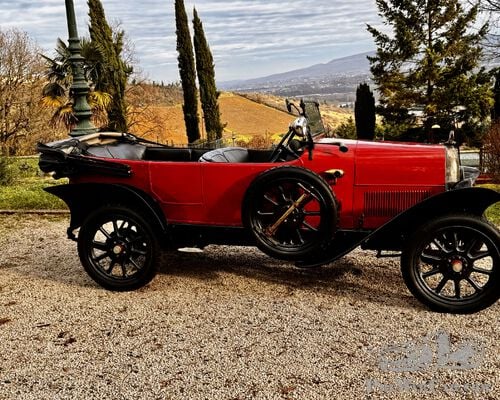
Torpedo sport de 1923 complete et fonctionnelle, conforme a sa sortie d'usine ,d'une authenticité totale, agréer à participer aux MILLE MIGLIA
Voiture référencée pour son authenticité au BOOK FIAT historique de ThurinBelle présentatio, peinture ancienne d'environ 20 ans ,Mot..
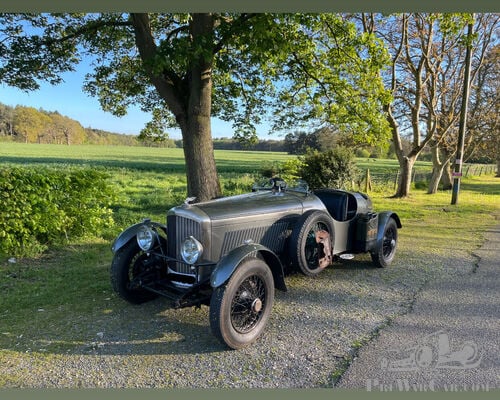
Derby Bentley Special 4-1/4
Sadly i am having to sell on my Bentley special ( Icarus). It is currently a work in progress and still needs finalising/ refining. A great o..

Alfa 6C1750 Spider
Alfa 6C1750 Spider with complete history from delivery in 1930 to first owner in Firenze till today with copy Libretto/license plate all the years