The global magazine and marketplace for classic car enthusiasts, by enthusiasts.


Filter
Classic Case, Donnet/ Donnet-Zédel for sale - Case, Donnet/ Donnet-Zédel cars for sale
-

Case tractionengine for sale
Case 45, year 1909, probably one of the the best case worldwide. Restored from scratch, one hundred percent original. The tractor was restored in 2000 and the boiler was rebuilt by specialist Mc Ewen in England. An authentic water and coal trailer was built.This case has boiler test from England and Austrian TÜV, all papers are therefor. If you ..

Case
CDN, 1907
Lethbridge Motor Car Co, Lethbridge, Alt.
The Case Model A had a 20/24hp 4-cylinder air-cooled engine, friction drive, and what were describes as ‘Fawkes airless tyres’. The price for the Canadian Case was $2.000.
US, 1910 – 1927
The J.I. Case Threshing Machine Co, Racine, Wisc.
The American Case was a conventional car made by one of America’s best-known makers of threshing machines, steam traction engines and agricultural tractors. The Case cars were mainly sold through the farm equipment dealers. At first 4-cylinder Case cars only were made, the 1914 range consisting of a ‘Case 25’, ‘Case 35’, and powerful ‘Case 40’, but a Continental-engined Case six was offered for 1918. This was available in three body styles, a touring, a sedan, and a ‘sport’, which was a close-coupled open four-seater. The engine was rated at 29.4hp (3.9-litres), and this was gradually increased to 31.5hp (5.3-litres) by 1923. These 6-cylinder engines were all by Continental, and usually only one size was offered each year, although in some years (such as 1923) an overlap between Case models made two sizes available. From 1924 a smaller Case six of 4-litres was made, but in decreasing quantities, and in 1927 Case car production ceased. The Case company is still active and well-known in the field of agricultural tractors and other farm equipment. These, like the Case cars, carry the eagle emblem modelled on ‘Old Abe’, the famous mascot of the 8th Wisconsin Regiment from 1861 to 1881.
Source: Georgano, encyclopedia of motorcar; GNG
The information is written with the greatest of care. However, if you have any suggested amendments please contact us at office@prewarcar.com
Donnet / Donnet-Zédel
France, 1924 – 1934
SA des Automobiles Donnet, Nanterre, Seine; Neuilly, Seine, Pontarlier, Doubs.
After Zédel and Vinot et Deguingand ceased production, Donnet, a new company constituted from them in 1924, offered two new cars called Donnet-Zédel. A light car was made, the 7CV Donnet-Zedel Type G, which had a side-valve 4-cylinder engine of 1100cc and (unusual for so small a vehicle) a 4-speed gearbox. It was a solidly-built machine, and a Donnet-Zedel sports model was listed. There was, in addition, a medium-sized four of about 2¼-litres. From 1926, the Donnet-Zedel firm came to concentrate upon a 2½-litre six, also with side valves, which proved a popular car. Another, smaller six with 1.3-litres (later 1.8-litre) Sainturat-designed engine was also offered by Donnet-Zedel. In the 1932 range however, was a new small Donnet-Zedel car in the shape of a 750cc 2-stroke. This, a violet design, had been sold as the Dequingand until 1930. A fwd 2-litre 6-cylinder Donnet-Zedel, shown at the 1931 Paris Salon came to nothing. With the demise of Donnet, Simca took over the Donnet-Zedel factory.
Source: Georgano, encyclopedia of motorcar; TRN
The information is written with the greatest of care. However, if you have any suggested amendments please contact us at office@prewarcar.com


Featured
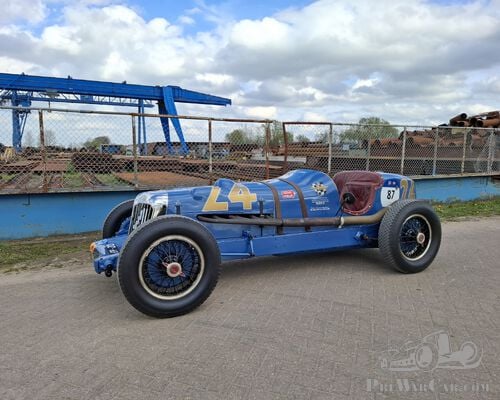
1932 - Graham " Lucenti " Indianapolis
Original participant of the 1932, 1934 and 1935 Indy 500. Best result: finishing 10th overall in the 1934 Indy 500 with driver “Herb” Ardinger...
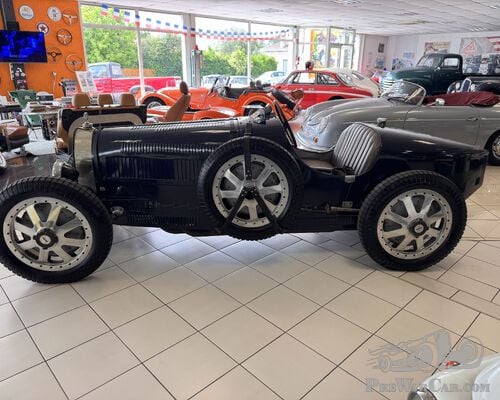
Bugatti 35 B Pur Sang
Bugatti 35 B Pur Sang,importée par un membre délégué de la FFVE il y’a une quinzaine d années.Participation à de nombreux Rallyes Bug..