The global magazine and marketplace for classic car enthusiasts, by enthusiasts.


Filter
Classic DFP - Doriot-Flandrin-Parant, Donnet/ Donnet-Zédel for sale - DFP - Doriot-Flandrin-Parant, Donnet/ Donnet-Zédel cars for sale
-

C1926 DFP open
Rare DFP from c1926Mechanical complet, Missing interior and hood topno documents,can see in LisbonCan help with transportchassis # 40 273

D.F.P.
France, 1906 – 1926
Doriot, Flandrin et Parant, Courbevoie, Seine
Doriot and Flandrin had worked for Clément-Bayard and Peugeot, and their first products were straightforward shaft-driven single-cylinder voiturettes with transverse rear suspension, sold as Doriot-Flandrins until Parant arrived to complete the triumvirate. The singles DFP cars were still being marketed with 1100cc engines as late as 1910, but the 1908 DFP car range already included two 4-cylinder cars with sv Chapuis-Dornier engines of 2.4-litres and 2.8-litres capacity. By 1910 there was a small DFP four, the very successful DFP 10/12hp of 1.6-litres, with L-head Monobloc engine, magneto ignition, thermos-syphon cooling, cone clutch and 3-speed gearbox. There was also a DFP 25/30hp 6-cylinder car in 1911. In 1912 DFP started to make their own engines the ‘DFP 10/12’ being joined by an excellent 2-litre ‘DFP 12/15’ with pressure lubcrication, 3-bearing crankshaft and 4-speed gearbox, capable of 2500rpm and 55mph. Further, the British concession was acquired by the brothers W.O. and H.M. Bentley, who ran the ‘12/15’ in competitions; by the end of 1913 a specially prepared example of the DFP car had been timed of the half-mile at 89.70mph. Nothing, however, could be done with the DFP 16/22hp, a 2.8-litre (later 3-litre) machine with pair-cast cylinders and poor performance. In 1914 came the sporting DFP 12/40hp with V-radiator and electrics: for this model the Bentleys persuaded D.F.P. to fit aluminium pistons, as a consequence of which a 65mph performance was available for only £320. W.O. Bentley finished 6th in that year’s T.T., an excellent effort for a 2-litre car competing against specialized 3.3-litre machines.
DFP never recovered fully from World War 1 and Bentley’s decision to set up as a manufacturer in his own right meant that the DFP car company lost its best export market. A DFP 12/15hp chassis now cost £675 as against £290 in 1914. Failing finances forced the DFP company to use proprietary engines, Altos for the 2-litre models, and a Sergant in the ‘10/12’, which went American in 1922 with central change and coil ignition, but reverted to a magneto in 1923. 1922 ‘DFP 12/40s’ had 4-wheel brakes, and a year later this model was supplanted by an ohv 4-speed ‘13/50’, once again with a DFP-built engine. At the same time the DFP company marketed the little D.F.Petite, a sporting machine in the Amilcar idiom, with an ohv 1100cc engine, 3-speed gearbox, quarter-elliptic springing all round and a back axle without differential. This DFP car had front-wheel brakes by 1925, but a year later production had ceased, the DFP car factory being acquired by the Lafitte concern.
Source: Georgano, encyclopedia of motorcar; MCS
The information is written with the greatest of care. However, if you have any suggested amendments please contact us at office@prewarcar.com
Donnet / Donnet-Zédel
France, 1924 – 1934
SA des Automobiles Donnet, Nanterre, Seine; Neuilly, Seine, Pontarlier, Doubs.
After Zédel and Vinot et Deguingand ceased production, Donnet, a new company constituted from them in 1924, offered two new cars called Donnet-Zédel. A light car was made, the 7CV Donnet-Zedel Type G, which had a side-valve 4-cylinder engine of 1100cc and (unusual for so small a vehicle) a 4-speed gearbox. It was a solidly-built machine, and a Donnet-Zedel sports model was listed. There was, in addition, a medium-sized four of about 2¼-litres. From 1926, the Donnet-Zedel firm came to concentrate upon a 2½-litre six, also with side valves, which proved a popular car. Another, smaller six with 1.3-litres (later 1.8-litre) Sainturat-designed engine was also offered by Donnet-Zedel. In the 1932 range however, was a new small Donnet-Zedel car in the shape of a 750cc 2-stroke. This, a violet design, had been sold as the Dequingand until 1930. A fwd 2-litre 6-cylinder Donnet-Zedel, shown at the 1931 Paris Salon came to nothing. With the demise of Donnet, Simca took over the Donnet-Zedel factory.
Source: Georgano, encyclopedia of motorcar; TRN
The information is written with the greatest of care. However, if you have any suggested amendments please contact us at office@prewarcar.com


Featured
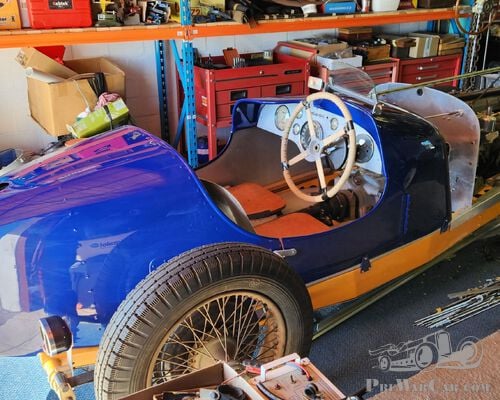
Riley TT Sprite
1935 6-cylinder TT Sprite replica. Chassis # 46A2722. Engine # 6A2722. Original Ulster Imp body. Restoration nearing completion. Engine, Ge..
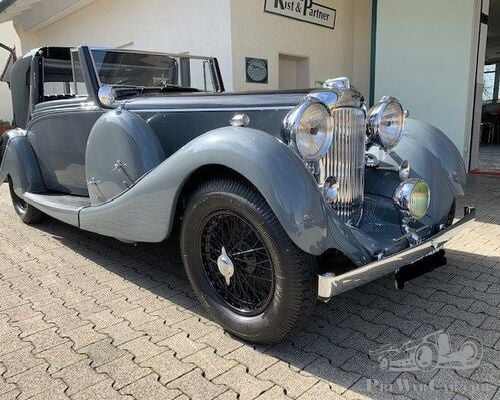
Lagonda LG 45 Coupe de Ville Sedanca by Mayfair
The successor to the M45, the LG45 was built around the same highly capable, competition-proven 4.5-litre Meadows inline-six engine, but featured r..
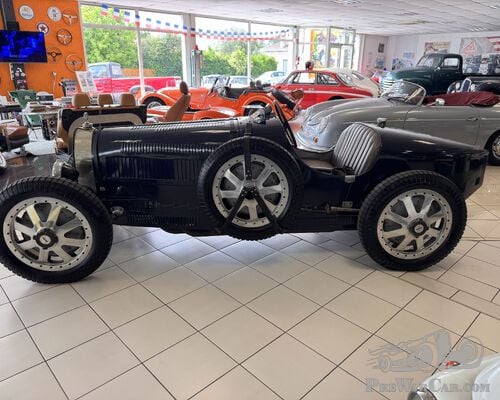
Bugatti 35 B Pur Sang
Bugatti 35 B Pur Sang,importée par un membre délégué de la FFVE il y’a une quinzaine d années.Participation à de nombreux Rallyes Bug..