The global magazine and marketplace for classic car enthusiasts, by enthusiasts.


Filter
Classic Donnet/ Donnet-Zédel, Flint for sale - Donnet/ Donnet-Zédel, Flint cars for sale
-

Flint 1925/26 touring-car
Was on the road 8 month ago , but now it stands not running. It need total restoration . Top is very bad.It has Danish registration document . Lots of documentations goes with car.There are some extra parts with the car : trunk , extra rim , cyl.head , trunk-rag , and more.

Donnet / Donnet-Zédel
France, 1924 – 1934
SA des Automobiles Donnet, Nanterre, Seine; Neuilly, Seine, Pontarlier, Doubs.
After Zédel and Vinot et Deguingand ceased production, Donnet, a new company constituted from them in 1924, offered two new cars called Donnet-Zédel. A light car was made, the 7CV Donnet-Zedel Type G, which had a side-valve 4-cylinder engine of 1100cc and (unusual for so small a vehicle) a 4-speed gearbox. It was a solidly-built machine, and a Donnet-Zedel sports model was listed. There was, in addition, a medium-sized four of about 2¼-litres. From 1926, the Donnet-Zedel firm came to concentrate upon a 2½-litre six, also with side valves, which proved a popular car. Another, smaller six with 1.3-litres (later 1.8-litre) Sainturat-designed engine was also offered by Donnet-Zedel. In the 1932 range however, was a new small Donnet-Zedel car in the shape of a 750cc 2-stroke. This, a violet design, had been sold as the Dequingand until 1930. A fwd 2-litre 6-cylinder Donnet-Zedel, shown at the 1931 Paris Salon came to nothing. With the demise of Donnet, Simca took over the Donnet-Zedel factory.
Source: Georgano, encyclopedia of motorcar; TRN
The information is written with the greatest of care. However, if you have any suggested amendments please contact us at office@prewarcar.com
Flint
US, 1902 – 1904
Flint Automobile Co, Flint, Mich.
The Flint was a light two-seater runabout with a rear-mounted single-cylinder engine and no mudguards. The Flint was designed by A.B.C. Hardy who was later general manager of Marquette and then Chevrolet. Flint is sometimes erroneously called the Hardy after the designer.
US, 1923 – 1927
Flint Division, Locomobile Co of America, Long Island City, N.Y., 1923 – 1924, Elizabeth, N.J., 1924 – 1927, Flint, Mich., 1924 – 1926
Fitted with a 7-bearing crankshaft and a steel tube for added reinforcement, the Flint occupied an important niche in William C. Durant’s car empire. With its 6-cylinder Continental engine and a price of less than $2.000 for the closed models, Flint was popular in its class and as many as 3.000 Flint cars were sold in a year. Lockheed hydraulic 4-wheel brakes came with the 1925 Flint model, and during the company’s last two years there were two big sixes of 3.8-litres and 4½-litres, as well as the 2.8-litre ‘Flint Junior’. A compact six Flint with rear wheel brakes only.
Source: Georgano, encyclopedia of motorcar; GNG, KM
The information is written with the greatest of care. However, if you have any suggested amendments please contact us at office@prewarcar.com


Featured

K3 Replica on KN Chassis
"The K3 Magnette must rank in the history books as the most famous and successful of all the record breaking MGs. With only 33 examples produced durin..
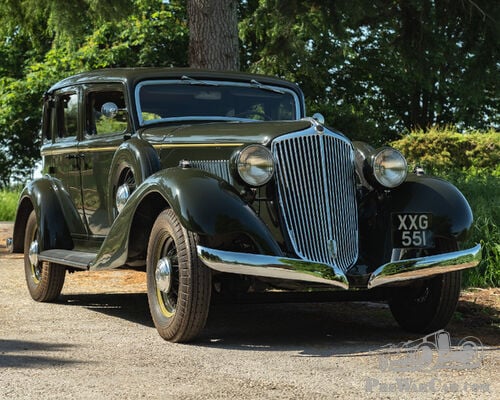
Graham Model 64 Standard Eight 'Blue Streak'
UK Registration No: XXG 551Chassis No: 1801069MOT: ExemptH&H ClassicsKelham Hall | Newark, Nottinghamshire
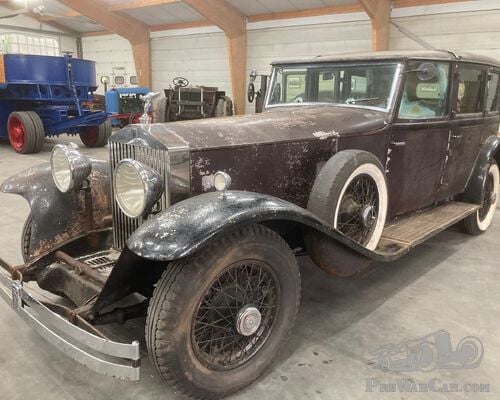
Rolls-Royce
Rolls-Royce Phantom ll chassisnummer 287 AJS. bouwjaar 1932, Links gestuurd, Brewster Keswick Sedance Towncar