The global magazine and marketplace for classic car enthusiasts, by enthusiasts.


Filter
Classic Gray, Donnet/ Donnet-Zédel for sale - Gray, Donnet/ Donnet-Zédel cars for sale
-

1925 Gray open tourer
1925 Gray open tourer , mechanically complete but comes with spare engine and rearaxle. Panelwork to be done to the body and guards. Is in our Dutch storage. Rare Canadian built righthanddrive car. This is the last year of Gray motorcars € 9500.

Gray
US, 1920
Gray Light Car Corp, Longmont, and Denver, Colo.
The Gray concern with a splendid-sounding title in fact only built two Gray cars, both of them cyclecars of what sounds like a particularly spidery kind. One Gray car for sale was powered by a single-cylinder motor-cycle engine and the other Gray car for sale by a twin, both made by Harley-Davidson. Motor-cycle wheels were fitted.
US, 1922 – 1926
Gray Motor Corp, Detroit, Mich.
During the 1920s, two new makes, Star and Gray, tried to win a share of the mass market dominated by the Model T Ford. The Gray car for sale was in fact made by former employees of Ford, who included the head of the Gray Corporation, F.L. Klingensmith, and this Gray car was similar to the Ford in several features of engine and chassis. A side-valve, 4-cylinder, 2.7-litre engine was used. Unlike the Ford, the Gray cars springing was by conventional quarter-elliptics at front and rear. Front-wheel brakes were offered in 1926 on the Gray car, but that year was its last. The Gray company’s grandiose plans, which included making nearly a quarter of a million cars in the first full year of production, at $490 for the touring car and $760 for the coach, were never fully realized.
Source: Georgano, encyclopedia of motorcar; TRN
The information is written with the greatest of care. However, if you have any suggested amendments please contact us at office@prewarcar.com
Donnet / Donnet-Zédel
France, 1924 – 1934
SA des Automobiles Donnet, Nanterre, Seine; Neuilly, Seine, Pontarlier, Doubs.
After Zédel and Vinot et Deguingand ceased production, Donnet, a new company constituted from them in 1924, offered two new cars called Donnet-Zédel. A light car was made, the 7CV Donnet-Zedel Type G, which had a side-valve 4-cylinder engine of 1100cc and (unusual for so small a vehicle) a 4-speed gearbox. It was a solidly-built machine, and a Donnet-Zedel sports model was listed. There was, in addition, a medium-sized four of about 2¼-litres. From 1926, the Donnet-Zedel firm came to concentrate upon a 2½-litre six, also with side valves, which proved a popular car. Another, smaller six with 1.3-litres (later 1.8-litre) Sainturat-designed engine was also offered by Donnet-Zedel. In the 1932 range however, was a new small Donnet-Zedel car in the shape of a 750cc 2-stroke. This, a violet design, had been sold as the Dequingand until 1930. A fwd 2-litre 6-cylinder Donnet-Zedel, shown at the 1931 Paris Salon came to nothing. With the demise of Donnet, Simca took over the Donnet-Zedel factory.
Source: Georgano, encyclopedia of motorcar; TRN
The information is written with the greatest of care. However, if you have any suggested amendments please contact us at office@prewarcar.com


Featured
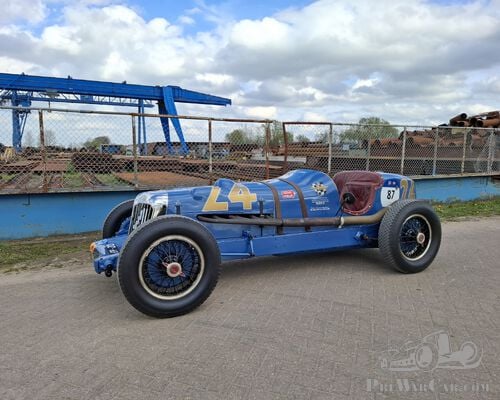
1932 - Graham " Lucenti " Indianapolis
Original participant of the 1932, 1934 and 1935 Indy 500. Best result: finishing 10th overall in the 1934 Indy 500 with driver “Herb” Ardinger...
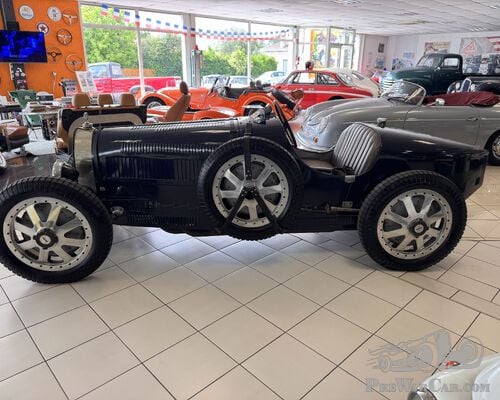
Bugatti 35 B Pur Sang
Bugatti 35 B Pur Sang,importée par un membre délégué de la FFVE il y’a une quinzaine d années.Participation à de nombreux Rallyes Bug..