The global magazine and marketplace for classic car enthusiasts, by enthusiasts.


Filter
Classic Donnet/ Donnet-Zédel, Haynes-Apperson for sale - Donnet/ Donnet-Zédel, Haynes-Apperson cars for sale
-

1900 Haynes Apperson Twin Cylinder - VCC Dated
1900 Haynes Apperson Twin Cylinder PhaetonRegistration No. BS8275Engine No. 17VCC Dating Cert No. 2255 Elwood Haynes of Kokomo, Indiana, US, was one of the first Americans to build a motorcar. A brilliant metallurgist, Haynes invented Stellite stainless steel, by the age of 27 he had devised a process for produ..

Donnet / Donnet-Zédel
France, 1924 – 1934
SA des Automobiles Donnet, Nanterre, Seine; Neuilly, Seine, Pontarlier, Doubs.
After Zédel and Vinot et Deguingand ceased production, Donnet, a new company constituted from them in 1924, offered two new cars called Donnet-Zédel. A light car was made, the 7CV Donnet-Zedel Type G, which had a side-valve 4-cylinder engine of 1100cc and (unusual for so small a vehicle) a 4-speed gearbox. It was a solidly-built machine, and a Donnet-Zedel sports model was listed. There was, in addition, a medium-sized four of about 2¼-litres. From 1926, the Donnet-Zedel firm came to concentrate upon a 2½-litre six, also with side valves, which proved a popular car. Another, smaller six with 1.3-litres (later 1.8-litre) Sainturat-designed engine was also offered by Donnet-Zedel. In the 1932 range however, was a new small Donnet-Zedel car in the shape of a 750cc 2-stroke. This, a violet design, had been sold as the Dequingand until 1930. A fwd 2-litre 6-cylinder Donnet-Zedel, shown at the 1931 Paris Salon came to nothing. With the demise of Donnet, Simca took over the Donnet-Zedel factory.
Source: Georgano, encyclopedia of motorcar; TRN
The information is written with the greatest of care. However, if you have any suggested amendments please contact us at office@prewarcar.com
Haynes Apperson
US, 1898 – 1904
The Haynes Apperson Co, Kokomo, Ind.
Although Elwood Haynes had built his first car in 1894, none Haynes was made for sale until he joined forces with the Apperson brothers. By the end of 1898 Haynes-Apperson cars were being made in two-, four- and six-seater models, all powered by a rear-mounted horizontally-opposed 2-cylinder engine of 3.120cc. The Haynes Apperson car had three forward speeds, spur gear transmission, and tiller steering. For three years this design of the Haynes Apperson car was made without great change, although the straight dash gave way to a sloping version. In November 1901 the Appersons left the Haynes Apperson car firm to make cars under their own name, but the Haynes-Apperson name continued on the cars for nearly three years longer. By 1903 the left-hand tiller steering had been replaced by a wheel, but this was still mounted on the left side, an unusual feature at the time on American cars. On 1904 Haynes Apperson car models the engine was moved to the front under a conventional bonnet, although it was still a horizontally-opposed twin. Prices ranged from $1.450 for a two-seater runabout to $2.550 for a five-seater tonneau. From June 1904 the Haynes Apperson cars began to be referred to as Haynes, and the 1905 cars with vertical 4-cylinder engines were always known under this name. The Haynes Apperson car company name was not changed until September 1905.
Source: Georgano, encyclopedia of motorcar; GNG
The information is written with the greatest of care. However, if you have any suggested amendments please contact us at office@prewarcar.com


Featured

Lagonda LC Tourer 1934
The Lagonda story began in 1901 in Staines, a small town in the UK. The company enjoyed its greatest successes around 1935. During this period, the..
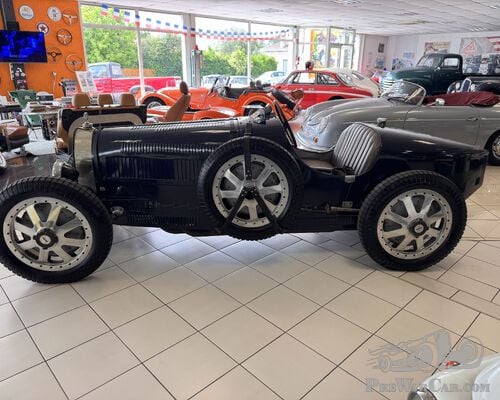
Bugatti 35 B Pur Sang
Bugatti 35 B Pur Sang,importée par un membre délégué de la FFVE il y’a une quinzaine d années.Participation à de nombreux Rallyes Bug..