The global magazine and marketplace for classic car enthusiasts, by enthusiasts.


Filter
Classic Duesenberg, Simca for sale - Duesenberg, Simca cars for sale
-

Open to Offers! Duesenberg Model J Dual Cowl Phaeton coachwork built in the style of LaGrande with Engine J-241
Open to Offers! Duesenberg Model J Dual Cowl Phaeton coachwork built in the style of LaGrande with Engine J-241 Not complete - Great Restoration project -
1931 Duesenberg Model J convertible sedan
Vehicle Highlights Chassis No. 2479Engine No. J 464ACD Category One Certified Original CarOne-Off CoachworkCCCA National First, Senior And Premier Award WinnerKnown Ownership History from New Vehicle DescriptionThis legendary Model J, with Chassis No. 2479.. -
1931 Duesenberg Model J Tourster by Derham | RM Sotheby's | The Monterey Auction
To Be OFFERED AT AUCTION at RM Sothebys' The Monterey Auction event, 13 - 15 August 2026. $2,250,000 - $3,250,000 USD One of the eight original, authentic Derham TourstersOriginal chassis, firewall, engine, and coachworkFormerly owned by Dr. Irwin Ginsberg, Andy Granatelli, and Joseph and Margie CassiniMeticulo.. -
1922 Duesenberg Model A Phaeton by Millspaugh & Irish For Sale
1922 Duesenberg Model A Phaeton by Millspaugh & Irish Chassis number: 798 Registration Number: Not currently registered. Engine Number 1111 Concours condition. This car when launched was a true standout. It was the very first seria.. -
1935 Duesenberg Model J "Sweep Panel" Dual-Cowl Phaeton by LaGrande | RM Sotheby's | Private Sales
Asking | $3,300,000 USD The final “Sweep Panel” Dual-Cowl Phaeton built by LaGrandeOriginally the New York Duesenberg factory branch demonstratorMultiple award-winning restoration by the noted Steve Babinsky, with further recent servicingA respected example with original frame, firewall, engine, and coachwork -
1935 Duesenberg Model JN Convertible Coupe by Rollston and Bohman & Schwartz | RM Sotheby's | The Monterey Auction
To Be OFFERED AT AUCTION at RM Sothebys' The Monterey Auction event, 13 - 15 August 2026. $5,750,000 - $8,000,000 USD Built for legendary actor Clark Gable, “The King of Hollywood”Restyled to Gable’s wishes by Bohman & Schwartz; a truly bespoke commissionUsed extensively by Gable with his beloved wife, Carole Lombar..


Duesenberg
US, 1920 – 1937, 1966
(1) Duesenberg Motor Co, Indianapolis, Ind., 1920 – 1937
(2) Duesenberg Corporation, Indianapolis, Ind., 1966
Fred Duesenberg began by making bicycles and designed his first Duesenberg car, the Mason, in 1904. He and his brother August made engines with horizontal overhead valves for the 1912 Mason racing cars, and founded Duesenberg Motors in the following year in order to produce marine engines and complete racing cars bearing the Duesenberg name. The most famous of the latter appeared in 1920: a 3-litre Bugatti-inspired Duesenberg straight-8 with single overhead camshaft and three (vertical) valves per cylinder. This Duesenberg won the 1921 French Grand Grand Prix. In the 1920s the Duesenberg racing cars were the great rivals of the Millers at Indianapolis, and victory was assured in 1924 by the adoption of a centrifugal blower on Duesenberg cars. Though a two-stroke 1½-litre 8-cylinder racing engine capable of 7.000rpm was made in 1926, this was not proceeded with. The horizontal-valve Duesenberg engine was taken over in 1920 by the Rochester Motor Manufacturing Co Inc and was used in various sporting and luxury cars.
Meanwhile, at the end of 1920, the first Duesenberg production car made its debut. This Duesenberg Model A was an extremely expensive, if very advanced, luxury car, embodying an 8-cylinder in-line engine – the first to be seen in an American production car – of 4.2 litres, basically similar to the Duesenberg racing unit, but with only two valves per cylinder and developing about 100bhp. There were also hydraulically-operated front wheel brakes – another ‘first’ as far as America was concerned. The Model A was current until 1926. A handful of its little-altered successor, the Duesenberg Model X, was made in 1926-1927, but in the former year E.L. Cord of Auburn acquired control of the Duesenberg company. He stipulated that Fred Duesenberg’s next car should be completely new, and a quite exceptional machine. In fact, the Duesenberg Model J, which made its bow at the end of 1928, was the most remarkable automobile in America: bigger, faster, more elaborate and more expensive than any other, yet also superior to them in refinement and good looks. Its 6.9-litre, 8-cylinder engine, made by Lycoming (a firm which Cord had also bought), had two chain-driven overhead camshafts operating four valves per cylinder; a layout of racing type unique among American cars at the time and said to develop 265bhp at 4250rpm – more than double the output of any rival. Although the complete Duesenberg car weighed more than 4980lb, it was claimed to be capable of 116mph in top gear and 89mph in second. Only Duesenberg Model J chassis were made for which $8500 was asked in 1929. Immensely long and strong and lowbuilt, Duesenberg cars were very popular with all the leading coachbuilders. The Duesenberg company preferred to sell cars complete with bodies designed by them but made by approved builders, such as Murphy, Bohman & Schwarts, Judkins, Derham and Le Baron. In this form, catalogued Duesenberg models cost up to $17.950. The transmission – apart form the double dry-plate clutch – was conventional, as was the suspension by half-elliptic springs and hydraulic shock absorbers. The brakes, of course, were hydraulic, with vacuum servo assistance from late 1929.
In 1932 a supercharged version of the Model J, the Duesenberg SJ, was added. To cope with the 320bhp now alleged to be available, bearings, reciprocating parts and valve springs were strengthened. Usually, the shortest Duesenberg J chassis was used, with the highest axle ratio and stronger front springs. A maximum speed of 129mph was attributed to the Duesenberg SJ, with an acceleration figure of 0-100mph in 17 seconds.
Duesenberg survived the Depression, but died in the collapse of the Cord Corporation in 1937. Attempts to revive the Duesenberg name were made in 1947 and in 1966. The first Duesenberg was unsuccessful, and in 1966 only one Duesenberg car was actually made, powered by a 7-litre V8 Chrysler engine with push-rod overhead valves, developing 431bhp at 5.000rpm. Transmission was automatic, front suspension was independent, and there were disc brakes. Body styling was by Ghia. This Duesenberg venture, too, collapsed.
Source: Georgano, encyclopedia of motorcar; TRN
The information is written with the greatest of care. However, if you have any suggested amendments please contact us at office@prewarcar.com
Simca
France, 1935 to date
(1) Sté Industrielle de Mécanique et Carrosserie Automobile, Nanterre, Seine, 1935 – 1961; Poissy, Seine-et-Oise, 1954 – 1970
(2) Chrysler France SA, Poissy, Seine-et-Oise, 1970 to date
H.T. Pigozzi’s Simca car company was formed in November 1934, to manufacture Fiat cars under licence for the French market in the former Donnet factory. Pre-1940 production Simca car models were virtually identical to their Italian counterparts, the types offered being the Simca Tipo 508 Balilla, the 2-litre Simca Tipo 518 Ardita, and the later 500 (Simca 5) and 1.100 (Simca 8). Outside France, however, the Simca car make’s reputation stemmed from the competition successes of Amdédée Gordini’s specially tuned versions, mainly based on the 508 family, though he also extracted 28bhp from the Topolino engine. Most successful of these Simca cars were the aerodynamic 508C two-seaters which won the Bol d’Or, the small sports-car race at Reims, and the Paris-Nice Rally, as well as the Index of Performance with a Simca car at le Mans in 1939. A 1.2-litre Simca car version of the basic Fiat unit developed 65bhp. After World War 2, Gordini continued to develop competition Simca cars under Simca sponsorship until 1951, and evolved an 1.100cc single-seater Simca car with twin-tube frame and all-round independent suspension, which Simca car furnished keen competition for the Cisitalia and did very well in 1947, with wins by the Simca car in the Bol d’Or and at Nimes, not to mention a 1-2-3 victory in the Coupe des Petites Cylindrées at Reims. The Simca cars acquired hemispherical heads and 5-bearing crankshafts in 1948, winning their class in the Belgian 24 Hour Race, as well as being victorious once again in the Bol d’Or. Later Simca-Gordinis used Wade-blown 1½-litre power units, and the breed’s career culminated in Trintignant’s win in the 1951 Albi Grand Prix. Thereafter the Simca car company withdrew its support from Gordini, who set up on his own as a manufacturer.
In 1942 Simca cars joined Baron Petiet’s Groupe Française Automobile selling organization along with Delahaye/ Delage, but withdrew from the GFA after the war, when production of the Simca 5, and Simca 8 resumed in basically 1939 form. An ohv Simca 6 (the equivalent of Fiat’s later 500C) was introduced for 1948, and in 1929 a 50bhp sports Simca car version of the 8CV with handsome coupé bodywork by Facel Metallon was marketed; a Simca car of this type won its class in the 1949 Alpine Rally, while standard Simca 8 cars scored two class wins in the 1950 Monte Carlo event. This year the Simca 8 was restyled, and this Simca car emerged with a 40bhp 1.2-litre engine and steering-column change. In the summer of 1951, however, an entirely new Simca car, the Simca Aronde, made its appearance; the enginee of this Simca car was a 45bhp derivative of the old 8CV, but the rest of the Simca car was entirely new, with unitary construction, coil-and-wishbone independent front suspension, and hypoid final drive. Production jumped to 50.000 Simca cars in 1952 and the Simca Aronde made numerous attacks on long-distance records held for many years by the Citroën ‘Petite Rosalie’, achieving 100.000 kilometres at 100 km/h in 1953. The Simca Aronde had a production run of over 12 years. The half-millionth Simca car was delivered in January 1957, and the millionth Simca car in February 1869. The Simca car company also participated in several takeover bids, buying Unic (now only making trucks) in 1951, Ford in 1954, Saurer’s French branch in 1956, and Talbot in 1959. A 50bhp sports version of the Simca Aronde was announced in 1953, and Gemmer cam steering was adopted on Simca cars in 1954, in which year the Simca car model was introduced to the British market at a list price of £896. With the acquisition of the French Ford company, their 2.3-litre sv V8 Vedette reappeared under the Simca car name, the Ford factory at Poissy first supplementing and then supplanting the original Simca car works at Nanterre, which was turned over to Citroën in 1961. The V8 Simca car sold fairly well, and was given a more powerful 84bhp engine in 1958. Production of Simca cars ceased in France in 1961, though as late as 1967 the Chambord and Présidence Simca car version, now with 112bhp and ohv, were still being made under licence in Brazil.
1956 Simca Arondes had 48bhp 1.3-litre engines as standard, though 57bhp Special units were found in the sports coupés and convertibles Simca cars and the Simca Montlhéry saloon; station wagon Simca cars had the 45bhp Service type. 1957 saw a family derivative, the Simca Ariane, using the hull of the V8 Vedette and the regular Simca Aronde engine – this Simca car was made until 1963. In 1958 Chrysler acquired a minority interest in Simca cars, and it was announced that the American company’s Adelaide factory would built Simca Arondes for the Australian market; this small holding had become a controlling interest by 1963, and the Chrysler ‘pentastar’ emblem was to be seen on all Simcas in 1967. Aronde development continued: a cheap 6CV 1.100cc Simca car model was listed in 1960, and the 1961 Simca car range used 5-bearing engines in various ratings up to 62bhp, later increased to 70bhp. A new departure for 1962 was the 1000 Simca car, a 944cc rear-engined 4-door saloon with radiator mounted alongside the power-unit, 5-bearing crankshaft, all-round independent suspension, and 4-speed synchromesh gearbox: at 6.490NFr this Simca car was cheaper than Citroën’s Ami 6, and production rose over a quarter of a million Simca cars. Within a year this Simca car had evolved into a Bertone-bodied coupé with all-round disc brakes, while the first of the Simca-Abarths was available in the shape of a twin ohc 1.300cc model. In 1963 all-synchromesh boxes were also found on the conventional 4-cylinder 1300 and 1500 Simca cars; outputs were 61bhp and 83bhp, and the bigger Simca car had front disc brakes, which were added to the 1300’s specification in 1966. 1964 was the last year of the Simca Aronde, which Simca car had been continued as a very inexpensive item at 6.950NFr for an 1.100cc saloon. In 1966 the 1000 became available with a 3-speed semi-automatic gearbox, full automatic (by Borg-Warner) being an option on the 1500-series Simca cars; during the year the millionth Simca 1000 left the Simca car factory.
1968 brought two new versions of the 1000 Simca car, the high-performance GLS and the austerity 777cc Sim’4 Simca car for the home market; at the same time Simca cars switched to front wheel drive with their transverse-engined 53bhp 1100. On this Simca car the gearbox was mounted left of the engine, rear suspension was independent, by wishbones and torsion bars, and front disc brakes were fitted. An interesting hybrid Simca car evolved in England was the Radbourne-Abarth 1200, basically a 1200 coupé Simca car fitted with a Fiat 124 engine. In 1970, the Simca car company changed its name and the Chrysler was added as a prestige line. Also Simca cars took Matra, and their racing team, under their wing. A 76bhp 1.2-litre version Simca car of the 1100 appeared in 1971, helping the front wheel drive Simca car to become France’s best-selling car early in 1972. The principal novelty for 1972 was yet another 1000 derivative Simca car, the 1.294cc Rallye saloon. The conventional rear-driven 1301 and 1501 were continued into 1973, along with the 1000 and 1100 families.
Source: Georgano, encyclopedia of motorcar; MCS
The information is written with the greatest of care. However, if you have any suggested amendments please contact us at office@prewarcar.com


Featured
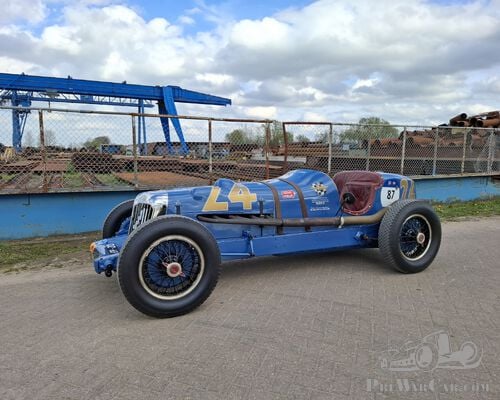
1932 - Graham " Lucenti " Indianapolis
Original participant of the 1932, 1934 and 1935 Indy 500. Best result: finishing 10th overall in the 1934 Indy 500 with driver “Herb” Ardinger...
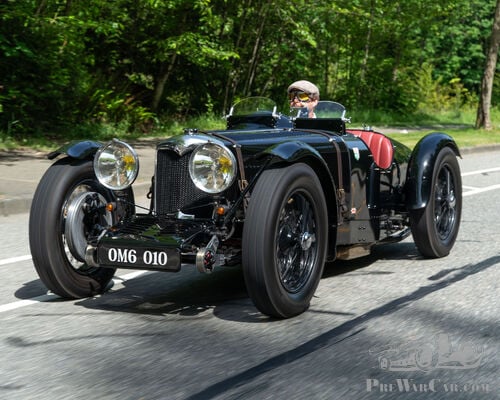
Riley 14/6 Special 1933
The ExperienceStep into the golden age of British motoring. This 1933 Riley 14/6 Special is a masterclass in pre-w..
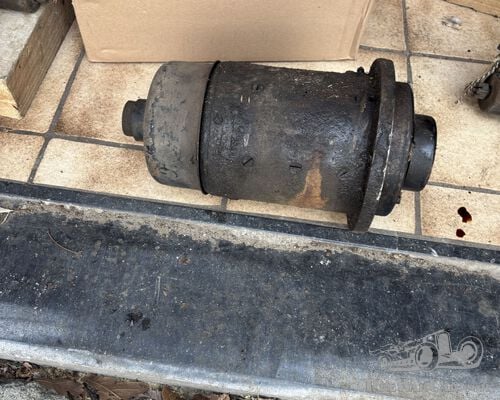
1929 Talbot K74 Limousine – Very comprehensive restoration project
For sale – 1929 Talbot K74 Limousine – Very comprehensive restoration projectAsking price: €19,950 A very rare 1929 Talbot K74..