The global magazine and marketplace for classic car enthusiasts, by enthusiasts.


Filter
Classic Century, Durant for sale - Century, Durant cars for sale
-

HORCH 853 ERDMANN & ROSSI SPEZIAL ROADSTER
IntroductionThe Horch 853 Spezial Roadster by Erdmann & Rossi is one of the most iconic and luxurious cars of the 1930s. This beautiful vehicle represents the pinnacle of German automotive engineering and design from the pre-war era.The Horch 853 was introduced in 1935 by the Horch factory, part of Auto Union (later Audi.. -
1935 Ford Pickup
Offered for sale is 1935 Ford Pickup in very good preserved condition. Imported from Spain, bodywork is in lovely condition, only little corrosion. Car needs to be technically commissioned. With the car comes several documents, including an original Spanish title. -
Imperia 8/25 racing/sport car
Imperia 8/25 racing/sport car with Couchard patent slide-valve engine. Fully restored car, the radiator cooling design is very special and unique. Hallot cable braking system. (make an offer or proposal for an exchange) -
Imperia 8/25 1923
Imperia 8/25 1923,Couchard patent slide-valve engine,fully restored rolling chassis,interior still needs finishing.(make an offer or proposal for an exchange) -
MASE CC Sport 1921
Restoration to be finishedRadiator and tank overhauled, etc.Gives with the car: 1 engine, 1 gearbox, 2 radiators, parts, numerous documents.Restauration à finirRadiateur et réservoir révisés, etc,...Donne avec la voiture : 1 moteur, 1 boîte de vitesse, 2 radiateurs, pièces, nombreux documents. -
Benjamin Type B 1923
Car to be restartedGives with the car: 3 engines, parts, numerous documentsVoiture à remettre en route Donne avec la voiture : 3 moteurs, pièces, nombreux documents -
1929 Rolls-Royce 20/25 Estate Car
Extremely unusual well-proportioned estate coachwork from Burbage & SonsThoroughly well sorted benefitting from significant work from ourselvesCharming and practical vehicle accompanied by an interesting early history Coming off test on Christmas Eve 1929, GDP 43 was delivered to coachbuilder Th.. -
1938 BMW 328 Roadster 1938 for sale
1938 BMW 328 Roadster Chassis number 85316 Registration number: TBA €790,000.00 Part of a small collection of rare BMW cars: This 328 was found as a wreck in the late 1960's with the then Czechslovakian title documents going back to 4th November 1970 when it was registered in Bratislava. The registration lists a succe.. -
'Halford Special' 1923 Aston Martin
One of the most advanced race cars of the mid-1920s, the Halford Special was built by engine designer Major Frank Halford using Aston Martin chassis, number ‘1916’. In its original configuration, this chassis was the first Aston Martin built for sale and competed at Brooklands in 1923 but crashed in a Voiturette race in Boulogne the following ye.. -
Marmon Type 70 Sedan 1930 for sale
Marmon-Roosevelt straight eight sedan. Model 97, Type 70. The body was built by Hayes Corp. Roosevelt is the companion make to Marmon, nevertheless the Marmon label is featured on the car. The car makes a striking impression with it's six wire wheels and handsome headlights. It runs and drives but it requires work. The restoration is older and ..


Century
GB, 1899 – 1907
(1) Century Engineering & Motor Co Ltd, Altrincham, Cheshire, 1899 – 1901
(2) Century Engineering & Motor Co Ltd, Willesden, London N.W., 1901 – 1904
(3) Century Engineering Co Ltd, Willesden, London N.W., 1904 – 1907
Ralph Jackson of Altrincham, a bicycle makder since 1885, began vehicle manufacture with the Century Tandem, a two-seater tricar with 2¼hp single-cylinder engine and wheel steering which sold for £115. After the move to London, the Century car company was taken over by Sydney Begbie who had introduced Aster engines to England. He extended the range of Century tandems to three; they used engines by De Dion (3½hp), Aster and M.M.C. (both 5hp). In 1903 he introduced the Century car with 8hp and 12hp Aster 2-cylinder engines and 22hp Mutel 4-cylinder engines and English chassis an bodies. 1905 saw a range of improved Century trandems with 2-cylinder engines and two radiators, one on each side of the rear wheel. In 1906 the Century company was making Princess cars with 4-cylinder 16hp engines.
US, 1899 – 1903
Century Motor Vehicle Co, Syracuse, N.Y.
The first car produced by the American Century company was a light steamer powered by a 4¾hp 2-cylinder vertical engine. Final drive of this Century car was by bevel gear instead of the more usual single chain. This model was made until 1903 when it was succeeded by the petrol-engined Century Tourist. This was also a tiller-steered two seater, but had a single-cylinder engine and chain drive.
US, 1911 – 1915
(1) Century Motor Co, Detroit, Mich., 1911 – 1913
(2) Century Electric Car Co, Detroit, Mich., 1913 – 1915
The Century was an electric car with an underslung chassis. It was tiller-operated, and the customer had a choice of solid or pneumatic tyres. The speed controller gave a choice of six speeds, and the series-wound Westinghouse motor was geared directly to the rear axle.
GB, 1928 – 1929
Century Cars Ltd, London N.W.1
The Century light car was one of several attempts in the late 1920s to make a £100 car. This Century car used a 2-troke engine of the same dimensions as the Austin Seven and had a light open two-seater body on a chassis of 7ft 3in wheelbase.
Source: Georgano, encyclopedia of motorcar; GNG, GMN
The information is written with the greatest of care. However, if you have any suggested amendments please contact us at office@prewarcar.com
Durant
US, 1921 – 1932
Durant Motors Inc, New York, N.Y., Lansing, Mich.; Muncie, Ind.; Oakland, Calif.; Elizabeth, N.J.; Long Island City, N.Y.; Toronto and Leaside, Ont.; Syracause, N.Y.
The Durant was, with the Star, Eagle, flint, Princeton, Rugby and Locomobile, one of several makes comprising William C. Durant’s automobile empire. It was introduced as a 4-cylinder car and used its own ohv engine. The first Durant models in 1921 had disc or wooden spoke wheels and a five-seater Durant touring car cost $850. In 1922, the peak year of production, 55.000 Durant cars were sold, the figure failing to 39.000 in 1923 and fluctuating thereafter. The 4-cylinder Durant model remained basically the same through 1926 with various modifications added in keeping with the times. A Durant car with a 6-cylinder Ansted engine was built in 1922 and 1923 at the Muncie plant. In 1927 Durant suspended production, but started again in 1928 with a completely redesigned line of 4- and 6-cylinder cars which were continued in 1929. Another new line was brought out in 1930 by Durant and the 4-cylinder car was dropped. The 1930 range included two Durant sixes, with wire wheels as standard equipment for the larger of the two. The 1931 Durant models for sale were unchanged except for the engines which were Continentals. Sales had dropped severely, however; the 43.951 Durant cars sold in 1928 dropped to 20.261 in 1930. In 1931, only 7270 Durants were sold and early in 1932, the Durant firm went out of business. The Candian Durant cars were marketed under the name Frontenac form 1931 and were sold until 1933.
Source: Georgano, encyclopedia of motorcar; KM
The information is written with the greatest of care. However, if you have any suggested amendments please contact us at office@prewarcar.com


Featured
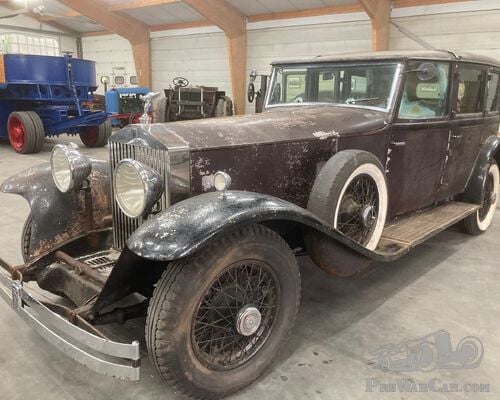
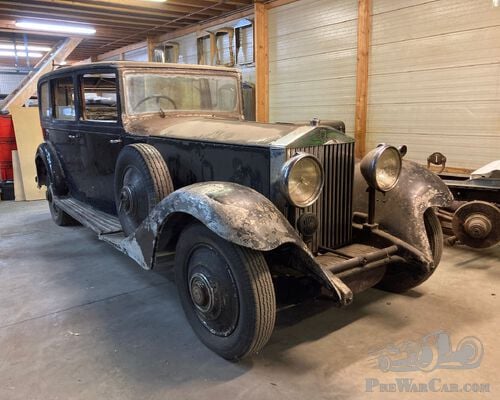
Rolls-Royce
Rolls-Royce Phantom ll chassisnummer 287 AJS. bouwjaar 1932, Links gestuurd, Brewster Keswick Sedance Towncar
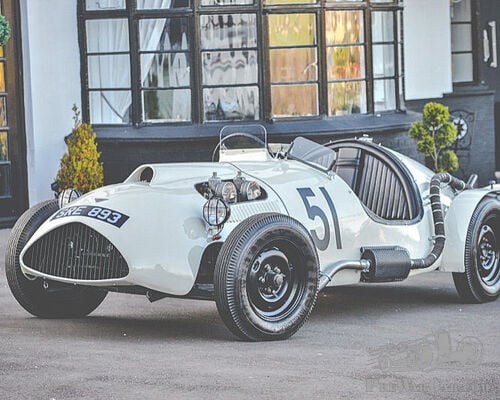
1933 Alvis 3.0 Special - One-Off Alloy Body | Period Competition Car | Featured in “Alvis – A Century of Drivers”
1933 Alvis 3. 0 Special - One-Off Alloy-Body | Period Competition Car | Featured in “Alvis – A Century of Drivers”