The global magazine and marketplace for classic car enthusiasts, by enthusiasts.


Filter
Classic Dürkopp for sale - Dürkopp cars for sale
-

1927 Rolls-Royce 20HP Open-Drive Brougham
Vintage and Prestige are proud to offer 1927 Rolls-Royce 20HP Open-Drive Brougham For SaleRegistration: FOE147Chassis no: GUJ 47This stunning 20HP will certainly be noticed along the road; finished in the striking colour combination of Yellow and Black, with yellow wire wheels to match. The door surround is also.. -
Ford Model A Beach Racer 1930
An ideal car for events such as the Beach Races at Romo (Denmark), Pendine (England), and Normandy (France). Completely overhauled chassis. Converted to 12 Volt, starts very easily. A car for lots of fun and certainly an eye-catcher at any moment. Thanks to the large 21-inch wheels with 6.0.. -
1932 Aston Martin International
1932 Aston Martin International, chassis number A2/129. This is the last International sold by Aston Martin, first registered on 5th May 1932 and declared to the Licencing Authority as used for ‘Experimental Purposes’. Unusually, it was fitted with long sweeping front wings fitted to the bodywork, rather than the more normal ‘cycle wings’. Sold .. -
Bentley 4¼ Litre Sedanca 1938
Technical Specifications: Mark & Model: Bentley 4¼ Litre SedancaYear: 1938Registration plate: Guernsey registeredChassis Number: B-153-KUEngine Number: Z-3-BMEngine Capacity: 4257 ccTransmission: 4-speed manualMileage: Body style: 2-door SedancaInterior color: Black leathe.. -
1938 Bentley 4¼ Litre Sedanca
Technical Specifications Mark & Model: Bentley 4¼ Litre SedancaYear: 1938Registration plate: Jersey registeredChassis Number: B-187-LEEngine Number: E-9-BJEngine Capacity: 4257 ccTransmission: 4-speed manualMileage: Body style: 2-door SedancaInterior color: Cream le.. -
1927 Franklin 11-B Tandem Sport
1927 Franklin 11-B Tandem Sport Chassis Number: 164935-17 Registration Number: OFL27H (Germany.) Body Number: 58 A rare & unusual air cooled Franklin as used in a similar model by Charles Lindburgh in peiod. Air cooled 3.3l, 6 cyli.. -
1935 Daimler 15 Sports Coupe by Mulliner
Technical Specification:Mark & Model: Daimler 15 Sports Coupe by MullinerYear: 1935Registration plate: Jersey registeredChassis Number: 39538Engine Number: SG7L039Engine Capacity: 2003 ccTransmissions: 4-speed pre-selectorMileage:Body style: 2-door CoupeInterior col.. -
1929 Lancia Lambda 8th Series Short-Chassis Torpedo
With its monocoque body, four-wheel brakes, independent front suspension and V4 overhead camshaft engine many enthusiasts view the Lancia Lambda as one of the greatest automobiles of all time. With a conventional pedal layout and H-pattern gear selection the Lambda also set the automotive template for years to come. The Lambda was..


Dürkopp
D, 1898 – 1927
(1) Bielefelder Maschinenfabrik vorm. Dürkopp & Co AG, Bielefield, 1898 – 1913
(2) Dürkoppwerke AG, Bielefeld, 1913 – 1927
Dürkopp cars made their first public appearance in 1899. The Dürkopp car had 2-cylinder engines and were based on Panhard-Levassor principles. After 1902 4-cylinder Dürkopp cars were also built, a 3-cylinder and a 6-cylinder model being added in 1903. Dürkopp had a branch factory in France and the cars were also known under the name Canello-Dürkopp. In the United-Kingdom they were marketed as Watsonias.
Dürkopp was seldom active in sports events and specialized in heavy types of touring car. These were based on a Dürkopp racing car developed for the Kaiserpreis Race of 1907 with a 4-cylinder 7.2-litre engine developing 70bhp. The largest model Dürkopp DG43 with a 13-litre engine developed 100bhp. From 1908 small Dürkopp models were also built, later known under the name of Knipperdolling, of which the type Dürkopp EK6 continued in production after World War 1. Another post-war model was the Dürkopp P8 with a 2-litre 8/32ps engine. This Dürkopp model was also available as a sports car with a 40bhp engine and with a blown engine developing 60bhp. This latter version brought Hans tuck his first racing successes.
Production of private Dürkopp cars ceased in 1927, while production of Dürkopp lorries, which had started early in the century, lasted until 1929. Motor cycles were built by Dürkopp from 1900 to 1914 and again from 1948, the best-known post-war product being the Diana scooter.
Source: Georgano, encyclopedia of motorcar; HON
The information is written with the greatest of care. However, if you have any suggested amendments please contact us at office@prewarcar.com


Featured
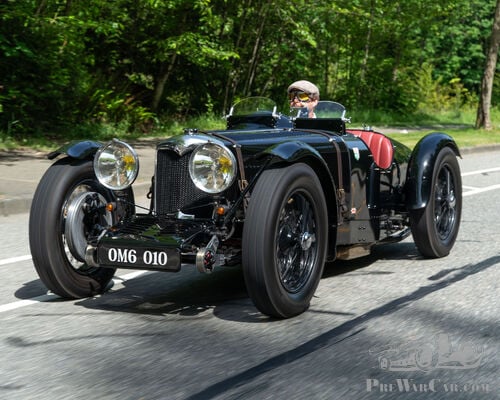
Riley 14/6 Special 1933
The ExperienceStep into the golden age of British motoring. This 1933 Riley 14/6 Special is a masterclass in pre-w..
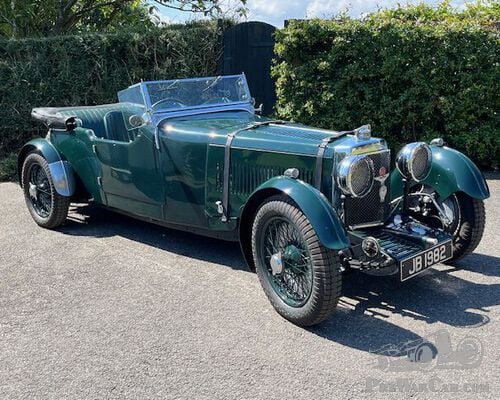
1933 Aston Martin Le Mans
Exceptional 1933 Astron Martin Le MansOriginally bodied as a Standard (Chassis No. L2/222), this unique vehicle was thoughtfully re-bodied i..
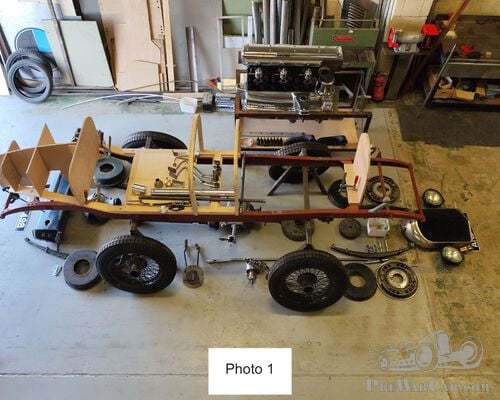
Bentley 3/6 litre sports racing car kit with V5C
I am a specialist vintage and classic car restorer with decades of hands-on experience. For some time I have been collecting parts for a special pr..