The global magazine and marketplace for classic car enthusiasts, by enthusiasts.


Filter
Classic Empire for sale - Empire cars for sale
-

1910 Buick Model 10
Beautiful 1910 Buick Model 10 RunaboutThis was the first mass-produced Buick. It was marketed as a "light 4-cylinder roadster for gentlemen" and quickly became one of Buick’s bestsellers.Its respectable performance of 22.5 hp from the 4-cylinder “valve-in-head” engine with a 2.7-liter displacement earned it the nickname "The White .. -
Talbot 4AB Sport 2 Seater 1910
Lovely car from the brass era , with a sporty look.Delivered as a rolling to "Kellows" AustraliaCurrent 2 Seater Sport body was build in the 1980's when restoredImported to the UK around 1999Compete in the VSCC , VSCC Buff form in fileThe 2.4 liter , 4 cylinder engine start easily on the crank and runs smoothly.. -
1910 OLDSMOBILE SPECIAL 40HP ROADSTER RHD
1910 OLDSMOBILE SPECIAL 40HP ROADSTER Chassis Number: 2037Registration Number: AA-00-41 Portugal Yellow with black pinstriping and black leather seats Engine: four cylinder, c336ci., 40bhp; Gearbox: four-speed manual; Suspension: front, semi-elliptic leaf springs, rear, three-quarter ellipt.. -
1910 Overland Model 46 Roadster
1910 Overland Model 46 RoadsterChassis number: 46366Registration Number: BF7057 This Model 46 two-seat roadster has right-hand drive, as did all Overlands before 1915. The car was imported into Norway from the USA in 1969 and then to Sweden by the family the previous owner purchased it from. The Overland .. -
RENAULT AX RUNABOUT
RENAULT AX 1910 Runabout 2 placesEntièrement restauréParfait état de fonctionnementUK REGISTRATION


Empire
US, 1901 – 1902
Empire Mfg Co Inc., Sterlin, Ill
Also known as the Sterling Steamer, the Empire was a typical light steam buggy in appearance, but was unusual in using a V-twin engine. A water-tube boiler produced superheated steam at a pressure of 400psi, and maximum speed of the two-seater was 30mph.
US, 1904 – 1905
William T. Terwilliger & Co, Amsterdam, N.Y.
This Empire steamer had an opposed 2-cylinder engine of 15hp rating. This was ‘hung pivotally from rear axle’ and the ‘cylinder end was suspended from boiler’. The Empire had tubular steel wheels and its rear-entrance tonneau body carried five passengers.
US, 1909 – 1919
(1) Empire Motor Car Co, Indianapolis, Ind., 1909 – 1912
(2) Greenville Metal Products, Greenville, Pa., 1912 – 1919
A two-seater Empire with a 4-cylinder, 20hp GBS engine with pair-cast cylinders was produced with little change from 1909 to 1912. It was known as The Little Aristocrat and cost $950. In 1912 Empire car operations moved to Pennsylvania, and for one season the Empire car was known as the Fay. Although sold by the Empire Automobile Co of Indianapolis, all subsequent cars were made in Greenville. After 1912, a large line of Empire cars in two-, four-, and five-seater models was made, with wheelbases up to 10ft. These Empire cars were powered by 4-cylinder Teetor and 6-cylinder Continental engines and prices ranged to $1360
Source: Georgano, encyclopedia of motorcar; GNG, GMN
The information is written with the greatest of care. However, if you have any suggested amendments please contact us at office@prewarcar.com


Featured

1939 Wanderer W 23 Gläser(Dresden) Convertible
Wanderer W 23 Gläser(Dresden) Convertible in original condition Built in 1939 for sale. Ready to drive with TÜV and approval as a historic vehicle..
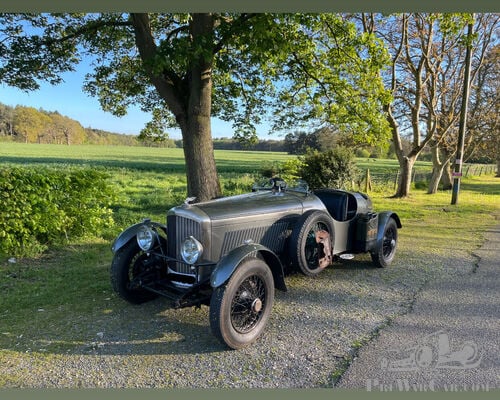
Derby Bentley Special 4-1/4
Sadly i am having to sell on my Bentley special ( Icarus). It is currently a work in progress and still needs finalising/ refining. A great o..