The global magazine and marketplace for classic car enthusiasts, by enthusiasts.


Filter
Classic Excelsior for sale - Excelsior cars for sale
-

MG TA
The MG TA replaced the highly successful P type, the main advancements in the new model was the increased track by 3 inches, which in-turn gave more room and comfort for occupants, also improved cornering stability. However the biggerst updread was the new engine know as a MPJG at 1292cc. This engine gives the TA real credibility on the open roa.. -
Rice Vintage Folding Caravan | Brightwells | Auction Ends: Wed 16th Sept
Incredibly rare 1920's Rice vintage folding caravan in fully functioning and usable condition; fully furnished interior; remarkable condition for a near 100 year old camper; conversion plate included for standard tow bar; find another one The Rice folding caravan was a pioneering design of the early 20th century, offering a .. -
1934 Riley Nine Kestrel Special Series | Brightwells | Auction Ends: Wed 16th Sept
Restored to show-winning condition in 2010 and carefully maintained since; national concours winner in 2024; recent suspension overhaul and service; nice original number plate; a fine example of this most handsome Riley at a very attractive guide price Introduced in late 1932, the Riley Nine Kestrel is widely hailed as one o.. -
1926 MG 14/28 Super Sports | Brightwells | Auction Ends: Wed 16th Sept
Expertly restored version of the world's oldest surviving MG model; period LAP ohv cylinder head; always in regular use and in wonderful condition throughout A man of enormous energy and creative flair with petrol flowing through his veins, Cecil Kimber joined Morris Motors in March 1921, initially as a sales manager, but wa.. -
1932 Riley 9 Monaco Special Series Plus Ultra | Brightwells | Auction Ends: Wed 16th Sept
Wonderfully original Riley in need of recommissioning following many years in storage; sporting Plus Ultra chassis and floor-change gears; few owners, the current for 26 years; a proper time capsule at a very modest guide price One of two Riley Monaco Special Series saloons in today’s auction (the other is Lot 84), this fabu.. -
1938 Rover 10 P1 Saloon | Brightwells | Auction Ends: Wed 16th Sept
1,344cc four-cylinder engine; appears to have been registered to the same family since 1978; showing 84,710 miles; interesting period rally history; original handbook and photographs; registered as ACL 644 First registered on 13th January 1938, this Rover 10 P1 is an appealing example of Rover's pre-war saloon, powered by th.. -
1934 Austin Seven Tourer | Brightwells | Auction Ends: Wed 16th Sept
Expertly restored in the 1980s at great expense and only lightly used since; rock solid car with deliberate 'oily rag' patina; full weather equipment; nice original number plate; driven over 30 miles to the sale; forced sale due to illness First registered in Surrey in March 1934, this Austin Seven four-seater Tourer comes w.. -
1938 BSA Scout Series 6C Four-Seater Sports Tourer | Brightwells | Auction Ends: Wed 16th Sept
Extremely rare Series 6C four-seater, one of only 10 surviving; large and interesting history file; well maintained and in regular use; a charming example of this quirky front-wheel drive sportscar Although BSA had built their first car in 1907, they were much better known for their core business of motorcycle production. Th.. -
1933 Riley Nine Monaco Special Series Plus Ultra | Brightwells | Auction Ends: Wed 16th Sept
In the previous family ownership for 28 years; drop chassis and Special Series twin-carb engine; restored in the 1980s and carefully maintained since; good Blockley tyres all round; a veteran of many events; very pretty indeed Launched in 1926, the Riley Nine was acclaimed as one of the best small sporting cars in the world ..


Excelsior
Belgium, 1903 – 1932
(1) Compagnie National Excelsior, Bruxelles, 1903 – 1907
(2) A. de Coninck et Cie, Bruxelles, Liège, 1907 – 1911
(3) SA des Automobiles Excelsior, Saventhem, 1911 – 1929
(4) SA des Automobiles Imperia-Excelsior, Saventhem; Nessonvaux-les-Liège, 1929 – 1932
With the Minerva, the Excelsior was the premier make of Belgium, a country noted for finely-engineered motorcars. Excelsior began modestly enough, however, and in 1905 a range of cars powered by French Aster engines with one, two or four cylinders was offered. The great days of the Excelsior car began after 1907, when Arthur de Coninck’s new model, the Excelsior Type Adex, arrived. This was technically a conventional machine, seen mostly with a long-stroke, 9.1-litre, 6-cylinder side-valve engine, which served as the basis of the Grand Prix engine of 1912. The classic Excelsior model was the 20/30hp introduced in 1911, with an 85x130mm engine of 4.4-litres. There was also the Excelsior 14/20hp 4-cylinder, 3-litre car with the same cylinder dimensions. Both were fast enough in normal form, but sports models with overhead exhaust valves were offered. An Excelsior team ran in the 1911 Coupe des Voitures Legères and in 1912 and 1913 the Excelsior company fielded 6-cylinder racers, Christiaens taking 6th place in the 1912 Grand Prix. The old Excelsior six was continued after World War 1, but a new and much more modern design supplanted it.
This was the new Excelsior Type Adex, which had an 85x140mm, 4767cc engine with an overhead camshaft and a diagonally-compensated 4-wheel braking system also called Excelsior Adex. This car was developed in 1922 into the most magnificent car the Belgian industry ever produced – the Albert I Excelsior, comparable with the contemporary H6B Hispano-Suiza from France. The engine of the Excelsior was an efficient 5350cc six with overhead camshaft, large valves and lightweight pistons. A sporting version had three carburetors and this Excelsior could exceed 100mph. The Adex brakes of the Albert I had Dewandre vacuum servo assistance. Rumours of an amalgamation of Excelsior with FN in 1927 came to nothing, but two years later the Excelsior firm was absorbed by Imperia and the great car was no more.
CH, 1905 – 1907
Motorwagenfabrik Excelsior, Wollishofen
Excelsior cars were designed by Rudolf Egg, who had previously been responsible for the 3-wheelers built by Egg & Egli, Bachtold, Weber and Rapid. The first Excelsior was similar to the curved-dash Oldsmobile, with a 6hp single-cylinder engine, single chain drive, and semi-elliptic springs extending from front axle to rear. In 1906 a number of light Excelsior cars were made with 4-cylinder Fafnir engines and shaft drive. The bodies of the Excelsior cars were made by a firm in Lugano.
Source: Georgano, encyclopedia of motorcar; TRN, GNG
The information is written with the greatest of care. However, if you have any suggested amendments please contact us at office@prewarcar.com


Featured
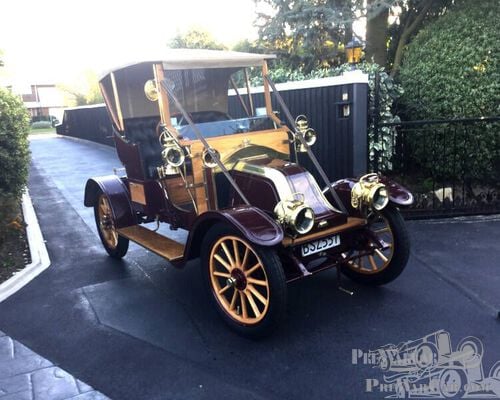
Renault /AX 1913 - named
Purchased fully renovated from New Zealand and imported to the UK. We have owned her for over10 years. Gigi is currently living in France where she..
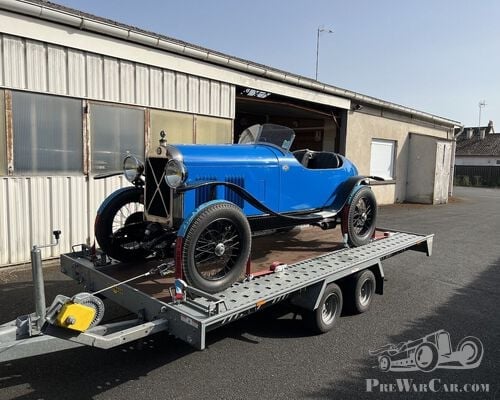
Salmson VAL 3 Séries 7
1927 Salmson VAL3 Series 7. Completely restored a few years ago, in very good overall condition, both bodywork and mechanics. Bordino-style bodywor..
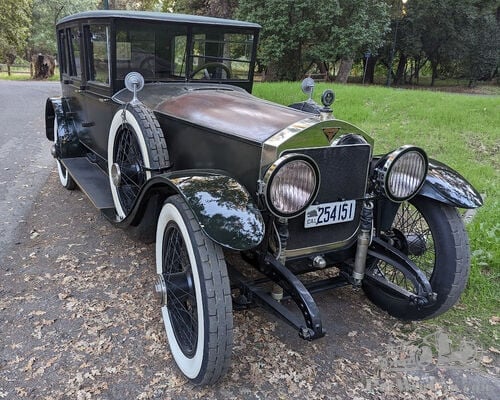
1916 Simplex, Crane model 5
1916 Simplex, Crane MODEL 5CUSTOM MADE HISTORIC PRESERVATION VEHICLE – READY TO TOUR!This Simplex recently completed th..