The global magazine and marketplace for classic car enthusiasts, by enthusiasts.


Filter
Classic F.N., Sizaire Freres for sale - F.N., Sizaire Freres cars for sale
-

1921 Rolls Royce 20hp Experimental tourer
1921 Rolls Royce 20hp Experimental tourer. Chassis number: 4G2 Registration Number: CH2892 Sir Henry Royces' personal car used for development of the 20HP chassis. He is pictured in it both at his French house; La Villa Mimosa in Le Canadel & also near his UK home "Elmsted" .. -
Oldsmobile Curved Dash Model 6C 7hp 1904
We have available for sale this exceptionally original 7hp Curved Dash Oldsmobile. Manufactured in 1904. Continuous ownership/history for many years. This is the larger engined motor car with rear brakes & larger hp. These are exceptionally good strong motor cars and can certainly cover some miles without any issues, well built & very go.. -
BMW 326 Cabriolet
DISPONIBLE PRES DE PARISRare version cabriolet 2 portes douanes EU acquittées, title américainNécessite une restauration totale, Voiture complète vendue avec un moteur complet en plus -
C1926 DFP open
Rare DFP from c1926Mechanical complet, Missing interior and hood topno documents,can see in LisbonCan help with transportchassis # 40 273 -
Horch 854 – A Masterpiece of Automotive Craftsmanship (1939)
This Horch 854 represents one of the finest examples of pre-war German luxury engineering. Built on the shorter and more agile 854 chassis and equipped with the more powerful A-engine, this vehicle combines elegance, rarity, and exceptional craftsmanship. Originally, only 7 chassis of the 854 series we.. -
1928 Mercedes Benz SSK Rebuild
A faithful, high-quality rebuild of an SSK, carried out in 2003 by a renowned specialist in GermanySubsequently owned and actively used by a single owner for 20 years Original 1929 supercharged engine with impressive performanceComprehensive documentation availableEligible to participate in numerous histo.. -
1936 Chevrolet - 2D Business Coupe
1936 Chevrolet - 2D Business Coupe*** in Excellent condition ***Engine: Inline 6 cil SixDisplacement: 206.8 cu. in.Horsepower: 79 @ 3200 RPMWheelbase: 109 inches - 276.86 cmThe 1936 Business Coupe was a more practical approach as 2 passengers could cram in behind the front riders. Primarily a salesman's car wit.. -
2X BUICKS !! 1941 Buick Roadmaster 76s Coupe + 1948 Buick Roadmaster 2 doors serie 79, convertible
Car no 1.1941 Buick Roadmaster 76s Coupe ***one price two cars, both cars in Excellent conditions***Engine : 320 cu in (5.2 L) Fireball I8, 168hpTransmission : 3-speed sliding shift manualWheelbase : 126.0 in (3,200 mm)Length 1941 : 215.0 in (5,461 mm)Sold : 3.991 unitsThe Roadmaster Series 76s, f.. -
1932 Rolls Royce 20/25 H/J/ Mulliner Sports Saloon (Woolf Barnato.)
1932 Rolls Royce 20/25 H/J/ Mulliner Sports Saloon (Woolf Barnato.) Chassis number: GBT37 Registration Number: GX41 Ordered new for Captain Woolf Barnato whom was residing at 50 Grosvenor Square at the date of order. The car was carefully specified by him to include a number of .. -
4 ½ Litre Vanden Plas Tourer
Chassis AD3652 was delivered 90 years ago from Mayfair by Jack Olring & Co to a Mr Grout. A sports four seater with fully valanced wings in green. This heavy chassis 4 ½ model was built to the latest specification including self-wrapping brakes, electron engine etc. and was unusually delivered with an aluminium sump and long bonnet. Dr William ..


F.N.
Belgium, 1899 – 1935
Fabrique Nationale d’Armes de Guerre, Liège
The F.N. was Belgium’s longest-lived make an was made in greater numbers than any other Belgian car, even at the bginning of its career. In 1900, 100 examples of a 2-cylinder FN voiturette with a water-cooled (originally air-cooled) 3½hp engine were made. The FN had two forward speeds, with belt primary and chain final drive. This little FN car was well-made on conservative, well-tried lines, typical of FN cars throughout their history. In 1906, FN changed over from chain drive to a live axle. By 1909, car production was running at three or four FN cars a day, rising to five by 1914. The FN 8/10hp of that year was a modern light car with a 60x110mm, 4-cylinder, side-valve 2345cc engine. It was continued after World War 1 as the ‘FN 1250’, and developed in 1923 into the famous ‘FN 1300’, with a bigger bore providing the cubic capacity implied. This FN car also had push-rod overhead valves, unit construction of engine and gearbox, and front wheel brakes. The open FN four-seater had light and elegant lines. With the bore again enlarged, the ‘FN 1300’ became the ‘FN 1400’, with four forward speeds for the first time. A twin-carburettor FN sports model was also offered. The ‘FN 1400’ became the ‘FN 1625’, which was listed until 1933. The 1300 F.N. and its successor were very successful in competitions, with a third place in General Classification in the 1925 Monte Carlo Rally, class wins in the Spa 24 Hours race in 1925, 1926 and 1933 and a Coupe des Alpes for the FN works team of ‘FN 1625s’ in the 1931 Alpine Trial. In 1928, the 1300 FN had become the first normal wheeled vehicle to cross Africa from north to south. Although the small FN cars were always the best known, larger FN cars were made up to the ‘FN 3800’ luxury chassis of 1920. A straight-8 3.2-litre FN model was current from 1930 to 1935, in conformity with fashion. The last small FN vanished with the ‘FN 1625’ which was replaced by the new 2-litre Baudouin. This was now accompanied by the bigger FN Prince Albert model. Production ceased in 1935, though FN motorcycles and FN trucks have been made since World War 2.
Source: Georgano, encyclopedia of motorcar; TRN
The information is written with the greatest of care. However, if you have any suggested amendments please contact us at office@prewarcar.com
Sizaire Frères
France/ Belgium, 1923 – 1931
(1) Sté Nouvelle des Autos Sizaire, Courbevoie, Seine, 1923 – 1929
(2) Sté Belge des Automobiles Sizaire, 1929 – 1931
In 1923, there emerged from the Sizaire works in Courbevoie the world’s first production car to have all-independent suspension; the Sizaire Frères Type 4RI. The system of the Sizaire Frères car was basically similar to that of the old transverse-spring Sizaire-Naudin, considerably refined, and applied to all four wheels. As before, Maurice Sizaire was responsible for it, while his brother Georges looked after experimental work. The power unit of the Sizaire Frères car was a 11CV of 2 litres, with a single overhead camshaft, and developed 50bhp. The 4RI Sizaire Frères car was capable of almost 70mph. A 16-valve sports version of this advanced fast Sizaire Frères car was listed in 1926. The suspension system remained unchanged throughout the Sizaire Frères car’s career, though Lockheed brakes arrived in 1928, and various proprietary engines were used on the Sizaire Frères cars. These included, in the same year, an ohv Hotchkiss and a Willys-Knight sleeve-valve six. In 1929 production of Sizaire Frères cars ceased in France, but Georges Sizaire began small-scale manufacture in Belgium, where the Sizaire Frères car was known as the Belga Rise. This usually had Willys-Knight engines, but Hotchkiss or Minerva units could be ordered.
Source: Georgano, encyclopedia of motorcar; TRN
The information is written with the greatest of care. However, if you have any suggested amendments please contact us at office@prewarcar.com


Featured
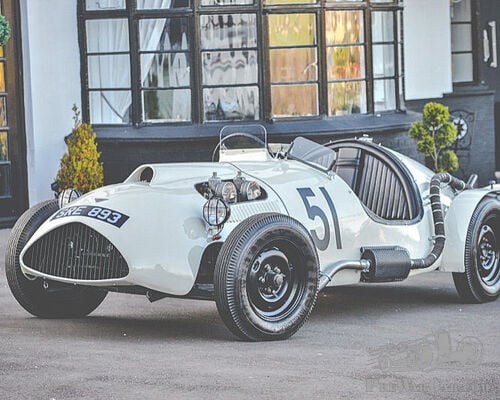
1933 Alvis 3.0 Special - One-Off Alloy Body | Period Competition Car | Featured in “Alvis – A Century of Drivers”
1933 Alvis 3. 0 Special - One-Off Alloy-Body | Period Competition Car | Featured in “Alvis – A Century of Drivers”
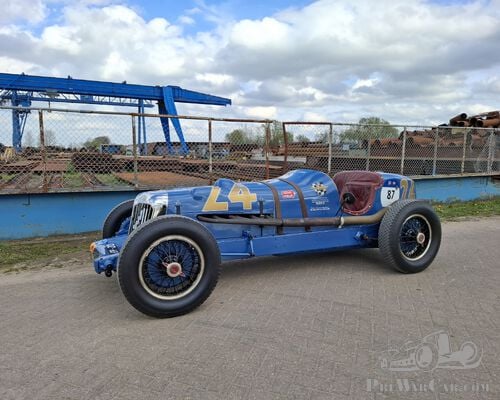
1932 - Graham " Lucenti " Indianapolis
Original participant of the 1932, 1934 and 1935 Indy 500. Best result: finishing 10th overall in the 1934 Indy 500 with driver “Herb” Ardinger...