The global magazine and marketplace for classic car enthusiasts, by enthusiasts.


Filter
Classic Ford, Talbot for sale - Ford, Talbot cars for sale
-

Ford Model A Roadster Deluxe 1931
This 1931 Ford Model A Roadster Deluxe is a fine example of one of the most iconic American cars ever built — a car that truly embodies Henry Ford’s original vision: “You can have any color, as long as it's black.”Finished in classic all-black, this Roadster presents a clean, authentic look without excessive chrome or flashy accessories —.. -
1938 Ford Eifel
In good condition2-seater convertibleDutch registration For sale: this beautiful Ford Eifel. This 2-seater convertible was built in Germany and the model is named after the Eifel mountain range. Not much is known about its history, except that the car has been part of two major collections.. -
Ford model T 1914 touring
Very correct car in good restored condition . Runs good . Nothing to complain about !! -
1913/14 Ford Model T runabout
1913/14 Ford Model T runabout. 3/4 restored brass Model T Ford. The following has been done: New chassis, fully overhauled engine no 1095067 and gearbox, rearaxle with driveshaft and brakes. New ex-USA painted mudguards ( 4× ) ,tailend and new wooden bodyframe, all new bodypanels bonnet and hoodbows with hoodmaterial, 4 good condition brass.. -
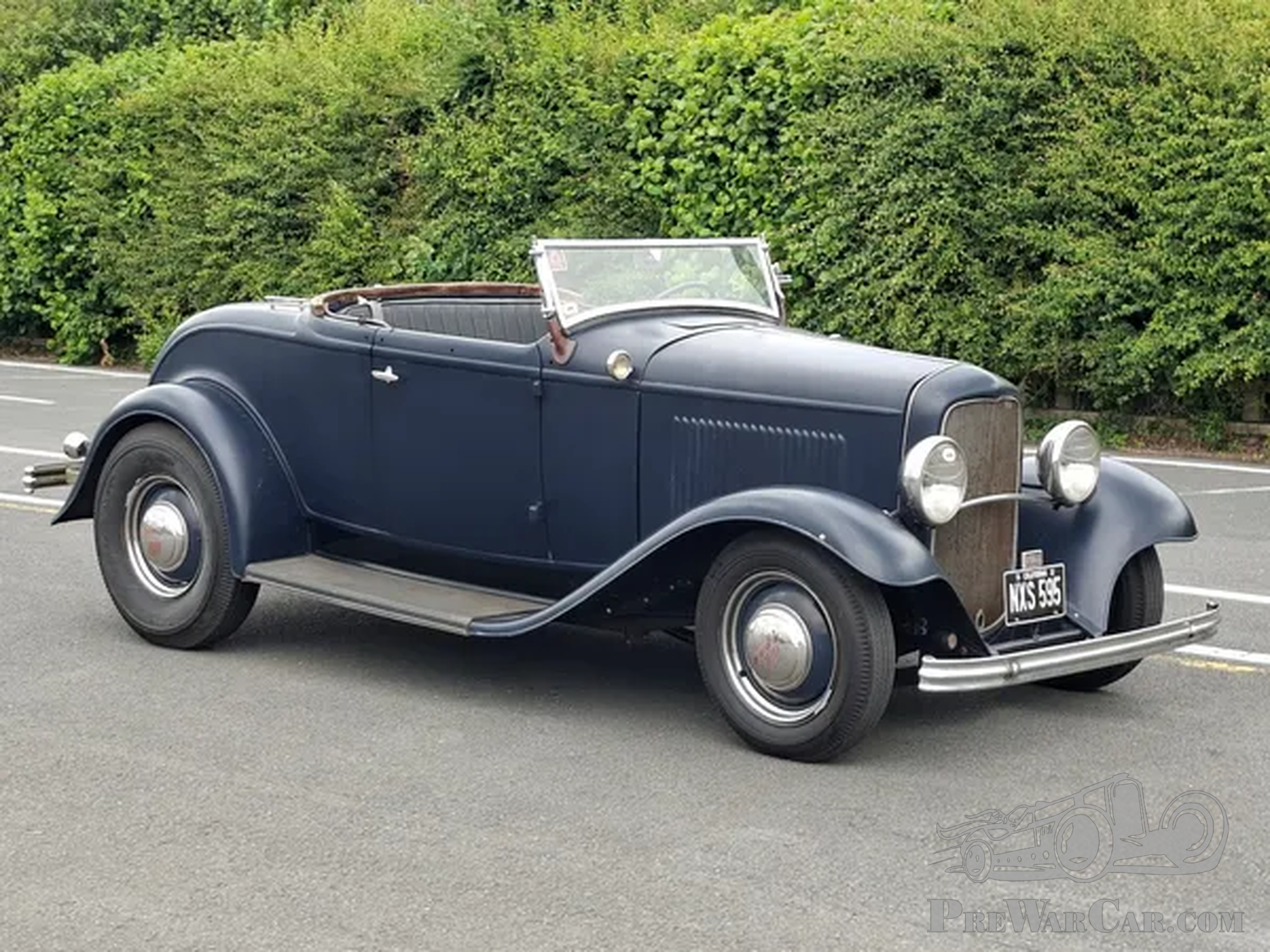
1932 Ford Roadster | Brightwells | Auction Ends: Wed 24th Jun
Further information to follow.Contact: david.tassell@brightwells.com -
Talbot 4AB Sport 2 Seater 1910
Lovely car from the brass era , with a sporty look.Delivered as a rolling to "Kellows" AustraliaCurrent 2 Seater Sport body was build in the 1980's when restoredImported to the UK around 1999Compete in the VSCC , VSCC Buff form in fileThe 2.4 liter , 4 cylinder engine start easily on the crank and runs smoothly.. -
Ford Model A Roadster Pickup 1930
This is a very nice Model A Roadster Pickup,In a very attractive color red.The car has some very nice accesoires as;– A stone quard– Quail mascot– Side mounted spare wheel with a mirror– Wind wings– Step plates– A trunk rack– Folding down convertible top.Converted to 12 Volt -
Ford model T racer 1925
This is an original “ Poor mans race car “ build in New Jersey by Ralph Cox , in 1935 - 39 .It has 2 speed rearend , Lovered chassis , another steering ect. Engine is standard .He was Aircraft pilot and made the body in the weymann / aircraft style with leather- clothe over padded frame. Price : please ask ! -
1933 Talbot AV105 Super Speed Saloon Coachwork by James Young
As a Swiss, Talbot Chief Engineer, Georges Roesch, designed his cars with Alpine motoring in mind. With their combination of a strong and powerful push-rod six cylinder engine, powerful brakes, light and accurate steering and a compact, light yet sturdy chassis it is no surprise that Talbots excelled in the Alpine Trials of the 1930s, then undou.. -
1932 Ford B Tudor Sedan
1932 Ford "B" Tudor Sedan, 4 cylinders, not restored, original condition, almost completed, ideal for a Hot Rod project, RHD. I can also supply a Ford V8 engine (please ask for pricing!)




Ford
US, 1903 to date
Ford Motor Co, Detroit, Mich.
Henry Ford built his first experimental car in a workshop behind his home in Bagley Avenue, Detroit in 1896. The Ford had a twin-cylinder engine with chain-cum-belt drive, and attained 20mph. A second Ford car was made and tested in 1898. In 1899 he left his employment with Edison to help organize the Detroit Automobile Co. He was replaced there by H.M. Leland and Ford’s third experimental machine had certain similarities with Leland’s Cadillac, notably the basic layout, wheel steering, and planetary transmission. The first production Ford for sale, the Ford Model A of 1903, had a flat-twin underfloor-mounted engine, central chain drive, and rear-entrance tonneau bodywork, and sold for $850, or $100 more than the Cadillac, 1.708 Ford Model A cars were sold in the first season, and from the beginning Ford elected to fight both Selden’s alleged master patent and the Association of Licensed Automobile Manufacturers set up by those makers who were willing to recognize the patent’s validity. Ford and the other rebels were not finally vindicated until 1911. During these early years Ford built a number of experimental racing machines, of which the most famous was the Ford 999, a vast 4-cylinder affair without clutch or gears, in which Henry Ford himself recorded 91.4mph on the frozen Lake St.Clair in 1904. That year the company offered Ford Model C, a development of the original Ford Model A with the now-mandatory dummby bonnet, and the first of their fours, the Ford Model B at $2.000. Both these Ford models had the 2-speed planetary transmission, and this was applied in 1905 to a 6-litre six, the Ford Model K, selling at $2.500. The transmission proved the big car’s achilles’ heel, and no more 6-cylinder cars were marketed until 1941. In 1906 Ford undercut Oldsmobile with the 4-cylinder Ford Model N runabout at $500, and this led logically to the immortal Ford Model T announced for the 1909 season.
The Tin Lizzie put the world on wheels during its 18-year production run; for its day the Ford Model T was very advanced, with a 2.9-litre monobloc sv 4-cylinder engine, detachable head, a top speed of 40-45mph, and a fuel consumption of 25-30mpg. Original list price for the Ford Model T was $850, but this was progressively cut until a roadster could be bought for as little as $260 in 1925. The car retained Ford’s pedal-controlled transmission with 2 forward speeds, and some American states were, as a result to issue two categories of driving licence – one for ordinary cars, and others for planetary types, i.e. the Ford. More than 15 million T-Ford cars were made between October 1908, and May 1927. It formed the basis for a farm tractor (for sale in 1916) and a one-ton truck (for sale in 1917), and in 1919 41 per cent of all motor vehicles registered in Great Britain were Ford. Production figures soared: more than 100.000 Fords were made in 1913, the 300.000 mark was passed in 1914, and more than half a million left the Ford works in 1916. The first ‘million year’ was 1922, and the Ford Model T reached its production peak a year later, with more than two million Ford cars delivered. A British Ford factory was opened in Manchester in 1911, and subsequently French and German plants were to produce their own individual species of Ford. Black was the only colour offered on Ford cars from 1914 to 1925, and a painted black radiator shell replaced the original brass Fprd type in 1917; 4-wheel brakes were never available, but electric starters were, from 1920, though it was possible too buy an open car with hand starting only and magneto-driven headlamps as late as 1925.
With the demise of the Ford Model T in 1927, the Ford factory was idle for six months pending the changeover of the Ford Model A in 1927, which turned out to be a conventional 3.3-litre 4-cylinder sv machine with 3-speed sliding-type gearbox, 4-wheel brakes, and pleasing lines inspired by the Lincoln which had been under Ford control since 1922. The price for the Ford Model A was $450, and four-and-a-half million were sold in four seasons despite the Depression, Ford outselling Chevrolet two-to-one in the peak year, 1930. The Ford Model A was also sold in stationwagon versions from 1929, the first large-scale production of a type of body that is now a sine qua non in an American manufacturer’s range. In 1932 Ford again broke new ground with a mass-produced 3.6-litre Ford V8 offering 70bhp for $460. It used the 4-cylinder chassis, and as in roadster form this Ford weighed only one ton, the performance was exciting and sometimes lethal. A revised four, the Ford Model B, was made for a short while, but was dropped once V8 production got into its stride. Inherited from both the T-Ford and the A-Ford was the all-round transverse-leaf suspension of the B-Ford and all Ford V8s up to 1948. The V8s first million year was 1935. The Rumanians Zamfirescu and Cristea won the 1936 Monte Carlo Rally for Ford, a success repeated by the Dutchman Bakker Schut in 1938. A smaller companion V8, the 2.2-litre Ford Model 60, came out in 1936, but it was not a great success, and disappeared after 1940. V8s acquired hydraulic brakes in 1939, and column change in 1940, and a companion 3.7-litre Ford six was listed for sale in 1941.
After World War 2 the 1942 Fords were continued for three seasons with little change, but the 1949 line, though it used the same power units, was entirely new, with a longer and lower silhouette, and coil-spring independent front suspension. Automatic transmission became available on Ford cars during 1950, and in 1952 a ‘square’ 3½-litre ohv six was introduced. Two years later the old sv Ford V8 at long last gave way to a new 130bhp ohv engine in the modern idiom, while another unusual departure was the sporting two-seater Ford Thunderbird, described by its makers as a ‘personal car’. Engine options were 4.8 or 5.1 litres, the latter giving a speed of 113mph, but by 1958 it had grown up into a bulky Ford five-seater convertible with unitary construction. Ford cars were further restyled in 1955, and from 1957 to 1959 there was a fully-convertible hardtop, the Ford Skyliner. In 1958 the most powerful V8 engines developed 300bhp from 5.8-litres. The 50 millionth Ford was delivered in 1959 and along with GM and Chrysler, the Ford company had a compact ready for the 1960 season, in the shape of the ohv 6-cylinder 2.3-litre Ford Falcon. A step towards the semi-compact was achieved in 1962, when the big Ford Fairlane models were listed with two modest-sized engines, a 2.8-litre six and a short-strokeeight of 3622cc, the exact capacity of the original 1932 V8.
Since 1962 there has been an increasing emphasis on competition; the big Ford Galaxies with 7-litre engines finally ousted the Jaguars from their comination of British saloon-car racing, while the adoption of the V8 engine by A.C. Cars Ltd for their Cobra model brought Ford back into the sports car field as well. A team of Ford Falcon Sprints was entered in the 1963 Monte Carlo Rally and dominated the big-car class. 1964 brought the Ford Mustang, a compact semi-GT with close-coupled four-seater bodywork, sold for $2.480 with a 4.7-litre V8 engine giving a top speed of over 110mph; a cheaper model used a 120bhp six. This Ford car achieved a sensational success, with half a million sold in less than eighteen months, and the 1½ millionth Ford Mustang delivered in June 1967. Even in 1970, when the effects of new American legislation were already being felt, the USA alone registered 165.415 new Mustangs. Ford Works support for racing ceased at the end of 1967. For 1968 Ford offered their contribution to the popular intermediate class, the Ford Torino on a 9ft 8in wheelbase. A 115bhp 3.3-litre six was standard, but V8 options with outputs of up to 390bhp were also catalogued.
The first of a new generation of compacts, the Ford Maverick, appeared in 1969. This had a 7ft 7in wheelbase and at 15ft overall was shorter than the original 1960 Ford Falcon. Engines were 2.8-litre and 3.3-litre 6-cylinder. Other features were a platform frame and semi-elliptic rear springing. Initially it was sold only as a fastback coupé, but by 1971 a 4-door sedan on a longer chassis had joined the Ford range, and the old Falcon had been discontinued, except by Ford of Australia. At the other end of the Ford spectrum were the high-performance Ford Torino Cobra hardtop with 5.7-litre 285bhp V8 engine and 4-speed manual gearbox, and the costly Ford Thunderbird, with a 7-litre unit and front disc brakes as standard, and a price of $5295.
More important, however, was 1971’s novelty, the Ford Pinto sub-compact introduced towards the end of 1970, when it helped Ford beat Chevrolet in the sales race. This had a sizeable European content. The German Ford factory made the 3-speed gearboxes and buyers had a choice of two 4-cylinder engines, the British 1.600cc Ford Cortina or the 86bhp 2-litre ohc model from Cologne. Drum brakes were standard. The expected swing away from manual transmissions and the sporting image came in 1972: Cobra units were derated to 266bhp, and Ford’s biggest engine, the 7½-litre V8 available as an option in the Ford Thunderbird, gave only 212bhp. Front disc brakes were standardized on the Ford Torino series, and halfway through the season came a station wagon version of the Ford Pinto. The main 1973 improvements concerned safety (energy-absorbing bumpers). However, the big Ford cars (Custom, Galaxie and LTD) on the 10ft 1in chassi were restyled, at the same time receiving front disc brakes as regular equipment. Six-cylinder and manual transmission options were discontinued on this series, as were all American Ford convertibles with the exception of the Mustang. In addition to the full-sized Fords and the intermediate Torino family, the range embraced the Pinto, Maverick, Mustang and Thunderbird. Like Chevrolet, Ford also offered several types on the borderline between private car and truck. These include campers; the 4x4 Ford Bronco; the forward-control Ford Econoline station wagon powered by a commercial-model 4.8-litre 6-cylinder engine; and the Ford Ranchero, a coupé-utility on the car chassis which came with a 4.1-litre six as standard equipment.
GB, 1911 to date
(1) Ford Motor Co Ltd, Trafford Park, Manchester, 1911 – 1931
(2) Ford Motor Co Ltd, Dagenham, Essex, 1932 to date
(3) Ford Advanced Vehicles Ltd, Slough, Bucks., 1964 – 1966
Until 1932, Ford of England made only rhd versions of the American Ford, Models T and A: the only exception was a small-bore (14.9 RAC rating) version of the latter model known as the Ford AF, deisgned to beat the British horsepower tax. The opening of the new Dagenham Ford factory in 1932 produced the first true British Ford, the 8hp 933cc Ford Model Y with side-valve engine and transverse springing at £120 (it was also made by Ford in Cologne). This was joined by the Ford Model C Ten of 1.172cc in 1935, a car which was to supplant the Austin Seven as the favourite basis for British road-going and trials ‘specials’. In October 1935 the price of the 2-door saloon Ford Eight was reduced to £100, making it the first full-sized closed car sold at this figure in the UK. The Ford Eight and the Ford Ten had developed into the Ford Anglia for sale and the Ford Prefect for sale with more modern bodywork and pressed-steel wheels by 1939. British-made and assembled Ford V8s during this period were identical to their American counterparts with one exception: the 1937 – 1939 version of the ‘Ford 60’ model rated at 22hp selling for £220. This was very similar to the French Matford.
After World War 2 the small Dagenham Fords continued with little alteration until 1953, a companion V8, known as the Ford Pilot, being offered in the 1947 – 1950 period with the pre-war 22hp styling, the 3.6-litre side-valve engine and column gear change. In 1951 came the Ford Consul an Ford Zephyr (a 1½-litre four and 2.3-litre six respectively) which featured independent front suspension, oversquare ohv power units, 12-volt electrics and slab-sided styling. Both cost less than £650. In 1954 a wide range was available, with convertible versions of the bigger Ford models, a de luxe variant of the Ford Zephyr known as the Ford Zodiac, and new small cars (the Ford 100E versions of the Anglia and Prefect) with the same basic chassis specification as the Ford Consul and Ford Zephyr, but retaining long-stroke side-valve power units and of course 3-speed gearboxes. At the bottom of the Ford range, listed at only £391, was the Ford Popular, a simplified version of the old Ford Anglia with 1172cc engine; this indestructible period piece was still being made in 1959, complete with 1935 side-valve engine, beam front axle and mechanical brakes. Restyled Ford Consuls, Ford Zephyrs and Ford Zodiacs appeared in 1956, and a year later they were available with the now generally accepted options of overdrive and automatic transmission. A step towards greater efficiency came in 1960, when the Ford 105E Anglia was introduced. Its layout wss conventional, but the roward-sloped rear window gave it a distinctive appearance. A 4-speed gearbox was featured for the first time and an ultra-oversquare 4-cylinder 997cc (80,96x48,4mm) engine introduced the average British motorist to engine speeds of 5.500rpm and higher. The 1954 Ford Anglia was given a few more seasons’ life as the Ford Popular. The 1.3-litre 4-headlight Ford Classic of 1961 and its sports coupé version, the Ford Capri, were less successful, but Ford did much better with an improved line of big cars; 4- and 6-cylinder Ford Zephyrs and a 6-cylinder Ford Zodiac with Dearborn-styled bodies and front disc brakes.
Ford’s answer to the BMC Minis came in 1963. It was a roomy and conventional saloon, the Ford Cortina, powered by developments of the 105E engine in 1.2-litre and 1½-litre forms, giving 48 and 64bhp respectively. The Ford Cortinas were followed shortly afterwards by a 1½-litre Ford GT model with front disc brakes and 83bhp and a supersporitng 1558cc twin ohc Lotus-Cortina developed with the assistance of Colin chapman of Lotus and capable of over 100mph. In 1964 the Cortina range was extended by standard and GT versions of the Ford Corsair, a full six-seater; 1965 versions were available with automatic gearbox and air conditioning. During the 1960s Ford had been doing increasingly well with the 105E engine in competitions, and this unit formed the basis of ‘Ford specials’ in every category from roadgoing GTs with fiberglass bodies up to the rear-engined Formula Junior racers, in which category Ford had a virtual monopolu of success.
In 1967, the British Ford range covered every category except the ultra-small and the super-luxury models. The Ford Anglia was available in 997cc and 1.2-litre forms. The Ford Cortinas, now all wih front disc brakes, ranged from the basic 1.2-litre 2-door saloon at £648 up to the Lotus-Corina at £1010. The bigger Ford cars had gone over to V-engines, starting with the 1.7-litre and 2-litre Ford Corsairs in October 1965, an followed by the Ford Zephyrs and Ford Zodiacs in the spring of 1966. Ford’s Advanced Vehicles Division also evolved a rear-engined Ford GT40 coupé with the American-built V8 engine, intended primarily for competitions; 50 Ford GT40 cars were made of which about 30 were sold privately. This development programme on both sides of the Atlantic resulted in the first American victory at le Mans in 1966, the car being a Ford 7-litre GT Mk 2 driven by McLaren and Amon. Ford repeated this success in 1967. However, the Advanced Vehicle Division at Slough had closed down at the end of 1966, an the 1967 Le Mans cars were made entirely in the USA, mainly by a Ford subsidiary known as Car Craft.
During 1967 the Ford company experimented with the Ford Comuta, a diminutive two-seater electric city car only 80in long and 49,5in high, but this project was shelved in 1971. Of greater interest to the car-buying public were the 1967 versions of the best-selling Ford Cortina (over one million in four years), which was restyled on Corsair lined with the choice of 1.3-litre or 1.5-litre 5-bearing engines; a year later the bigger engine was enlarged to 1.6-litres and crossflow heads were adopted. After a production run of 1.300.000 cars the 105E Anglia gave way in January 1968 to the Ford Escort, featuring a Cologne-designed 4-speed all-synchromesh gearbox, and rack and pinion steering, as well as crossflow 5-bearing engines of 1098cc or 1298cc. Both the GT and the 1558cc twin-cam versions had front disc brakes; the model won Ford the 1968 and 1969 Rally Constructors’ Championships and the 1970 World Cup Rally, successes reflected in the introduction early in 1970 of the Ford RS1600 model with dohc 16-valve engine featuring cogged-belt camshaft drive. This was made in a new Advanced Vehicles plant at Aveley. Ford had also assumed the role of general provider to the racing-car industry, with its 4-cylinder Formula 2 and V8 Formula 1 3-litre engine made to Cosworth designs. A new and successful ‘poor man’s’ Formula (Formula Ford) was built up round the standard 1600cc crossflow engine.
Meanwhile Ford’s European operations were being rationalized. The Ford Escort was made by Cologne as well as by Dagenham, and the same applied to the 2+2 Ford Capri coupé introduced early in 1969 – though in this case British and German versions used different engines. The British version had sold over 800.000 by August 1972, and came initially with a wide choice of engine and trim options, the former ranging from the 1300cc ohv in-line four up to the big 3-litre V6 that developed 136mph. Front suspension was of McPherson strut type and front disc brakes were standard. During 1970 the Ford Corsair range was discontinued. There were victories in 1971 in the Circuit of Ireland and the Scottish Rally, as well as some interesting experiments such as a 4x4 Ford Capri for Rallycross, and a mid-engined sports coupé prototype, the Ford GT70 with 5-speed gearbox, all-independent suspension, and fiberglass bodywork. The engine was a German-built Ford 3-litre V6. In the same year the Ford Cortina series was completely redesigned, emerging as bigger cars with double wishbone independent front suspension, and sohc in-line fours of 1.593cc or 1.992cc as an alternative to the established crossflow units. Irs reached series-production Fords during 1972, when the ageing Ford Zephyr IV family gave way to the Ford Consul/Granada series (also shared with Cologne). V-engines (a 2-litre four or sixes of 2500cc and 3000cc) were used. The most expensive Ford GXL Granada had a vinyl roof, power-assisted steering, and automatic transmission as standard. The Consul, Cortina and Granada were continued into 1973, along with a slightly revised Escort, and some improved Capris, which could be had for the first time with 1600cc sohc engines giving 72bhp or 86bhp.
AUS, 1925 to date
Ford Motor Company of Australia Ltd, Geelong; Broadmeadows, Victoria
Ford cars were first assembled in Australia in 1925 (Ford Model T), and Ford Model A cars had Australian-made bodies on American chassis. Australian Ford V8s made from 1932 to 1960 had small body variations from their American counterparts, such as greater slope on the roof lines of the Ford Tudor sedans of the late 1930s, making them similar to Holden’s coupés on GM chassis such as Chevrolet, Pontiac and Vauxhall. The Broadmeadows Ford plant was opened in 1960 to make the Ford Falcon, with 6-cylinder engine up to 1966, when it was supplemented with a V8, In 1967 the more expensive Ford Fairlane V8 wsa added to the Ford of Australia range, and in 1972 both Falcon and Fairlane were completely restyled so that thye were quite distinct from American Ford models of the same name. The 1973 range comprised three 6-cylinder engines and two V8s.
D, 1931 to date
Ford-Werke AG, Cologne
Ford started assembling the Ford Model T in Berlin in 1925 and Ford Model A in 1927. A new Ford factory was built at Cologne and production began in 1931 with the Ford Model B, later known as the Rheinland, with a 4-cylinder 3.285cc engine using many imported parts. The Ford Köln was built in the new works to American designs, using a 933cc engine, and was almost identical to the English Ford 8, the first Dagenham-built Ford. The Ford V8 was imported at first, but after 1935 it was built entirely at Cologne. A very popular model was the Ford Eifel (1157cc) available as a sedan or a two-seater convertible. In 1939 the Ford Taunus appeared with a 1172cc 34bhp engine and streamlined body, but this type was only produced in small numbers as a result of the outbreak of World War 2. The Ford Taunus was continued after the war in 1948 with the same 1172cc engine. An engine with the same specification was used for the British Ford 10 and Ford Prefect from 1935 for about 20 years. The name Taunus later came to be used for all German Ford cars, and the 12M, 15M and 17M were fitted with 4-cylinder 1.2-, 1.5-, and 1.7-litre engines respectively. The 12M was offered with front drive in 1962 and was available with V4 engines of 1.2 and 1.5-litres’ capacity. The 17M also appeared with a V4 engine in 1964, available in 1.5- and 1.7-litre sizes, but this car was rear-driven. The Taunus 20M was a 2-litre V6 introduced for 1968; known as the 20M RS, it had a 108bhp 2.3-litre engine.
An increasing tendency to rationalize Ford’s European programme became apparent when Dagenham and Cologne offered identical Ford Escort ranges in 1968. In 1969 there were German as well as British Ford Capri coupés, though engine options were different; V4s of 1.3, 1.5 and 1.7 litres, and 2-litre and 2.3-litre V6s, with outputs ranging from 63bhp to 123bhp. With this came an increasing interest in competitions; Glemser won the 1969 German Saloon Car Championship with a Ford Escort, and the 1971 European Touring Car Challenge as well. The Ford Taunus name, dropped in 1967, returned in 1971 on a replacement for the fwd 12M. This marked a reversion to conventional drive as well as new 5-bearing ohc in-line 4-cylinder engines of 1300cc and 1600cc, and coil-and-wishbone independent front suspension in place of Ford’s familiar McPherson struts. The bigger Ford cars retained V-engines, and Ford of Cologne entered 1972 with a range extending from the basic 1098cc Ford Escort up to the 142bhp 26M six with 2548cc engine and all-disc brakes. The most powerful catalogued Ford Capri was the 150bhp RS2600, also with discs all round; a team of 2.9-litre versions took the first three places in the Spa 24-Hour Race that year. During the season the 17M and 26M were replaced by German versions of the British Consul-Granada saloons, with all-independent springing. These came with four different engines: a 1.7-litre V4, a 2-litre ohc in-line four, a German-designed 2.3-litre V6, and the 3-litre British Ford V6.
Source: Georgano, encyclopedia of motorcar; MCS, ELF, HON
The information is written with the greatest of care. However, if you have any suggested amendments please contact us at office@prewarcar.com
Talbot
1903 – 1938
Clement-Talbot Ltd, North Kensington, London W.10
From 1903, Clement-Talbot Ltd, a company backed by the Earl of Shrewsbury and Talbot, began importing the French Clément car into Britain; in spite of its name and an interest held by Adolphe Clément, the concern was British, and by the end of the year its cars were called Talbot cars. The 1904 models Talbot cars were a 6hp single, and 11hp twin, and two big fours. All of the Talbot cars had shaft drive and side valves in T-heads, except for the biggest, the 27hp voiture de luxe Talbot car, which used overhead inlet valves and a single camshaft. Trucks, buses and boats were also advertised, next to Talbot cars. Promotion of the Talbot car, which was at first in the hands of the managing director, D.M. Weigel, was energetic and successful.
By the end of 1904, an impressive Talbot car factory had been built, complete with test track, and in the following year British-assembled, and partly British-made Talbot cars emerged from it. A wide variety of types Talbot cars was listed, from an 11hp twin to a great 50hp 4-cylinder Talbot car. One model that was to be famous, the 12/16hp Talbot car, had already been designed. French cars were still being imported by the Talbot car company. However, the 20hp Talbot car of 1906 was the first British-made Talbot car. It was designed by C.R. Garrard, and while still conventional, this Talbot car had an unusually efficient engine of 3.8 litres’ capacity. Both this and the 2.7-litre ‘12/16’ Talbot car were fast cars that quickly made a name for themselves in competitions; the slogan for the Talbot cars became ‘The Invincible Talbot’. For 1907 a 3-litre 15hp, a Talbot car in the same mould, superseded the ‘12/16’. By 1908 this Talbot car was the only British chassis offered, into which could be installed 15hp, 25hp or 35hp engines. The Talbot car popularity was due to a combination of smoothness, reliability, speed and reasonable price. The French range Talbot cars was still listed. A six was introduced for 1910, and the 4½-litre 25hp was revised by G.W.A. Brown with an L-head valve arrangement. This model Talbot car, highly tuned and lightened, and fitted with a racing body, became the first car to cover 100 miles in an hour, at Brooklands in 1913 in the hands of Percy Lambert. In the same year a new model Talbot car, the 2.6-litre 15/20hp, was introduced. This Talbot car and the 25hp, now called the ‘25/50’, were the famous cars that kept the Talbot car name before the public eye in competitions. A sports model Talbot car of the latter was also listed. By this time, the French range Talbot cars had been dropped.
In 1919 Clement-Talbot was taken over by another French-sounding, but in fact British-owned firm, the Société Alexandre Darracq of Paris. Darracq proceeded to acquire Sunbeam as well, but private Talbot car policy was at first unaffected. The 25/50hp and 15/20hp Talbot cars were continued. For 1922, however, the new 1-litre Darracq light car was offered as the 8/18hp Talbot car. In the Talbot tradition, this Talbot car was a solid car with above-average performance and handling. The push-rod overhead valve engine had coil ignition, there were only two seats in the Talbot car, there was no differential, and suspension was by quarter-elliptic springs all round. Both acceleration and brakes of the Talbot car were excellent; in other words, this Talbot car was a light car more typical in France than of England. Georges Roesch, who had been Chief Engineer since 1916 and had already devised the Talbot 12hp of 1919, a Talbot car which was never put on the market, quickly revised the ‘8/18’ Talbot car as the 10/23hp, which was more ‘English’ in that the Talbot car had a long, wide, roomy body, and a differential, with an enlarged bore and 1100cc to cope with the added weight.
From 1923 to 1926, the Talbot car company tried to exist on the ‘10/23’ Talbot car and a series of obscure small sixes of which few Talbot cars were made. The pre-war big four Talbot cars had been dropped, but nothing as popular had been found. Clement-Talbot cars were at a very low ebb when Georges Roesch saved them with a one-model policy, based on a small six of the type just becoming fashionable. However, the 14/45hp Talbot car was better than the rest because the Talbot car combined efficiency and high quality with comfort, roominess and smoothness. Considering all this, the price of the Talbot car was not high. It was, in fact, Roesch’s intention to provide the characteristics of the Rolls-Royce 20hp to the Talbot car but with half the engine size, weight and price. The cubic capacity was only 1665cc (61x95mm). The reciprocating parts, including the overhead valves, were very light, and the compression ratio was notably high, enabling revolutions and power output to be high also. Even so, the engine of the Talbot car was an unusual combination of silence and flexibility. The brakes were excellent, though it was suprising to find only quarter-elliptic springs at the rear of the Talbot car. The car’s main drawback was weight: bodies of these Talbot cars were very spacious, mounted on a deep, stiff but heavy frame with a long wheelbase. However, most Talbot car customers did not want ultra-high performance; the 60-65mph of the ‘14/45’ Talbot car was very good for such a large car with so small an engine.
The Talbot car company’s crisis had allowed no time for development, so the new Talbot car came straight off the drawing board to the public; but the Talbot car was so good in design that there were no major snags, and the Talbot car firm sold all they could make. The engine of the Talbot car was very difficult to work on without garage equipment, but the ‘14/45’ Talbot car was designed for replacement rather than repair of parts: another very modern, if not entirely desirable, feature. The design was obviously capable of great development, and during 1930 the first stages were announced – the Talbot 75 and 90. Both Talbot cars had the same size of engine; the ‘14/45’ Talbot car with an enlarged bore, providing 2¼ litres. The ‘75’ Talbot car was a touring model available alongside the ‘14/45’ to those who wanted a little more performance, while the ‘Talbot AM90’ was a more highly-tuned sports Talbot car, giving over 80mph with the same refinement. This Talbot car was sold in closed as well as open form, but the most handsome body was the standard sports tourer. Additionally, a cheaper Light Six 14/45 Talbot car with a shorter chassis was added at the lower end of the range.
With the ‘Talbot AM90’ began Talbot cars second lease of life as a distinguished sporting make. Third and fourth places in the Le Mans 24 Hour Race were followed by class wins of Talbot cars in the Irish Grand Prix, the Ulster Tourist Trophy Race and the Brooklands 500 Miles Race. In spring 1931 the Talbot 105 was introduced with a new, 75x112mm engine providing 3-litres. To improve the breathing, the valves were in a staggered arrangement instead of bing in line as hitherto. All types of body, from saloon to four-seater sports, were offered on this Talbot car chassis. The last Talbot car was a 100mph machine. The bigger engine of the Talbot car was difficult to start, in spite of assistance from two 12-volt batteries, for the starter was not geared down. It was no help when the optional Wilson self-changing gearbox was fitted from 1933. In competitions, the Talbot car name went from strength to strength. The ‘Talbot 105’ came 3rd in the Irish Grand Prix and at Le Mans, 4th in the Tourist Trophy and 2nd in the 500 Miles Race. A 105 tourer Talbot car took home a Coupe des Glaciers after a fault-free performance in the Alpine Trial. The Coupe des Alpes team prize was won in 1932 by Talbot 105s, and in that year came a 2nd place in the Brooklands 1000 Miles Race (which replaced the Double Twelve), and 3rd place at Le Mans and in the 500 Miles Race with a Talbot car.
These racing successes were won by Talbot cars prepared by Fox & Nicholl Ltd with works support; in spite of the fame and success of the Talbot car, the Sunbeam-Talbot-Darracq group had been in financial trouble since 1930 and earlier, and racing was a luxury. At the end of 1932, however, Fox & Nicholl’s participation was discontinued and the great run of triumphs for Talbot cars ended. The normal production Talbot cars continued to do well. In 1932 the Talbot 65, a new model basically the same as the ‘14/45’, was announced. The ‘Talbot 95’, consisting of the ‘Talbot 105’ engine in a longer wheelbase for more sedate use, was introduced for 1933. In the following year Talbot cars with the self-changing gearbox were given a centrifugal clutch to avoid drag, and for 1935 there appeared the last developments of the standard type Talbot car, the ‘Talbot 110’. This superb Talbot car had a larger bore than the 105, giving 3½-litres. Early in 1935, however, Rootes gained control of Clement-Talbot. The ‘Talbot 65’ was dropped for 1936 in favour of the Rootes Talbot Ten, a Hillman Minx-based design, and by 1938 the last Roesch survivor, the ‘Talbot 110’ was gone.
Source: Georgano, encyclopedia of motorcar; TRN
The information is written with the greatest of care. However, if you have any suggested amendments please contact us at office@prewarcar.com


Featured
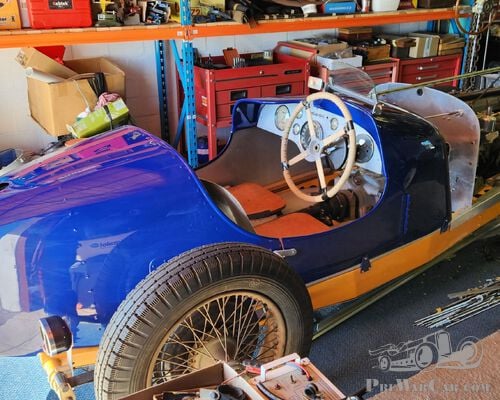
Riley TT Sprite
1935 6-cylinder TT Sprite replica. Chassis # 46A2722. Engine # 6A2722. Original Ulster Imp body. Restoration nearing completion. Engine, G..
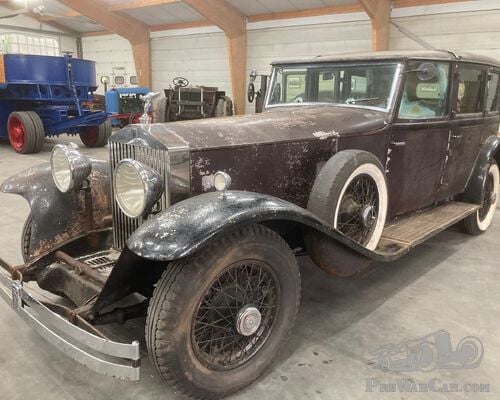
Rolls-Royce
Rolls-Royce Phantom ll chassisnummer 287 AJS. bouwjaar 1932, Links gestuurd, Brewster Keswick Sedance Towncar
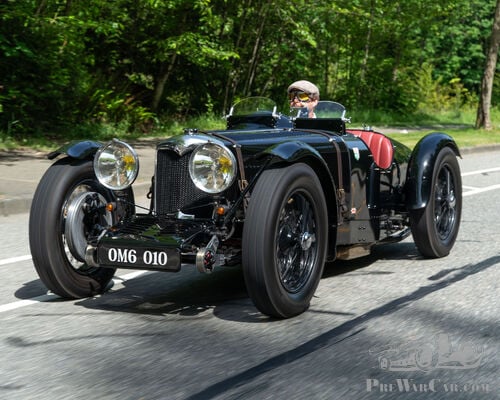
Riley 14/6 Special 1933
The ExperienceStep into the golden age of British motoring. This 1933 Riley 14/6 Special is a masterclass in pre-w..