The global magazine and marketplace for classic car enthusiasts, by enthusiasts.


Filter
Classic G.N. for sale - G.N. cars for sale
-

1937 Bentley 4 ¼ Litre Vanden Plas 'Allweather' Tourer B179JY
An unusual and very interesting, attractive, practical four door open cabriolet configuration make this a particularly desirable Derby Bentley, being easy to access through large doors, and ‘wide-bodied’, giving increased spaciousness and elbow room, and nicely weather resistant, with well-constructed hood, wind up windows, tonneau cover, etc, i.. -
Have you seen this Bentley Le Mans Special? - Brooklands Birkin Racer
Who can tell me more about the whereabouts of the following car? I’m looking for information about a “Red Bentley” replica with a Mark VI chassis and a RR straight-8 B81 engine. The car was built in the Netherlands and was for sale roughly 25 years ago at Imparts in Ede. I even test-drove it there at the time. After that, it was exported to the .. -
1913/14 Ford Model T runabout
1913/14 Ford Model T runabout. 3/4 restored brass Model T Ford. The following has been done: New chassis, fully overhauled engine no 1095067 and gearbox, rearaxle with driveshaft and brakes. New ex-USA painted mudguards ( 4× ) ,tailend and new wooden bodyframe, all new bodypanels bonnet and hoodbows with hoodmaterial, 4 good condition brass.. -
1927 Cadillac V8 complete and restored rolling chassis
1927 Cadillac V8 complete and restored rolling chassis. With good radiator, beautiful original headlights, bonnet, cowling and dashboard. On restored wooden spoked wheels with the original hubcaps. Ideal car for racing and build your own body on ! We also have most of the dismantled original tourer body and the original fenders (guards) in good con.. -
1928 Bentley 4.5 Litre Lemans style tourer.
1928 Bentley 4.5 Litre Chassis No. KM3083 Engine No. KM3086 Registration No. UC 8791 Mint restored condition and all ready for some serious fun. This 4.5 Litre Bentley started life as a Martin Walter Saloon. in 2011 it was rebuilt to Lemans spec by the late Stanley Mann. Since converion it has .. -
Ford Model A Pickup Truck
Ford Model A Pickup Truck Dieser schöne Ford wurde 2014 von einem Oldtimerliebhaber in Kalifornien, USA gekauft, nach Deutschland verschifft und war seitdem Teil seiner privaten Klassiker-Sammlung. Es liegt eine ältere Postkarte bei auf der der schöne Pickup als Teil des Motivs diente. Pickups gehören beim Ford Model .. -
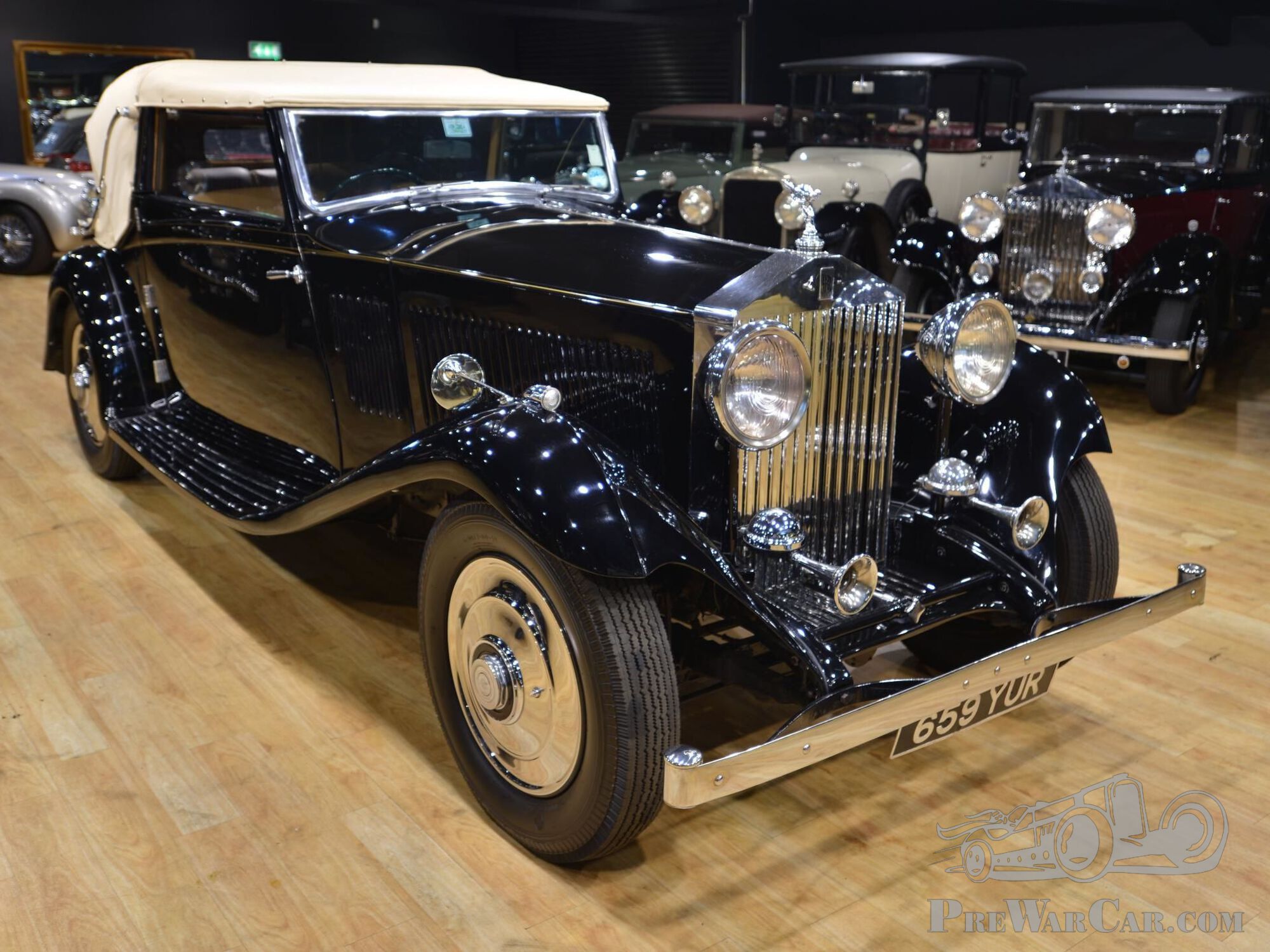
1934 Rolls-Royce 20/25 Gurney Nutting Owen Sedanca 3 position drophead for sale
Vintage and Prestige are proud to offer this 1934 Rolls-Royce 20/25 Gurney Nutting Owen Sedanca 3 position drophead for sale.Chassis number: GYD69Registration number: 659YUROrdered new by one Stanley Morris of Blundellsands Lancs; The car carries most desirable coachwork by J. Gurney Nutting taking the form of an Owen 3 posi.. -
1927 Renault NN1 & Brian James braked trailer
Imported from France in 1997, current owner from 2010, complete engine rebuild, approx 4000 miles, new clutch, dynastart and carburettor restored.Good hood and new tonneau cover. All new inner tubes fitted, spare magneto.Maintenance manual in French and English with other spares available.Includes a Brian James braked traile.. -
1933 Rolls-Royce Phantom II All Weather Touring
This beautiful Rolls is the epitome of 1930’s stunning designs; the exclusive Hooper & co. coachwork is far from conservative. The mile long hood combined with the dramatically raked, low windshield, window pillars and doors give it the appearance of speeding when it’s standing still! And with its astonishing 150” wheelbase she..




G.N.
GB, 1910 – 1925
(1) G.N. Ltd, Hendon, Middlesex, 1910 – 1920
(2) G.N. Motors Ltd, Wandsworth, London S.W., 1920 – 1923
(3) G.N. Ltd, Wandsworth, London S.W., 1923 – 1925
The GN car was the best-known and longest-lived of the British cyclecars; the vehicles that provided the earliest form of motoring for the masses. H.R. Godfrey and A. Frazer-Nash installed air-cooled 1.100 V-twin engines of JAP and Antoine manufacture in the GN prototypes. By 1911 GN were manufacturing their own 90 degrees V-twin using in that year Peugeot cylinder barrels and in 1912 their own GN ioe design cylinder heads. The pre-World War 1 GN cars for sale used a variety of transmissions incorporating belts and chains. Production at Hendon of GN cars was low, not exceeding two cars a week. After the war the British Grégoire works at Wandsworth were taken over, and the GN car was redesigned. A steel chassis replaced the original ash, a conventional steering box replaced the wire and bobbin, and the final drive on the GN cars was by chains rather than by belts. Though high-geared, the steering was extremely light, road-holding was excellent, and the complete GN car weighed very little – 6½cwt for the basic 2-seater GN Popular of 1920. In conjunction with reasonable power and good low-speed torque, this recipe gave a sporting performance, simplicity and economy, and attracted many sportsmen. These GN cars were catered for by the GN Légère, a tuned model, and the GN Vitesse, a still faster car with chain-driven ohc.
Some 50 GN cars were being made per week in 1920 and 1921. Further developed, the GN Vitesse became a really powerful little racing car, with shaft-driven overhead camshafts operating very large inclined valves. In 1922 Godfrey and Frazer-Nash left the GN firm. By 1923 the family motorist had abandoned the cyclecar in favour of the comforts of the light car, so GN ltd began to build this type alongside the old. Shaft-driven chassis were made on these GN cars, powered either by the twin, in smoother, quieter and less potent form, or by water-cooled 4-cylinder units; DFP, Chapuis-Dornier and Anzani were used. Very few GN cars were in fact produced. The cyclecar and the GN name disappeared, but GN carried on in theory until 1929; in 1926 the GN firm re-issued an instruction book. GN Ltd still survives as a Vauxhall agent in Balham.
GN’s were made and sold in France by the Salmson aero engine company between 1919 and 1922.
Source: Georgano, encyclopedia of motorcar; TRN
The information is written with the greatest of care. However, if you have any suggested amendments please contact us at office@prewarcar.com


Featured
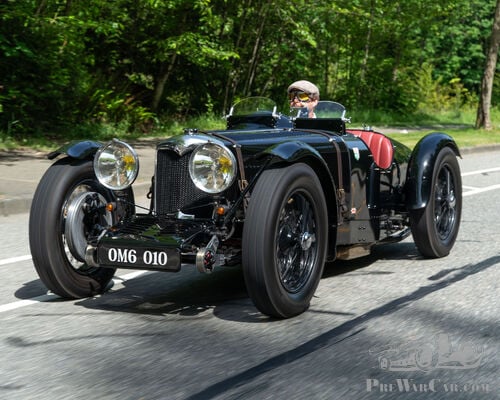
Riley 14/6 Special 1933
The ExperienceStep into the golden age of British motoring. This 1933 Riley 14/6 Special is a masterclass in pre-w..
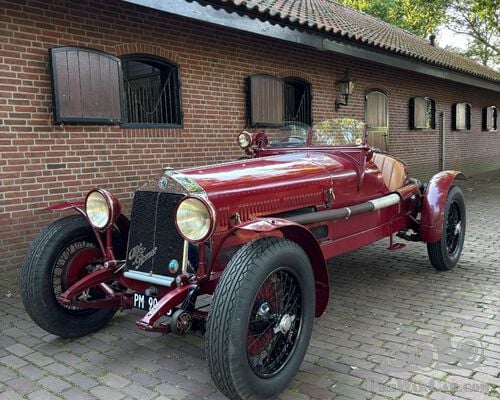
1930 Alfa Romeo 6C 1750 Spider
1930 Alfa Romeo 6C 1750 Spider with complete history from delivery to first owner in 1930 in Firenze till today with copy Libretto/license plate.
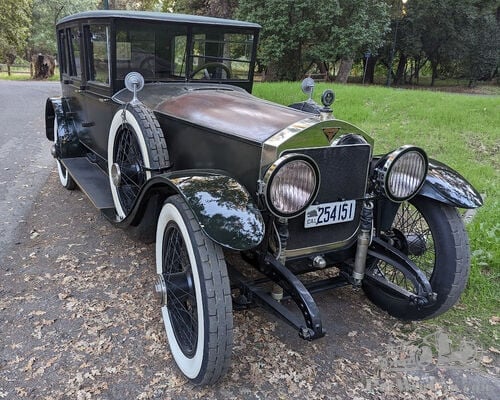
1916 Simplex, Crane model 5
1916 Simplex, Crane MODEL 5CUSTOM MADE HISTORIC PRESERVATION VEHICLE – READY TO TOUR!This Simplex recently completed th..