The global magazine and marketplace for classic car enthusiasts, by enthusiasts.


Filter
Classic Donnet/ Donnet-Zédel, Graham-Paige for sale - Donnet/ Donnet-Zédel, Graham-Paige cars for sale
-

1932 - Graham " Lucenti " Indianapolis
Original participant of the 1932, 1934 and 1935 Indy 500. Best result: finishing 10th overall in the 1934 Indy 500 with driver “Herb” Ardinger.• Genuine Indy 500 racer.• Graham Blue Streak 8 cylinder based chassis and engine.• 1 owner between 1953 to 2006.• Road legal 2-seater car with Dutch registration.• FIA .. -
Graham Model 64 Standard Eight 'Blue Streak'
UK Registration No: XXG 551Chassis No: 1801069MOT: ExemptH&H ClassicsKelham Hall | Newark, NottinghamshireViewing: Tues 16th June from 12pmAuction: Wed 17th June from 9amLocation: Main Street, Newark, Nottinghamshire NG23 5QXEstimate£18,000 - £22,000*One of the m..


Donnet / Donnet-Zédel
France, 1924 – 1934
SA des Automobiles Donnet, Nanterre, Seine; Neuilly, Seine, Pontarlier, Doubs.
After Zédel and Vinot et Deguingand ceased production, Donnet, a new company constituted from them in 1924, offered two new cars called Donnet-Zédel. A light car was made, the 7CV Donnet-Zedel Type G, which had a side-valve 4-cylinder engine of 1100cc and (unusual for so small a vehicle) a 4-speed gearbox. It was a solidly-built machine, and a Donnet-Zedel sports model was listed. There was, in addition, a medium-sized four of about 2¼-litres. From 1926, the Donnet-Zedel firm came to concentrate upon a 2½-litre six, also with side valves, which proved a popular car. Another, smaller six with 1.3-litres (later 1.8-litre) Sainturat-designed engine was also offered by Donnet-Zedel. In the 1932 range however, was a new small Donnet-Zedel car in the shape of a 750cc 2-stroke. This, a violet design, had been sold as the Dequingand until 1930. A fwd 2-litre 6-cylinder Donnet-Zedel, shown at the 1931 Paris Salon came to nothing. With the demise of Donnet, Simca took over the Donnet-Zedel factory.
Source: Georgano, encyclopedia of motorcar; TRN
The information is written with the greatest of care. However, if you have any suggested amendments please contact us at office@prewarcar.com
Graham Paige
US, 1927 – 1941
Graham Paige Motors Corp, Detroit, Mich.
The Graham brothers, Joseph, Robert and Ray, acquired the old Paige concern in 1927. Their Graham Paige cars were conventional machines noted for their internal-expanding hydraulic front wheel brakes and 4-speed ‘twin-top’ gearboxes, and 78.000 Graham Paige cars were sold in their first year of production. The range embraced three sixes and two eights, the biggest of these being the ‘Graham Paige 835’ with an 11ft 5in wheelbase and a 5.3-litre engine. One of these straight-8 Graham Paige cars won the last race ever held on the Brooklands Motor Course in August 1939. The name of the Graham Paige make was simplified to Graham for the 1931 season, though design underwent little alteration until the arrival of the 1932 Graham Blue Streaks, headed by a 4-litre eight which introduced skirted front wings to the American market and was immortalized in the ‘Tootsie Toys’ found in many a nursery of the 1930s. 1934 8-cylinder Graham Paige cars were available with a centrifugal supercharger rotating at 5¾ times the engine speed, which gave them a top speed of 95mph. After 1935 only sixes were made by the Graham Paige car factory, the 3½-litre Graham Cavalier being listed in 80bhp unblown and 112bhp blown versions, both with aluminium cylinder heads – this chassis of this Graham Paige car formed the basis of the Anglo-American Lammas. Despite an attempt to compete in the lowest-priced field with the 2.8-litre Graham Crusader at $595 (it cost less than £300 in England), Graham Paige achieved little beyond three successive outright wins in the Gilmore-Yosemite Ecoonmy Run, though these small Graham Paige sixes were copied by Nissan of Japan. An ugly concave nose and spatted rear wheels characterized the 1938 and 1939 Graham Paige cars, which were 3½-litre Graham cars available with or without superchargers. The Graham Paige company’s final fling was the 1940 Hollywood, which made use of the body dies from Cord’s 810/812 series. Like Hupmobile’s very similar Skylark, this was not a commercial success, and after World War 2 Graham-Paige joined forces with Henry J. Kaiser to build the Kaiser and Frazer cars: the latter were named after Graham-Paige’s President Joseph W. Frazer.
Source: Georgano, encyclopedia of motorcar; MCS
The information is written with the greatest of care. However, if you have any suggested amendments please contact us at office@prewarcar.com


Featured
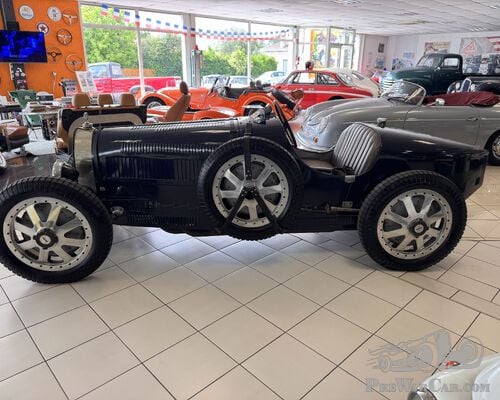
Bugatti 35 B Pur Sang
Bugatti 35 B Pur Sang,importée par un membre délégué de la FFVE il y’a une quinzaine d années.Participation à de nombreux Rallyes Bug..
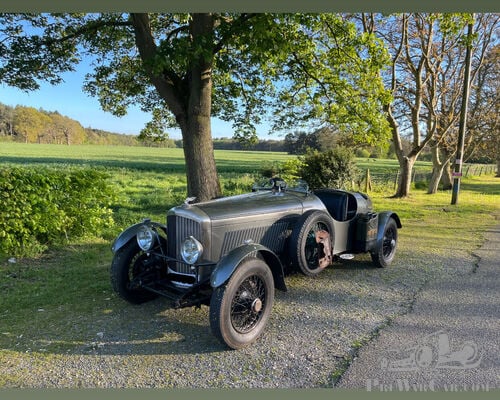
Derby Bentley Special 4-1/4
Sadly i am having to sell on my Bentley special ( Icarus). It is currently a work in progress and still needs finalising/ refining. A great o..