The global magazine and marketplace for classic car enthusiasts, by enthusiasts.


Filter
Classic Gwynne for sale - Gwynne cars for sale
-

1929 Rolls Royce Phantom 1 Springfield LHD Brewster Lonsdale Landaulette
1929 Rolls Royce Phantom 1 Springfield LHD Brewster Lonsdale Landaulette Chassis Number: S324KP Registration Number: BS9362 Currently undergoing a major service & set up with noted marque expert James Black. At the same time the Autovac is being reinstated to replace the cur.. -
Te koop, Renault NN Torpedo Commercial 1926
Deze Renault betreft een restauratie object voorzien van Franse papieren Carte Grise plus Certificat de Cession D'un Véhicle gedateerd 2003. Tevens een Renault NN rollend chassis voor eventuele onderdelen eveneens met Franse papieren. Te bezichtigen in Bemmel (Nederland). Vraagprijs voor beiden voertuigen € 6000,= dus voor beide auto's die in éé.. -
1937 Cord 812 Supercharged Cabriolet | RM Sotheby's | The Hershey Auction
To Be OFFERED AT AUCTION WITHOUT RESERVE at RM Sothebys' The Hershey Auction event, 7 - 8 October 2026. Offered Without Reserve | $300,000 - $350,000 USD Offered from 27 years of loving enthusiast ownershipFormerly owned by Harrah’s Automobile Collection and William Cord HummelKnown history since 1952; never fully resto.. -
1908 Cadillac Model S Runabout | RM Sotheby's | The Hershey Auction
To Be OFFERED AT AUCTION WITHOUT RESERVE at RM Sothebys' The Hershey Auction event, 7 - 8 October 2026. Offered Without Reserve | $6,000 - $12,000 USD A tangible link to the formative years of one of America’s most important automotive marquesPowered by a 10-hp single-cylinder engine, paired with a two-speed transmission, Brown-.. -
Rolland Pilain
I am selling a 1913 Rolland Pilain RP 10HP in very good condition. It has a standard registration document in my name, and the MOT will be carried out prior to the sale. -
The famous white Riley 12/4 from 1936 with Race History ex New Zealand
The famous white Riley of racing driver Mrs. Ivy Stephenson , Riley 12/4 Kestrel Special from 1936A car which was built as a race car and still can be successfully raced today!- A known car with racing history in New Zealand -Restored in excellent state and condition-Comprehensively files and documentation .. -
1933 Rolls Royce 20/25 Sedanca by Thrupp & Maberly
1933 Rolls Royce 20/25 Sedanca by Thrupp & Maberly Chassis Number: GRW27 Registration Number: VTK777 Simply the best we have ever seen. This car won prizes in class at the recent RREC national rally at Burghley house. A massive nut & bolt re.. -
1934 Rolls-Royce 20/25 Gurney Nutting Owen 3 position drop head
1934 Rolls-Royce 20/25 Gurney Nutting Owen 3 position drop headChassis number: GLZ75Registration number: ALW565Chassis number GLZ 75 was off test 10th July 1933 for supply to HR Owen as a ‘stock’ car. The chassis was delivered to Gurney Nutting & Co Ltd. on The Kings Road for Owen Sedanca Coupe Coachwork which the car st.. -
1913 Wolseley 24/30HP Two-Seater
1913 Wolseley 24/30HP Two-Seater Chassis no. 20034Registration no. J1296Engine no. 34/1134 1913 Wolseley 24/30HP Two-Seater for sale: A large and imposing Edwardian two seat tourer, this 24/30hp model sports Wolseleys large 5 litre six cylinder engine giving ample power and easy modern day cruising spe.. -
a real Speedster
A real Speedster with hot cams, big vales, big bores, etc. Will go 100 kmh. Technical absolute top. comes with some spare parts and fresh MOT.




Gwynne
GB, 1922 – 1929
(1) Gwynne’s Engineering Co Ltd, Chiswick, London W.4, 1922 – 1925
(2) Gwynne Cars Ltd, Chiswick, London W.4, 1925 – 1929
The name of Gwynne wss known on centrifugal pumps before (and after) Gwynne appeared on cars, and the Gwynne company also made aero and car engines before turning to road vehicles. The first Gwynne venture into the latter field, in 1920, took the form of acquiring the Albert, whose engines they had made. From the 1923 model year, they were known as Gwynne-Alberts. In 1922, Gwynne offered a light car under their own Gwynne name. The engine of the Gwynne Eight was of Spanish origin, based on one of Arturo Elizalde’s designs used in the Victoria. The Gwynne Eight had four cylinders. Bore and stroke were 55x100mm, providing a capacity of 950cc. The push-rod overhead valves were neatly enclosed, the whole unit representing a very clean outward appearance. High power – 24bhp – and light weight afforded a desirable combination of good performance and fuel economy of the Gwynne, which was allied to low price. The Gwynne was noisy and uncomfortable in the extreme, but sold well at first on account of its other virtues. The two-and-two-halves ‘chummy’ style of body was popular on the Gwynne at the time was supplemented by more practical, if ugly, full four-seater and saloon bodies on longer chassis, while to pull the extra weight of these, a bigger and more flexible engine of 1.247cc, the Gwynne Ten, was substituted. At the other extreme, a Gwynne sports model was offered, but by this time, the middle 1920s, the family motorist who was the most important customer could find greater comfort and quietness more cheaply and the Gwynne passed from the motoring scene, after involving its creators in heavy loss.
Source: Georgano, encyclopedia of motorcar; TRN
The information is written with the greatest of care. However, if you have any suggested amendments please contact us at office@prewarcar.com


Featured
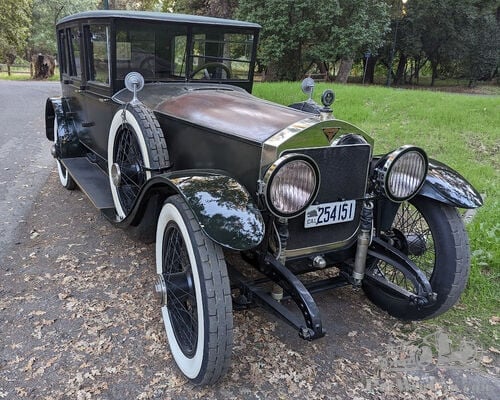
1916 Simplex, Crane model 5
1916 Simplex, Crane MODEL 5CUSTOM MADE HISTORIC PRESERVATION VEHICLE – READY TO TOUR!This Simplex recently completed th..
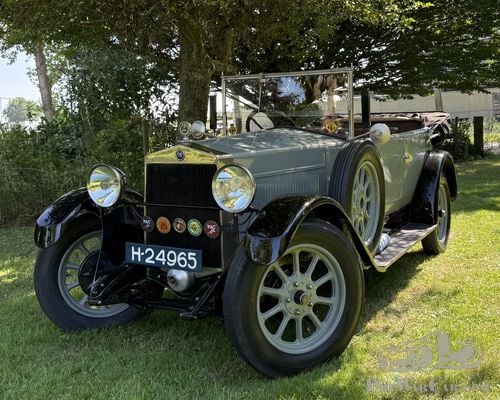
Fiat 509 Torpedo / Spider – Exceptionally Original and Complete
A Rare and Highly Original Example with Long-Term Dutch HistoryOffered for sale is an exceptionally original and remarkably complete Fiat 50..
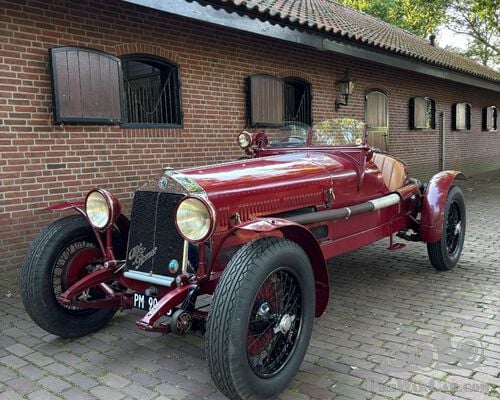
1930 Alfa Romeo 6C 1750 Spider
1930 Alfa Romeo 6C 1750 Spider with complete history from delivery to first owner in 1930 in Firenze till today with copy Libretto/license plate.