The global magazine and marketplace for classic car enthusiasts, by enthusiasts.


Filter
Classic DFP - Doriot-Flandrin-Parant, Haynes for sale - DFP - Doriot-Flandrin-Parant, Haynes cars for sale
-

C1926 DFP open
Rare DFP from c1926Mechanical complet, Missing interior and hood topno documents,can see in LisbonCan help with transportchassis # 40 273 -
HAYNES 1916 touringcar
Starts and run powerfull with the 6 cyl. Engine , 50 hp . Original upholstery , repaint 70 years ago. No rust ever . 4 new tyres and tubes . Old top .Some plaques from Ralley in the fifties mounted on dashboard, American title and import document for eu. Price : Please ask


D.F.P.
France, 1906 – 1926
Doriot, Flandrin et Parant, Courbevoie, Seine
Doriot and Flandrin had worked for Clément-Bayard and Peugeot, and their first products were straightforward shaft-driven single-cylinder voiturettes with transverse rear suspension, sold as Doriot-Flandrins until Parant arrived to complete the triumvirate. The singles DFP cars were still being marketed with 1100cc engines as late as 1910, but the 1908 DFP car range already included two 4-cylinder cars with sv Chapuis-Dornier engines of 2.4-litres and 2.8-litres capacity. By 1910 there was a small DFP four, the very successful DFP 10/12hp of 1.6-litres, with L-head Monobloc engine, magneto ignition, thermos-syphon cooling, cone clutch and 3-speed gearbox. There was also a DFP 25/30hp 6-cylinder car in 1911. In 1912 DFP started to make their own engines the ‘DFP 10/12’ being joined by an excellent 2-litre ‘DFP 12/15’ with pressure lubcrication, 3-bearing crankshaft and 4-speed gearbox, capable of 2500rpm and 55mph. Further, the British concession was acquired by the brothers W.O. and H.M. Bentley, who ran the ‘12/15’ in competitions; by the end of 1913 a specially prepared example of the DFP car had been timed of the half-mile at 89.70mph. Nothing, however, could be done with the DFP 16/22hp, a 2.8-litre (later 3-litre) machine with pair-cast cylinders and poor performance. In 1914 came the sporting DFP 12/40hp with V-radiator and electrics: for this model the Bentleys persuaded D.F.P. to fit aluminium pistons, as a consequence of which a 65mph performance was available for only £320. W.O. Bentley finished 6th in that year’s T.T., an excellent effort for a 2-litre car competing against specialized 3.3-litre machines.
DFP never recovered fully from World War 1 and Bentley’s decision to set up as a manufacturer in his own right meant that the DFP car company lost its best export market. A DFP 12/15hp chassis now cost £675 as against £290 in 1914. Failing finances forced the DFP company to use proprietary engines, Altos for the 2-litre models, and a Sergant in the ‘10/12’, which went American in 1922 with central change and coil ignition, but reverted to a magneto in 1923. 1922 ‘DFP 12/40s’ had 4-wheel brakes, and a year later this model was supplanted by an ohv 4-speed ‘13/50’, once again with a DFP-built engine. At the same time the DFP company marketed the little D.F.Petite, a sporting machine in the Amilcar idiom, with an ohv 1100cc engine, 3-speed gearbox, quarter-elliptic springing all round and a back axle without differential. This DFP car had front-wheel brakes by 1925, but a year later production had ceased, the DFP car factory being acquired by the Lafitte concern.
Source: Georgano, encyclopedia of motorcar; MCS
The information is written with the greatest of care. However, if you have any suggested amendments please contact us at office@prewarcar.com
Haynes
US, 1904 – 1925
(1) The Haynex-Apperson Co, Kokomo, Ind., 1904 – 1905
(2) Haynes Automobile Co, Kokomo, Ind., 1905 – 1925
Elwood Haynes built his original single-cylinder Haynes car of buggy type in 1894. In 1898, with the Apperson brothers, he formed the Haynes-Apperson Automobile Co. In 1902, the Appersons and Haynes separated, although both companies remained in Kokomo. From June 1904 the cars were called either Haynes-Apperson or Haynes, while the company name was still Haynes-Apperson. This was officialy changed to Haynes Automobile Company in September 1905.
The first production models of the Haynes car (in 1904) were powered by 2- and 4-cylinder engines, sliding-gear transmissions and shaft drive. Only 4-cylinder engines were used in the years 1905 – 1913. In 1912, three chassis were built, with a total of eight body types. In 1914, Haynes Model 26 was fitted with a 6-cylinder engine, and in 1915 an electric gear change was standard on the larger chassis. For 1916, Haynes car advanced to a 12-cylinder engine of 5.8-litres. This large engine was made by Haynes and continued to be manufactured through 1922, with no changes in bore or stroke. The chassis varied in wheelbase during the post-World War 1 period from 10 to 11ft. The prices for the various Haynes car models dropped from $4.200 for a seven-seater limousine in 1920, to $3.200 in 1925 for a five-seater sedan. Body styles in the Haynes car range were conservative, although one close-couples four-seater coupé with distinctive lines was made in 1923, and a special Haynes Speedster, a two-seater roadster with wire wheels and attractive styling was introduced in 1921.
Source: Georgano, encyclopedia of motorcar; GMN
The information is written with the greatest of care. However, if you have any suggested amendments please contact us at office@prewarcar.com



Featured
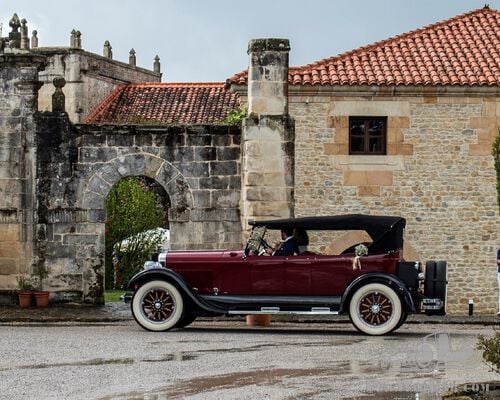
1925 Lincoln Model L Phaeton by Brunn - Excellent provenance
Retaining its original matching-numbers engine and chassis (both numbered 24576), the car benefits from an extensively documented history and..
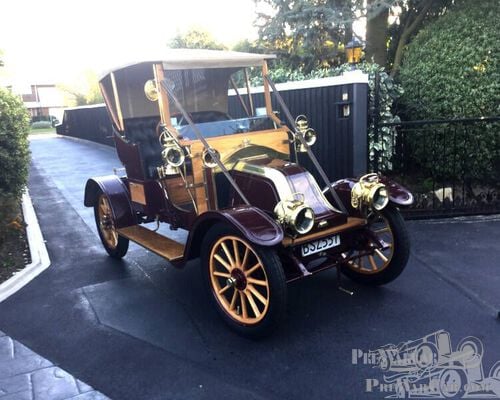
Renault /AX 1913 - named Gigi
Purchased fully renovated from New Zealand and imported to the UK. We have owned her for over10 years. Gigi is currently living in France where she..
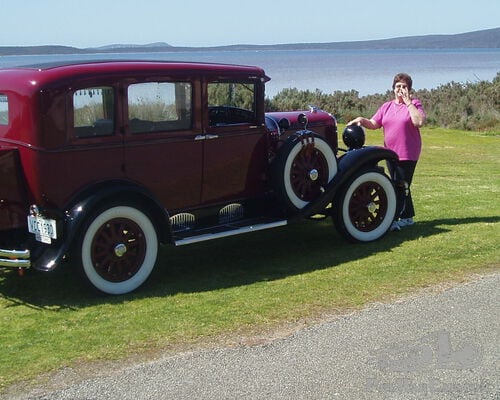
1930 Chrysler 66 Six-Wheel Equipped Royal Sedan
An exceptionally well restored and highly awarded Chrysler 66 Royal Sedan, with only two owners in nearly 97 years.The present owner ..