The global magazine and marketplace for classic car enthusiasts, by enthusiasts.


Filter
Classic Hillman for sale - Hillman cars for sale
-

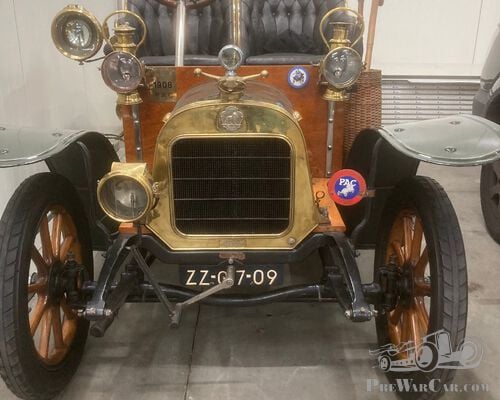
renault ax d'origine
RENAULT AX 1908 Cabriolet 2 placesÉtat d'origine exceptionnelCapote neuveParfait état de fonctionnementCarte grise françaiseLa Renault Type AX, .. -
ROCHET-SCHNEIDER 29500A
ROCHET-SCHNEIDER 29500A – 29539 Fully restored around ten years ago Limousine by BILLETER ET CARTIER Formerly part of the POZZOLI collection French registration document 6-cylinder, 4561cc, 26hp Dual ignition (magneto and coil) capable of operating separately or simultaneously Brakes with internal linings, power-assisted Twin-barrel carbu.. -
1919 SUNBEAM 24HP 4 1/2 LITRE TOURER BY BREWSTER.
1919 Sunbeam 24hp 4 1/2 Litre Tourer by Brewster. Chassis number: 24/5124/19 Registration Number: DA3651 TRULY EXCEPTIONAL & LIKE NEW!!! The recipient of a massive £160,000 restoration over four years with the majority of the mechanical works being undertaken by noted vintage specialists VBE restorations. A massive sheaf of.. -
Lagonda LG 45 Coupe de Ville Sedanca by Mayfair
The successor to the M45, the LG45 was built around the same highly capable, competition-proven 4.5-litre Meadows inline-six engine, but featured refinements such as synchromesh gears and a central lubrication system.Introduced in 1936, the public and motoring press alike immediately recognized the model’s merits, with British publication.. -
1925 VAUXHALL 14/40 Princeton Tourer
1925 VAUXHALL 14/40 Princeton Tourer. Chassis Number: LM2614 Registration Number: SV7947 The Vauxhall 14-40 made its debut at the 1921 London Motor Show, with the first deliveries reaching the public the following year. Designed by Clarence King, this new model featured a 2. 3 l.. -
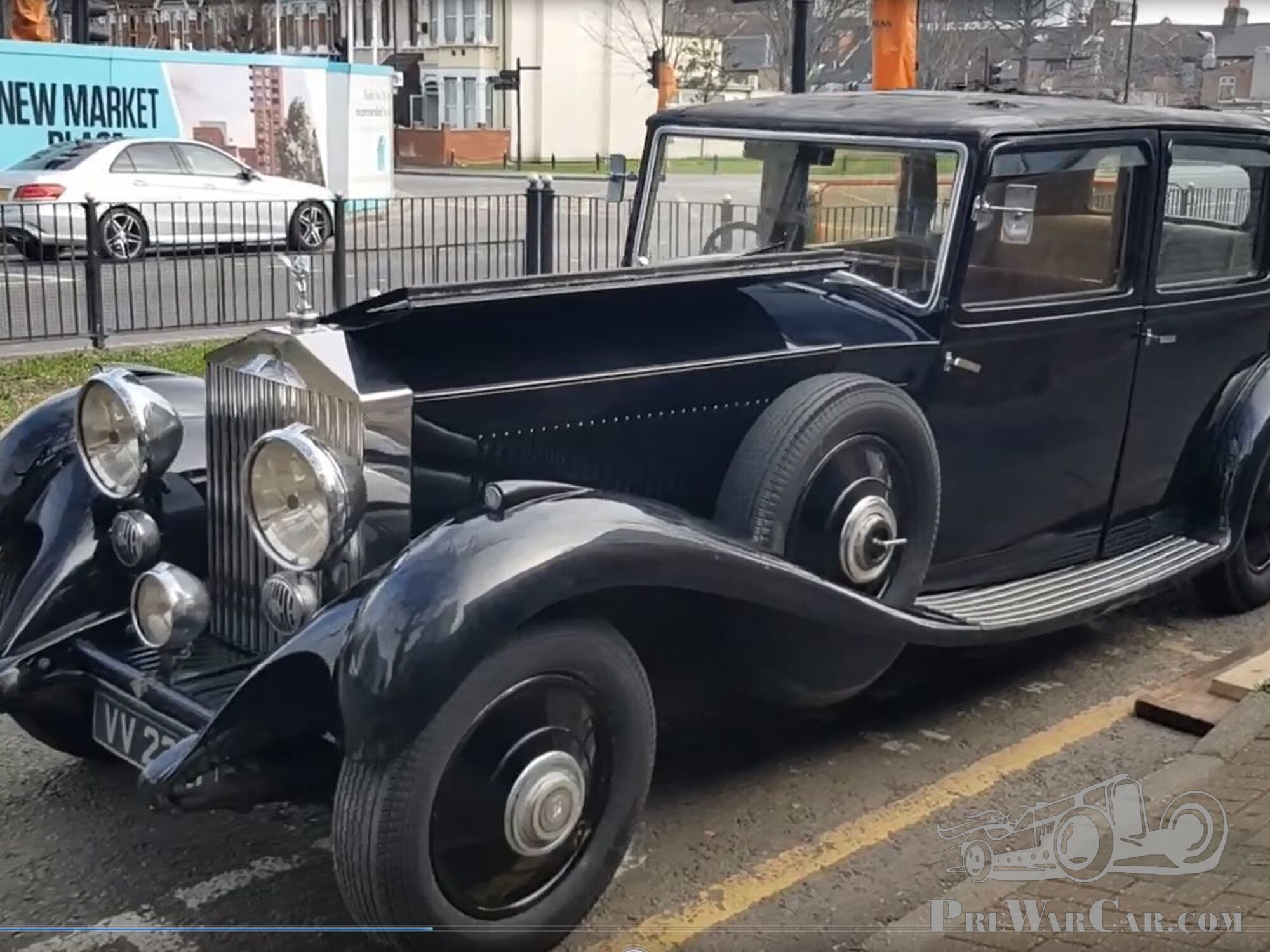
1933 Rolls Royce Phantom II Sport - drive it as is - “experience the old glory” - or built your own CLASSIC special
Our Rolls Royce Phantom II 1933 is in a driving condition, Powered by a 7,668 cc straight-six, these magnificent leviathans represent the ultimate development of the 40/50 family. They were aimed at a more sporting clientele than the standard Phantom II. Ready to drive, the RR has been imported from the UK (after Brexit) to N.. -
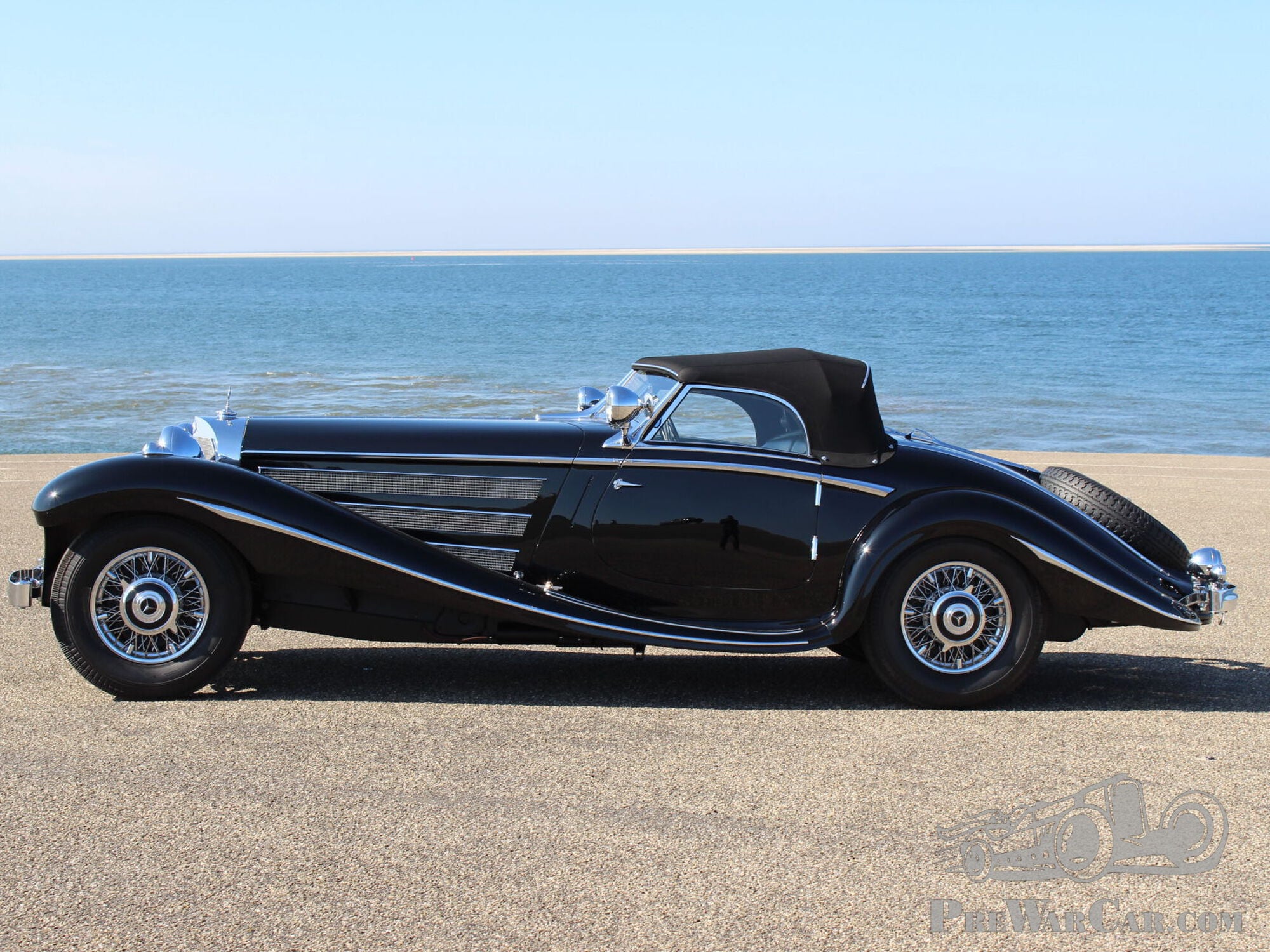
Mercedes Benz 540K Spezial Roadster
Mercedes Benz 540K-Spezial Roadster-Year of construction: 1937Colour combination: Black/ Green leatherBody: 2+2 seats cabrioletFactory designation: Spezial RoadsterEngine: 5.4 litre 8-cylinder in-line engine115HP without/ 180HP with compressorGearbox: The highly desireable 5 speed manualThe.. -
1902 Oldsmobile Curved-Dash
Chassisnumber: 4640Engine number: 4640 This 1902 Oldsmobile curved-dash "R" as it was called is the 15th oldest in the club register and the second oldest in EuropeIt's a monocylindre of around 1600cc and the steering is by means of a tiller, maybe more direct than a steering wheelAs member of the .. -
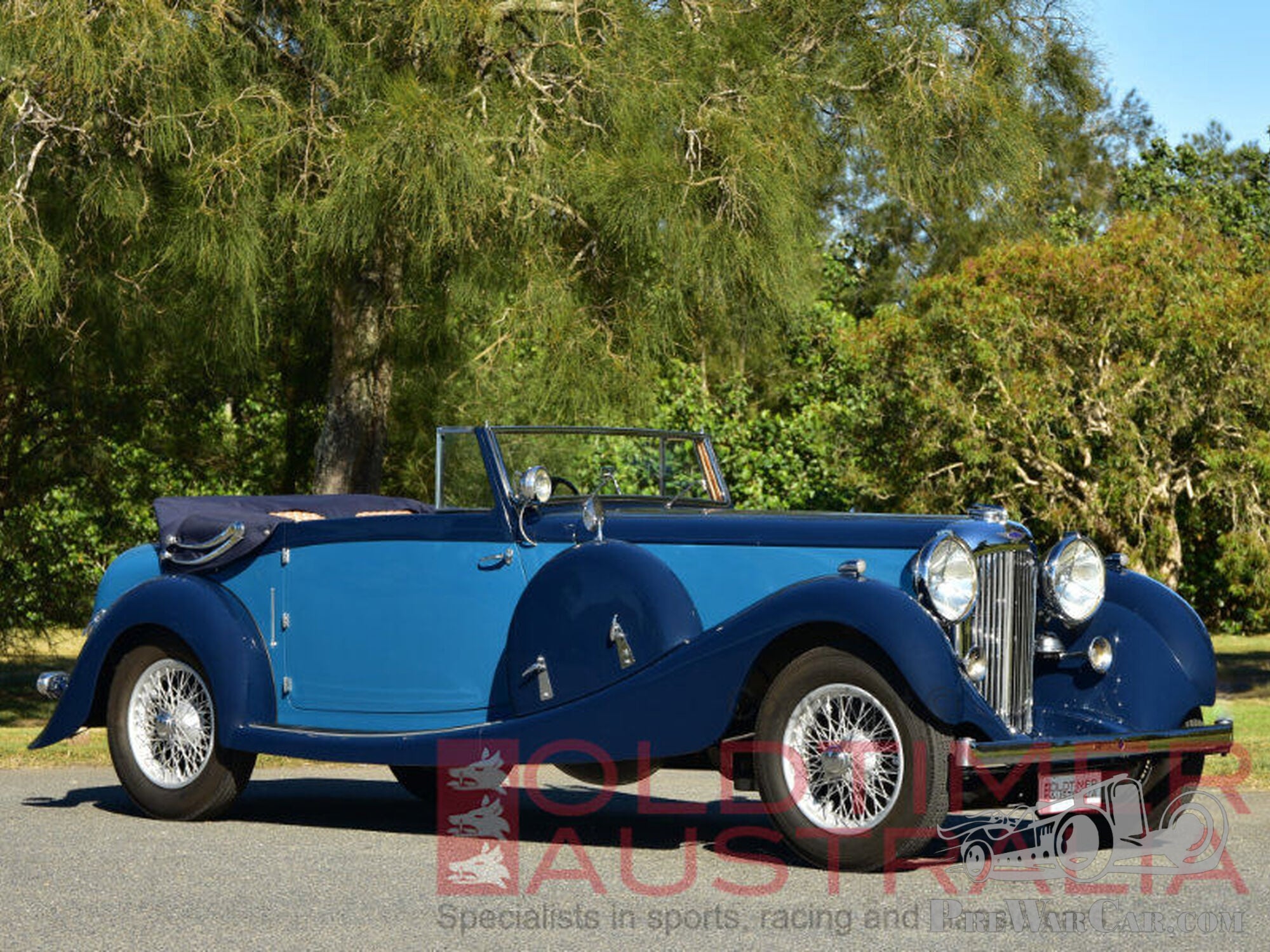
1937 Lagonda LG45 Drophead Coupe
Details:Oldtimer Australia is delighted to offer for sale a beautifully restored 1937 Lagonda LG45 Drophead Coupe.This particular example was first registered in the UK on 22nd February 1937 and it carried the registration number AJB 282. According to documentation in the history file the car was originally black in colour. The Lag.. -
1930 Alfa Romeo 6C 1750 GS Testa Fissa
1930 Alfa Romeo 6C 1750 GS Testa FissaChassis number: 8513089Engine Number: 8513089Registration Number: 102 hp, 1752 cc dual overhead cam six-cylinder engine with Memini supercharger, four-speed manual gearbox, semi-elliptic leaf spring suspension, and four-wheel mechanical drum brakes. Wheelbase: 2920 mm• The ..




Hillman
GB, 1907 to date
(1) Hillman – Coatalen Motor Car Co Ltd, Coventry, 1907 – 1909
(2) Hillman Motor Car Co Ltd, Coventry (1910 – 1946); Ruton-on-Dunsmore, Warwickshire (1946 – 1970); Linwood, Glasgow (1963 – 1970
(3) Chrysler United Kingdom Ltd, Ruton-on-Dunsmore, Warwickshire; Linwood Glasgow, 1970 to date
The Hillman car was originally known as the Hillman-Coatalen, the first cars being the work of Louis Coatalen, who designed a 25hp 4-cylinder for the 1907 Tourist Trophy. Pre-1914 production of Hillman cars was on a small scale, and consisted initially of big sv machines with separately cast cylinders (a 6.4-litre four and a 9.7-litre six) and shaft drive. The traditional shape of Hillman car radiator emerged in 1908, and continued on all Hillman car models up to 1930. Neither a little-known 1.8-litre 2-cylinder of 1913 nor a very small six of 2 litres’ capacity in 1914 made much impression, but much more successful was the 9hp Hillman car, a monobloc 1.357cc sv four, selling at £200. This Hillman car was brought up to date with electrics after World War 1, and progressively developed until 1925, by which time it had grown to 1.6-litres. A sports version with a V-radiator, outside exhaust, and polished aluminium bodywork was raced quite extensively in the early 1920s and Raymond Mays served his apprenticeship on one of these. All 1923 – 1925 Hillman cars came with drophead bodywork and winding windows. A conventional sv Hillman Fourteen with a 4-speed gearbox and magneto ignition was the only Hillman car model offered from 1926 to 1928, and production of this was stepped up after Rootes took over in the latter year. In 1929 prices started at £295, and ‘Safety’ versions were fitted with safety glass and servo brakes. Less happy was a companion to the Hillman Fourteen, a 2.6-litre ohv straight-8 with coil ignition. However, Hillman moved into the mass-production class in 1932 with their excellent 1.185cc sv Hillman Minx car at £159. This Hillman car was progressively developed up to the outbreak of World War 2, with 4-speed gearbox and the options of free-wheel and radio in 1934, all-synchromesh boxes in 1935 (these were dropped again in 1939), integral luggage boot in 1936, and unitary construction in 1940. The underslung Hillman Aero-Minx sports model of 1933 formed the basis for the Talbot and Sunbeam-Talbot Tens which resulted from Rootes’ acquisition of the S.T.D group, and there was even a luxury Hillman car Minx-based Humber Ten, though this was marketed only in New Zealand. Alongside these there were also some sv 6-cylinder Hillman cars, 1936 and later versions having transverse independent front suspension, but they gave way to another sv 1.9-litre Hillman Fourteen, sold with hydraulic brakes by 1940; these were not added to the Hillman Minx until the Phase II Hillman car models of late 1947, which also featured steering-column change.
Post-war Hillman Minxes continued the model’s reputation as a style leader of conventional mechanical specification. 1949 Hillman cars had full-width five/six-seater bodywork, there was a more powerful 1¼-litre engine in 1950, and a hardtop coupé version, the Hillman Californian, in 1953. In 1955 the Hillman car range was extended to include the Hillman Husky short-wheelbase station wagon, while de luxe Hillman Minxes acquired 1.395cc short-stroke ohv power units, and licence-production was taken up in Japan by Isuzu. The Hillman car model continued to keep abreast of the times with its cylinder capacity increased to 1½-litres in 1959, to 1.6-litres in 1962, and to 1.7-litres with a 5-bearing crankshaft in 1966. Automatic transmission became optional in 1960 with Hillman cars, hypoid final drive replaced the spiral bevel type in 1961, and later cars had front disc brakes. From 1957 onwards the Rootes-owned Singer company’s Gazelle had a Minx-type hull, and the Minx engine was used after 1959. A bigger Hillman Super Minx car joined the Hillman car range in 1962, and 1963 produced a challenger in the baby-car class, the Hillman Imp car. Made in the Rootes’ Group’s Scottish factory at Linwood, this Hillman car had an inclined, rear-mounted ohc 875cc 4-cylinder engine, 4-speed all-synchromesh gearbox, and all-round independent suspension. In 1966 Hillman Imps did well in the saloon-car racing, and Singer and Sunbeam versions followed, as well as a new Hillman Husky station wagon: the engine was used by a number of specialist manufacturers, notably Bond, Ginetta, TVR and Clan. It was also fitted to one version of the Greek Farmobil cross-country vehicle.
Chrysler acquired a majority interest in Rootes in 1964, the first consequences of the new management being the 1967 Hillman Minx car and Hillman Hunter car that replaced the existing Minx, and Super Minx types. Design was entirely new on these Hillman cars, though the 1.496cc and 1.725cc engines (now inclined in the ‘chassis’) were retained. These were assembled in Iran under the name of Peykan. Vehicles assembled in South-Africa used Peugeot engines. A Hillman Hunter won the 1968 London-Sydney Marathon. An entirely new shape from Hillman cars, the Avenger, appeared in 1970. Its suspension, by McPherson struts at the front and by rigid axle and coils at the rear, was similar to that of French Chryslers, there was a choice of 1.248cc or 1.496cc ohv 4-cylinder engines, disc brakes were fitted at the front, and automatic transmission was optional. Prices of these Hillman cars started at £765.
At the end of the 1970 season the Hillman Minx was dropped after an unbroken run of 38 years. Its replacement was a 54bhp Hillman Hunter De Luxe with the 1½-litre engine. Hillman Avengers went on sale in the USA as Plymouth Crickets. Two new Hillman Avenger cars were added during 1972: a station wagon and the twin-carburettor high-performance Hillman Tiger, a limited-production saloon with magnesium alloy wheels, capable of 105mph and retailing at £1.328. A 78bhp GLS Hillman car version with power brakes, radial-ply tyres and wide-rim wheels appeared in 1973, when the Hillman Imp was continued, and the Hunter line-up ranged from the basic Hillman De Luxe up to the 93bhp 1.7-litre GLS with twin Weber carburetors and close-ratio gearbox.
Source: Georgano, encyclopedia of motorcar; MCS
The information is written with the greatest of care. However, if you have any suggested amendments please contact us at office@prewarcar.com


Featured
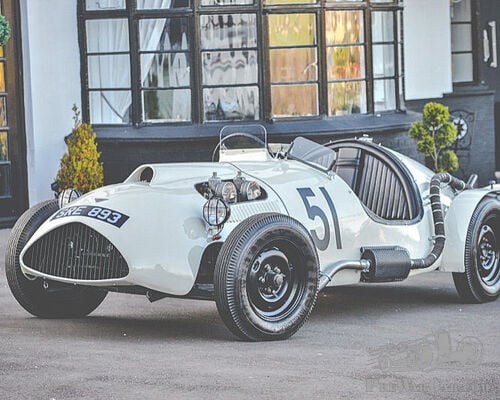
1933 Alvis 3.0 Special - One-Off Alloy Body | Period Competition Car | Featured in “Alvis – A Century of Drivers”
1933 Alvis 3. 0 Special - One-Off Alloy-Body | Period Competition Car | Featured in “Alvis – A Century of Drivers”

1939 Wanderer W 23 Gläser(Dresden) Convertible
Wanderer W 23 Gläser(Dresden) Convertible in original condition Built in 1939 for sale. Ready to drive with TÜV and approval as a historic vehicle..