The global magazine and marketplace for classic car enthusiasts, by enthusiasts.


Filter
Classic Hillman, Vulcan for sale - Hillman, Vulcan cars for sale
-

1921 Ansaldo type 4C rolling chassis
1921 Ansaldo type 4C rolling chassis. Complete engine and gearbox no 17634 and chassis no 1763. All components are in excellent condition including the 5 original wirespoked wheels and three of the beaded edge tyres. Good radiator. Suitable project to build a Special from. OHC engine. € 18500 negotiable. .. -
1904 Swift 7HP - VCC Dated
1904 Swift 7HPRegistration No - BS8487Chassis No - 176Engine No - 2886 - VCC Dated - Electric starting- 4 seat London to Brighton vehicle - Rare English Marque- Many time London to Brighton Finisher - Ready for use Swift of Coventry gained and adapted its skills .. -
1939 Rolls Royce Wraith James Young Razor Edge Saloon
1939 Rolls Royce Wraith James Young Razor Edge Saloon Chassis Number: WEC72 Registration Number: 39D25 (Ireland) £200k spent upon the restoration of this car to make it in effect a brand new Rolls Royce Wraith being delivered 86 years late!!! Simply.. -
1936 Bentley Derby 4.25 Sedanca by Thrupp & Maberly
1936 Bentley Derby 4.25 Sedanca by Thrupp & Maberly Chassis number: B-36-GA Registration Number: CXE213 A stunningly beautiful car which wows onlookers wherever it is seen, this 4.25 Litre Derby Bentley Sedanca Coupe has fabulous and possibly unique aluminium Sedanca coachwork by Thrupp and Maberly... -
Cadillac V16 - Series 452 - 1930 - Imperial Sedan 4330
Offers invited a round € 200.000 - This ONE of 4 Survivors of Serie 4330 body style - book C.W. Cummings - 2014) ***excellent driving car, the V16 gives you a special experience, no other car has***https://www.prewarcar.com/a-stately-cadillac-v16-in-the-netherlandsBuilt; no 9 of 50 - Engine no. 700163Lengt.. -
Bugatti Type 30 short chassis roadster. Fully restored on a replica chassis
This car has had a full restoration and is build from a lot of original parts on a replice chassis built in Germany, It has chassis number BC 189 from the UK Bugatti Owners Club. Car has done only about 500km since restoration but health problems dictate that it must go. Please email for fullest details of the source of all the parts and a vide.. -
1930 Bentley Speed Six
1930 Bentley Speed Six Chassis Number: SB2774 Engine Number: SB2772 Reistration Number: GH8974 New to market & freshly restored to perfection. This car has over the past two years been fully rebuilt & built up as a LeMans style tourer by noted Rolls Royce &.. -
1936 Cadillac Series 60 Convertible Coupe | RM Sotheby's | The Hershey Auction
To Be OFFERED AT AUCTION WITHOUT RESERVE at RM Sothebys' The Hershey Auction event, 7 - 8 October 2026. Offered Without Reserve | $50,000 - $70,000 USD Please check back soon as our dedicated cataloguing team is preparing the description for this lot. To view this car and others currently consigned to this auction, please visit the RM website a.. -
Renault NN Torpedo Commerciale (1926)
Highlights Complete, coherent, unmodified exampleExcellent base for a full restorationAttractive 1920s torpedo body styleVery accessible entry priceIdeal for workshops or enthusiasts looking for a rewarding project Restoration project – Complete car – Solid base but major work r.. -
Renault 12 HP Coupé de Ville Carrosserie Kellner Type CB – 1911
HighlightsExceptional original conditionRare Kellner coachworkComplete, authentic, coherent exampleOriginal paint and interiorMuseum‑grade preservationIdeal for concours preservation class Kellner Coupé de Ville – Exceptional original condition This..


Hillman
GB, 1907 to date
(1) Hillman – Coatalen Motor Car Co Ltd, Coventry, 1907 – 1909
(2) Hillman Motor Car Co Ltd, Coventry (1910 – 1946); Ruton-on-Dunsmore, Warwickshire (1946 – 1970); Linwood, Glasgow (1963 – 1970
(3) Chrysler United Kingdom Ltd, Ruton-on-Dunsmore, Warwickshire; Linwood Glasgow, 1970 to date
The Hillman car was originally known as the Hillman-Coatalen, the first cars being the work of Louis Coatalen, who designed a 25hp 4-cylinder for the 1907 Tourist Trophy. Pre-1914 production of Hillman cars was on a small scale, and consisted initially of big sv machines with separately cast cylinders (a 6.4-litre four and a 9.7-litre six) and shaft drive. The traditional shape of Hillman car radiator emerged in 1908, and continued on all Hillman car models up to 1930. Neither a little-known 1.8-litre 2-cylinder of 1913 nor a very small six of 2 litres’ capacity in 1914 made much impression, but much more successful was the 9hp Hillman car, a monobloc 1.357cc sv four, selling at £200. This Hillman car was brought up to date with electrics after World War 1, and progressively developed until 1925, by which time it had grown to 1.6-litres. A sports version with a V-radiator, outside exhaust, and polished aluminium bodywork was raced quite extensively in the early 1920s and Raymond Mays served his apprenticeship on one of these. All 1923 – 1925 Hillman cars came with drophead bodywork and winding windows. A conventional sv Hillman Fourteen with a 4-speed gearbox and magneto ignition was the only Hillman car model offered from 1926 to 1928, and production of this was stepped up after Rootes took over in the latter year. In 1929 prices started at £295, and ‘Safety’ versions were fitted with safety glass and servo brakes. Less happy was a companion to the Hillman Fourteen, a 2.6-litre ohv straight-8 with coil ignition. However, Hillman moved into the mass-production class in 1932 with their excellent 1.185cc sv Hillman Minx car at £159. This Hillman car was progressively developed up to the outbreak of World War 2, with 4-speed gearbox and the options of free-wheel and radio in 1934, all-synchromesh boxes in 1935 (these were dropped again in 1939), integral luggage boot in 1936, and unitary construction in 1940. The underslung Hillman Aero-Minx sports model of 1933 formed the basis for the Talbot and Sunbeam-Talbot Tens which resulted from Rootes’ acquisition of the S.T.D group, and there was even a luxury Hillman car Minx-based Humber Ten, though this was marketed only in New Zealand. Alongside these there were also some sv 6-cylinder Hillman cars, 1936 and later versions having transverse independent front suspension, but they gave way to another sv 1.9-litre Hillman Fourteen, sold with hydraulic brakes by 1940; these were not added to the Hillman Minx until the Phase II Hillman car models of late 1947, which also featured steering-column change.
Post-war Hillman Minxes continued the model’s reputation as a style leader of conventional mechanical specification. 1949 Hillman cars had full-width five/six-seater bodywork, there was a more powerful 1¼-litre engine in 1950, and a hardtop coupé version, the Hillman Californian, in 1953. In 1955 the Hillman car range was extended to include the Hillman Husky short-wheelbase station wagon, while de luxe Hillman Minxes acquired 1.395cc short-stroke ohv power units, and licence-production was taken up in Japan by Isuzu. The Hillman car model continued to keep abreast of the times with its cylinder capacity increased to 1½-litres in 1959, to 1.6-litres in 1962, and to 1.7-litres with a 5-bearing crankshaft in 1966. Automatic transmission became optional in 1960 with Hillman cars, hypoid final drive replaced the spiral bevel type in 1961, and later cars had front disc brakes. From 1957 onwards the Rootes-owned Singer company’s Gazelle had a Minx-type hull, and the Minx engine was used after 1959. A bigger Hillman Super Minx car joined the Hillman car range in 1962, and 1963 produced a challenger in the baby-car class, the Hillman Imp car. Made in the Rootes’ Group’s Scottish factory at Linwood, this Hillman car had an inclined, rear-mounted ohc 875cc 4-cylinder engine, 4-speed all-synchromesh gearbox, and all-round independent suspension. In 1966 Hillman Imps did well in the saloon-car racing, and Singer and Sunbeam versions followed, as well as a new Hillman Husky station wagon: the engine was used by a number of specialist manufacturers, notably Bond, Ginetta, TVR and Clan. It was also fitted to one version of the Greek Farmobil cross-country vehicle.
Chrysler acquired a majority interest in Rootes in 1964, the first consequences of the new management being the 1967 Hillman Minx car and Hillman Hunter car that replaced the existing Minx, and Super Minx types. Design was entirely new on these Hillman cars, though the 1.496cc and 1.725cc engines (now inclined in the ‘chassis’) were retained. These were assembled in Iran under the name of Peykan. Vehicles assembled in South-Africa used Peugeot engines. A Hillman Hunter won the 1968 London-Sydney Marathon. An entirely new shape from Hillman cars, the Avenger, appeared in 1970. Its suspension, by McPherson struts at the front and by rigid axle and coils at the rear, was similar to that of French Chryslers, there was a choice of 1.248cc or 1.496cc ohv 4-cylinder engines, disc brakes were fitted at the front, and automatic transmission was optional. Prices of these Hillman cars started at £765.
At the end of the 1970 season the Hillman Minx was dropped after an unbroken run of 38 years. Its replacement was a 54bhp Hillman Hunter De Luxe with the 1½-litre engine. Hillman Avengers went on sale in the USA as Plymouth Crickets. Two new Hillman Avenger cars were added during 1972: a station wagon and the twin-carburettor high-performance Hillman Tiger, a limited-production saloon with magnesium alloy wheels, capable of 105mph and retailing at £1.328. A 78bhp GLS Hillman car version with power brakes, radial-ply tyres and wide-rim wheels appeared in 1973, when the Hillman Imp was continued, and the Hunter line-up ranged from the basic Hillman De Luxe up to the 93bhp 1.7-litre GLS with twin Weber carburetors and close-ratio gearbox.
Source: Georgano, encyclopedia of motorcar; MCS
The information is written with the greatest of care. However, if you have any suggested amendments please contact us at office@prewarcar.com
Vulcan
GB, 1902 – 1928
(1) Vulcan Motor Manufacturing and Engineering Co Ltd, Southport, Lancs., 1902 – 1906
(2) Vulcan Motor and Engineering Co Ltd, Southport, Lancs., 1906 – 1928
The Vulcan car firm was better known for commercial vehicles. Private Vulcan cars stemmed from experiments conducted in the 1897-1899 period by the brothers Thomas and Joseph Hampson. A belt-driven single-cylinder voiturette Vulcan car with lateral radiators was shown in 1902, being replaced a year later by a 6hp Vulcan car with armoured wood frame, mechanically-operated inlet valves, and shaft drive. This Vulcan car was listed at only £105, and this Vulcan car was soon followed by a 10hp twin, also T-headed but with a steel frame, selling for £200. 4-cylinder Vulcan cars of 12 and 16hp, still modestly priced, were available in 1905, while the biggest 1906 Vulcan cars, with capacities of 3.1- and 5.2-litres, had gate change. No 2-cylinder Vulcan cars were catalogued after 1908, but a year previously Vulcan cars had joined the ranks of 6-cylinder manufacturers with a 4.8-litre T-headed machine featuring dual ignition and cone clutch, at £600 for a Vulcan car chassis. Unlike other makers, Vulcan cars retained their interest in this type, which Vulcan car had acquired a 4-speed box and had grown to 6-litres by 1908, and the 1909 Vulcan car range consisted of four 4-cylinder cars and the six, all shaft-driven and still with T-heads; the smallest Vulcan car, rated at 12hp, had a 3-speed gearbox and worm drive. A new 3.6-litre six Vulcan car with unit gearbox and worm drive followed in 1911, along with an L-head 2.4-litre fifteen. Worm drive was standardized on the 1912 Vulcan cars, when the bigger Vulcan cars had T-heads, and a 1.8-litre, 2-cylinder with an Aster engine was offered. All but the smallest Vulcan car had detachable wheels as standard in 1913, and by the outbreak of World War 1 the Vulcan car company was well established with a range of solidly-built Vulcan cars: a 2.4-litre 10/15, a 2.6-litre 15.9, and a 3-litre monobloc 15/20 Vulcan car at £375. All these Vulcan cars had L-heads and bull-nose radiators, though the similarly styled six retained the older Vulcan car configuration. A 1½-litre Vulcanette with a 3-speed rear-axle gearbox and full electrical equipment was announced for 1915 but the war intervened.
After 1918 the Vulcan car company concentrated increasingly on trucks, and a brief association with the Harper Bean Group (1919-1920) did no good to finances. Some odd experiments by Vulcan cars included a worm-drive 3½-litre V8 tourer Vulcan car intended to sell for £625 (1919), and two Vulcan cars in 1922 with Howard sleeve-valve engines, a big 3.6-litre sports-touring four Vulcan car and a 10hp 1.4-litre flat-twin listed at £315. However, none of these Vulcan cars reached the public, the regular Vulcan car lines being a 1.8-litre ohv 12 and a 2.6-litre sv 16/20, both with Dorman engines. There was also a conservative 20hp Vulcan carmodel with the Vulcan car company’s own 3.3-litre sv fixed-head engine and 4-speed separate gearbox, this Vulcan car was selling for £850 in 1921; by this time flat radiators were again being used on Vulcan cars. The Vulcan 20 was available to military order with full wireless equipment in 1923, in which year C.B. Wardman effected a liaison of Vulcan cars and Lea-Francis. The two companies pooled their dealer network, Vulcan cars became responsible for certain Lea-Francis power units and bodies, and Lea-Francis made gear and steering boxes for Vulcan cars. A 1½-litre sv Dorman-engined Vulcan 12 was listed at £295 in 1925, followed a year later by an ohv worm-driven derivative, also with Dorman engine, and looking very like a Lea-Francis. 4-wheel brakes were available on Vulcan cars in 1925 and standardized in 1926. Last of the line Vulcan cars were the 14/40 and 16/60, with the disastrous twin ohc 6-cylinder engines of their own make. Short-chassis Vulcan cars were worm-driven, but bevel drive was adopted for long-chassis versions. Vulcan cars wore artillery wheels, but were otherwise identical to their Lea-Francis counterparts which Vulcan cars were made alongside them at Southport. Not many of these Vulcan cars were made, and after 1928 only commercial vehicles were produced. The Vulcan car firm subsequently amalgamated with Tilling-Stevens and thus were abrorbed into the Rootes Group after World War 2. Truck production ceased in 1953.
US, 1913 – 1914
(1) Vulcan Motor Car Co, Painesville, Ohio, 1913
(2) Vulcan Manufacturing Co, Painesville, Ohio, 1913 – 1914
This Vulcan car was a cleanly-designed light car with a 27hp 4-cylinder engine. A two-seater speedster Vulcan car on an 8ft 9in wheelbase with electric lights sold for $750. A five-seater version of this Vulcan car with the same engine, but on a longer wheelbase, cost $850.
Source: Georgano, encyclopedia of motorcar; MCS, GMN
The information is written with the greatest of care. However, if you have any suggested amendments please contact us at office@prewarcar.com


Featured
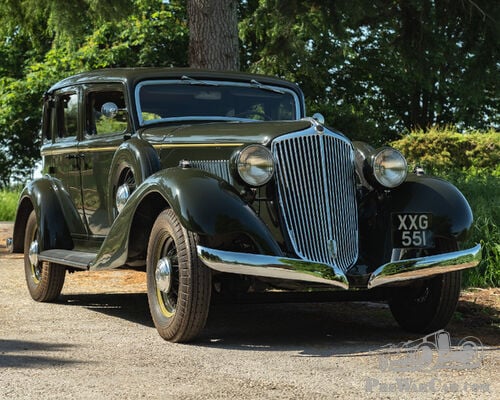
Graham Model 64 Standard Eight 'Blue Streak'
UK Registration No: XXG 551Chassis No: 1801069MOT: ExemptH&H ClassicsKelham Hall | Newark, Nottinghamshire
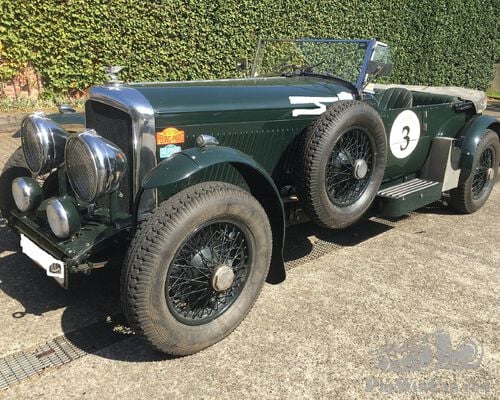
Bentley Derby Special Open Rally Car
This Bentley Derby, manufactured in 1935, has been rebuilt into a short and long-distance rally car. Full rebuilt engine in 2021, Since 2021 low mi..
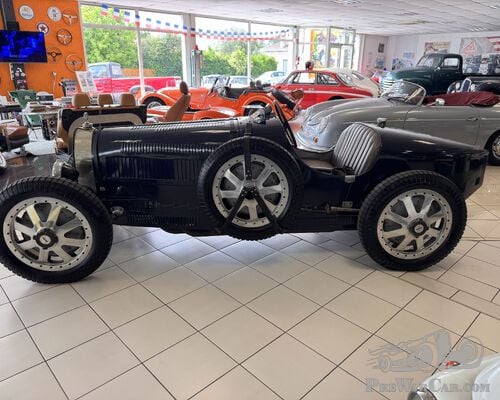
Bugatti 35 B Pur Sang
Bugatti 35 B Pur Sang,importée par un membre délégué de la FFVE il y’a une quinzaine d années.Participation à de nombreux Rallyes Bug..