The global magazine and marketplace for classic car enthusiasts, by enthusiasts.


Filter
Classic Horch, Vulcan for sale - Horch, Vulcan cars for sale
-

1938 Horst Lautenschläger 855 Spezialroadster
Iconic automotive designExceptional craftsmanship in the reconstruction of the Horch 855 Special Roadsterby Horst LautenschlägerThe Horch 855 Special Roadster was the sensation of the 1938 International Motor Show in Berlin. It had a beautiful roadster body and the engine of the Horch 853 A, and its curved fenders, lav.. -
1938 Horch 853 A Sport Cabriolet
1 of only 342 examples of the 853 AIn last hand for more than 16 yearsBuilt by the Horch factory in Zwickau The Horch 853 A Sport Cabriolet is one of the most sought-after luxury automobiles of its time - a masterpiece of Saxon engineering that embodies style consciousness and technical sophistication a.. -
1938 Horch 853 A Sport Cabriolet
High-quality, true-to-original restoration in the mid-1990s, performed by craftsmanship of the highest standardSince completion (1997) only one owner in Germany (!), who has driven the car approximately 45,000 kilometresPreserved in mint condition to this day and always well maintained; best driving characteristics and exc.. -
Horch 854 – A Masterpiece of Automotive Craftsmanship (1939)
This Horch 854 represents one of the finest examples of pre-war German luxury engineering. Built on the shorter and more agile 854 chassis and equipped with the more powerful A-engine, this vehicle combines elegance, rarity, and exceptional craftsmanship. Originally, only 7 chassis of the 854 series we.. -
HORCH 853 ERDMANN & ROSSI SPEZIAL ROADSTER
IntroductionThe Horch 853 Spezial Roadster by Erdmann & Rossi is one of the most iconic and luxurious cars of the 1930s. This beautiful vehicle represents the pinnacle of German automotive engineering and design from the pre-war era.The Horch 853 was introduced in 1935 by the Horch factory, part of Auto Union (later Audi.. -
HORCH 930 V
For SaleHorch 930 VManufacturer: HorchModel and Variant: 930 VBody Type: 4-door sedanChassis Number: 931906Color: Dark bluePower: 93 kWEngine Capacity: 3,796 ccFirst Registration: 01/07/1939Engine Type: Petrol, 8-cylinderMileage: 12,125 km


Horch
D, 1900 – 1939
(1) A. Horch & Co, Cologne-Ehrenfeld, 1900 – 1902
(2) A. Horch & Co, Reichenbach/ Vogtland, 1902 – 1904
(3) A. Horch & Co, Motorwagenwerke AG, Zwickau, 1904 – 1939
August Horch was among the pioneers of car manufacture in Germany. He was employed as a an engineer with Benz from 1896 to 1899 when he started his own Horch car factory at Cologne. The first Horch car appeared in 1900. This Horch car had a 2-cylinder 5hp front-mounted engine and shaft drive. The next Horch models were a 2-cylinder 10/12hp and a 4-cylinder 16/20hp. After the Zwickau works had been set up in 1904 Horch was able to increase production. The Horch 18/22hp ohv 4-cylinder model of 1904 became very popular and was the basis for several subsequent Horch cars. A victory in the Herkomer Trial of 1906 was gained with this Horch car model, the first such success for a Horch. Horch also pioneered with his Horch Torpedo form aero-dynamic bodies for the Prince Henry Trials, which were built by Kathe of Halle. In 1906 a 6-cylinder 8-litre power unit was designed for Horch cars, developing 60bhp, but it was not a success and this was one cause of differences between Horch and his partners. Horch himself left the firm and started the Audi factory.
Various models with different engine sizes were included in the Horch car range, from the small Horch 6/18PS 1.588cc to the Horch 25/60PS 6.395cc. All Horch cars had 4-cylinder engines. After World War 1 the Horch 33/80PS 8.440cc model appeared, which had actually been designed in 1914. This Horch car started a series of prestige cars for which the make became famous in the following years. Paul Daimler (son of Gottlieb) was engaged as chief engineer in 1923. Ohc 4- and 6-cylinder Horch car models with fwb appeared in 1923/ 1924, but the first new Horch car under his management was the Horch 300 with a straight-8 3.230cc engine with twin overhead camshafts. In 1927 the ‘Horch 305’ and ‘Horch 306’ appeared, which also featured straight-8 engines, with twin overhead camshafts and a capacity of 3.375cc developing 75bhp. These Horch car models differed only in wheelbase. They were followed by the ‘Horch 375’ in 1928 with an 8-cylinder 3.974cc engine capable of 80bhp. After Daimler left Horch two more models (the Horch ‘400’ and ‘405’) were produced showing Daimler influence. The Horch 450 of 1930 was entirely new. This Horch car was straight-8 with only one overhead camshaft. Two different wheelbases and engines of 4, 4½ and 5 litres were available. The last of these stayed in the Horch car range until 1939, later Horch cars having 10-bearing crankshafts and all round independent suspension. Type numbers of Horch cars became a little confusing in the next few years, when some models were available with different wheelbases and engine capacities. A V12 with 5.990cc (Horch car models ‘600’ and ‘670’) appeared in 1931, followed by the V8 3.517cc ‘Horch 830B’ in 1933, available in two wheelbase and engine sizes. By 1939 the range consisted of the ‘Horch 930V’ and ‘Horch 830BL’(3.823cc, 92bhp) and the ‘Horch 951A’, ‘Horch 853A’ and ‘Horch 855’ (4.944cc, 120bhp). These Horch car models were available with different wheelbases and a variety of body styles from a two-seater roadster to a large Pullman saloon. The Horch car company was celebrated for luxurious ‘prestige’cars which were sold at lower prices than other top makes; a V8 cost £615 in England, and straight-8s from £985.
From 1932 Horch was a member of the Auto Union, and the racing cars bearing this name were built in the Horch car works. In 1945 the Horch car factory was nationalized and in 1956 it brought out a new Horch car. This had to be sold as the Sachsenring, as Auto Union, now based on Düsseldorf, hold the sole rights to the brand-names Horch, Audi and Wanderer.
Source: Georgano, encyclopedia of motorcar; HON
The information is written with the greatest of care. However, if you have any suggested amendments please contact us at office@prewarcar.com
Vulcan
GB, 1902 – 1928
(1) Vulcan Motor Manufacturing and Engineering Co Ltd, Southport, Lancs., 1902 – 1906
(2) Vulcan Motor and Engineering Co Ltd, Southport, Lancs., 1906 – 1928
The Vulcan car firm was better known for commercial vehicles. Private Vulcan cars stemmed from experiments conducted in the 1897-1899 period by the brothers Thomas and Joseph Hampson. A belt-driven single-cylinder voiturette Vulcan car with lateral radiators was shown in 1902, being replaced a year later by a 6hp Vulcan car with armoured wood frame, mechanically-operated inlet valves, and shaft drive. This Vulcan car was listed at only £105, and this Vulcan car was soon followed by a 10hp twin, also T-headed but with a steel frame, selling for £200. 4-cylinder Vulcan cars of 12 and 16hp, still modestly priced, were available in 1905, while the biggest 1906 Vulcan cars, with capacities of 3.1- and 5.2-litres, had gate change. No 2-cylinder Vulcan cars were catalogued after 1908, but a year previously Vulcan cars had joined the ranks of 6-cylinder manufacturers with a 4.8-litre T-headed machine featuring dual ignition and cone clutch, at £600 for a Vulcan car chassis. Unlike other makers, Vulcan cars retained their interest in this type, which Vulcan car had acquired a 4-speed box and had grown to 6-litres by 1908, and the 1909 Vulcan car range consisted of four 4-cylinder cars and the six, all shaft-driven and still with T-heads; the smallest Vulcan car, rated at 12hp, had a 3-speed gearbox and worm drive. A new 3.6-litre six Vulcan car with unit gearbox and worm drive followed in 1911, along with an L-head 2.4-litre fifteen. Worm drive was standardized on the 1912 Vulcan cars, when the bigger Vulcan cars had T-heads, and a 1.8-litre, 2-cylinder with an Aster engine was offered. All but the smallest Vulcan car had detachable wheels as standard in 1913, and by the outbreak of World War 1 the Vulcan car company was well established with a range of solidly-built Vulcan cars: a 2.4-litre 10/15, a 2.6-litre 15.9, and a 3-litre monobloc 15/20 Vulcan car at £375. All these Vulcan cars had L-heads and bull-nose radiators, though the similarly styled six retained the older Vulcan car configuration. A 1½-litre Vulcanette with a 3-speed rear-axle gearbox and full electrical equipment was announced for 1915 but the war intervened.
After 1918 the Vulcan car company concentrated increasingly on trucks, and a brief association with the Harper Bean Group (1919-1920) did no good to finances. Some odd experiments by Vulcan cars included a worm-drive 3½-litre V8 tourer Vulcan car intended to sell for £625 (1919), and two Vulcan cars in 1922 with Howard sleeve-valve engines, a big 3.6-litre sports-touring four Vulcan car and a 10hp 1.4-litre flat-twin listed at £315. However, none of these Vulcan cars reached the public, the regular Vulcan car lines being a 1.8-litre ohv 12 and a 2.6-litre sv 16/20, both with Dorman engines. There was also a conservative 20hp Vulcan carmodel with the Vulcan car company’s own 3.3-litre sv fixed-head engine and 4-speed separate gearbox, this Vulcan car was selling for £850 in 1921; by this time flat radiators were again being used on Vulcan cars. The Vulcan 20 was available to military order with full wireless equipment in 1923, in which year C.B. Wardman effected a liaison of Vulcan cars and Lea-Francis. The two companies pooled their dealer network, Vulcan cars became responsible for certain Lea-Francis power units and bodies, and Lea-Francis made gear and steering boxes for Vulcan cars. A 1½-litre sv Dorman-engined Vulcan 12 was listed at £295 in 1925, followed a year later by an ohv worm-driven derivative, also with Dorman engine, and looking very like a Lea-Francis. 4-wheel brakes were available on Vulcan cars in 1925 and standardized in 1926. Last of the line Vulcan cars were the 14/40 and 16/60, with the disastrous twin ohc 6-cylinder engines of their own make. Short-chassis Vulcan cars were worm-driven, but bevel drive was adopted for long-chassis versions. Vulcan cars wore artillery wheels, but were otherwise identical to their Lea-Francis counterparts which Vulcan cars were made alongside them at Southport. Not many of these Vulcan cars were made, and after 1928 only commercial vehicles were produced. The Vulcan car firm subsequently amalgamated with Tilling-Stevens and thus were abrorbed into the Rootes Group after World War 2. Truck production ceased in 1953.
US, 1913 – 1914
(1) Vulcan Motor Car Co, Painesville, Ohio, 1913
(2) Vulcan Manufacturing Co, Painesville, Ohio, 1913 – 1914
This Vulcan car was a cleanly-designed light car with a 27hp 4-cylinder engine. A two-seater speedster Vulcan car on an 8ft 9in wheelbase with electric lights sold for $750. A five-seater version of this Vulcan car with the same engine, but on a longer wheelbase, cost $850.
Source: Georgano, encyclopedia of motorcar; MCS, GMN
The information is written with the greatest of care. However, if you have any suggested amendments please contact us at office@prewarcar.com


Featured
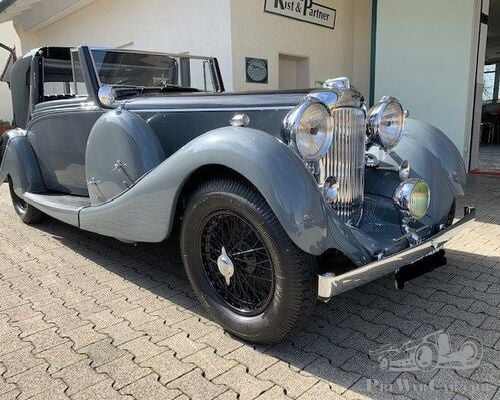
Lagonda LG 45 Coupe de Ville Sedanca by Mayfair
The successor to the M45, the LG45 was built around the same highly capable, competition-proven 4.5-litre Meadows inline-six engine, but featured r..
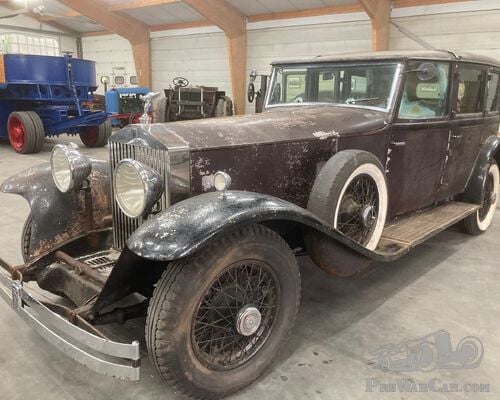
Rolls-Royce
Rolls-Royce Phantom ll chassisnummer 287 AJS. bouwjaar 1932, Links gestuurd, Brewster Keswick Sedance Towncar
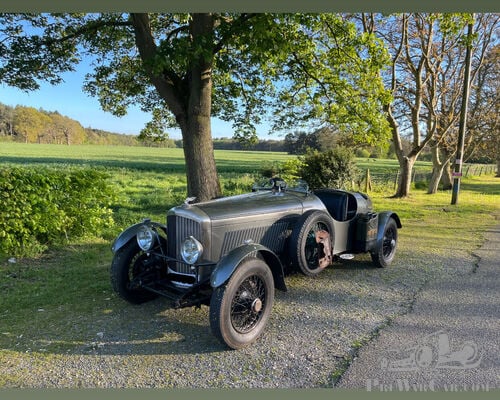
Derby Bentley Special 4-1/4
Sadly i am having to sell on my Bentley special ( Icarus). It is currently a work in progress and still needs finalising/ refining. A great o..