The global magazine and marketplace for classic car enthusiasts, by enthusiasts.


Filter
Classic Hudson, Rauch & Lang for sale - Hudson, Rauch & Lang cars for sale
-

1918 Rauch & Lang Model B26 Brougham | RM Sotheby's | The Hershey Auction
To Be OFFERED AT AUCTION at RM Sothebys' The Hershey Auction event, 7 - 8 October 2026. $150,000 - $175,000 USD One of the finest surviving examples of the Rauch & Lang electric carBeautiful show-quality, AACA First Junior-winning restorationKnown history, with only three long-term caretakers since the 1950s -
1935 Hudson Big Six Suburban Sedan | RM Sotheby's | The Hershey Auction
To Be OFFERED AT AUCTION WITHOUT RESERVE at RM Sothebys' The Hershey Auction event, 7 - 8 October 2026. Offered Without Reserve | $25,000 - $35,000 USD An attractive and capable alternative to the “Big Three” offerings of the era212-cid inline-six; three-speed manual transmissionPreviously restored in green over a tan i.. -
1922 | Hudson Super Six Special Race Car
Formerly owned by racing driver Antonio Trabucco in Argentina with a great early racing history in South AmericaDiscovered in Argentina in 2014 and imported to EuropePartially overhauled by a specialist workshop in Germany Fully functional and drivableSix-cylinder in-line engine, 4.7 litre displacement wi..


Hudson
US, 1901 – 1902
Beau-Chamberlain Manufacturing Co, Hudson, Mich.
The first car to bear the name Hudson was a light steamer with a vertical 2-cylinder engine, single chain drive and tiller steering. This Hudson car bore no relationship to the later Hudson car.
US, 1909 – 1957
(1) Hudson Motor Car Co., Detroit, Mich., 1909 – 1954
(2) American Motors Corp., Kenosha, Wisc., 1954 – 1957
The Hudson car was created by Roy D. Chapin, and financed by J.L. Hudson, head of Detroit’s famous department store of that name. The first product was a 20hp 4-cylinder Hudson car of conventional design, capable of 50mph, of which 4.000 Hudson cars were sold in its first season. These fours, one of which was entered in the 1914 Tourist Trophy were first supplemented and then supplanted by a 6-cylinder line. The first of these Hudson cars was the heavy (3.696lb) and fairly expensive $2.350) Hudson Model 54 with a 4-speed overdrive gearbox, but the 4½-litre Hudson Super Six of 1916, with its high-compression sv engine, really made the Hudson company’s name, and marked the first of a line of engines of this type which lasted almost to the end of Hudson car production, giving generous outputs while still burning commercial-grade petrol. A Hudson Super Six made the first two-way transcontinental trip – New York to San Fransisco and back – in 1916; Ira Vail took 9th place with a Hudson car in the Indianapolis 500 Mile Race in 1919, and this Hudson car formed the backbone of New Zealand’s ‘service car’ network in the 1920s.
Though Hudson’s booming sales in the 1920s were largely due to the inexpensive companion make the Essex, the Hudson car company also pioneered modestly-priced closed Hudson cars, and in 1922 their ‘coach’ (a 2-door saloon) sold for only $100 more than a tourer. Until 1929, the Hudson Super Six remained the staple Hudson car model, and during its last three years of production the Hudson car was powered by a 4.7-litre ioe unit derived from the original Essex Four of 1918. In 1930 this Hudson car was replaced by a 3½-litre straight-8, later increased to 4.168cc in 1932 – this tough and well-liked unit remained in production until 1952, and powered such Anglo-Americans as the Railton and Brough Superior. These firms also used Hudson’s 3½-litre six.
The 1930s were less facrouable to Hudson cars, except in Britain, where the breed’s popularity warranted the manufacture of a small-bore 2.7-litre ‘export’ six rated at only 16.9hp, which was still being made for Hudson cars in 1940. The regular Hudson Six was a bigger machine of 3.455cc and was offered with independent front suspension in 1934 and 1935; in the latter year Electric Hand gear change became available on Hudson cars. Fencer’s mask radiator grilles followed in 1936, and steering-column change in 1939. The first post-war Hudson cars were a continuation of the 1942 models, but 1948 brought the revolutionary Hudson Step-Down series with the Hudson car company’s high-compression sv in-line engines. These low-built Hudson cars had unitary construction of chassis and body, rear wheels mounted inside the chassis frame, and coil-spring independent front suspension. The 5-litre 145bhp 6-cylinder Hudson Hornet engine introduced for 1951, proved a great success in stock-car events, but before this the Hudson car company had reached its post-war sales peak, with nearly 145.000 Hudson cars delivered in 1950. Competition in the medium-price bracket was too strong, and Hudson’s venture in the compact car market in 1953, with the 3.3-litre 6-cylinder Hudson Jet at $1.833 (this was also the first Hudson to abandon the wet-plate clutch) was not successful.
In 1954 Hudson amalgamated with Nash to form the American Motors Corporation. Though all production was transferred from Detroit to Kenosha, and the Hudson car range now shared its utinized hulls with the bigger Nash models, sales did not prosper. These last Hudson cars had initially the old sv 6-cylinder units or Packard-built V8s, while both Nash’s Rambler and the Austin-built Metropolitan were sold by Hudson agents. The Hudson car name was dropped at the end of the 1957 season.
Source: Georgano, encyclopedia of motorcar; GNG, MCS
The information is written with the greatest of care. However, if you have any suggested amendments please contact us at office@prewarcar.com
Rauch & Lang
US, 1905 – 1928
(1) Rauch & Lang Carriage Co, Cleveland, Ohio, 1905 – 1916
(2) Baker, Rauch & Lang Co, Cleveland, Ohio, 1916 – 1922
(3) Rauch & Lang Electric Car Manufacturing Co, Chicopee Falls, Mass., 1922 – 1928
Rauch & Lang were an old-established carriage building firm (founded 1853) when they began to make electric Rauch & Lang cars in 1905. These Rauch & Lang cars followed the usual pattern for such electric vehicles, being mainly closed town cars, although a few open phaeton Rauch & Lang cars were also made. The biggest Rauch & Lang cars were heavier vehicles and included a six-seater limousine with separate outside seat for the chauffeur. Some Rauch & Lang cars had 4-doors, a very unusual feature in electric cars. In 1916 the Rauch & Lang cars became part of the Baker, Rauch & Lane group and production declined. From 1919 onwards the Rauch & Lang cars were sometimes listed as Raulangs, and from 1922 this became the official name of the Rauch & Lang cars.
By this time production of Rauch & Lang cars had been transferred to the Stevens-Duryea factory at Chicopee Falls where the number of private cars made was very small. The factory, which was still turning out a few Stevens-Duryeas, also made petrol and electric taxi-cabs under the name Rauch & Lang cars, and bodies for Stanley Steamers.
Source: Georgano, encyclopedia of motorcar; GNG
The information is written with the greatest of care. However, if you have any suggested amendments please contact us at office@prewarcar.com


Featured
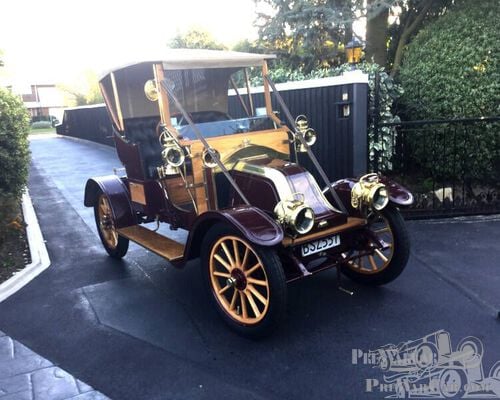
Renault /AX 1913 - named
Purchased fully renovated from New Zealand and imported to the UK. We have owned her for over10 years. Gigi is currently living in France where she..
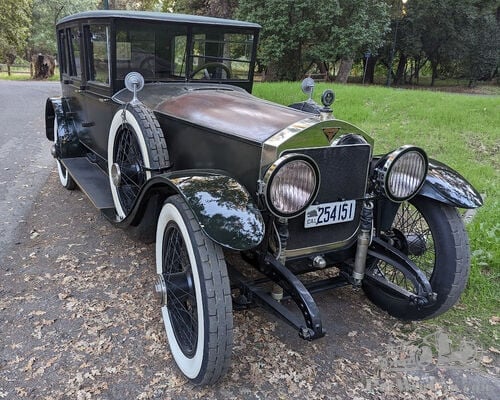
1916 Simplex, Crane model 5
1916 Simplex, Crane MODEL 5CUSTOM MADE HISTORIC PRESERVATION VEHICLE – READY TO TOUR!This Simplex recently completed th..
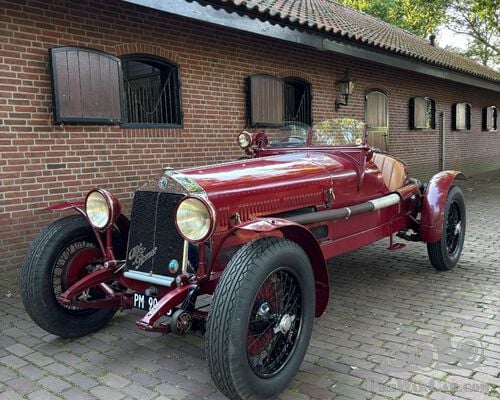
1930 Alfa Romeo 6C 1750 Spider
1930 Alfa Romeo 6C 1750 Spider with complete history from delivery to first owner in 1930 in Firenze till today with copy Libretto/license plate.