The global magazine and marketplace for classic car enthusiasts, by enthusiasts.


Filter
Classic Hudson, Vulcan for sale - Hudson, Vulcan cars for sale
-

1920 HUDSON SUPER SIX
FOR SALE :1920 HUDSON SUPER SIX SEVEN SEAT TOURER. 4.7 litre six cylinder sidevalve engine producing 76bhp at 2445rpm. . The car stands on four excellent wooden wheels fitted with new Goodrich 35x5 tyres. The car also has 4 addition rims with tyres as supplied with the car when new. I've reluctantly to part with the car which has a lot of.. -
1922 | Hudson Super Six Special Race Car
Formerly owned by racing driver Antonio Trabucco in Argentina with a great early racing history in South AmericaDiscovered in Argentina in 2014 and imported to EuropePartially overhauled by a specialist workshop in Germany Fully functional and drivableSix-cylinder in-line engine, 4.7 litre displacement wi.. -
1910 Hudson model 20 Touring car
Brass lovers!! 1910 Hudson touring car. This car is a GREAT "driver"...I'll detail that in a moment but it has tons of power and is easy to drive. Aesthetically, it's an 8. Recent paint on the body, frame, wheels, under carriage, fenders. Top is new and in excellent shape. Leather is older, but totally livable. Carpet in back is in good shape, f..


Hudson
US, 1901 – 1902
Beau-Chamberlain Manufacturing Co, Hudson, Mich.
The first car to bear the name Hudson was a light steamer with a vertical 2-cylinder engine, single chain drive and tiller steering. This Hudson car bore no relationship to the later Hudson car.
US, 1909 – 1957
(1) Hudson Motor Car Co., Detroit, Mich., 1909 – 1954
(2) American Motors Corp., Kenosha, Wisc., 1954 – 1957
The Hudson car was created by Roy D. Chapin, and financed by J.L. Hudson, head of Detroit’s famous department store of that name. The first product was a 20hp 4-cylinder Hudson car of conventional design, capable of 50mph, of which 4.000 Hudson cars were sold in its first season. These fours, one of which was entered in the 1914 Tourist Trophy were first supplemented and then supplanted by a 6-cylinder line. The first of these Hudson cars was the heavy (3.696lb) and fairly expensive $2.350) Hudson Model 54 with a 4-speed overdrive gearbox, but the 4½-litre Hudson Super Six of 1916, with its high-compression sv engine, really made the Hudson company’s name, and marked the first of a line of engines of this type which lasted almost to the end of Hudson car production, giving generous outputs while still burning commercial-grade petrol. A Hudson Super Six made the first two-way transcontinental trip – New York to San Fransisco and back – in 1916; Ira Vail took 9th place with a Hudson car in the Indianapolis 500 Mile Race in 1919, and this Hudson car formed the backbone of New Zealand’s ‘service car’ network in the 1920s.
Though Hudson’s booming sales in the 1920s were largely due to the inexpensive companion make the Essex, the Hudson car company also pioneered modestly-priced closed Hudson cars, and in 1922 their ‘coach’ (a 2-door saloon) sold for only $100 more than a tourer. Until 1929, the Hudson Super Six remained the staple Hudson car model, and during its last three years of production the Hudson car was powered by a 4.7-litre ioe unit derived from the original Essex Four of 1918. In 1930 this Hudson car was replaced by a 3½-litre straight-8, later increased to 4.168cc in 1932 – this tough and well-liked unit remained in production until 1952, and powered such Anglo-Americans as the Railton and Brough Superior. These firms also used Hudson’s 3½-litre six.
The 1930s were less facrouable to Hudson cars, except in Britain, where the breed’s popularity warranted the manufacture of a small-bore 2.7-litre ‘export’ six rated at only 16.9hp, which was still being made for Hudson cars in 1940. The regular Hudson Six was a bigger machine of 3.455cc and was offered with independent front suspension in 1934 and 1935; in the latter year Electric Hand gear change became available on Hudson cars. Fencer’s mask radiator grilles followed in 1936, and steering-column change in 1939. The first post-war Hudson cars were a continuation of the 1942 models, but 1948 brought the revolutionary Hudson Step-Down series with the Hudson car company’s high-compression sv in-line engines. These low-built Hudson cars had unitary construction of chassis and body, rear wheels mounted inside the chassis frame, and coil-spring independent front suspension. The 5-litre 145bhp 6-cylinder Hudson Hornet engine introduced for 1951, proved a great success in stock-car events, but before this the Hudson car company had reached its post-war sales peak, with nearly 145.000 Hudson cars delivered in 1950. Competition in the medium-price bracket was too strong, and Hudson’s venture in the compact car market in 1953, with the 3.3-litre 6-cylinder Hudson Jet at $1.833 (this was also the first Hudson to abandon the wet-plate clutch) was not successful.
In 1954 Hudson amalgamated with Nash to form the American Motors Corporation. Though all production was transferred from Detroit to Kenosha, and the Hudson car range now shared its utinized hulls with the bigger Nash models, sales did not prosper. These last Hudson cars had initially the old sv 6-cylinder units or Packard-built V8s, while both Nash’s Rambler and the Austin-built Metropolitan were sold by Hudson agents. The Hudson car name was dropped at the end of the 1957 season.
Source: Georgano, encyclopedia of motorcar; GNG, MCS
The information is written with the greatest of care. However, if you have any suggested amendments please contact us at office@prewarcar.com
Vulcan
GB, 1902 – 1928
(1) Vulcan Motor Manufacturing and Engineering Co Ltd, Southport, Lancs., 1902 – 1906
(2) Vulcan Motor and Engineering Co Ltd, Southport, Lancs., 1906 – 1928
The Vulcan car firm was better known for commercial vehicles. Private Vulcan cars stemmed from experiments conducted in the 1897-1899 period by the brothers Thomas and Joseph Hampson. A belt-driven single-cylinder voiturette Vulcan car with lateral radiators was shown in 1902, being replaced a year later by a 6hp Vulcan car with armoured wood frame, mechanically-operated inlet valves, and shaft drive. This Vulcan car was listed at only £105, and this Vulcan car was soon followed by a 10hp twin, also T-headed but with a steel frame, selling for £200. 4-cylinder Vulcan cars of 12 and 16hp, still modestly priced, were available in 1905, while the biggest 1906 Vulcan cars, with capacities of 3.1- and 5.2-litres, had gate change. No 2-cylinder Vulcan cars were catalogued after 1908, but a year previously Vulcan cars had joined the ranks of 6-cylinder manufacturers with a 4.8-litre T-headed machine featuring dual ignition and cone clutch, at £600 for a Vulcan car chassis. Unlike other makers, Vulcan cars retained their interest in this type, which Vulcan car had acquired a 4-speed box and had grown to 6-litres by 1908, and the 1909 Vulcan car range consisted of four 4-cylinder cars and the six, all shaft-driven and still with T-heads; the smallest Vulcan car, rated at 12hp, had a 3-speed gearbox and worm drive. A new 3.6-litre six Vulcan car with unit gearbox and worm drive followed in 1911, along with an L-head 2.4-litre fifteen. Worm drive was standardized on the 1912 Vulcan cars, when the bigger Vulcan cars had T-heads, and a 1.8-litre, 2-cylinder with an Aster engine was offered. All but the smallest Vulcan car had detachable wheels as standard in 1913, and by the outbreak of World War 1 the Vulcan car company was well established with a range of solidly-built Vulcan cars: a 2.4-litre 10/15, a 2.6-litre 15.9, and a 3-litre monobloc 15/20 Vulcan car at £375. All these Vulcan cars had L-heads and bull-nose radiators, though the similarly styled six retained the older Vulcan car configuration. A 1½-litre Vulcanette with a 3-speed rear-axle gearbox and full electrical equipment was announced for 1915 but the war intervened.
After 1918 the Vulcan car company concentrated increasingly on trucks, and a brief association with the Harper Bean Group (1919-1920) did no good to finances. Some odd experiments by Vulcan cars included a worm-drive 3½-litre V8 tourer Vulcan car intended to sell for £625 (1919), and two Vulcan cars in 1922 with Howard sleeve-valve engines, a big 3.6-litre sports-touring four Vulcan car and a 10hp 1.4-litre flat-twin listed at £315. However, none of these Vulcan cars reached the public, the regular Vulcan car lines being a 1.8-litre ohv 12 and a 2.6-litre sv 16/20, both with Dorman engines. There was also a conservative 20hp Vulcan carmodel with the Vulcan car company’s own 3.3-litre sv fixed-head engine and 4-speed separate gearbox, this Vulcan car was selling for £850 in 1921; by this time flat radiators were again being used on Vulcan cars. The Vulcan 20 was available to military order with full wireless equipment in 1923, in which year C.B. Wardman effected a liaison of Vulcan cars and Lea-Francis. The two companies pooled their dealer network, Vulcan cars became responsible for certain Lea-Francis power units and bodies, and Lea-Francis made gear and steering boxes for Vulcan cars. A 1½-litre sv Dorman-engined Vulcan 12 was listed at £295 in 1925, followed a year later by an ohv worm-driven derivative, also with Dorman engine, and looking very like a Lea-Francis. 4-wheel brakes were available on Vulcan cars in 1925 and standardized in 1926. Last of the line Vulcan cars were the 14/40 and 16/60, with the disastrous twin ohc 6-cylinder engines of their own make. Short-chassis Vulcan cars were worm-driven, but bevel drive was adopted for long-chassis versions. Vulcan cars wore artillery wheels, but were otherwise identical to their Lea-Francis counterparts which Vulcan cars were made alongside them at Southport. Not many of these Vulcan cars were made, and after 1928 only commercial vehicles were produced. The Vulcan car firm subsequently amalgamated with Tilling-Stevens and thus were abrorbed into the Rootes Group after World War 2. Truck production ceased in 1953.
US, 1913 – 1914
(1) Vulcan Motor Car Co, Painesville, Ohio, 1913
(2) Vulcan Manufacturing Co, Painesville, Ohio, 1913 – 1914
This Vulcan car was a cleanly-designed light car with a 27hp 4-cylinder engine. A two-seater speedster Vulcan car on an 8ft 9in wheelbase with electric lights sold for $750. A five-seater version of this Vulcan car with the same engine, but on a longer wheelbase, cost $850.
Source: Georgano, encyclopedia of motorcar; MCS, GMN
The information is written with the greatest of care. However, if you have any suggested amendments please contact us at office@prewarcar.com


Featured
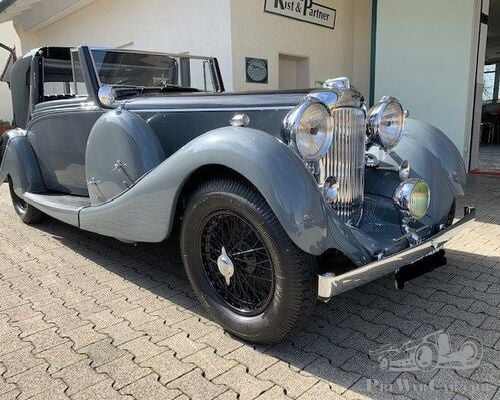
Lagonda LG 45 Coupe de Ville Sedanca by Mayfair
The successor to the M45, the LG45 was built around the same highly capable, competition-proven 4.5-litre Meadows inline-six engine, but featured r..
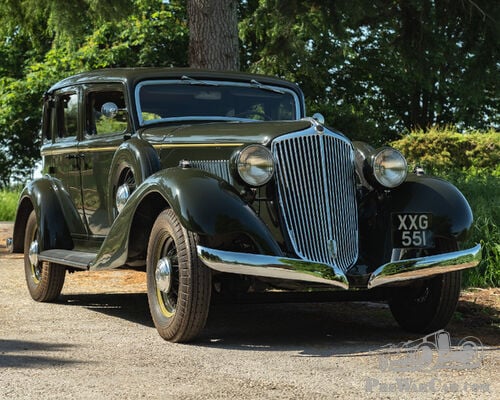
Graham Model 64 Standard Eight 'Blue Streak'
UK Registration No: XXG 551Chassis No: 1801069MOT: ExemptH&H ClassicsKelham Hall | Newark, Nottinghamshire