The global magazine and marketplace for classic car enthusiasts, by enthusiasts.


Filter
Classic Star, Humber for sale - Star, Humber cars for sale
-

Humber 1931 Pullman Limousine
Humber Pullman Limousine with 6 cylinder engine 3500 cc and 25 HP with manual gearbox with four speed transmission. Runs and drives great. Frank Kennis Phone: 00.31.622.420.766 or mail me: info@KennisCars.NL www.KennisCars.NL Classic Car Dealer for Europe Cadillac ; Mercedes ; Rolls-Royce ; Delage ; Bugatti ; Bentley ; Dodge ; Opel ; Corvette .. -
1900 Humber De Dion Engined Quadricycle - VCC Dated
1900 Humber De Dion Engined Quadricycle 2.75HPRegistration No. BS8088Engine No. 9078Frame No. M1041CVCC Dating Cert No. 2177 Humber & Co Ltd was a British manufacturer with its headquarters based in Coventry, incorporated as early as 1887 where the company’s primary source of income was the ‘Bicycle ..


Star
GB, 1898 – 1932
Star/ Starling/ Stuart
(1) Star Motor Co, Wolverhampton, Staffs., 1898 – 1902
(2) Star Engineering Co, Wolverhampton, Staffs., 1902 – 1909
(3) Star Cycle Co, Wolverhampton, Staffs., 1905 – 1909
(4) Star Engineering Co Ltd, Wolverhampton, Staffs., 1909 – 1928
(5) Star Motor Co Ltd, Wolverhampton, Staffs., 1928 – 1932
Edward Lisle Sr’s Star Motor Co, an offshoot of the Star Cycle Co, produced its first Star car in 1898, and offered the Star car for sale in the following year. The Star car was a Benz-based machine, with a single-cylinder, water-cooled 3½hp engine, belt primary drive and chain final drive. It was an improvement in that water circulation on the Star car was assisted by a pump. In 1900 there followed a 2-cylinder Star car with 3 forward speeds, still on Benz lines. 1901 brougth De Dion-engined single-cylinder Star cars, and 1902 an 8hp twin of Panhard type in addition. Other, larger Star cars of Panhard ancestry joined the 8hp, up to a 20hp four Star car. By 1904, although a De Dion-powered single and Panhard-type twin were still there, the bigger machines were of Mercédès pattern, these Star cars came with honeycomb radiators, mechanically-operated inlet valves and pressed-steel frames. All veteran Star cars up to 1914 were extremely well-made, well-furnished, conventional, rather expensive cars lacking in technical originality, showing a line of development appearance in the 1907 range. The best-known Star car of the veteran period was the excellent 15hp Star car of 1909, a shaft-driven 2.8-litre four which had become the 3-litre 15.9hp by 1914. A great variety of other Star cars, basically similar models were turned out, not only by Star but also by the Star Cycle Co. The latter, run by Edward Lisle Jr, had made motor tricycles and bicycles, and produced the Starling car in 1905. It had 2 forward speeds and a De Dion single-cylinder engine, but was otherwise of Panhard type, with armoured wood frame and chain drive. One year later the Star car company supplemented it with the more modern Stuart car, which had 2-cylinders, 3-speeds and shaft drive. This name was dropped in 1908, all models being called Starlings, but these too, disappeared in 1909 when Star cars cheaper line was entrusted to the new Brion Motor Co, a more indepented concern that was still run by Edward Lisle Jr. So popular was the Star car that its makers were among the six largest in the country before 1914.
The 15.9hp Star car was continued after World War 1, together with another sv four Star car of pre-war origin, the 20hp Star car of 3.8-litres. A modern light Star car of fashionable type, the 11.9hp, arrived in 1921. This Star car used a 1.795cc sv engine with a detachable head, made in unit with a 3-speed gearbox which had central change. By 1924, the 11.9 Star car had grown up into the 2-litre 12/25hp Star car. It shared cylinder dimensions with the 18hp Star car, which was a new 3-litre six. The 12/25 Star car could be had as a very fine fast touring car with overhead valves and 54bhp, in which form the Star car was called 12/40hp. Thereafter, the Star car range reverted to its pre-war complexity. By 1927, there were three sv Star car models and two additional and more up-to-date Star cars with overhead valves. The 14/40hp Star car, new in 1926, was a solid 2-litre, ohv machine which in spite of having only 4-cylinders and 3 forward speeds, this Star car was a notably smooth and flexible car, thanks to a 5-bearing crankshaft. The ohv 20/60hp Star car, a 2½-litre six with the same bore and stroke as the 14/40 and a 7-bearing crankshaft, was the most luxurious Star car. A light six, the popular ohv 18/50hp, joined the Star car range in 1928, the year of the Star car company’s acquisition by Guy, and replaced the 14/40 Star car for 1929. By this time, the sv Star cars had gone, leaving the two sixes. As the 18hp Star Comet and the 21hp Star Planet, these Star cars were revised with handsome bodies and very full, luxurious equipment, including one-shot chassis lubrication, thermostatically-controlled radiator shutters and a built-in jacking system. Two other engines, of 14hp (2-litres) and 24hp (3.6-litres) were also obtainable in Star cars for 1932, as alternative Comet and Planet power units. These Star car were the last new Star cars, for they were too expensive to make, and the times favoured the mass-produced economy car. Production of Star cars ended in March 1932, but the unsold stock was sold by McKenzie and Denley of Birmingham, and the Star car was quoted in the Buyer’s Guide lists until 1935.
US, 1903 – 1904
(1) Star Automobile Co, Cleveland, Ohio
(2) H.S. Moore, Cleveland, Ohio
This Star car was driven by a single-cylinder, watercooled engine of 1.9-litres, mounted beneath the front seat, with false bonnet and coil radiator in front. A champion planetary transmission and double chain drive was used on this Star car. Both two- and five-seater Star cars were made, the latter with rear entrance.
US, 1908
Star Automobile Co, Chicago, Ill.
Star runabouts were offered in three models, selling for $500, $600 and $700 respectively. The smallest Star car was an open two-seater, and shaft drive was employed on all Star cars.
US, 1908
Model Automobile Co, Peru, Ind.
The short-lived Star car from Peru was offered in conventional 2- and 4-cylinder forms. The twin was chain-driven, while the big, expensive four Star car ($4.000) had shaft drive.
US, 1922 – 1928
Durant Motor Co of New Jersey, Elizabeth, N.J.; Lansing, Mich; Oakland, Calif.
William Crapo Durant’s Star Four was one of the most serious attempts to take away some of the Model T Ford’s market, for the cheapest practical car. Unlike the Ford, the Star car was an assembled machine.The Star car had a 2.2-litre, 4-cylinder engine by Continental, and was conventional in design in every way except the gearbox, which was separate; a feature common to all the vehicles in Durant’s empire, but very unusual in American mass-produced cars by the early 1920s. The touring Star car cost only $443 in 1923, which helped Star to be the seventh biggest seller in America that year. The Star car was sold outside the United States as the Rugby. In 1926, a 2.8-litre six Star car was introduced. Front wheel brakes appeared in 1927 but a year later the Star car make disappeared in the collapse of the Durant interests. By this time, 250 Star cars a day were being turned out. Only the Four was still called the Star car for the 1928 model year, as the Six was now known as the Durant Model 55.
Source: Georgano, encyclopedia of motorcar; TRN, GMN, MJWW, TRN
The information is written with the greatest of care. However, if you have any suggested amendments please contact us at office@prewarcar.com
Humber
GB, 1898 to date
(1) Humber Ltd, Beeston, Notts., 1898 – 1908
(2) Humber Ltd, Coventry, 1898 – 1946
(3) Humber Ltd, Ryton-on-Dunsmore, Warwickshire, 1946 – 1970
(4) Chrysler United Kingdom Ltd, Ryton-on-Dunsmore, Warwickshire, 1970 to date
Thomas Humber’s bicycle firm, established in 1868, became a part of H.J. Lawson’s intended automobile empire empire and as such was responsible for production of the abortive Pennington tricars. Humber car manufacture started with an experimental front wheel drive design, while motor tricycles and quadricycles were also produced. These led to a line of 3-wheeled forecars which persisted up to 1905. Little came of Humber cars M.D. voiturette with 2-speed gear, but their more conventional 1901 offering had a 4½hp De Dion engine, De Dion-type transmission and shaft drive, as well a a single-spoke steering wheelwhich remained one of the Humber car company’s trademarks in the early years and anticipated Citroën practice by more than half a century. A 12hp 2½-litre 4-cylinder Humber car followed in 1902, but in 1903 two more ambitious vehicles appeared, a big Humber 20hp four and a 3-cylinder version with mechanically-operated inlet valves, as well a Britain’s first successful effort at a popular light car. This Humber car was the 5hp Humberette with a De Dion-type engine of 613cc and a 2-speed gearbox with two steering-column levers. All these Humber cars had shaft drive – Humbers eschewed the chain. In 1904 the Humberette was made in a more powerful form and up to 1908 two separate lines of Humber car were produced in the factories at Beeston and Coventry, the Beeston cars being the more expensive. 1905 saw a miniature Humber car, a four rated at 8/10hp, but with a capacity of 2 litres, which was developed the following year into a 10/12hp Coventry-Humber car selling at £315; Beeston’s offering that season was a 3½-litre T-head four selling for £472 10s. The 1907 versions of the Beeston-Humber car had a capacity of 6.3-litres and pressure lubrication.
The 1908 Humber car range was quite extensive, ranging from a bid for the lightcar market with a 1½-litre 8hp vertical twin, pressure-lubricated and with Humber’s own design of detachable wheels, at £195, up to a big 5½-litre six Humber car, also Coventry-made, at a modest £450.
Financial difficulties led to the closure of the Beeston factory in 1908, but Coventry went on making the T-headed Humber cars, all of which had 4-speed gearboxes by 1911. In 1912 new L-head models came out, the 11hp having a 1.7-litre monobloc engine, three forward speeds and splash lubcrication; there was also a new Humber car, a cyclecar named the Humberette, with a 998cc air-cooled engine but otherwise on full-scale car lines, which was made up to the outbreak of World War 1. 1913/1914 models cost £120, with £15 extra if watercooling was specified. Though Humber cars had supported the first Tourist Trophies, an unusual departure for 1914 was the preparation of a Humber car team of 3.3-litre twin ohc 4-cylinder machines inspired by the Henry-designed Peugeots for that year’s event.
After the war the Humber car company concentrated on solid family cars, noted for their excellent workmanship and all-weather equipment, as well as their conservatism. Side-valve engines were used up to 1922 in Humber cars, but inlet over exhaust layouts appeared in 1923, in which year there was also a new small Humber car model, the ‘Humber 8/18’ with 12-volt coil ignition at £275. Front wheel brakes had arrived by 1925, although Humber cars adhered to the foot-operated transmission brake for several more seasons. The company sold over 4.000 Humber cars in 1927, thanks to the 1.056cc ‘Humber 9/20’, an excellent 2-litre 4-cylinder ‘Humber 14/40’ and a new 20/55hp Humber car, the first six in a Humber car for many years.
The Humber cars were restyled in 1929, and the following year the effect of the Rootes takeover was seen in the new line of sixes, the 2.1-litre ‘Humber 16/50’ and the 3½-litre Humber Snipe and its long-chassis stablemate, the Humber Pullman. 1930 was also the last year for the 9hp Humber cars and thereafter the Humber car company’s staple products were upper-middle-class family cars of over two litres’ capacity, although a 1.7-litre ‘Humber 12’ appeared in 1933 and formed the basis for the long-stroke 4-cylinder Rootes engines still being manufactured in 1966 as a Humber car. Also at the end of 1932 overhead inlet valves were dropped. In 1936 the 6-cylinder Humber cars acquired transverse independent front suspension, while the biggest sixes were now of 4.1-litres’ capacity. Only 6-cylinder Humber cars were offered in 1938, and hydraulic brakes appeared on 16hp and 21hp Humber car models in 1939, and were also found on the first Humber Super Snipe – a ‘compact’ evolved by mounting the 4.1-litre engine in the smaller chassis, which was excellent value at £398.
Snipe-based Humber cars served the Allied Forces with distinction in World War 2 and the new models introduced in 1945 were really hold-overs of Humber car parts from 1940, with hydraulics now standardized, together with a new four in the shape of a 1.9-litre side-valve Humber Hawk based on Hillman’s Fourteen of 1938/1940. In 1950 a Humber car (the Super Snipe) took second place in the Monte Carlo Rally. The Super Snipe and Pullman acquired overhead valves in 1953, and the Hawk a year later, while 1956 Super Snipes could be had with automatic transmission. Unitary construction was used on a redesigned Hawk in 1957, and two years later the Super Snipe (after a short period in abeyance) re-emerged as an altogether smaller 2.650cc Humber car, also with unitary construction. This was soon replaced by a 3-litre development with disc front brakes. 1962 Humber car models had the four-headlamp pioneered in America in 1957. A small luxury Humber car came out in 1964 in the shape of the Humber Spectre, based on Hillman’s Super Minx, but with overdrive standard equipment. During 1967 all the big Humber cars were dropped, to be replaced on the British market by the Australian-built Plymouth Valiant. Since 1968 the only Humber car offering has been the 1.7-litre Humber Sceptre, a prestige version of the Hillman Hunter. The 1973 Humber cars had twin-carburettor 79bhp engine, and there was a choice of a 4-speed all-synchromesh gearbox with overdrive on the two upper ratios of automatic transmission.
Source: Georgano, encyclopedia of motorcar; MCS
The information is written with the greatest of care. However, if you have any suggested amendments please contact us at office@prewarcar.com


Featured

K3 Replica on KN Chassis
"The K3 Magnette must rank in the history books as the most famous and successful of all the record breaking MGs. With only 33 examples produced durin..
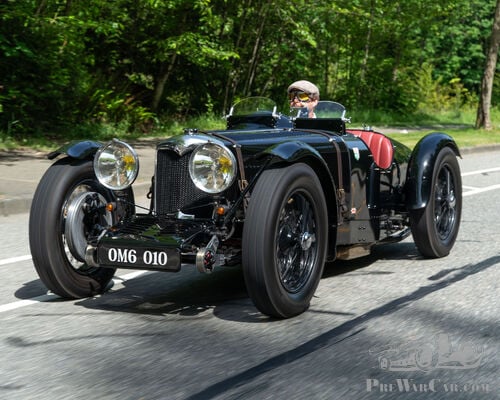
Riley 14/6 Special 1933
The ExperienceStep into the golden age of British motoring. This 1933 Riley 14/6 Special is a masterclass in pre-w..
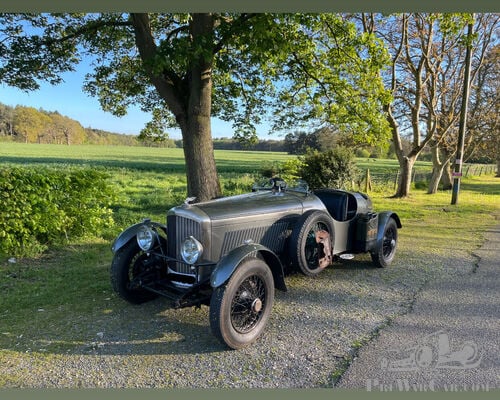
Derby Bentley Special 4-1/4
Sadly i am having to sell on my Bentley special ( Icarus). It is currently a work in progress and still needs finalising/ refining. A great o..