The global magazine and marketplace for classic car enthusiasts, by enthusiasts.


Filter
Classic Albion, Hupmobile for sale - Albion, Hupmobile cars for sale
-

1901 Albion A1 Dogcart 8HP Twin Cylinder - VCC Dated
1901 Albion Model A1 8HP Twin Cylinder Dog CartRegistration No. BS8677Chassis No. 45E Established in 1899 in Finnieston Street Glasgow by Dr Thomas Blackwood Murray and Norman Fulton, the Albion Motor Company were once the largest provider of commercial vehicles in the British Empire. Albion were famed for their relia.. -
Mid 1920s Hupmobile R series open tourer project car
Mid 1920s Hupmobile R series open tourer project car. Chassis N° R 179775, castingnumber on engine 52900. Very good condition older restored chassis. Also work done on both engine and rearaxle. Radiator shell is straight but needs to be renickeled. A number of smaller parts are in boxes and not shown. Suitable inexpensive project car fo..


Albion
GB, 1900 – 1913
Albion Motor Car Co Ltd, Scotstoun, Glasgow
Still active as a truck manufacturers within the Leyland Group, Albion was founded at the end of 1899 by T. Blackwood Murray and Norman Fulton, late of Arrol-Johnston and their early products were dogcarts with varnished-wood bodywork much in the Arrol-Johnston idiom, with 2-cylinder opposed-piston underfloor engines, low tension magneto ignition, and Murray’s patent governor. Wheel steering replaced the tiller in 1902, and a year later Albion began production of a 16hp vertical-twin which was made for many years, usually with solid tyres, and often with shooting-brake bodywork. ‘Cars for country houses’, especially Scottish ones, were a speciality of the house, though rather less rustic was a side-valve 5.6-litre chain-driven four introduced in 1906. This 24hp model had a seven-year production run. The last Albion passenger car was a 15hp Monobloc four with side valves in a T-head and worm drive, which sold for £475 in 1912. At the end of 1913 Albion elected to concentrade on commercial vehicles, though large shooting brakes using the 15hp engine continues to be made.
Source: Georgano, encyclopedia of motorcar; MCS
The information is written with the greatest of care. However, if you have any suggested amendments please contact us at office@prewarcar.com
Hupmobile
US, 1908 – 1940
Hupp Motor Car Corp., Detroit, Mich.; Cleveland, Ohio
Robert and Louis Hupp, the founders of the Hupmobile company, started with a 2.8-litre 4-cylinder light runabout, with two bucket seats and a bolster tank, distinguished by a 2-speed sliding-type gearbox. This Hupmobile car sold for $750 and was joined in 1911 by a Hupmobile touring car with 3 forward speeds and a longer wheelbase of 9ft 2in, listed at only $900. Hupmobile, like Dodge and Chevrolet, adhered to the 4-cylinder sv unit for many years and made nothing else until 1924, though the Hupmobile cars acquired electric lighting and starting in 1914. A Hupmobile car with a 10ft 6in wheelbase was made available for seven-seater bodywork in 1916. Sales were good: 12.000 Hupmobile cars in 1913, and climbing up to 38.000 by 1923. By 1918 a rounded cowl and bonnet line had replaced the original angular configuration and fuel feed was by vacuum from a tank at the rear. Open Hupmobile car models were listed at $1.250. Aluminium pistons were featured in 1924 and balloon tyres on the Hupmobile car in 1925, the last year of the four. Interestingly enough, Hupmobile’s 4-litre straight-8 appeared in 1925, a year before the first six. This Hupmobile car was a conventional machine with contracting Lockheed hydraulic brakes, mechanical actuation being used on the 6-cylinder Hupmobile cars. The Hupmobile car company stayed in the medium-price field, sixes selling at $1.295 in 1929, while prices of the Hupmobile M-series sv eight started at $1.825. In 1929 Chandler’s plant in Cleveland was acquired and was used for the manufacture of the less expensive Huppmobile Hupps. Like most of America’s independent makes, the Hupmobile car company was hit hard by the Depression, sales of Hupmobile cars dropping from 50.374 in 1929 to 17.450 in 1931, although in the next two years, in 1932 and 1933 some very handsome Hupmobile cars were made.
In 1934 the Hupmobile Aerodynamic range with three-piece wrap-around windscreens and headlamps faired into the bonnet sides appeared. An experimental front wheel drive version was not proceeded with. The aerodynamic Hupmobile cars were made in 4-litre, 6-cylinder and 5-litre straight-8 forms, but sales were poor and the Hupmobile car factory closed down halfway through the 1936 season. It was reopened, but the 1937 and 1938 Hupmobile cars were of little interest apart from the standardization of automatic overdrive on the eights. Like Graham, Hupmobile tried to stay in business by adapting the body dies on the discontinued 810/812 Cord series to their conventional running gear. These Hupmobile Skylarks were built in the Graham factory; the last Hupmobile cars were completed in July 1940, but were sold as 1941 models.
Source: Georgano, encyclopedia of motorcar; MCS
The information is written with the greatest of care. However, if you have any suggested amendments please contact us at office@prewarcar.com


Featured
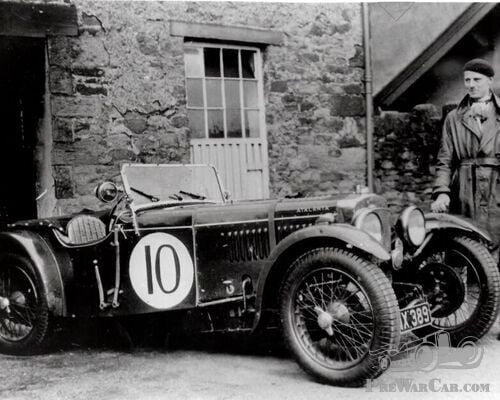
Fraser Nash TT Replica
AHX 389 ( chassis no. 2073, engine no. 10367).An important and correct short-chassis TT Replica with known history from new. Ex. H. P..
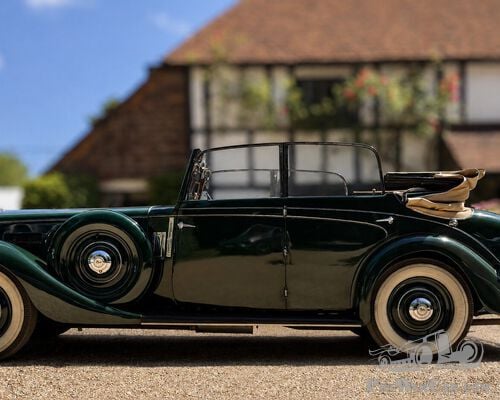
1936 Armstrong Siddeley 20/25 Cabriolet with Tickford coachwork by Salmons & Sons, Newport Pagnell
This exceptionally rare Armstrong Siddeley 20/25 Cabriolet with original Tickford coachwork by Salmons & Sons of Newport Pagnell was first reg..
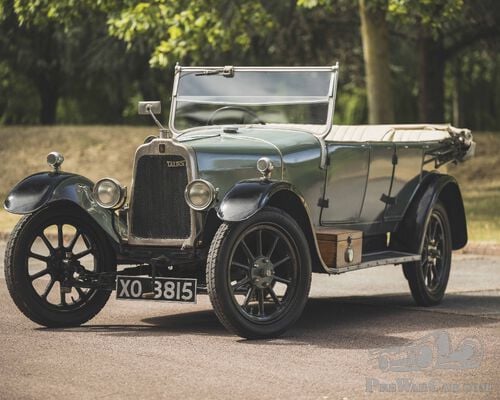
Rare RHD, low miles & great history file
This is an ONLINE-ONLY AUCTION at THE MARKET. The price shown here is the lower estimate. To see all the details, description, 250+ high-res photog..